
Completion and Sea Trials

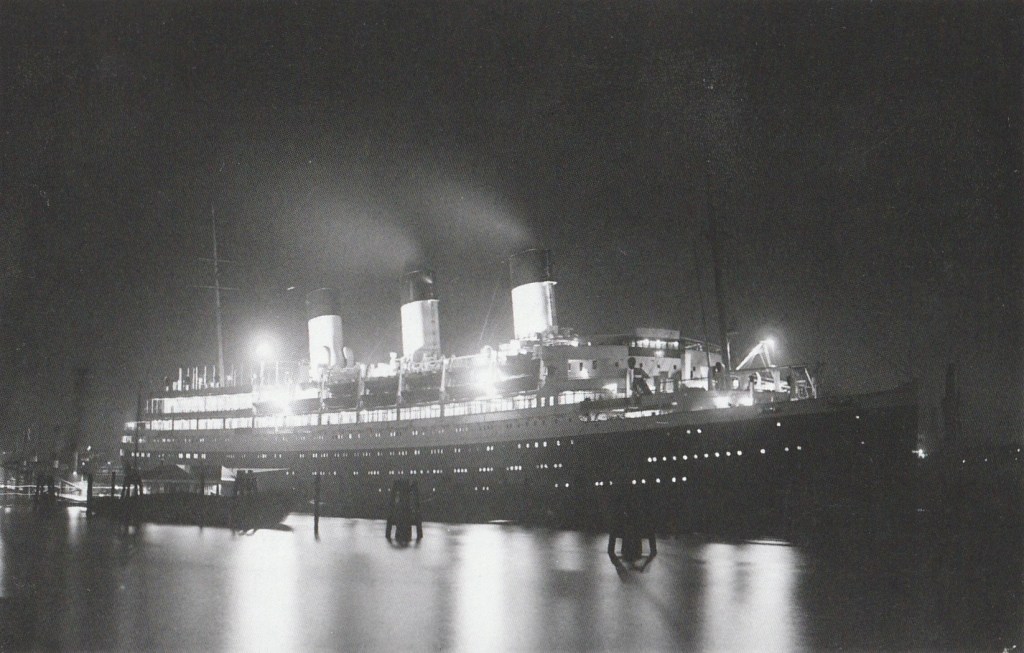
Round the clock, the workers touched up the liner to make her as perfect as possible for the sea trials. October was fast approaching, so all the magnificent woodwork had to be nailed down, systems readied, boilers fitted and three giant funnels capped off before then. They finished right on schedule to the delight of Hamburg Süd, and they allowed 500 special guests to board the vessel early and admire this palace during her sea trials. This took place on the 28th October 1927, and was a 36-hour trip through the North Sea, led by veteran commodore of the Hamburg Süd, Ernst Rolin. These esteemed guests included the most prolific people in Hamburg Süd’s circles, and countless journalists from home and abroad as far as South America to document the flagship’s test-run. In the coming weeks the ship would be dubbed many times: “The finest ship afloat” by British journalists. The ship had quickly garnered international attention and acclaim as the next great step forward in Germany’s merchant shipping and hopes couldn’t have been higher.
Unfortunately being late-October, the weather was far from preferred for this first voyage. Nonetheless, everyone on board had a splendid time indoors, enjoying the super-luxury liner. One of them in particular was Heinz Schön, a man with some of the most exceptional years at sea, later being Purser on the Wilhelm Gustloff. He stayed in an exceptional cabin on A-Deck, and being one of the very first passengers ever on the first voyage, described his experiences as:
“I went down the bright staircase to B-Deck. Here, the people behind the construction welcomed each other and went in groups through all the public spaces that took up the entire deck. The wide views were surprising. Everywhere was vast and beautiful. From the top of the Smoking Room to the end of the Dining Saloon was exactly one hundred full meters of space to roam.
Architecturally and generously structured, this accumulation of rooms had nothing of excess, and nothing that imitated older styles. No sobriety either, but cosy warmth everywhere. The entire interior was comfortable and dignified.“
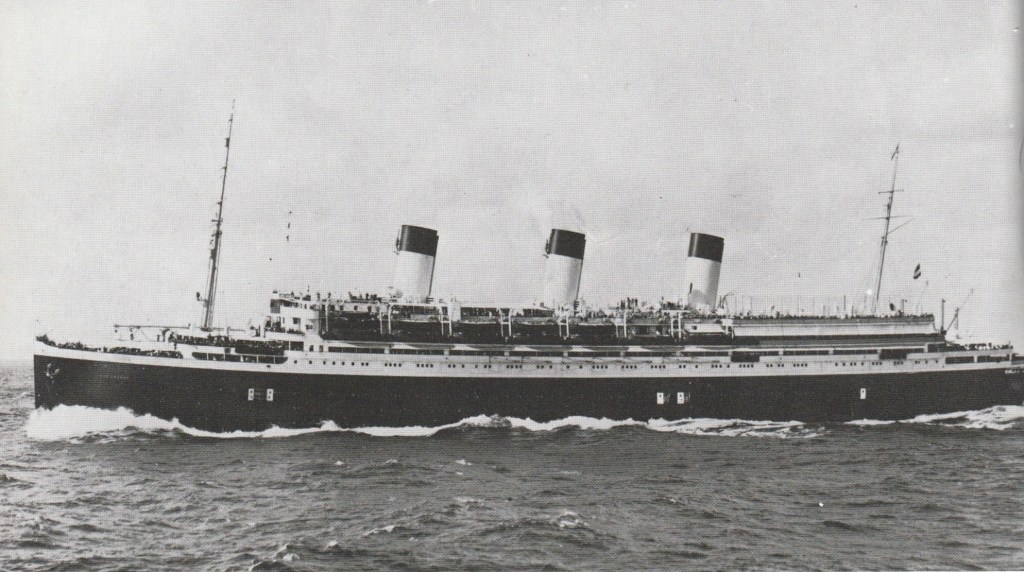
Sailing across the North Sea, the Cap Arcona was performing perfectly which delighted her crew, guests and the press. Her turbines were pushed to output 24’000 horsepower. As the voyage continued, the weather worsened eventually becoming a force-ten storm that pitched the ship up and down. Nearby, smaller vessels also suffered. Soon this storm became a hurricane and passengers went below deck. The next day at 2pm, the sun burst out from the clouds and the weather lightened. This didn’t last and the weather worsened again, and the ship was struck by mountainous waves. Eventually a large one forced the ship to sharply maneuver, and caused tables to slide, glasses to fall and wine bottles to roll down the main staircase.
Hamburg Süd’s verdict:
Nevertheless, despite so much seeming against the ship that day, her ability to take it all and keep going steadily was actually admired by the higher-ups of the Hamburg Süd and they were fully satisfied with what Blohm & Voss had built for them. So at 5pm this very day, the red and white flag of the Hamburg-Südamerikanischen-Dampfschiffahrts-Gesellschaft was proudly raised up to the top of the mast, signifying Hamburg Süd was fully satisfied with this ship and would now take it off the builder’s hands, another job well-done.
Preparation for the maiden voyage
Special visits:
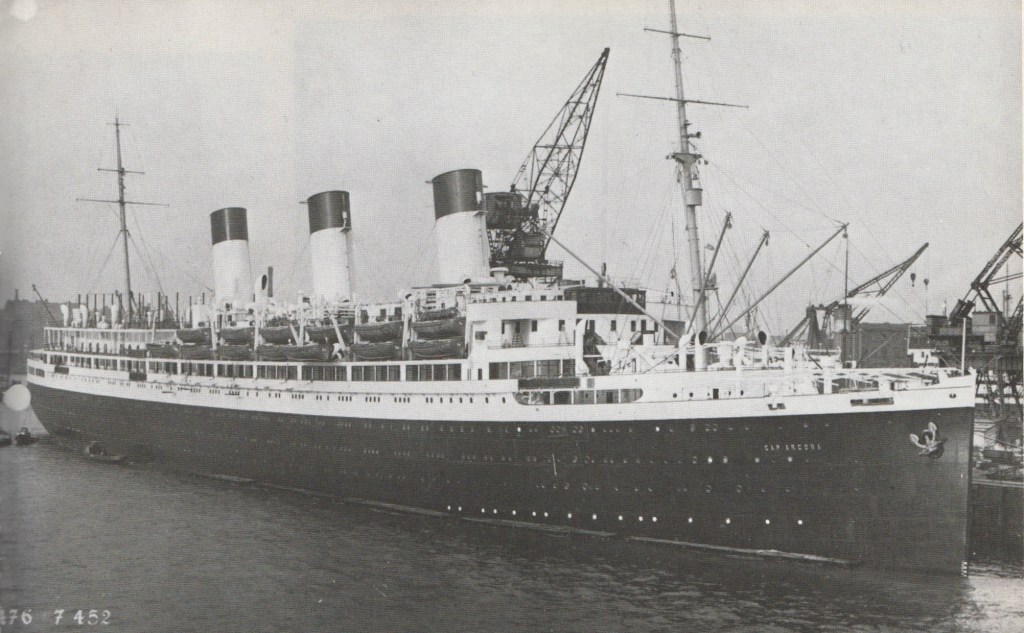
After the successful trials from the 28th – 30th October, the Cap Arcona was anchored at the Johannis-Bollwerk, the piers of the Hamburg Süd. The quickly-approaching maiden voyage was less than 3 weeks away on the 19th November 1927. The ship quickly saw all sorts of notable guests visit and inspect during this period: the mayor, senate and members of Parliament in particular. Mayor Carl Wilhelm Petersen was met and greeted by chairman of the supervisory board of the Hamburg Süd, Max von Schinkel, as well as Richard Krogmann and Theodor Amsick the general manager. They were all given a lengthy tour of the vessel and were greatly impressed by the construction, onboard facilities and luxury of the ship. They did however criticize the more primitive facilities of the Third Class and crew spaces.
Everything required aboard:
In terms of the actual voyage many other preparations happened during these last few days. Chief of which was supplying the ship with enough provisions for six weeks at sea. Some of these included: 3000lbs of meat, 12’000lbs of poultry and game, 12’000 pounds of fish of all types, 6000lbs of ham and sausages, 30’000lbs of vegetables, salads, mushrooms and herbs, 1200 sacks of potatoes, 40’000 eggs, hundreds of crates of fresh fruit, a mountain of dried provisions and in case anybody felt thirsty, there were innumerable bottles of wine and alcohol of every kind imaginable. Six weeks crossing the equator would ruin all of these, but Cap Arcona was equipped with state-of-the-art refrigeration facilities. To prepare all of these when needed, Cap Arcona carried 48 cooks and kitchen staff, servicing five kitchens. Once the Cap Arcona was supplied with enough provisions to sustain a small town because she was one in reality, the shining new vessel was ready to take her first lucky passengers to South America and take the lead as the flagship of the Hamburg Süd and the most opulent way to cross the South Atlantic.
Departure

Saturday, 19th November 1927. A project and dream 3 years in the making. The Cap Arcona was going to depart Hamburg on this very day and sail to South America with the end goal of the voyage being the capital of Argentina, Buenos Aires. The ship was under the leadership of Commodore Ernst Rolin, the previous captain of the Cap Polonio and the one Hamburg Süd entrusted with commanding their new flagship. Notable passengers included both general managers: Amsick and Gäth, as well as Walter Blohm and his wife, one of the sons of Rudolf Blohm. It was a late, cold November day as expected, but the weather was still fair. Boarding of the First and Second Classes had started at 8 o’clock that morning, and they arrived by tender, being carried from the St. Pauli-Landungsbrücken to the Cap Arcona, still docked at the Johannis-Bollwerk. Every free space around the river seemed to be full of thousands of onlookers watching the largest liner in all Hamburg depart. Others were working very diligently to take aboard the vast amounts of luggage and cargo aboard. The countdown was for 10 o’clock, when the great ship would set sail. Finally, shortly before the clock struck, the signal was sounded:
“All those on board, we are departing!”
And with that, the whistles blasted and the ship’s band began to play: “Muß i denn, muß i denn…” as the Cap Arcona slowly began to slide forward. The tugs that pulled her would bring her down the Elbe, before letting her go and casting the ship off alone towards South America.
Unfortunately there was one unforeseen obstacle before the ship could leave, the waters of the Elbe were not deep enough for a ship the size of the Cap Arcona to leave. The waters were lower than usual at this time of year, but today was an especially bad depth and the ship remained stuck. All those on land waited a long while, unsure what was to happen. But then suddenly, the Cap Arcona started moving forwards again and everybody could finally say their proper goodbyes. The maiden voyage of the Cap Arcona was watched by tens of thousands of people all throughout Hamburg. They lined on the river, stood on roofs, leaned out windows and crowded on bridges as the magnificent flagship of the Hamburg Süd slowly grew smaller and smaller, taking over 1500 happy, lucky people to the Southern Hemisphere in the grandest way possible.
Stops in Europe:
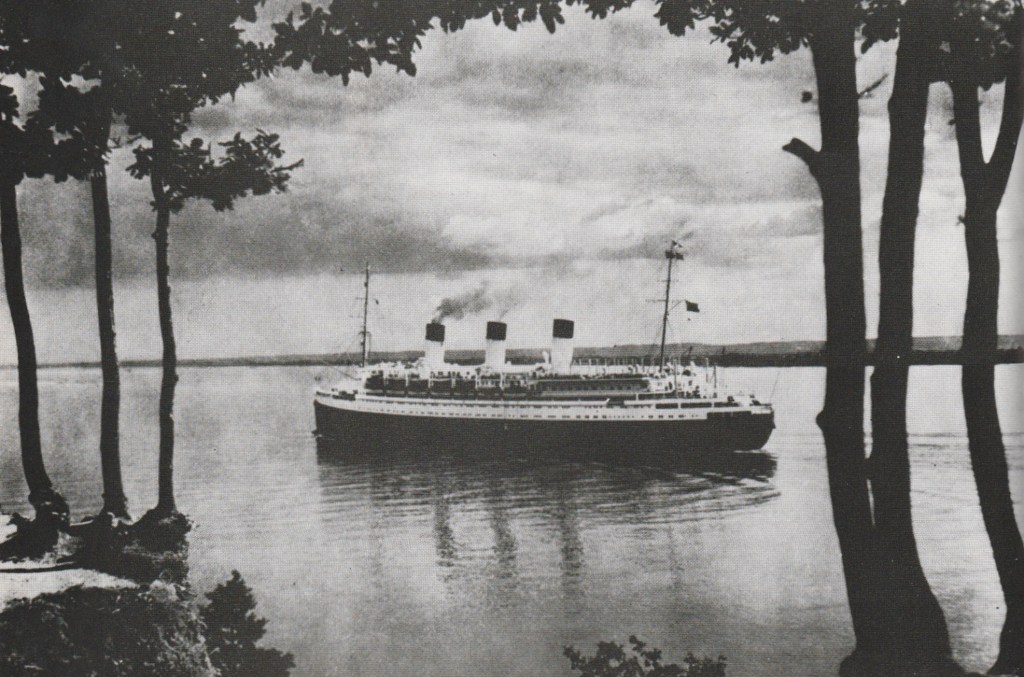
The Cap Arcona sailed forwards, accompanied by smaller steamers like Senator Grünwald and Courier as well as all sorts of little boats and craft. On she went, passing Altona, Blankenese, and Glückstadt, now beginning to approach the open ocean and the mouth of the Elbe. At some point between Brunsbüttel and Cuxhaven at 3pm, the ship became stuck again on a more narrow stretch of the river. That wasn’t all as it began to snow that night, forcing the Cap Arcona to reduce speed and sail slower. But being made to cross the intense weather, temperatures and might of both the North and South Atlantics, Cap Arcona was designed to take a beating as she had proven during her sea trials. The ship pressed on and all this bad luck didn’t seem to bother anyone on board: Lunch and Dinner had gone splendidly, the orchestra played on and people danced and celebrated in the ballroom until early morning. The ship made excellent time that night, departing Germany for the first time and passing Dunkirk, off the coast of France by breakfast on the 20th November.
Arrival in Boulougne-sur-Mer:
By 4pm, the British coast had disappeared and the ship anchored off Boulougne-sur-Mer to take aboard new passengers and their 3000 pieces of luggage. These passengers were notable as some of the wealthier Brazilians and Argentinians who had spent their summers in Europe, and now wished to return home. They arrived by two tenders, the passengers boarded easily but one crew member fell into the sea whilst loading the luggage in the rough weather. He was swiftly pulled out. By 8pm, everything was aboard and the new passengers wandered the ship, enthralled in the beauty with comments of: “que soberbio”, “Esplendida”, “eston encantando”, and “pero que hermoso vapor”. They weren’t the only ones taking tours as the higher French authorities were led through the ship by General Managers Amsick and Gäth. Once the clock struck midnight, Commodore Rolin gave the order to raise anchor and the ship slipped away, continuing her maiden voyage, although 12 hours late.
Arrival in Ria de Vigo:

The next spot was the Bay of Biscay, the extremely sunny stretch of water on the northern border of Spain, and the eastern of France. There were slight worries onboard about how the people would receive the Cap Arcona. The ship sailed along the Spanish coast and by 2pm on the 21st of November, she had reached Ria de Vigo. Everyone onboard received a true delight when they arrived: the shore was black with the masses of people all wanting to glimpse the ship as the Spanish newspapers had been writing very positively about this new luxury liner from Germany over the last few months. They came even closer – soon the Cap Arcona was surrounded by over a hundred little boats from the harbour. One special boat did leave the ship, it carried Managers: Amsick and Gäth who were travelling back to Germany, satisfied with the performance of the Cap Arcona thus far. Several of the little Spanish boats came forward with tropical fruits, tambourines, berets, perfumes and silk scarves which were sold to passengers aboard the liner.
Final stop in Lisbon:
After the delightful stopover, the Cap Arcona set forth again to make it in time the next day to the capital of Portugal, Lisbon. This was to be their last stop in Europe, before the big leg over the Atlantic. The next morning on the 22nd, they arrived to a truly magnificent sight of the city nestled on the hills with its palaces, Arabian doors and endless greenery. The last passengers boarded the ship here, as well as 209 tonnes of oil, the last of the ship’s fuel needed for the big stretch. With everything ready, it was time for the 4177-nautical mile or 7736 kilometres to Rio de Janeiro. The entire journey from Hamburg to South America was 30 days, so the ship had a tight schedule and half a day to make up lost time. On this last evening, Commodore Rolin personally met his guests for the first time and greeted them in multiple languages in the Dining Saloon. The entire night was endless celebration and dancing, with some boys demonstrating all the latest moves outside the Smoking Room. Other relaxed on the Promenade Deck, enjoying the cool night as the Cap Arcona sailed at an impressive 19.5 knots, covering 470 nautical miles in 24 hours.
Crossing the Pond
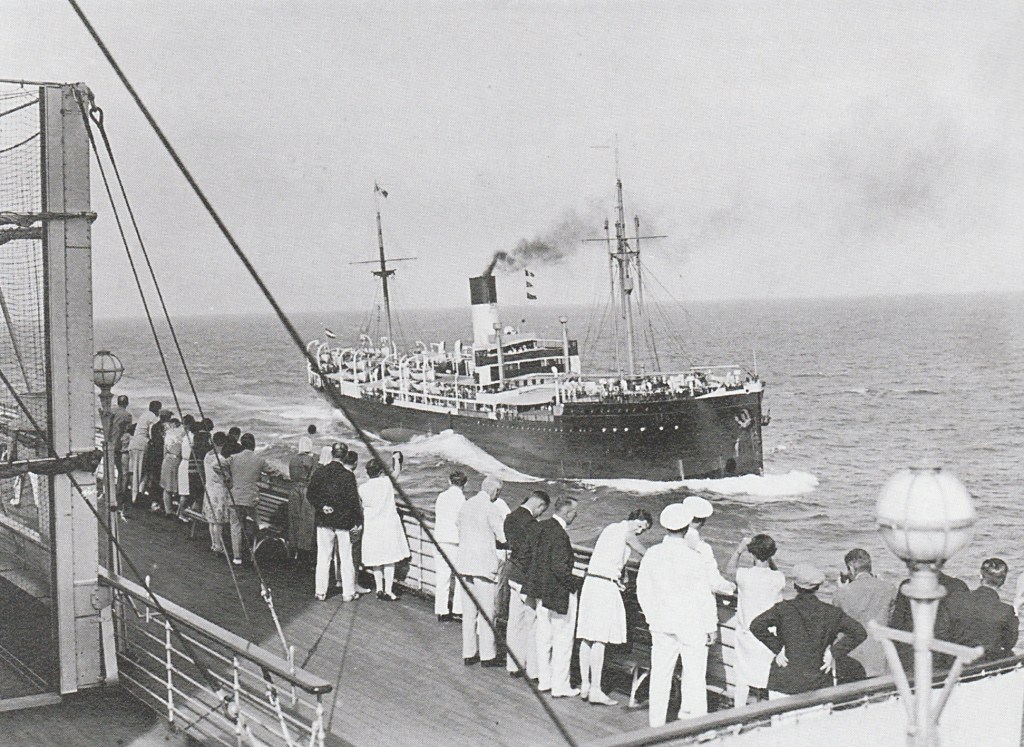
On the Cap Arcona steamed, making good progress across the Atlantic. Already by the 24th of November at 9pm, the Cap Arcona came within sight of the island of Tenerife, off the coast of Africa. A wonderful surprise had been set for them as they passed the harbour of Santa Cruz on Tenerife: The Governor of the island had been a long-time friend of Commodore Rolin, and knew of the ship approaching. And so, when the Cap Arcona sailed by, the residents of the island launched fireworks lighting up the night sky in a truly beautiful display as a greeting. This memory would stay with everyone for a lifetime, as the green, red and blue lights shone down on the ship as she sailed past. These weren’t the only friends the Cap Arcona would pass by: the next day on the 25th shortly before 2 o’clock, the passengers received the message they would be passing the Cap Norte, another ship of the Hamburg Süd in 8 minutes. In no time at all, the upper decks were full of passengers clutching binoculars and cameras. When the two vessels met there was much cheering, music and celebration as people on both ships sang the national anthem, celebrating the great flagship of the Hamburg Süd on her maiden voyage. Both liners blasted their whistles, and were distant specks within minutes.
Outdoor Entertainment:
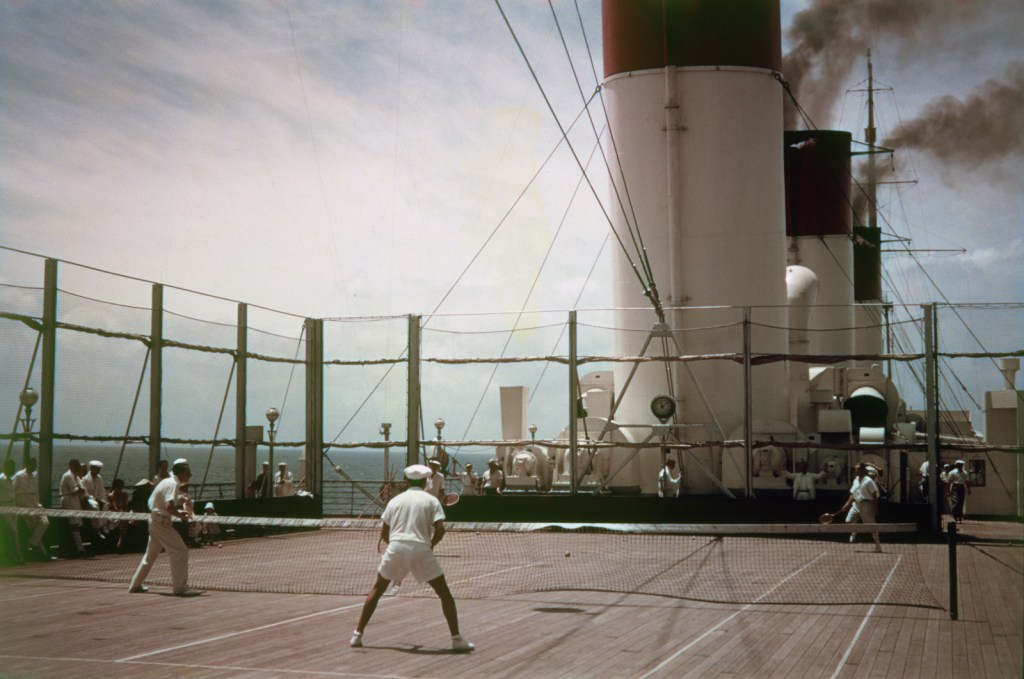
The weather was only sunny during these days, and soon the passengers could find their way around the ship quite comfortably. One of the most important things to be kept in mind, was that the ship was nearing the equator so passengers needed to stay cool. The Cap Arcona possessed the largest sports field on any vessel in the world during the 1920’s and 30’s and this is where many passengers found themselves enjoying tennis, shuffleboard, football, boxing, gymnastics and much more. The actual net that surrounded it was roughly two stories tall, to ensure balls wouldn’t fly into the ocean. The sporting activities were so popular, the ship would soon employ an onboard sports instructor. This magnificent space was located behind the third stack and had a total space 0f 1300 cubic meters. The actual area considered the sport deck spanned from behind the third stack, to the aft mast.
Log of Onboard Activities:
The next few days from the Sunday, 27th to Wednesday, 30th November went by in a breeze of activities and enjoyment. Sunday the 27th saw a cocktail party with dance at 5:30pm, a ball in the tennis court at 8 and a raffle with prizes. Monday the 28th saw a fancy-dress competition for the children with prizes at 3pm, . Tuesday the 29th saw the Cap Arcona cross the equator at 8pm as well as the ensuing equator-baptism ceremony. There was also a costume ball for the adults with awards for the most beautiful, handmade and improvised costumes. Tuesday the 29th saw a dance party at 7:30pm with prizes for the best tango, foxtrot and waltz. Those performing that night included guitar performances by Elena & Elvira Leinez and Susie Uguirre who also did vocals. It ended with another ball in the tennis court. And then finally, Wednesday the 30th saw a sombre farewell party and prize ceremony on the sports deck. The next morning saw a different sort of event, Mass conducted by Catholic priest aboard the ship. Those present donated money to help the poor during the service and the outcome amounted to 535 pesos, 4254 marks, 8010 pounds sterling, 10’435 francs and 50 pesetas.
Encountering the Cap Polonio:

Even more celebrations continued to follow as the Cap Arcona neared the South American coast. She passed the island of Fernando da Noronha on the 29th a little after noon, now rounding the tip of the continent. Another great surprise was waiting as the Cap Arcona had been in contact with her fleetmate Cap Polonio to alter both their courses so the ships would meet mid-ocean at roughly 3:30pm. Both ships had their upper decks packed once more and the two, three-funnelled flagships sailed only 200 meters from each other as they passed. People sang the national anthem again and waved handkerchiefs from both sides as the two ships blasted their vessels and left each other, Cap Polonio sailing back home to Hamburg, and Cap Arcona to South America for the first time. This was a special moment for Commodore Rolin, remembering all the years and happy memories he had spent commanding that vessel. Over a hundred telegrams rolled in aboard the Cap Arcona over the next hour congratulating Rolin and his ship, as well as thanking him for the great times aboard the Cap Polonio. Without a doubt, they were very near to their destination now.
Bibliography
- Kludas, Arnold (1996) Die Cap-Schnelldampfer der Hamburg Süd, Königinen des Südatlantiks. Kohlers Verlagsgesellschaft mbH
- Schön, Heinz (1989). Die Cap Arcona Katastrophe, Eine Dokumentation nach Augenzeugen-Berichten. Motorbuch Verlag
 The Kaiserhafen