
March 7th 2026
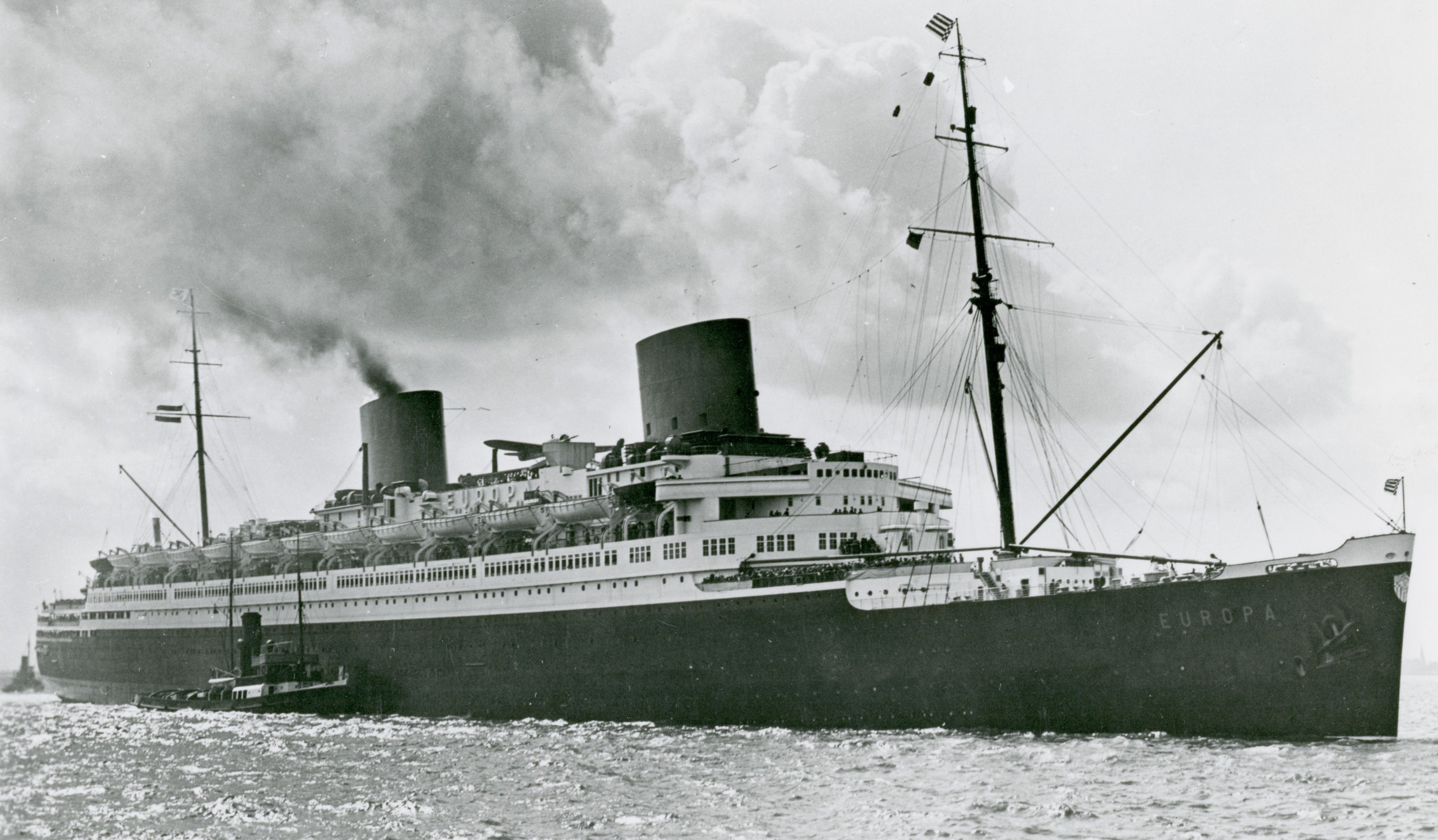
In the aftermath of the First World War, Germany’s entire Merchant Marine was in absolute ruins. Under the Treaty of Versailles, they were forced to give up 90% of the total tonnage they owed to the Allied nations to make up for what had been lost or damaged during the war. Yet, all hope was not lost and a phoenix rose from the ashes to likely the greatest heights the country had ever seen.
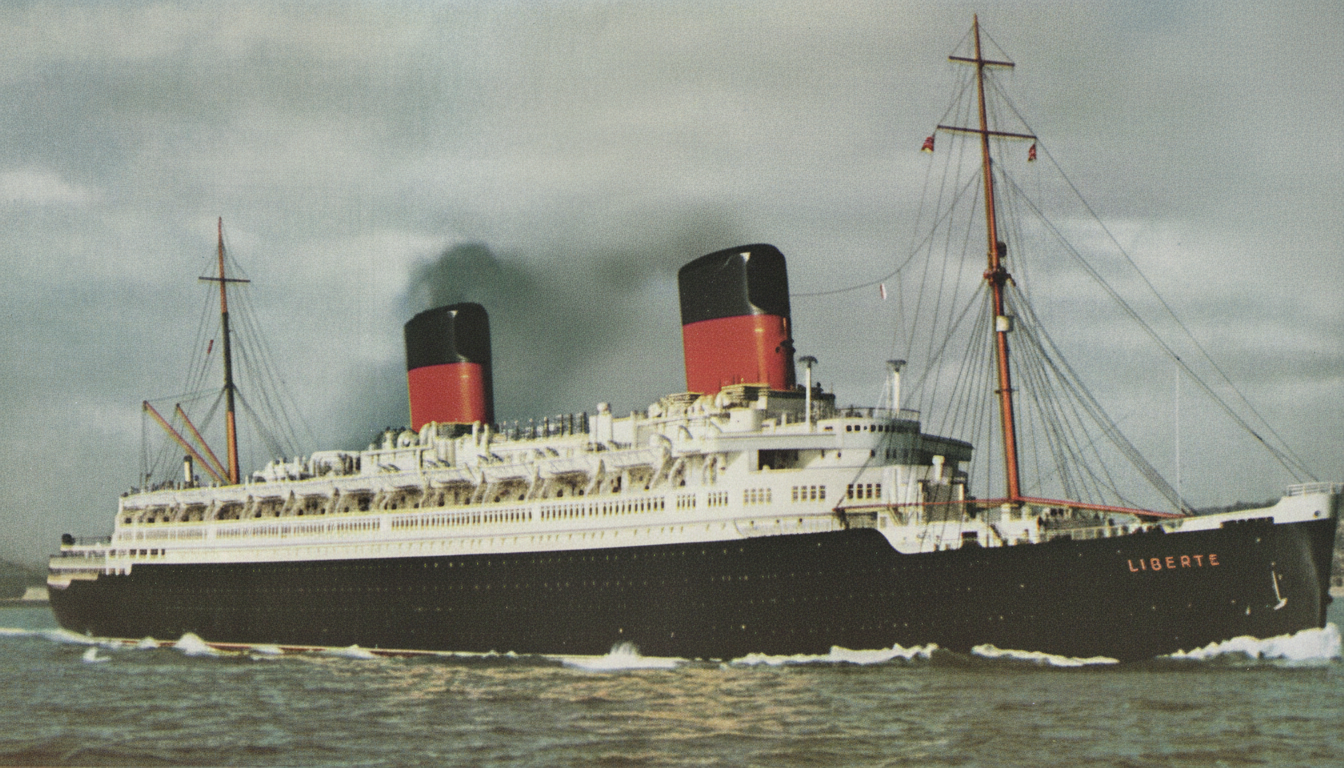
That ship was the SS Europa, a liner whose career was supposed to end before it started, enjoyed all the prewar glory it could, sailed as an extremely dangerous military ship against the country who built her, and was finally offered to replace the massive hole left in France in the wake of the Second World War. Being faced with a herculean task to bring this wrecked giant back up to speed, against relentless odds France revitalized a proud ship who would hold 30 years of fantastic service under three separate nations.
The birth of the two Superliners
The Revival of the Post-War German Merchant Marine:
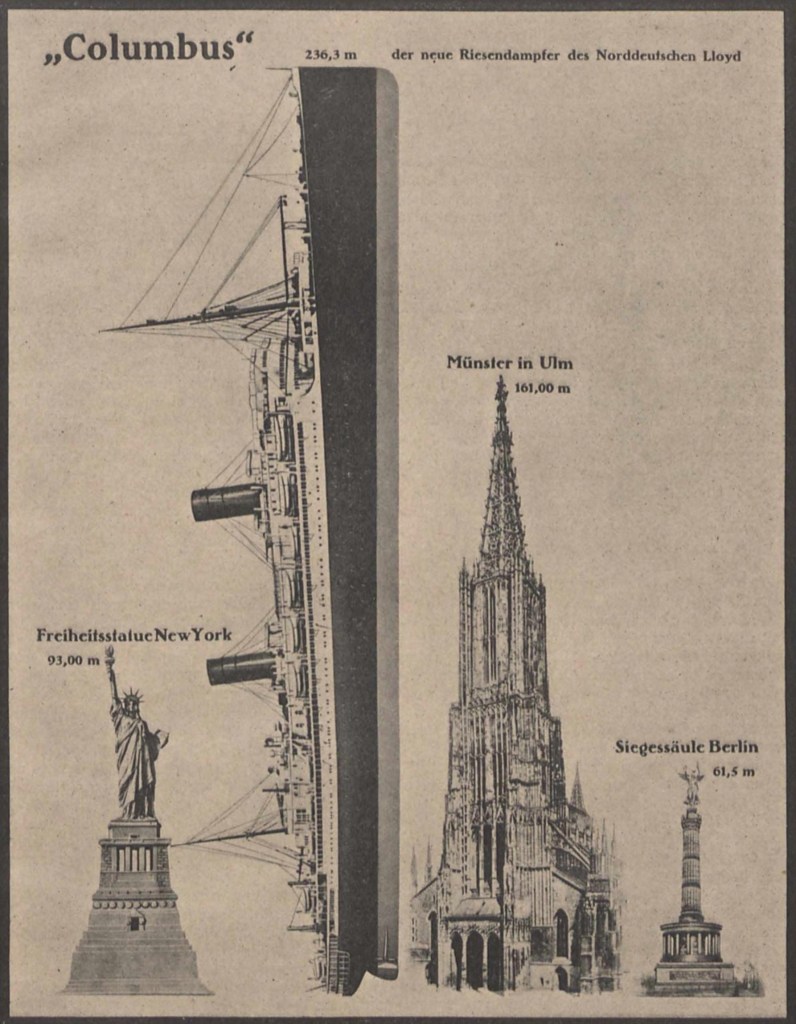
Faced with the prospect of rebuilding nearly their entire fleet, the North German Lloyd Steamship company would make very significant ground during the 1920’s. They had planned their two largest ships to date prior to the war: their twin 35’000-tonners Columbus and Hindenburg, but were able to keep the 10% complete Hindenburg as well as 5 other steamers equivalent to the tonnage of the Columbus after a hefty legal battle. The Hindenburg was rechristened Columbus after her sister likely due to high anti-German sentiment, and was accepted into the Lloyd fleet on the 29th November 1923. This vessel was a massive leap forward for the company who not long before had had nothing, but could suddenly boast having the sixth-largest liner in the world as well as by far the greatest one in Germany.
The Proposal:
By 1927 the Lloyd was now fourth place worldwide behind the Cunard, White Star, and United States Lines in terms of passengers carried with a grand total of 70’114 this year. Already a year earlier during the Summer of 1926 was the Lloyd planning to reclaim more of their prestige and construct a running-mate for the Columbus. They contacted four of the greatest German shipyards: Blohm & Voss (Hamburg), F. Schichau (Gdansk), Vulkan Werft (Hamburg) and A. G. Weser (Bremen) with an ambitious proposal.
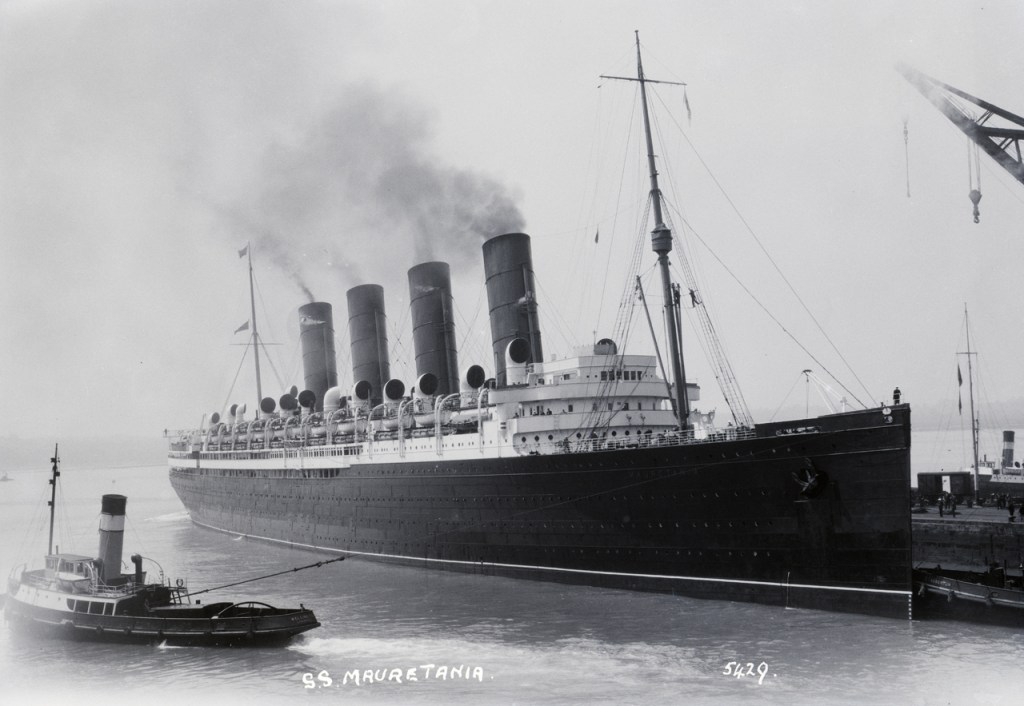
The Lloyd wanted a large ship of 35’000 tons who could sail at an incredible 23 knots compared to the Columbus’s 18. Initially the Lloyd’s biggest rival: Hamburg American Line (HAPAG) was in for a joint venture, but neither could not come to an agreement with the details by September, so Hapag merged with the German Australian Line instead. This annoyed the Lloyd as the balance of power shifted in Hapag’s favor, so the project grew even more ambitious. It now pushed for an insane 26.25-knot ship that could cross the Atlantic in just five days. The only other comparable vessel in the world was Cunard’s Mauretania who had been the speed queen of the Atlantic for a whole 19 years now. This new superliner was even larger though, as her tonnage was recorded by as 46’000 by December.
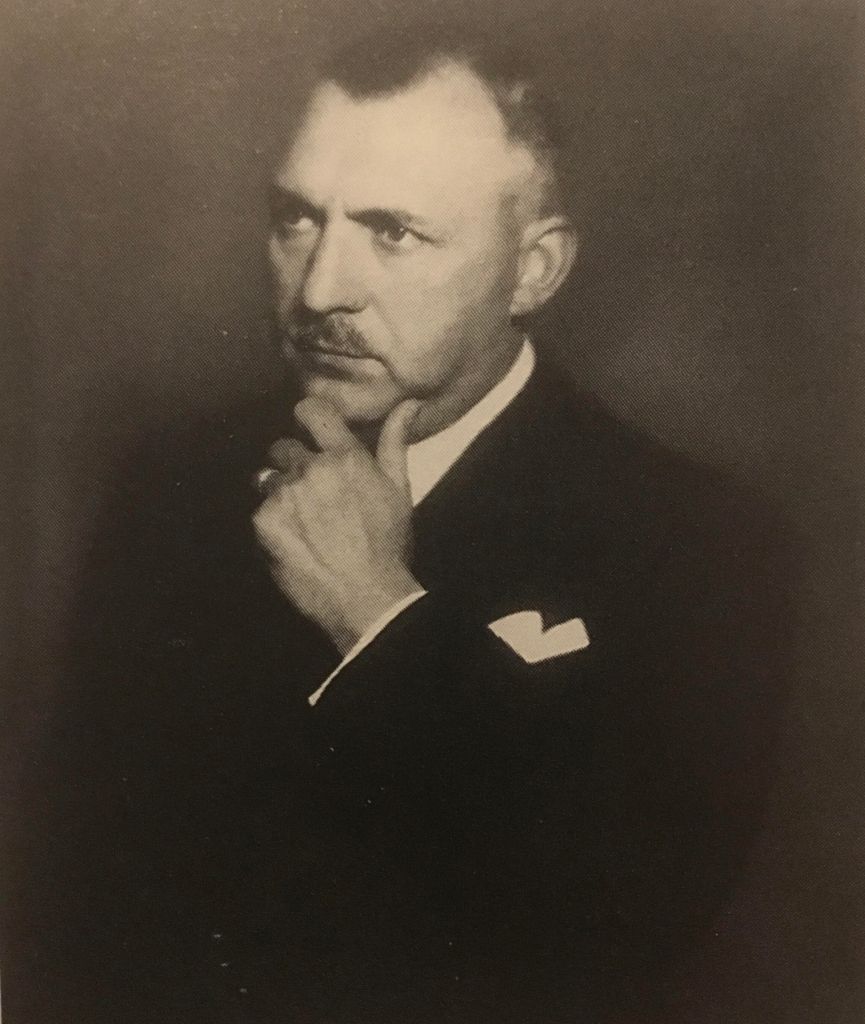
The Director of the Lloyd: Ernst Glässel, would then surprise everyone by arguing for two identical superliners to assist the Columbus. With two great liners of this speed, the Lloyd would be able to offer a never-seen-before weekly service of crossings between Bremerhaven and New York. This idea led to controversy about financing of course, but Glässel’s argument was won over due to the company receiving compensation this year from the Americans over seized Lloyd liners back from 1917.
A claim frequently made in publications is that the two Lloyd superliners were built with state subsidiaries from the Government. That is entirely false and the Lloyd risked their own finances heavily with building the two massive ships. It was initially estimated that 48 million Reichsmarks was required for each, but that number had risen to 68 million when all things were done.
The Bremen and the Europa
Design Secrets:
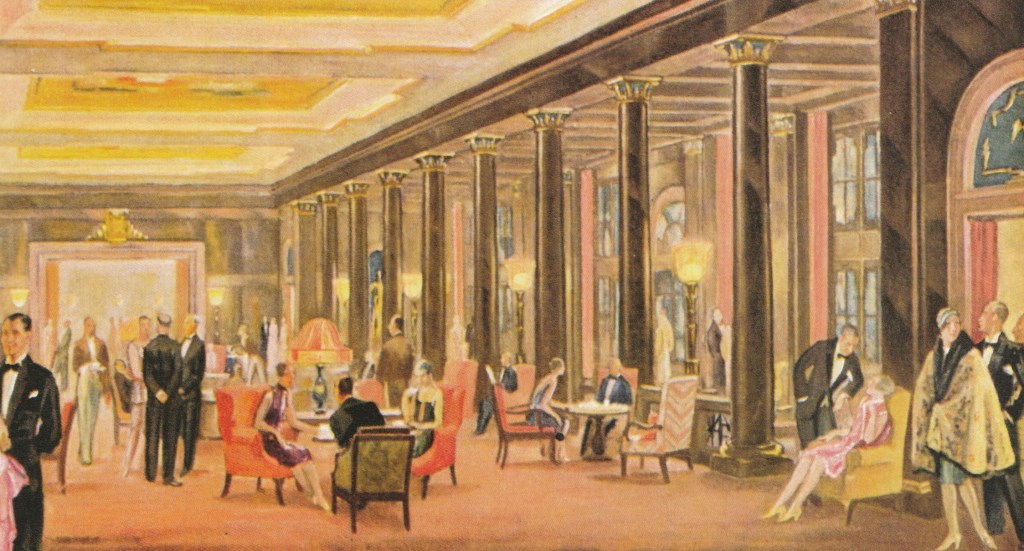
The contracts were signed in December 1926 and work was then on to complete the two giants within 28 months. Their names were to be Bremen and Europa and the former was entrusted to AG Weser, Bremen and the latter to Blohm & Voss. Hamburg. Europa’s keel was laid on the 18th June 1927, whilst her sister’s was on the 23rd July.
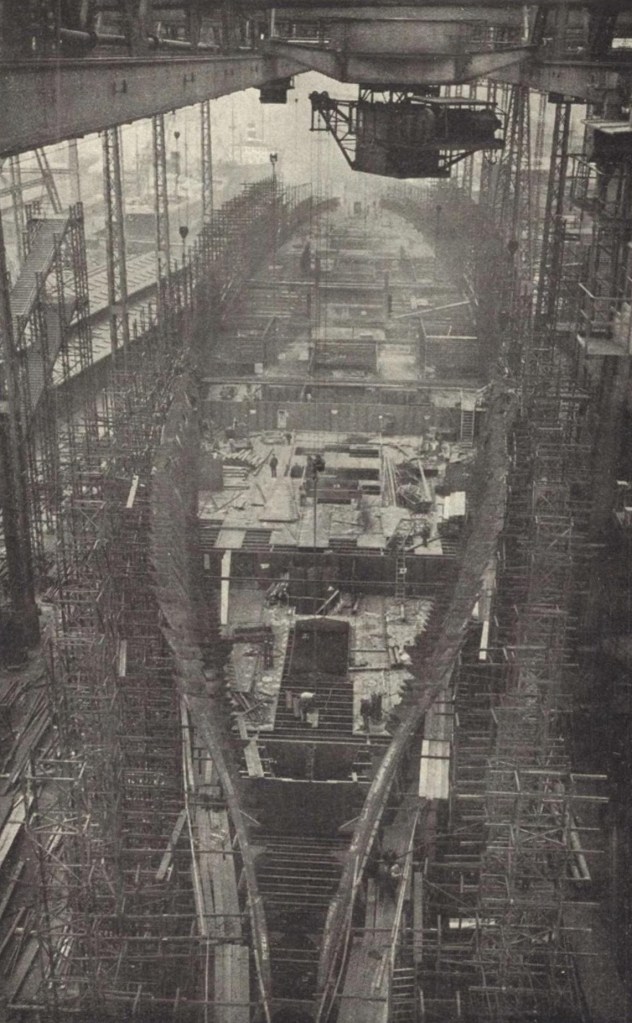
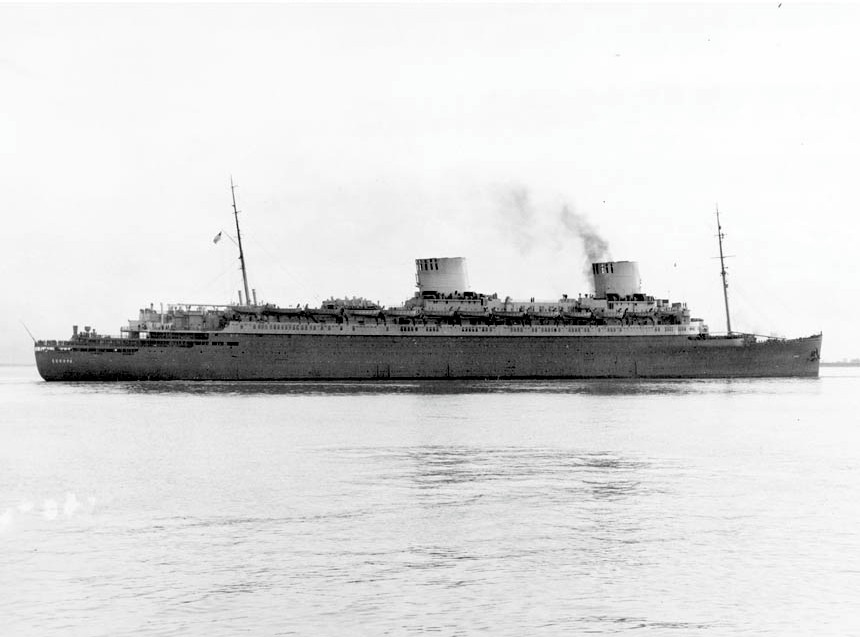
Massive technological and artistic advances were needed to make these two superliners the pride of the German Merchant Marine. To make them as fast as promised, they were given reliable reduction gearboxes to allow smaller turbines to work more efficiently, and the boilers could generate immense steam pressure. Their hulls would be long and sleek, with raked stems on an innovative bulbous bow.
The interior decoration of the superliners was also to be modern and futuristic. This led to the selecting of designers with an emphasis on flat geometric surfaces, with a minimum of ornamental decoration that had been so prevalent in the prior Teutonic phase of La Belle Epoque seen on previous liners. Passengers of any of the three classes would be given the freedom to pick their favorite colour schemes for their cabins, before embarking on their voyage.
The Launch:
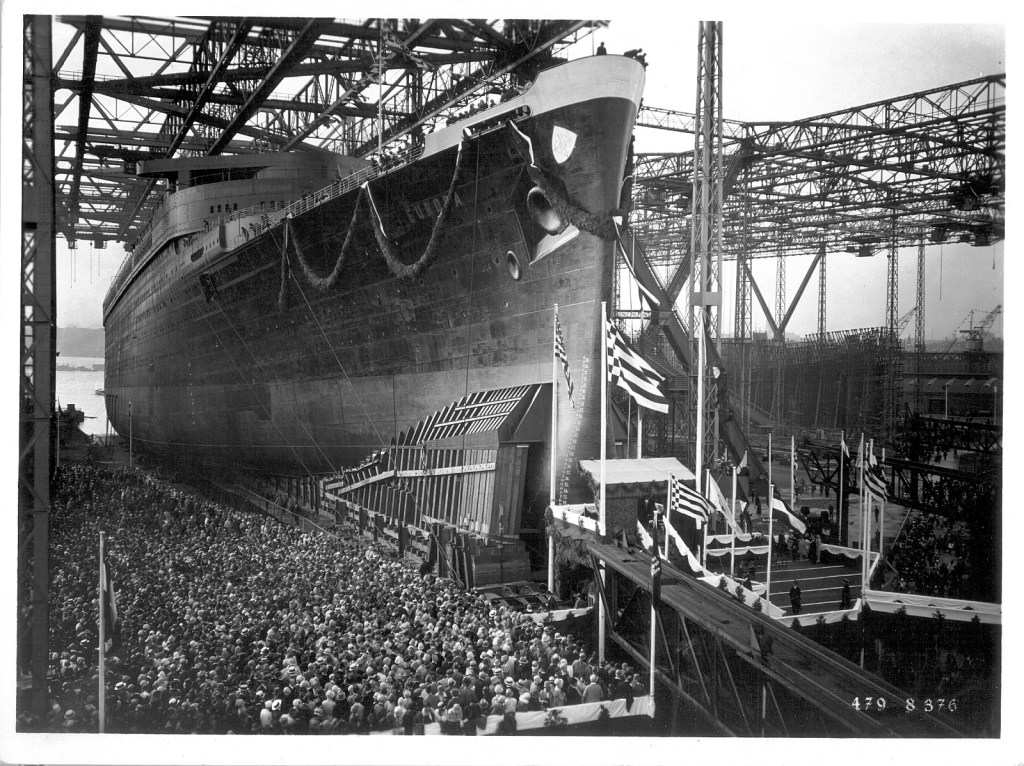
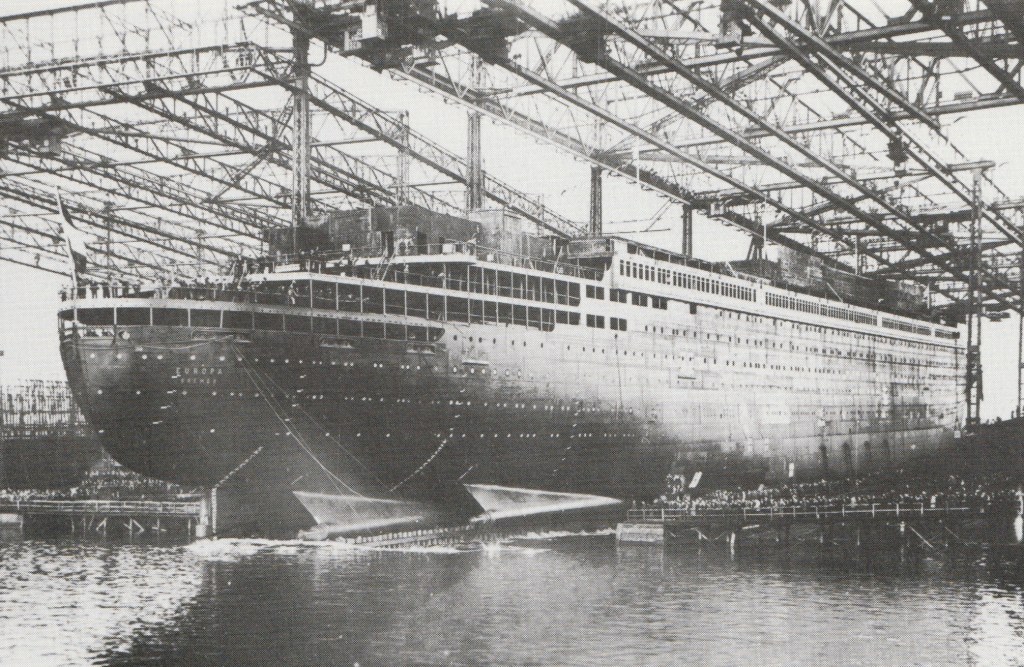
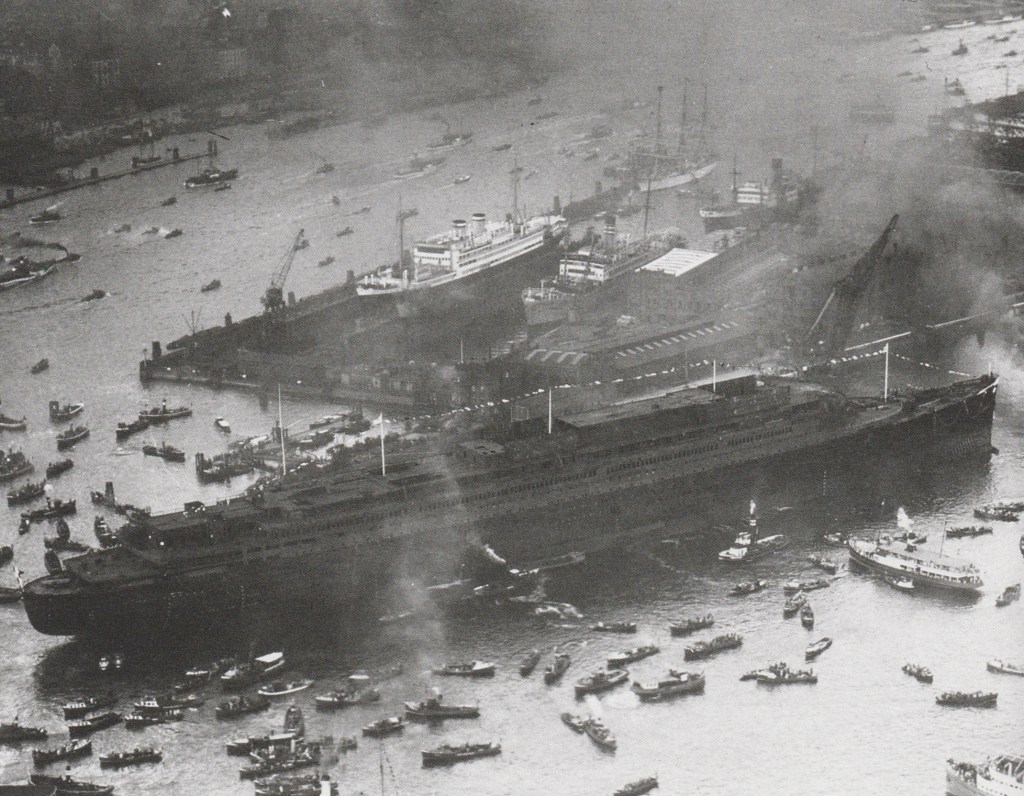
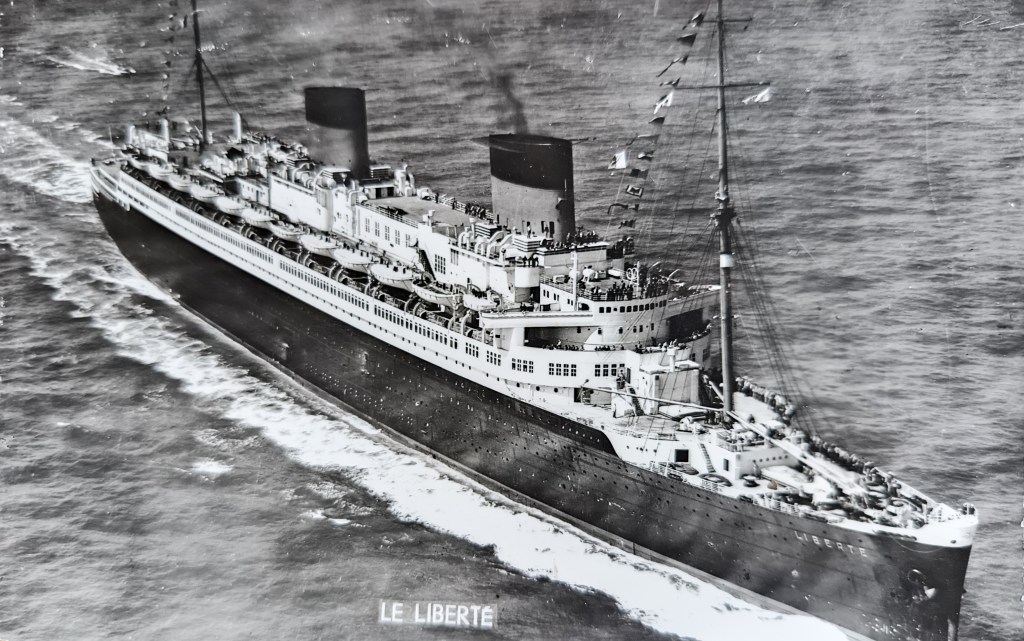
The two Lloyd flagships were launched back-to-back one day after another in August of 1928. This two-day city launching festival saw thousands of onlookers with hundreds of press all taking part in a cities-wide celebration. The Europa was pushed to be the first of the duo, and slid into the water on the 15th August. She was baptized by the United States Ambassador to Germany: Jacob Gould Schurman. The Bremen entered her element one day later on the 16th, baptized by none other than Paul Von Hindenburg -the President of Germany. Standing before the colossal prow prow of the 938-foot Europa, Schurmann would speak the following:
“I now give this ship the name, Europa, I add the reverent wish that good fortune may always attend her and that she may for years to come aid in uniting our two peoples more closely together in the bonds of mutually profitably commerce, good understanding and fellowship.”
With those words, the 46’000-ton hull began to pull away into the water. Ines Glässel, daughter of Director Ernst Glässel would break a bottle of champagne on the bow to cast Germany’s largest and greatest liner off.
The Phoenix
10’000 men steadily fitted out the two massive hulls at both shipyards. The goal was for twin record-breaking maiden voyages in April of 1929. This dream was soon crushed by a 50’000-man strong strike of shipyard workers for better pay and hours. The target was set back several months. The new dates were Europa departing for America on July 16th and returning on the 27th, whilst the Bremen would do so in August. However this year, the entire dream that was the Europa was very nearly lost forever.
Die Europa, Brennt!
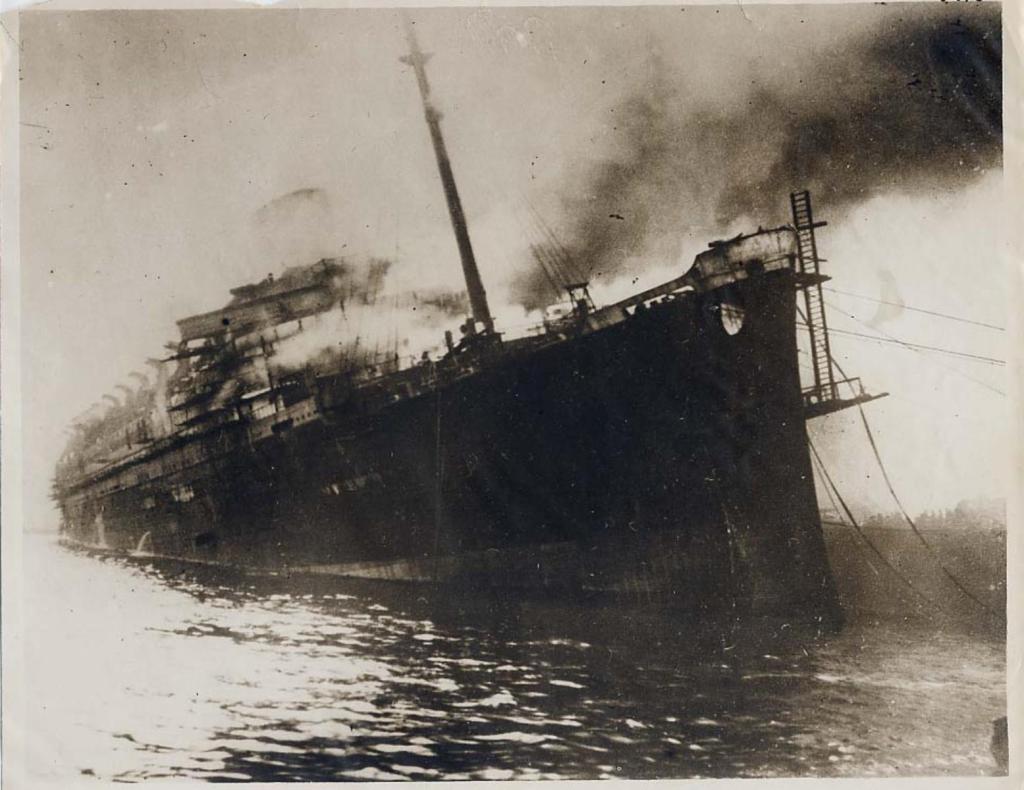
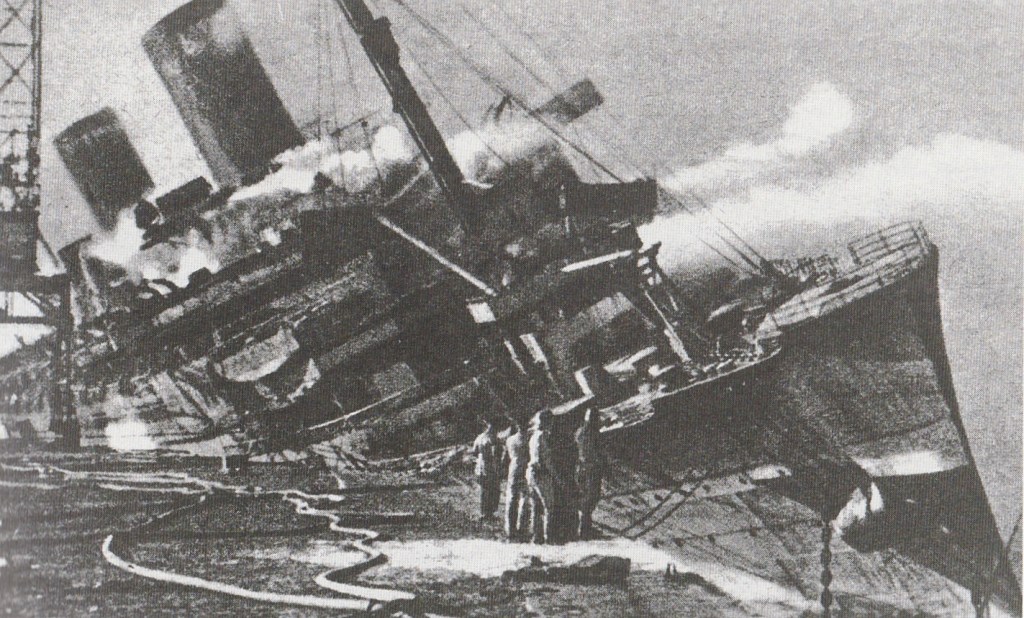
On the 26th March 1929, SS Europa caught fire only four months away from her maiden voyage. It started in the early morning quickly spread through debris, decorations and other material. Soon the entire fore and middle of the ship was fiercely ablaze. The city and port fire departments battled this onslaught for fifteen hours, surrounding the Europa with fireboats and blasting her upper decks relentlessly. The fire grew so hot, the steel began to melt and those fighting aboard were forced to jump ship. The fireboats retreated as well as the Europa took on a dangerous lean and threatened to capsize. Fortunately enough water flooded her lower levels and she settled herself half-submerged on the bottom of the harbor.
According to the New York Times, there had been no sadder day in Hamburg since the world’s largest and greatest liner: the SS Bismarck was sailed off to her new British masters in the wake of the war. Both men and women wept as the flames shot out of the hundreds of portholes, the deck beams and plates warped and shriveled, and a colossal cloud of steam and smoke swept over Blohm & Voss.
From the Ashes:
(Author’s Collection)
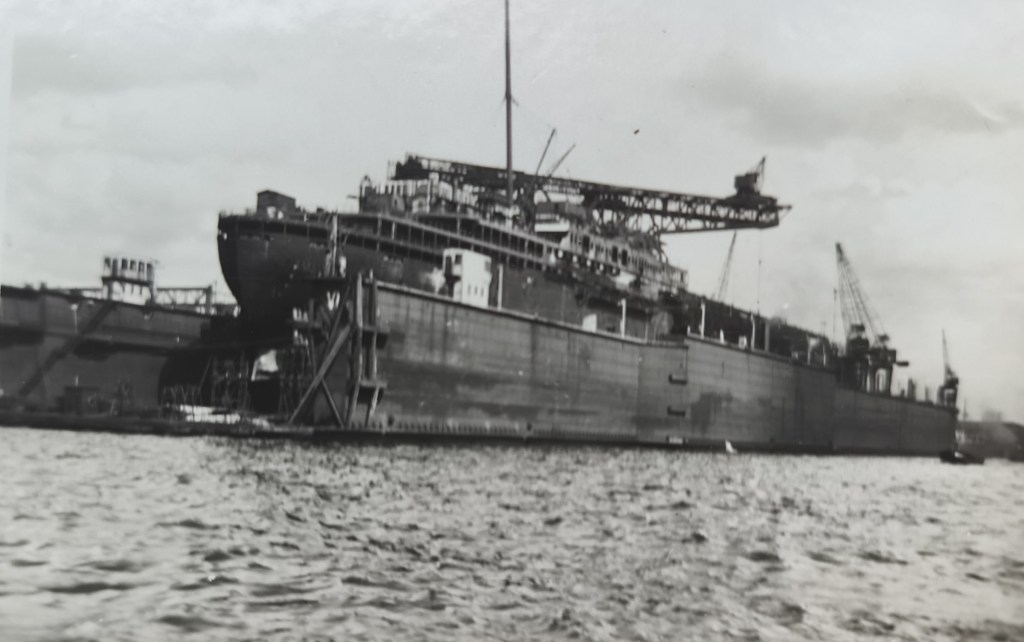
Upon looking at the charred sunken hulk, it seemed her only destination was to dismantled for scrap where she laid. This wasn’t the case. Initially the damages were estimated at $3 million, but that night after putting out the fire, inspections by engineers determined it wasn’t as bad as foreseen. Four decks had been torn through, but because of her fast-responding watertight bulkheads, the boilers and turbines were left untouched and in working order. The hull was still as rigid as ever too. The decision was then made to save the Europa.
It took a herculean effort to plug the holes raise the massive ship into a floating dry dock without any foreign aid. This was completed by the 14th April. 7100 tons of steel was scrapped and stripped off the ship, including her funnels and much of her superstructure. The ship’s dining saloon, and the framework for her cabins had been destroyed. This didn’t seem to matter to anyone working on the ship. They did so, with immense pride and now focused themselves on the new goal of setting the Europa into service a year from now in the 1930 season.
The Two Speed Queens of the Seas
Hail, Bremen!
Hail, Bremen!
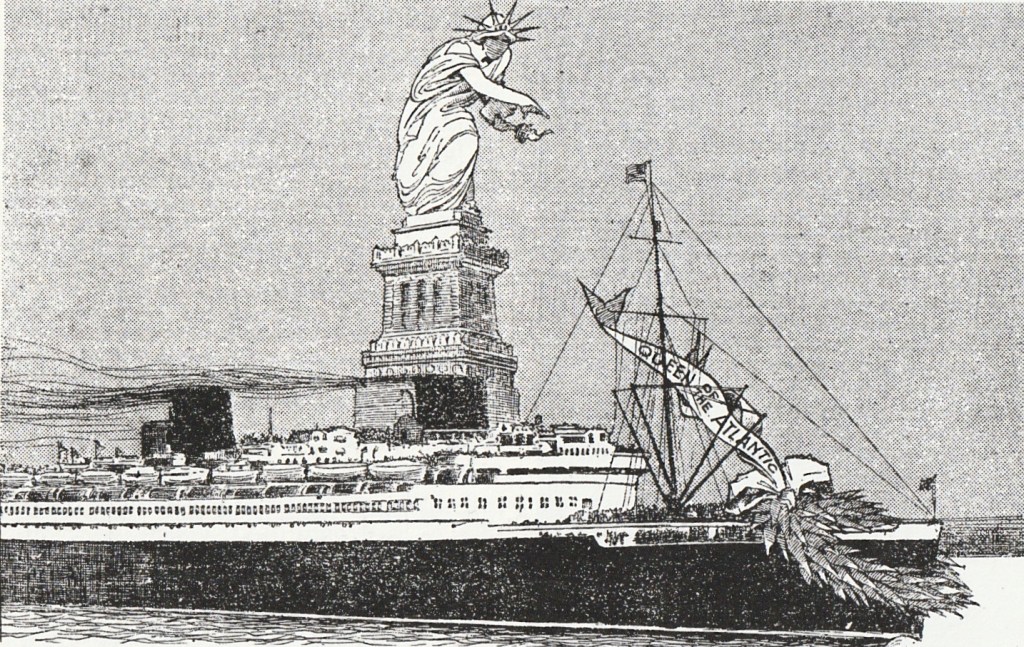
The Bremen all the way over in her namesake city was finished earlier than expected without any mishaps. She was handed over to the Lloyd from her builders on the 24th June. She set off on her maiden voyage on July 16th 1929 which had been Europa’s planned date and achieved a fantastic average crossing speed of 27.83 knots with a jaw-dropping highest total of 29.6 knots. This was a drastic jump from Mauretania’s 26.06 knots set back in 1909 and a full nine hours faster. Her reception in New York was enormous: thousands of people from hundreds of cars crowded the shores with binoculars to spot the big Lloyd liner.
Near loss again:
On the 15th July, one day before the Bremen left for her maiden voyage, the Europa was relaunched, – a brand new ship again from her floating dry dock. She then was almost destroyed again. The liner had just reached open water, when an explosion was heard in the back partition of the giant floating dry dock, and it then tipped over and sank into the river. Had the Europa not already left, she would have been sunk a second time -potentially forever.
The Europa proves herself
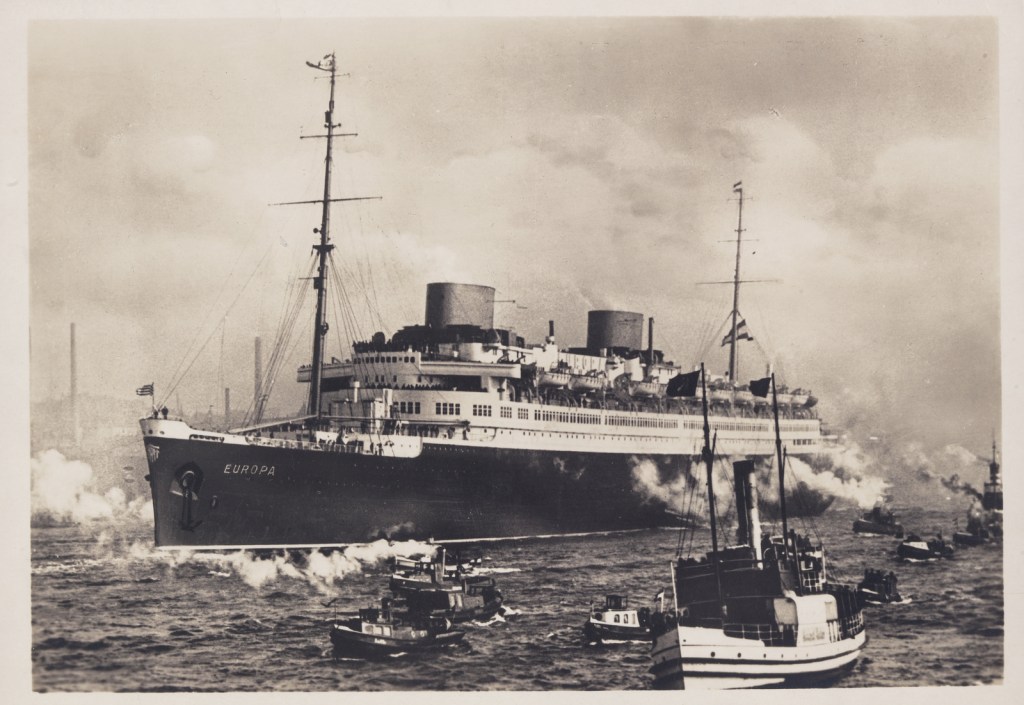
During her sea trials from the 25th-28th February 1930, the Europa proved herself on par with the Bremen and achieved an average speed of 27.67 knots, as well as a highest recorded speed of 28.91 knots. She sailed partly through a snowstorm alongside heavy gales and seas off the Scottish and Norwegian coasts before returning back to Bremerhaven. On March 18th the Lloyd officially accepted the Europa into their fleet from her builders. Before setting out for her maiden voyage, President Hindenburg personally telegraphed the Lloyd and wished them the following:
“May she bring honor to German ship construction and German seamanship and gloriously serve the Fatherland at sea.”
The Europa departed Bremerhaven for Southampton on the 19th March and was there in just 17 hours, -one earlier than her allotted time. She wasn’t planning on a maiden voyage record as the weather was much more unforgivable than the Bremen’s first trip. She departed Southampton at 11:45am and was already at Cherbourg, France by 4pm. On the way out of England, she actually passed the Bremen and there was much cheers from aboard both ships. In Cherbourg many airplanes circled over the liner and the Europa even shared the scene with ex-German liner: RMS Majestic who was the world’s largest ship. At 5:20pm Europa left Cherbourg to cross the pond to her final destination.
Hail, Europa!
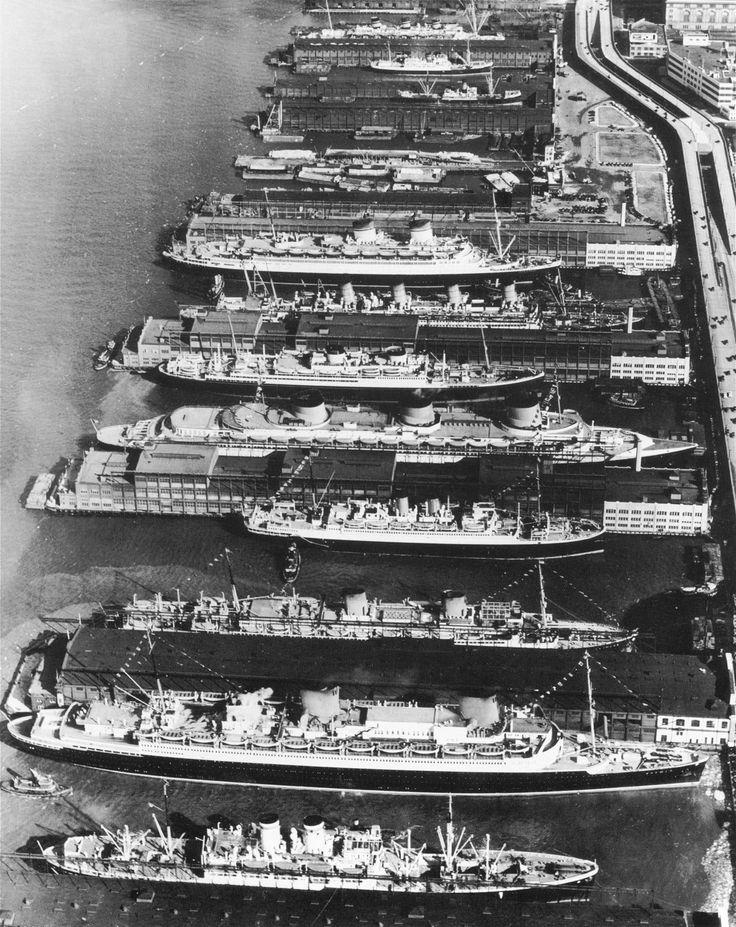
Europa landed in New York on the 25th March 1930 for the first time. Her crossing time had been 4 days, 17 hours and 16 minutes. During her very last last stretch up to New York, fog had threatened to slow her but the Europa powered through. When everything had cleared and the Europa had stopped at Ambrose Lightship, the whistles were blasted triumphantly. Festivities erupted onboard as well as all over the harbour as Europa had dethroned the Bremen’s crossing time by just 18 minutes. With her speed of 27.91 knots, a superintendent of the Lloyd stated:
“It’s a good thing for those few extra minutes which make the record. Otherwise the Europa would just have been another boat”
A Speed War between Nations:
The Europa would hold the westbound speed record from Europe to America for three years. The liner even bettered her own record in July of 1933 by exactly 0.01 of a knot. She would never take the eastbound one in the opposite direction from the Bremen. As the Lloyd had predicted, by challenging foreign supremacy over the seas and taking the coveted Blue Riband, this triggered other competing lines and countries to outdo them. During these times the greateest passenger liners often were the defacto ships of state for their countries, and carried immense national prestige. A liner that truly embodied this, and the first to beat Germany’s high-speed twins was the SS Rex of Italy.
Just two months after Europa’s steller improvement of her own record, the Rex would sail in August of 1933 and beat her by exactly one full knot. The Italians weren’t the only ones to crash the party as France released their own superliner and ship of state in 1935: SS Normandie and dethroned the Rex. Then the British would jump into the fray with their superliner RMS Queen Mary who would rob Normandie of the title in 1936. And so, the Normandie and the Queen Mary would trade the speed title, voyage after voyage until the outbreak of the Second World War.

Darker Times
(Author’s Collection)
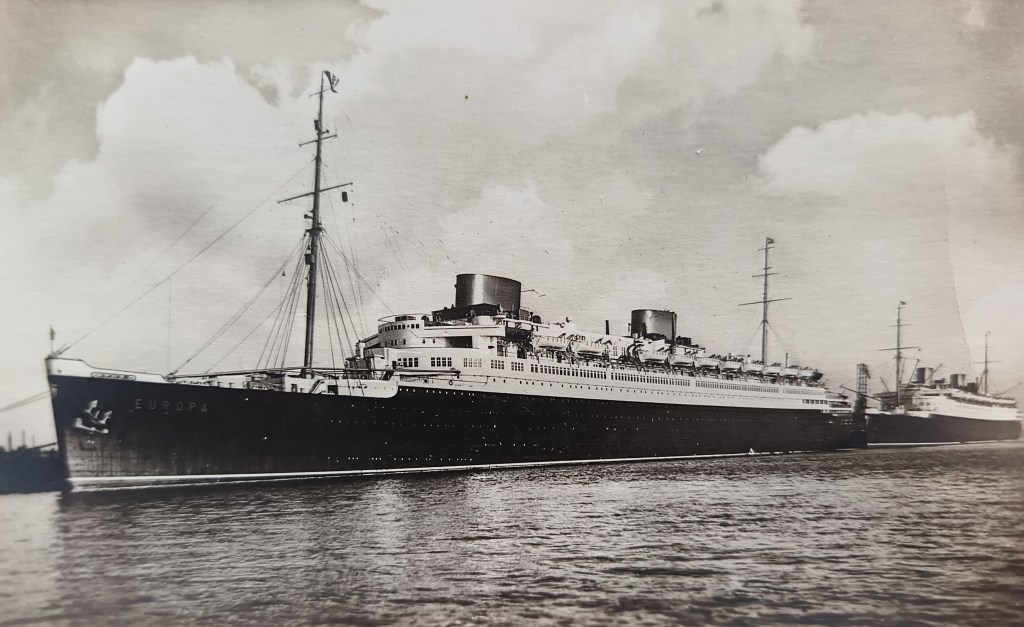
The two superliners would enjoy immense success and prestige abroad during the 30’s, and especially back home. Their image appeared everywhere and thousands would gather in anticipation in Bremerhaven when either arrived or left. Even back in January of 1929 before the liners were even completed, Hapag unsuccessfully tried to negotiate with Lloyd and purchase both but were turned down. As the years passed on however, profitability would sharply drop with non-Germans due to the ever increasing resentment towards the growing Nazi presence. The Bremen and Europa were built during the heart of the Weimar Republic -and represented the massive post-war reconstruction and bettering times. However the machine that was Nazi Germany was steadily growing and so would anti-German sentiment.
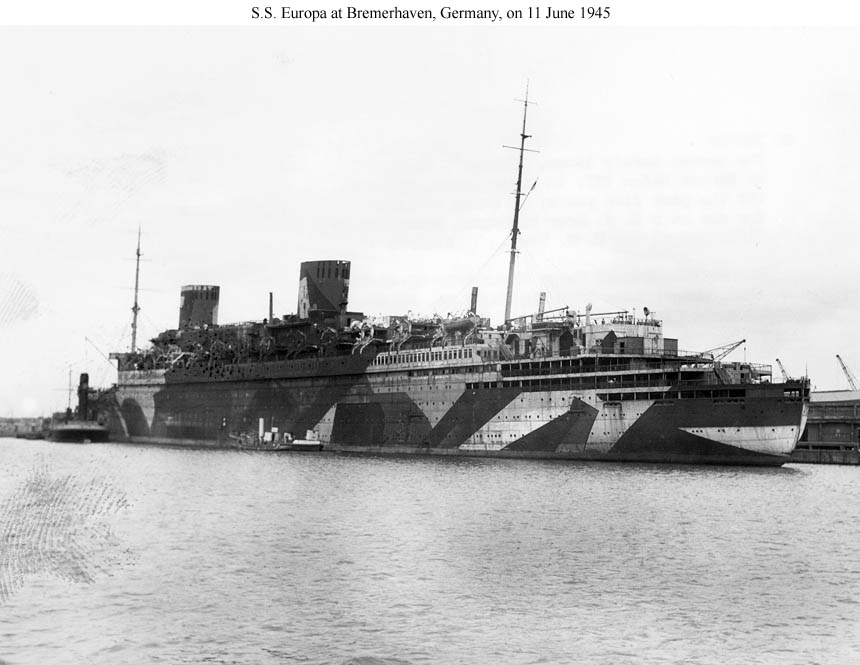
When war broke out in September 1939, both ships were on separate continents. The Bremen had a dashing escape back to Germany, whilst the Europa had been laid up in Wesermünde awaiting her 181st crossing. That was unsurprisingly canceled. In October 1939, the Kriegsmarine took over the Europa for use as an accommodation ship. They did the same with the Bremen on the 18th June the following year. Once it became evident the war was not a swift victory, both ships were then considered to be refitted into high-speed troop transports as part of Operation Sea Lion – the mainland invasion of Britain. The ships were taken to Hamburg against the Lloyd’s advice for this purpose, and they were painted in military dazzle colours and had huge holes cut into their bridge fronts to allow heavy military vehicles to be fitted in. After Operation Sea Lion failed, the ships were returned to their accommodations use.
Die Bremen, Brennt!
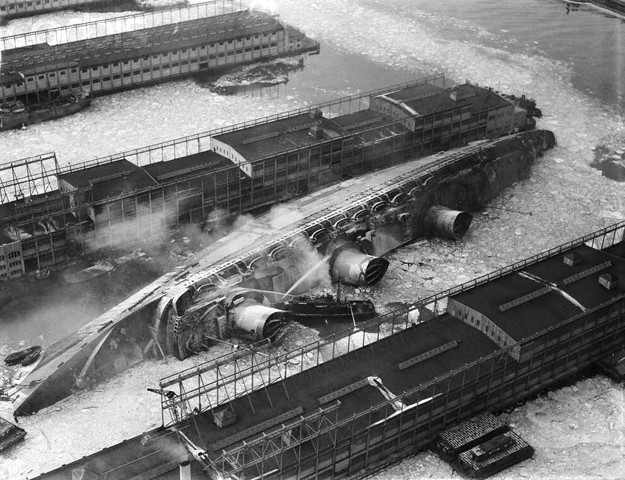
During the afternoon of March 16th 1941, the Bremen caught fire. It spread quickly from the onboard shooting gallery and the meager attempts by crew members did nothing to stop the advance. 25 of them were trapped on the stern and had to escape the flames by ladder. The combined fire brigades of Wesermünde, Hamburg and Hannover all attempted to stop the flames, but they couldn’t enter the ship due to the heat. Simultaneously, the anti-aircraft ammunition was ignited by the flames and started exploding. The fire was finally put out on the 18th March, but this phoenix would not be reborn.
The Bremen was a complete write-off and was purchased by the Kriegsmarine and towed back to Bremerhaven. Anything of use was scrapped off and repurposed, whilst the remaining hull plates and keel of the ship were towed to the river Weser and dumped where they still lie to this day.
There was not a shred of evidence to link the crime to any one person, but a 17-year old cabin boy named Gustav Schmidt amazingly confessed to the arson. Despite brutally efficient interrogation methods, he could not be linked to any rebel group -German or foreign, and no organization ever boasted of having burned down the Bremen. Schmidt was executed and the case is still in the air to this day.
As for the lone Europa, plans stalled on what to do with the last giant. In May 1942 plans arose for Blohm & Voss to convert her into a full warship, with all her upper decks ripped off to become an aircraft carrier. This was abandoned due to increasing stability and structural issues. Another plan also arose to make her a troop and tank transport but that went nowhere too. She was used in February 1945 for accommodations again by German refugees and dockyard workers who even during this hellish point of human history, were still comfortable aboard.
Seizure:
By May of 1945, North Germany was beginning to surrender and 3000 soldiers were quartered on the Europa. On May 7th, a British group occupied the ship with zero hostilities at all. The 149 original crew members on board were permitted to stay whilst the soldiers had to leave. They continued to stay when a larger American group arrived two days later and raised the American flag above the Europa. Despite British claims, by some miracle during her last 6 years of inactivity the Europa had never sustained any damage from the heavy Allied bombing. By another miracle again, retreating Nazi orders to destroy her had also been ignored. She still had some years left in her, and the liner was officially requisitioned into the United States Navy as AP 177 USS Europa on the 25th August. She finally departed Germany on September 11th bound for New York with 4’800 soldiers and landed there 13 days later.
She would continually serve the United States bringing soldiers back home from the battlefields of the Second World War until she was decommissioned on May 2nd 1926. Reasons for this included fires frequently breaking out at sea, as well as serious hull cracks forming. After being decomissioned, the Americans definitively rejected the ship for their own use due to her condition, and expected the British to take her isntead. However just a month later on the 8th June, this wrecked and tired ship was awarded to France by the Reparations Commission.
France’s Liberté
(Author’s Collection)
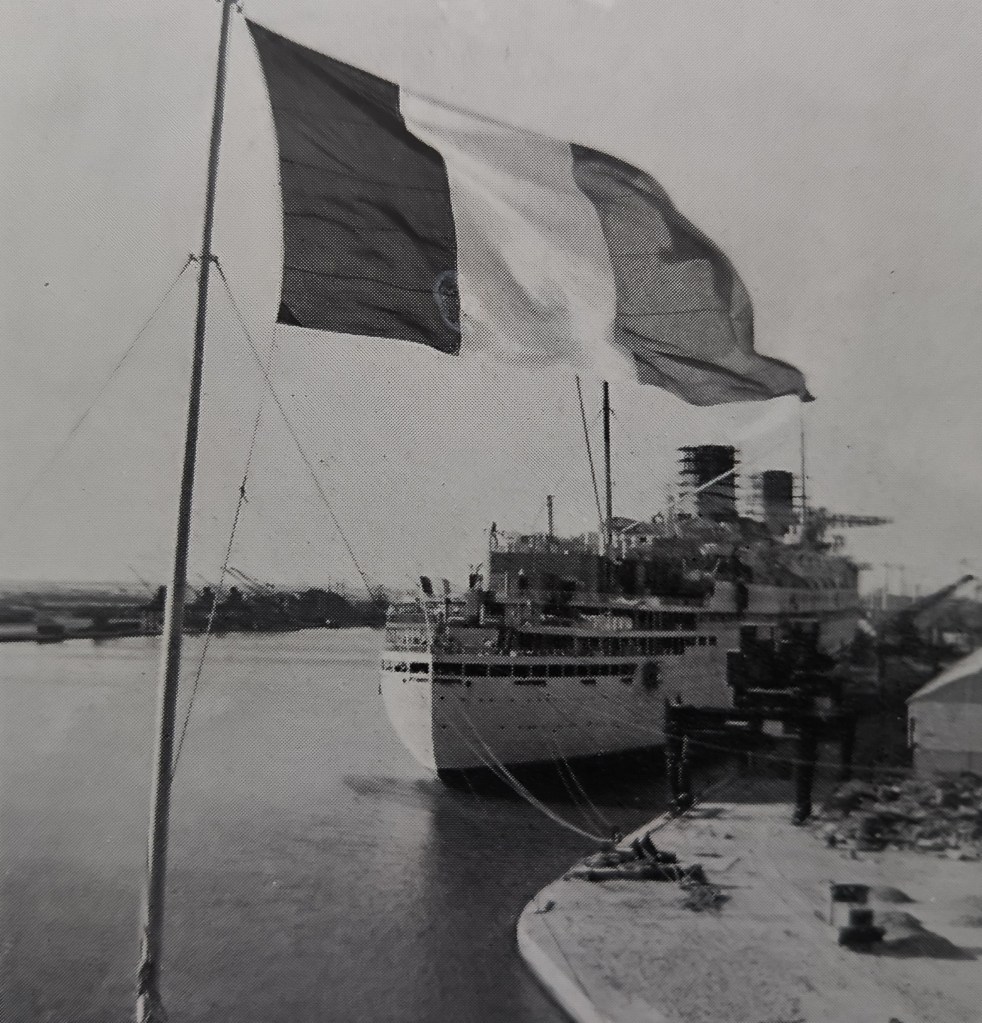
France was given the Europa specifically to make up for the United States disastrously destroying the national flagship of France: SS Normandie back in 1942 during a botched conversion into a troopship. On June 8th 1946, the Europa was officially taken over by Compagnie Générale Transatlantique (French Line) from the French government. The latter remained the owner of the vessel, but the former was tasked with bringing the tired giant back up to speed. It was decided to name the old liner Liberté, as a symbol of France’s liberation following the war. La Lorraine had also been considered but Liberté won out. The ship was in very poor condition after her war service and reports showed many structural issues, a faulty electrical system, poor dividing of the compartments, and inadequate crew accommodations which all needed to be strictly addressed. It had initially cost the Lloyd $20 million to build her two decades earlier, and the total bill for reconstruction was now a staggering $19.5 million again.
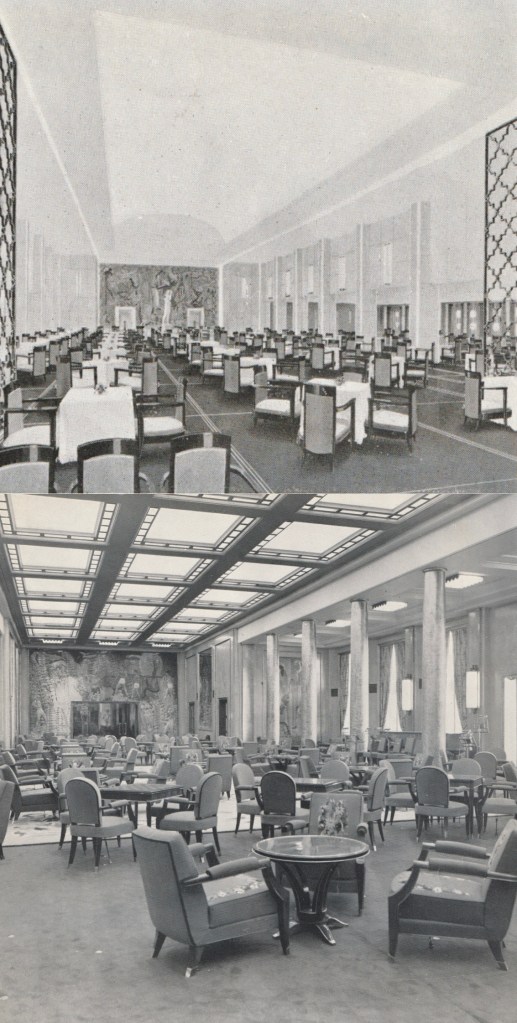
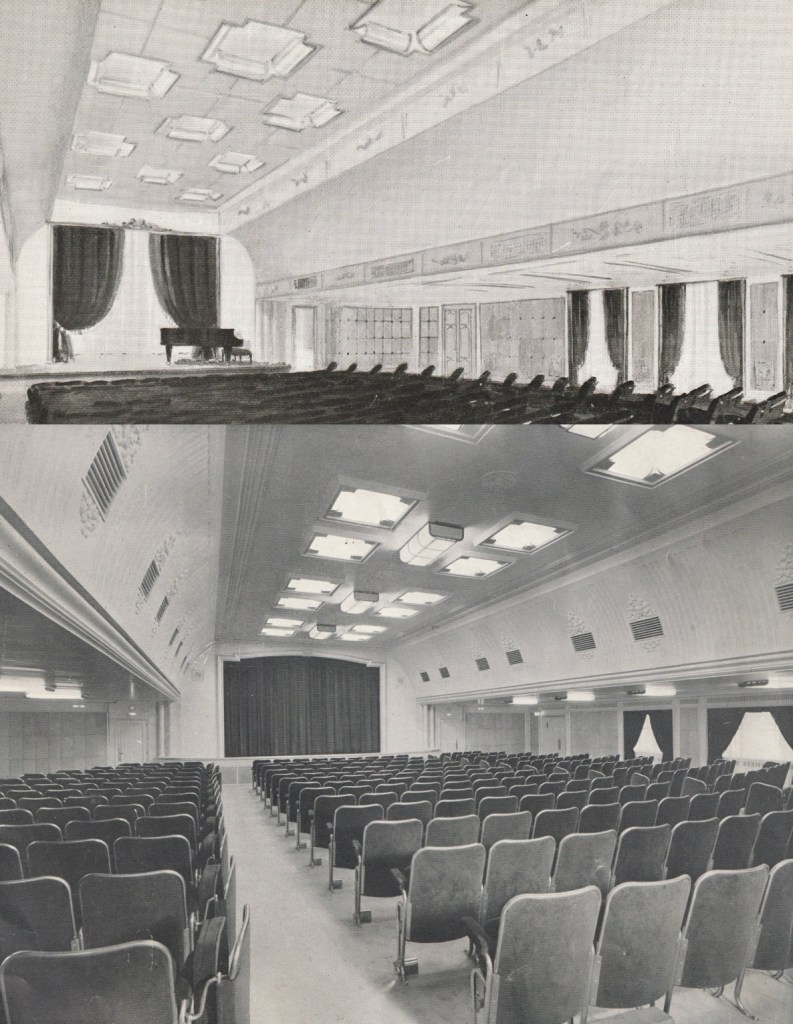
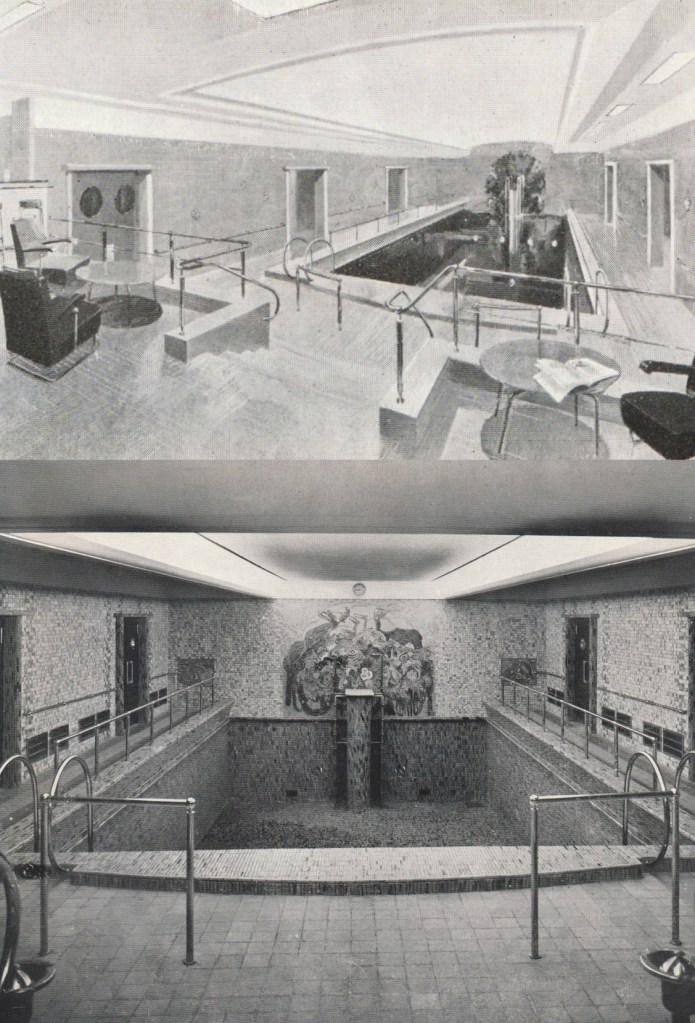
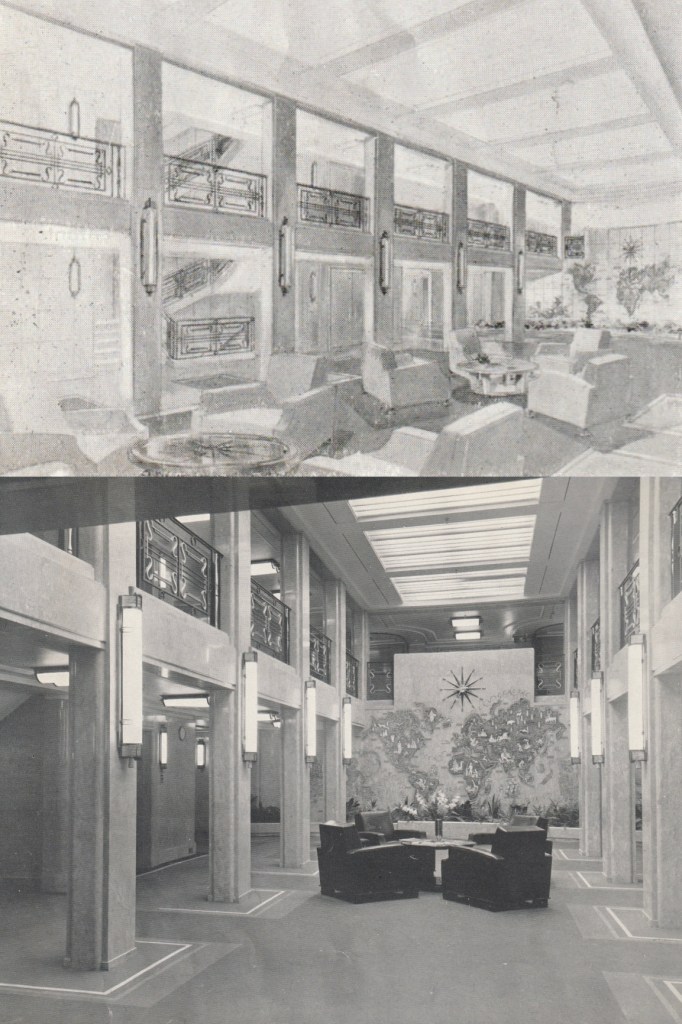
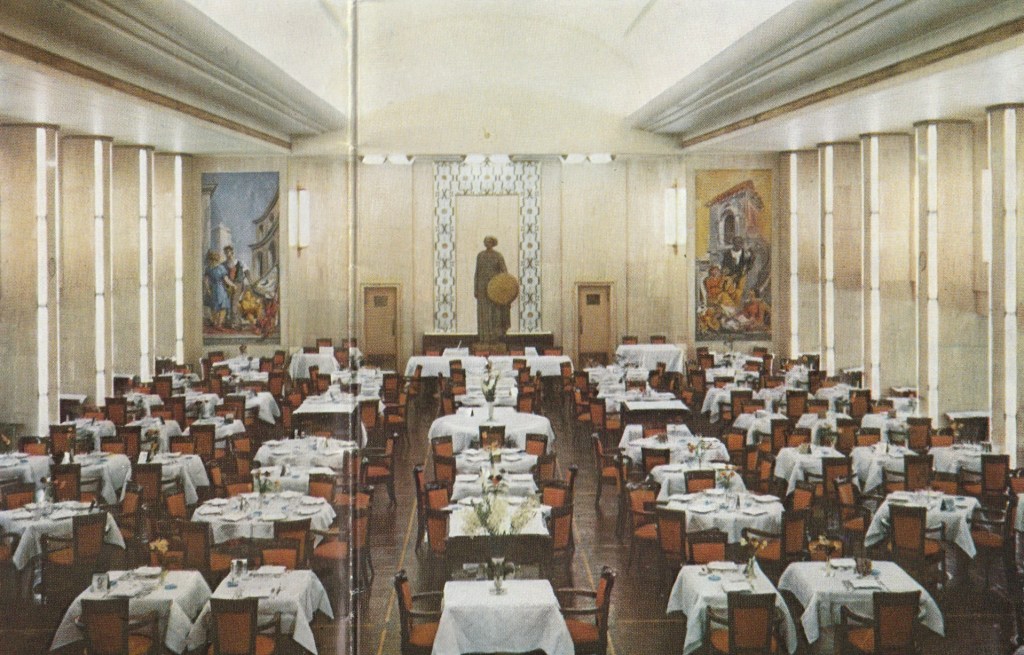
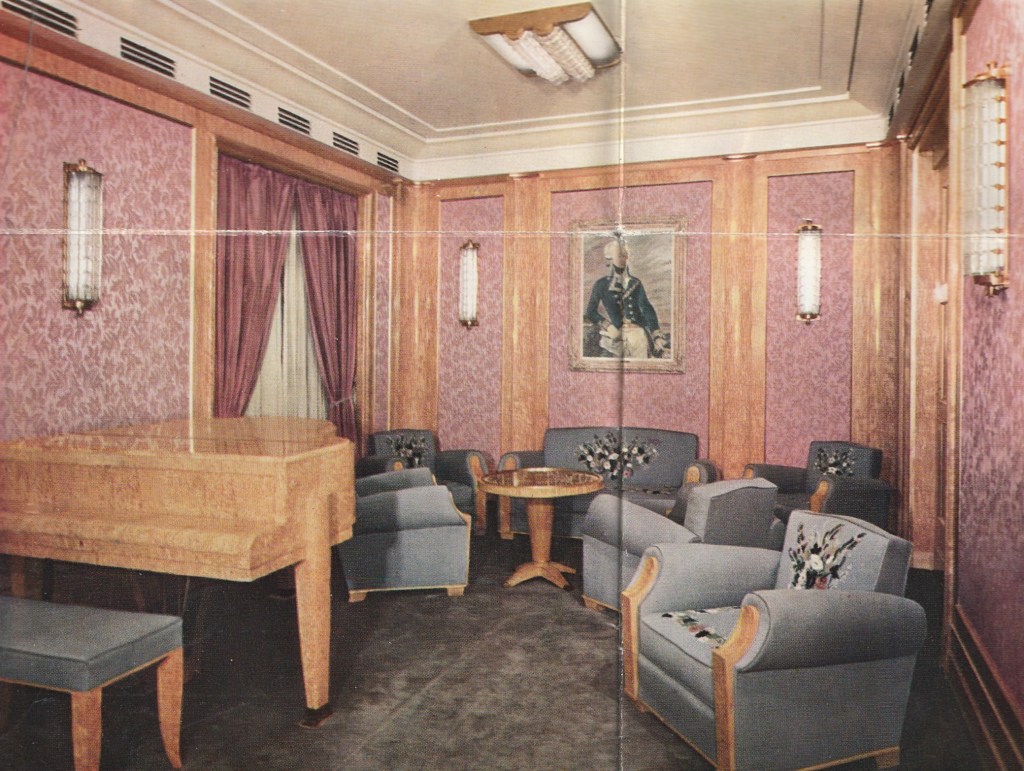
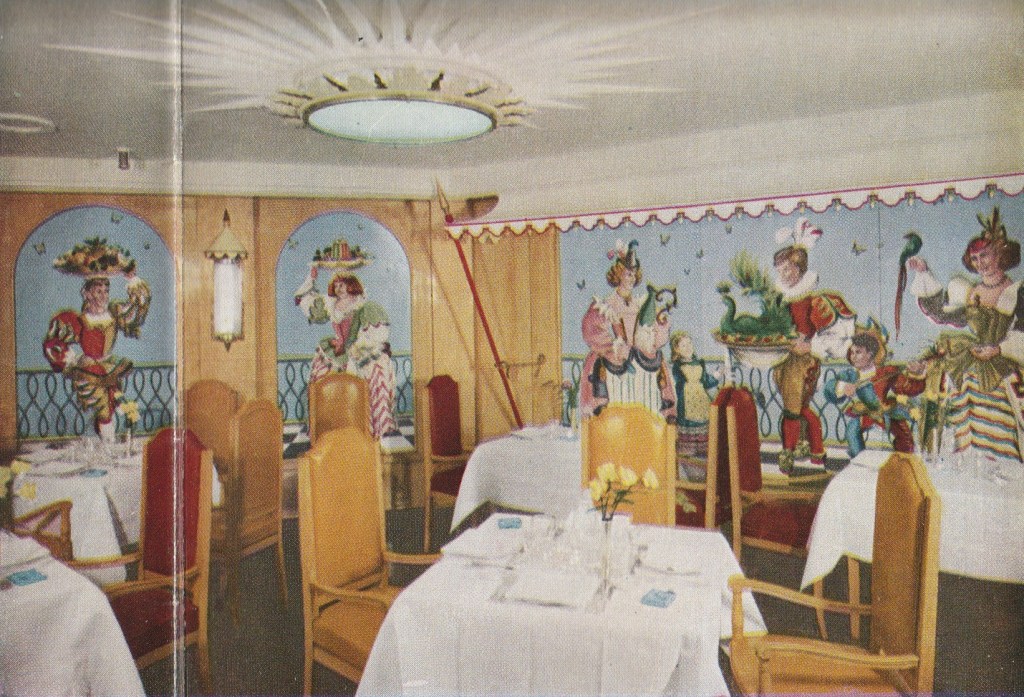
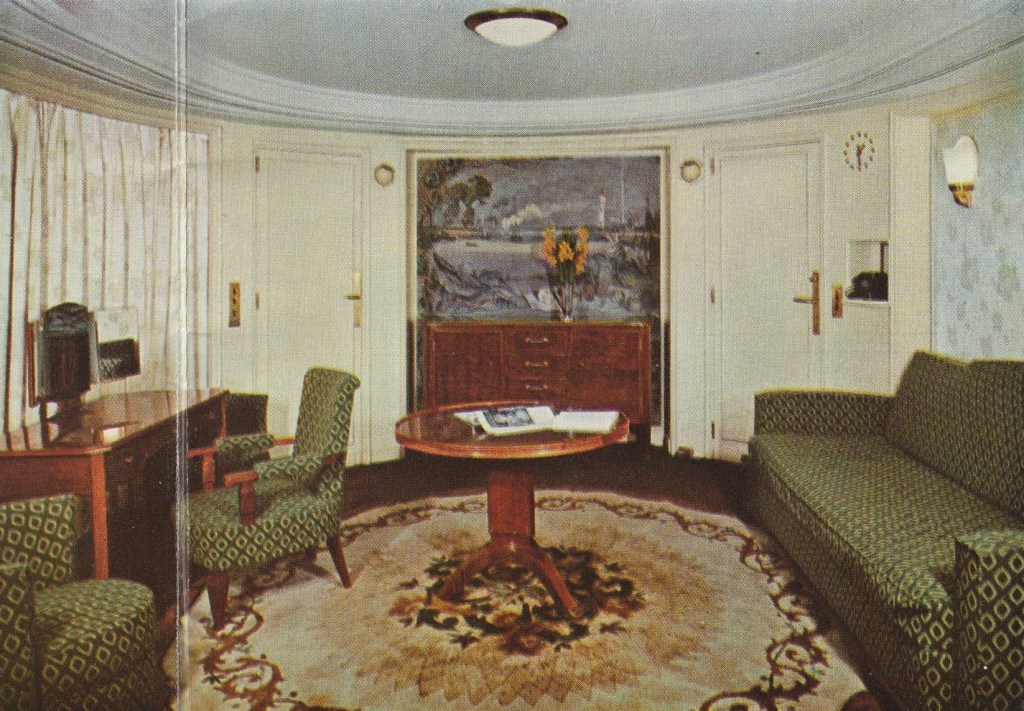
As soon as the French acquired the liner, they were determined that what remained of the interior be completely renewed according to French tastes and design to become a suitable flagship. Spearheaded by M. Domin, countless of the most talented French architects, artists and designers each worked on different rooms to bring the Liberté back to life. The Liberté was taken to Cherbourg in June 1946 to begin her reconstruction. She would then be transferred to the port of Le Havre in for further work.
The Restless Liberté :
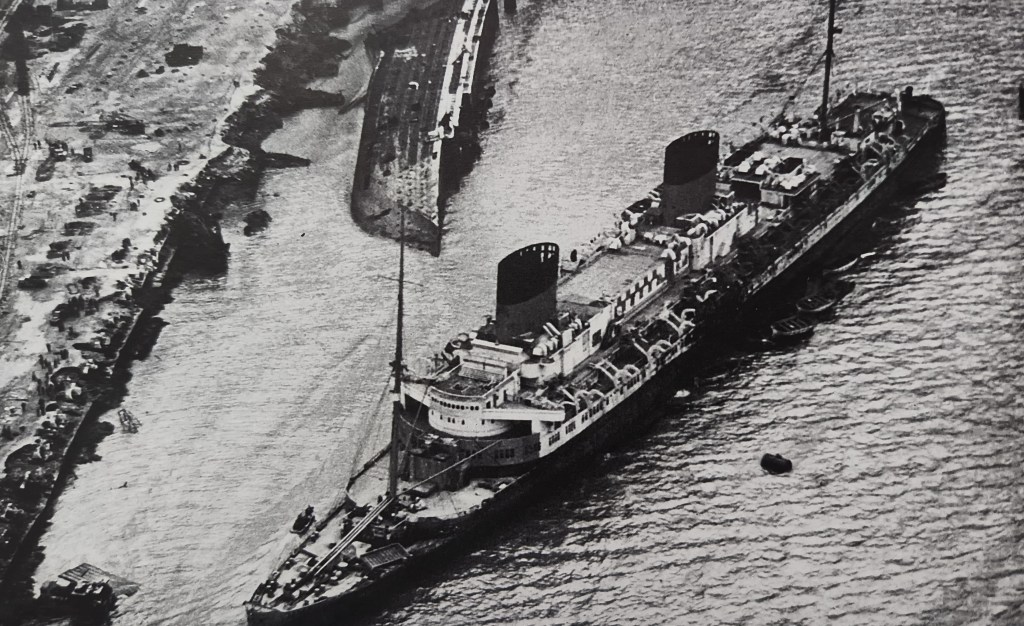
At 21:15 on December 9th 1946 during “the worst storm Le Havre had ever seen”, the Liberté broke free from her steel moorings and drifted across the harbor. She then slammed into the capsized wreck of the burnt-out SS Paris which was still not removed after being destroyed prior to the war. The Paris enviously punched a massive hole into her successor and the Liberté sank into the mud of the harbour. She then heavily tilted 37 degrees and threatened to capsize for one final time. A swarm of tugboats sailed up to the ship, and pulled at her until she finally rested at a safe 9 degrees. She was patched up underwater by divers and refloated at considerable time and money spent.
The Liberté would resume her old ways in October of 1949 by catching fire again before she was due to be completed. An acetylene tank used by the workers exploded and then set fire to the liner. It raged for four hours and destroyed at least 20 cabins, pushing back the completion date by weeks. Like many German fire brigades before them, the French fire brigade had to expend every resource they had to bring the big ship back under control. By August 1950, the liner was finally ready to start service after four long years of work.
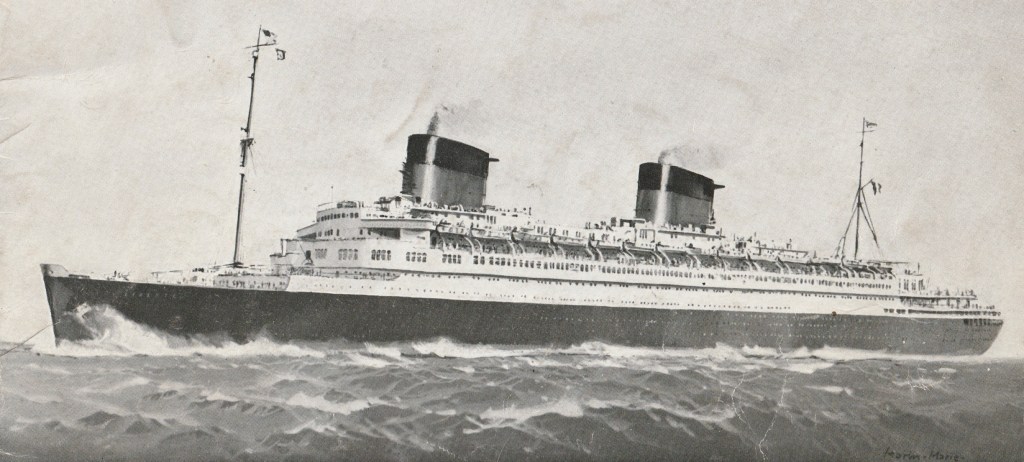
“It would be unfair not to acknowledge the debt the Liberté owes to its origins. Before the war, this ship served with honour for ten years, providing a service of impeccable regularity. May the Liberté remain true to the traditions of her first life as she now returns to the Atlantic under a garment of French technology and French taste, as a living demonstration of the skill of two great European nations.”
-Jean Marine, President of the Compagnie Générale Transatlantique
From Concept Drawings to Reality:
(Author’s Collection)
(Author’s Collection)
(Author’s Collection)
(Author’s Colelction)
A Tour Through The Finalized Liberté:
(Author’s Collection)
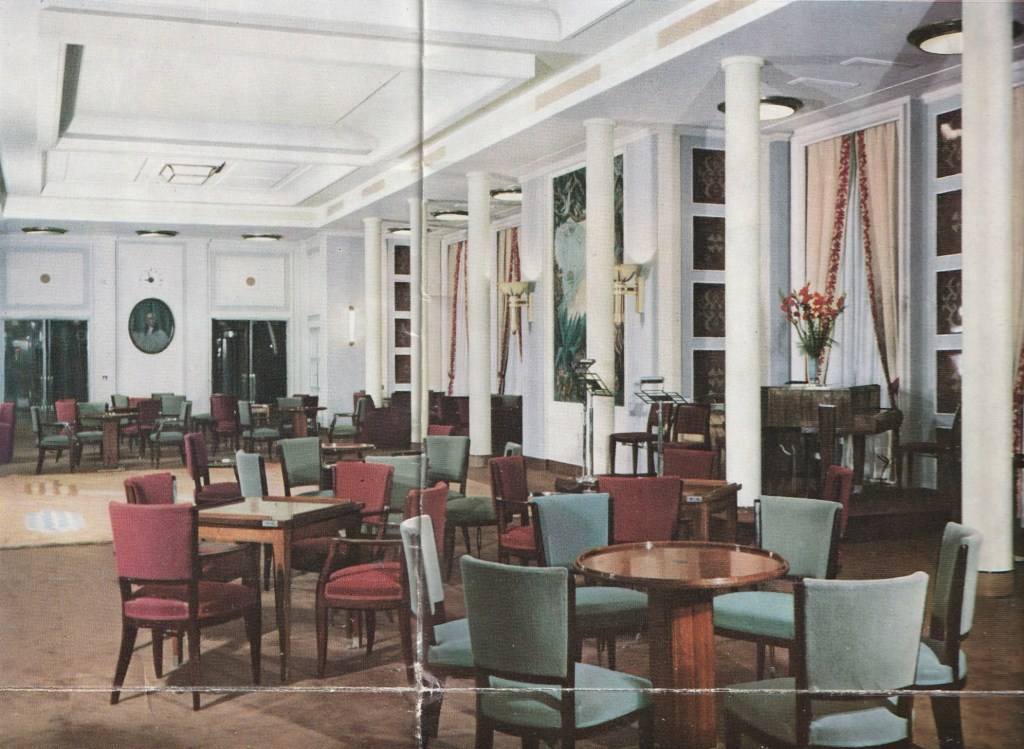
(Author’s Collection)
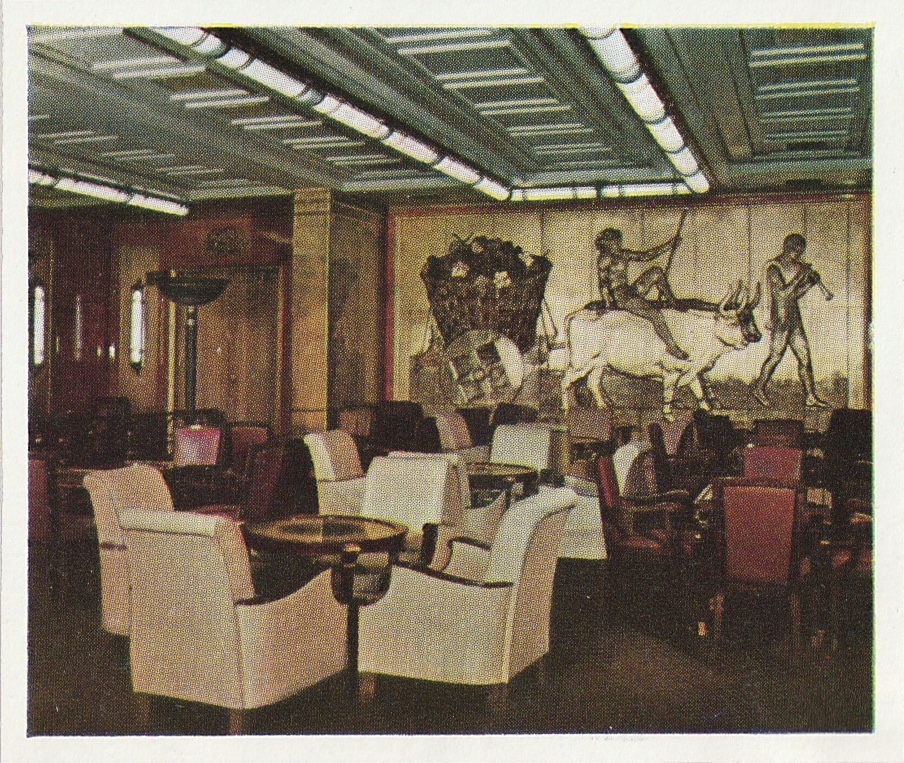
(Author’s Collection)
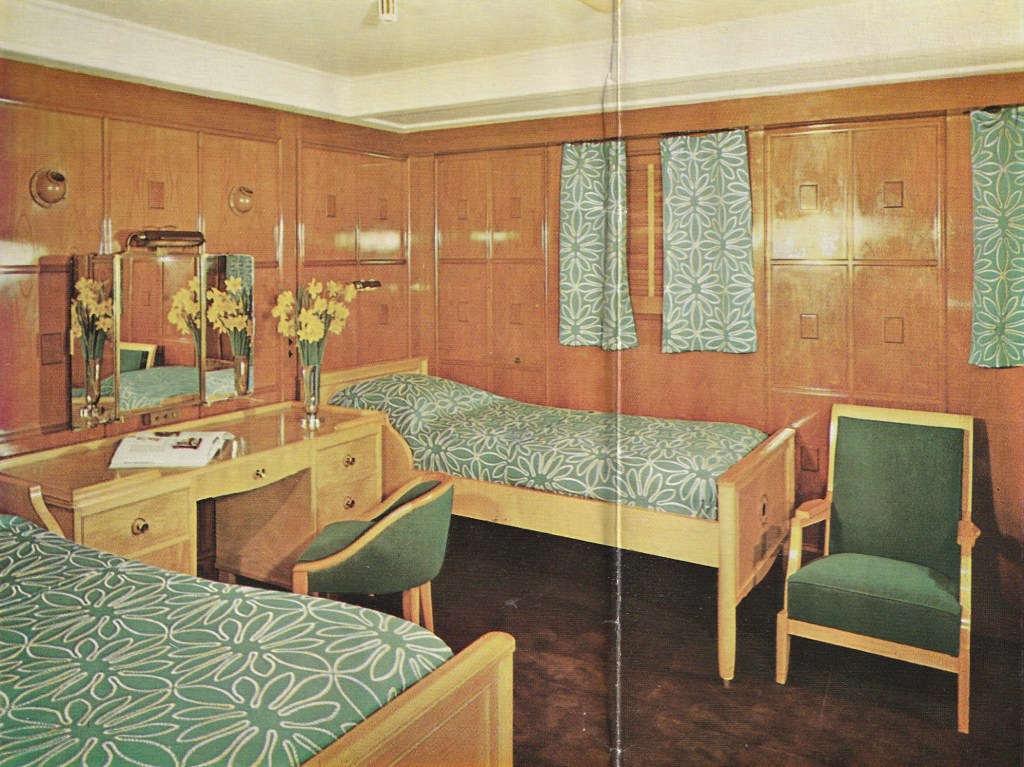
(Author’s Collection)
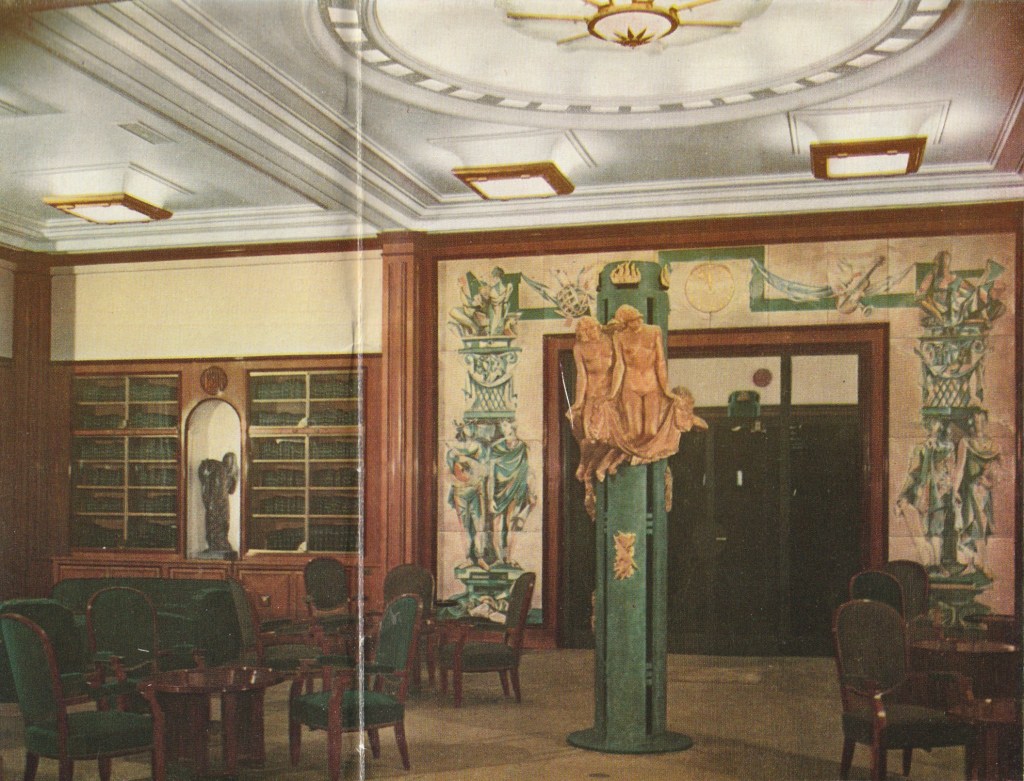
(Author’s Collection)
(Author’s Collection)
(Author’s Collection)
A Shocking Second Career:
(Author’s Collection)
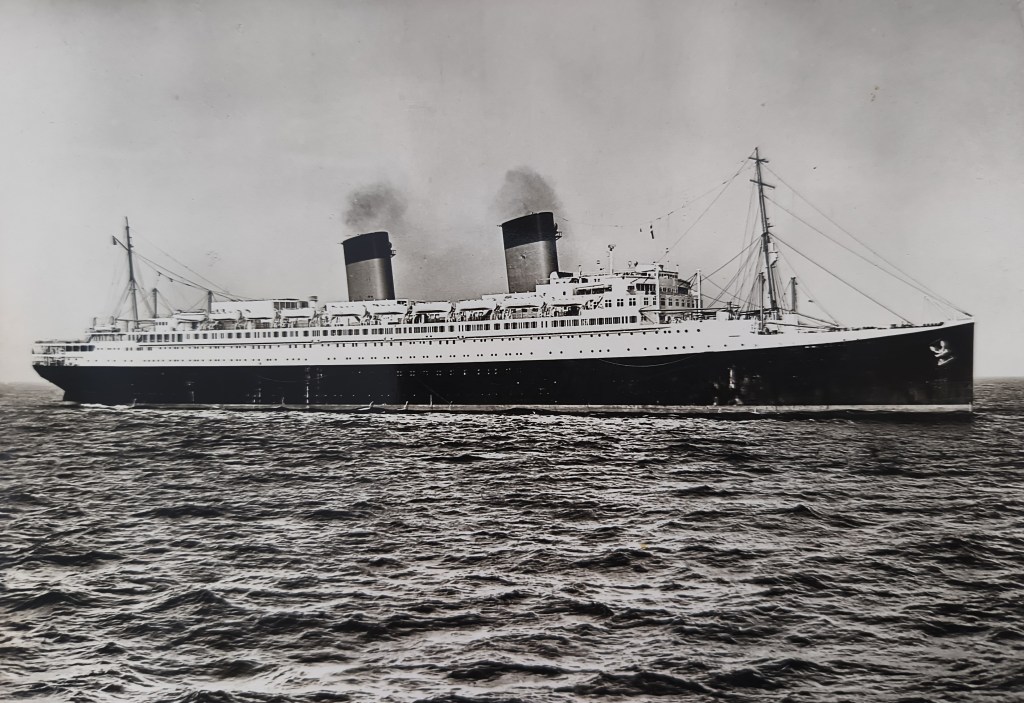
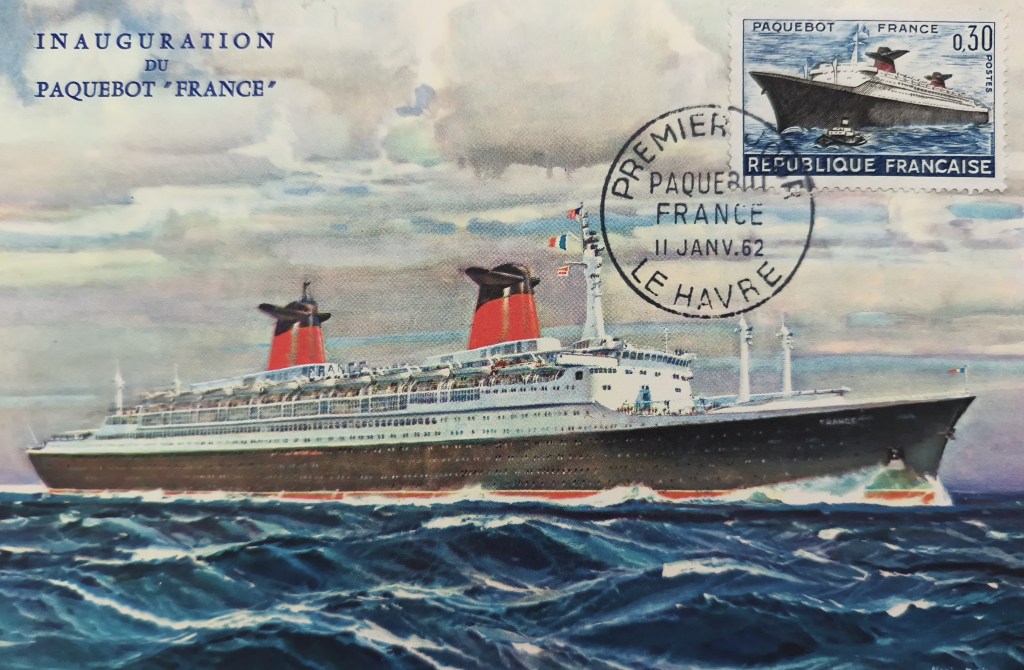
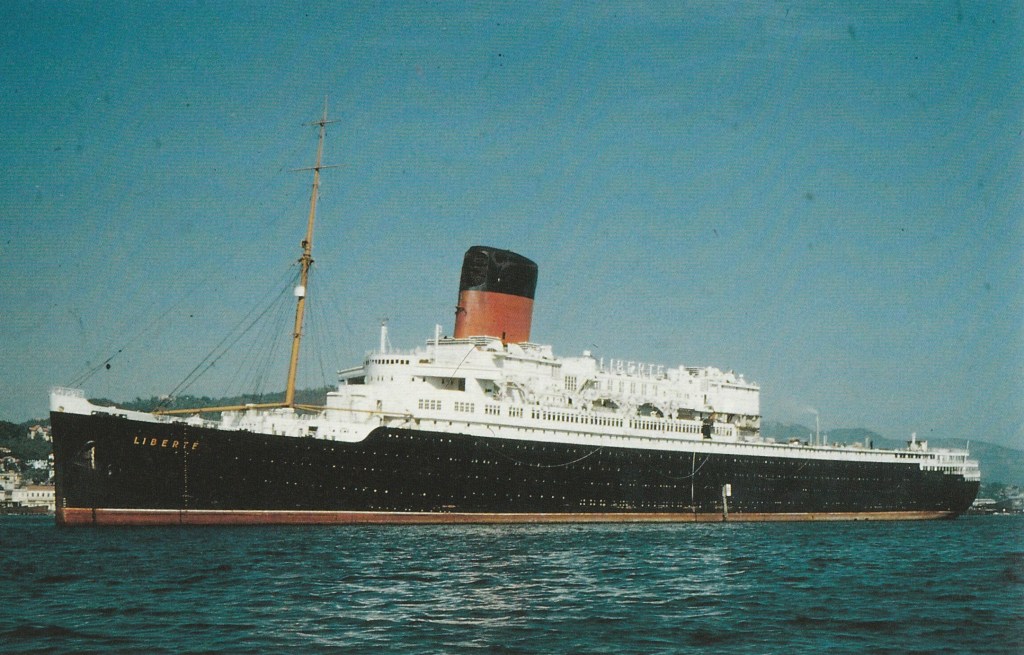
One must think that the Liberté was surely stalling for time with so many incidents and near-losses over so many years. It seemed she must have had one big disaster left to finish her off. The ex-Europa certainly had one surprise left in her: She sailed proudly for 12 more years as one of the most affluent and popular ships of the decade. Voyage after voyage, the Liberté sailed fully booked-out. Traveling agents competed to charter her and offer her services. She won over the hearts of the French as well, sailing as one of their two great flagships alongside the SS Île de France which was the other largest and greatest French ship to survive the war. She even quite literally seemed to carry on the spirit of the sorely-missed SS Normandie. The Liberté had cabins styled on and furniture acquired from the liner that had been stored in warehouses and survived the war.
(Author’s Collection)
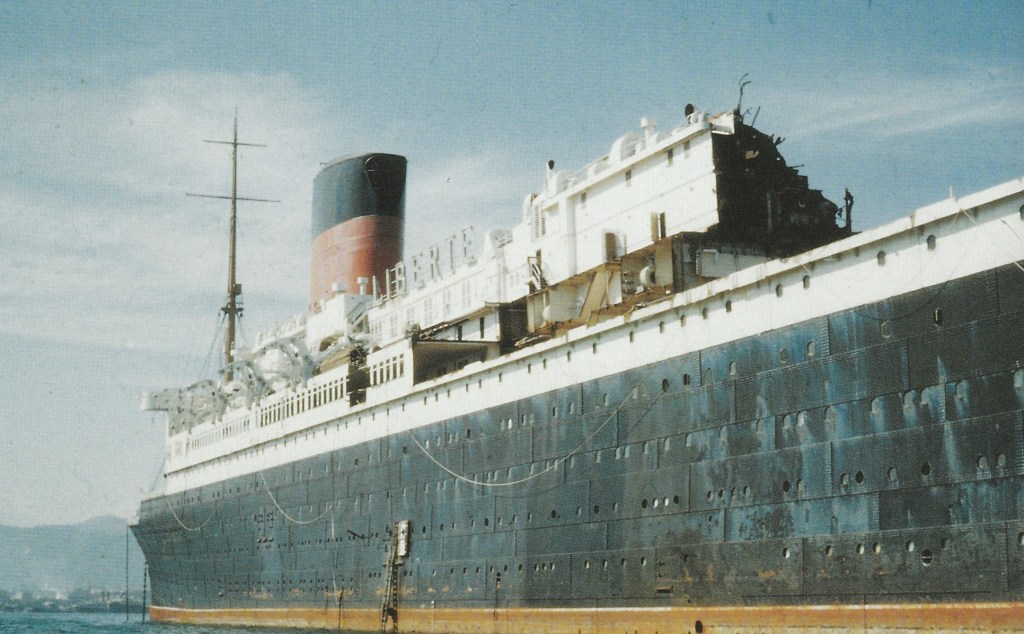
By the dawn of a new decade, the Liberté was definitively worn out. Air travel was rapidly shrinking the market for ocean liners and no refit or modernization could save this 30-year old deteriorating ship. The Île de France was in the same boat, and French Line planned to hold onto both ships until 1962 to make way when the final and last great French superliner, the SS France would set sail. The inevitable date arrived and in January 1962 with 32 years and 1.2 million passengers carried behind her, the Liberté was sold for 6.5 million marks to the scrapyard Terrestre Maritima in Italy to be dismantled for good.
The End of A Great Liner:
There were strict clauses in the Liberté’s sales contract that forbid that the last of CGT’s great flagships be given any injustice. This was referring to how when the Île de France was sold, she was used as a giant set in action movie, was sunk and partially blown up before being raised and scrapped. The Liberté was instead to be given a quiet rest at La Spezia, slowly broken up and recycled. This was the final end to The Phoenix – Germany’s last great superliner.
References
- Kludas, Arnold (1993) Die Schnelldampfer Bremen und Europa Höhepunkt und Ausklang einer Epoche Koehlers Verlagsgesellschaft mbH, Herford.
- Kludas, Arnold (2000) Record Breakers of the North Atlantic, Blue Riband Liners 1838 – 1952 Chatham Publishing, London.
- Miller, William H. (1989) German Ocean Liners of the 20th Century Patrick Stephens Limited, Avon.
- (1953-1960) SOS Schicksale Deutscher Schiffe: Allen Stürmen Zum Trotz Arthur-Moewig, Verlag
- The New York Times (1928) GERMANS LAUNCH THEIR LARGEST SHIP; 938-Foot Europa, August 16th, p. 16 https://www.nytimes.com/1928/08/16/archives/germans-launch-their-largest-ship-938foot-europa-46000-tons-is-25.html?searchResultPosition=4
- The New York Times (1923) Biggest German Liner Is Tested. November 28th, p.20 https://www.nytimes.com/1923/11/28/archives/biggest-german-liner-is-tested.html?searchResultPosition=188
- Werft – Reederei – Hafen Heft 22 (1923) Accessed: https://archive.org/details/1923-werft-reederei-u-hafen-no-22/page/n55/mode/2up?q=columbus+schichau
- The New York Times (1929) 30-Knot Ship, Fastest Afloat, Is Planned by German Line. January 9th, p.1 https://www.nytimes.com/1929/01/09/archives/30knot-ship-fastest-afloat-is-planned-by-german-line.html?searchResultPosition=5
- The New York Times (1929) SHIPYARD STRIKE ENDS IN GERMANY; February 4th, p.47 https://www.nytimes.com/1929/02/04/archives/shipyard-strike-ends-in-germany-north-german-lloyd-officials.html?searchResultPosition=13
- The New York Times (1929) LINER EUROPA RUINED IN A $3,000,000 FIRE , March 27th, p.1 https://www.nytimes.com/1929/03/27/archives/liner-europa-ruined-in-a-3000000-fire-fifteenhour-blaze-wrecks.html?searchResultPosition=36
- The New York Times (1929) Europa, Launched Again, Escapes Dock Blast, July 16th p.1 https://www.nytimes.com/1929/07/16/archives/europa-launched-again-escapes-dock-blast-bremen-sister-liner-will.html?searchResultPosition=67
- The New York Times (1929) BREMEN IN, SMASHES RECORD FOR ATLANTIC BY 9 HOURS; July 23rd p.1 https://www.nytimes.com/1929/07/23/archives/bremen-in-smashes-record-for-atlantic-by-9-hours-harbor-shrills.html?searchResultPosition=72
- The New York Times (1930) HINDENBURG GREETS LINER.; March 19th, p.9 https://www.nytimes.com/1930/03/19/archives/hindenburg-greets-liner-german-president-wishes-europa-best-of-luck.html?searchResultPosition=143
- The New York Times (1930) EUROPA SPEEDING ACROSS ATLANTIC; Does 27 Knots After Stopping at Cherbourg on Maiden Voyage to New York. March 21st, p.11 https://www.nytimes.com/1930/03/21/archives/europa-speeding-across-atlantic-does-27-knots-after-stopping-at.html?searchResultPosition=145
- The New York Times (1930) EUROPA SETS RECORD; ARRIVES 18 MINUTES UNDER BREMEN TIME ,March 26th, p.1 https://www.nytimes.com/1930/03/26/archives/europa-sets-record-arrives-18-minutes-under-bremen-time-new-speed.html?searchResultPosition=158
- The New York Times (1946) FATE OF EUROPA AGAIN IS CLOUDED , January 11th, p.23 https://www.nytimes.com/1946/01/11/archives/fate-of-europa-again-is-clouded-repaired-liner-held-here-and-may-be.html?searchResultPosition=1
- The New York Times (1936) December 10th, p.1 https://www.nytimes.com/1946/12/10/archives/galelashed-europa-sinks-tugs-right-ship-at-le-havre-former-german.html?searchResultPosition=25
 The Kaiserhafen