
Sinking the Robert Ingham
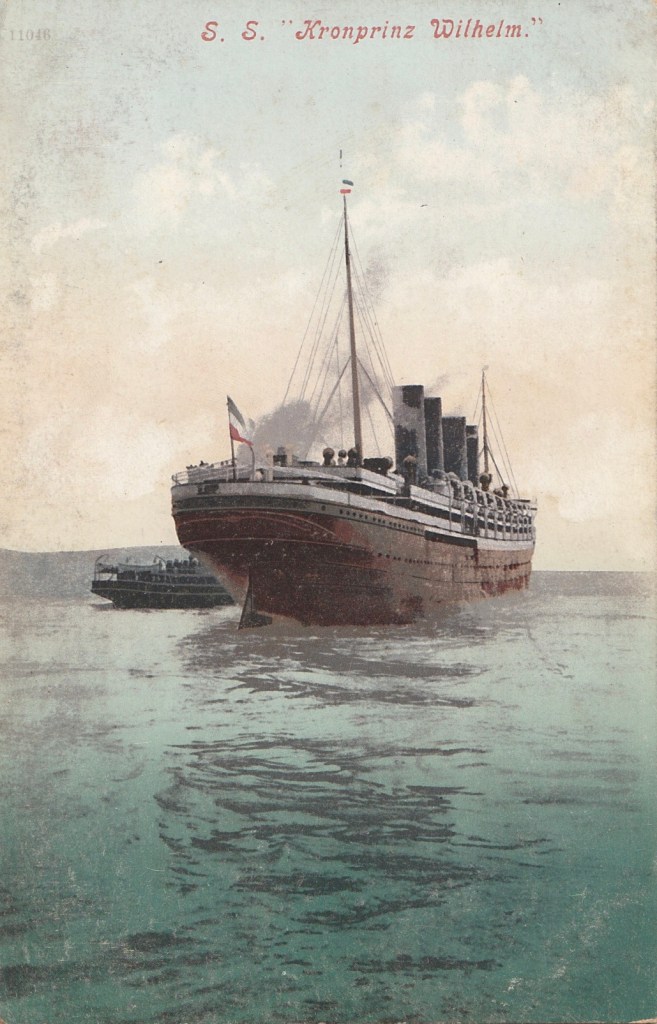
Despite 1902 being likely the best year the Kronprinz had during her thirteen years of passenger service, accidents could always have been made. On the 8th October of this year the Kronprinz departed on another normal transatlantic crossing to New York. She was en route to Southampton this morning before heading to New York, but visibility was very poor due to the dense fog on the southern English coast. Nearby also restricted by the fog, was the British Tyne-built steamer: Robert Ingham on a regular voyage from Southampton to Newcastle. Robert Ingham belonged to Ridley, Son & Tulley of Newcastle and was of 1028 GRT and 224 feet compared to the Kronprinz’s 663 feet and 14’906 GRT. Unknowingly, both ships were in a collision course due to the bad weather, one that would be devastating to the Robert Ingham who was only sailing at 3 knots compared to the Kronprinz’s 22.
Everything happened extremely quickly as one could guess. At 07:30, the Kronprinz was some distance in front of the Robert Ingham and sounded her foghorn moments before the collision. Captain Elliott of the Robert Ingham heard the call from Captain Richter’s ship and quickly sounded his siren and cut his engines, but it was too late. Within seconds the colossal prow of the Kronprinz suddenly burst through the fog aimed for the starboard quarter of the Ingham. It cut through the vessel like butter and nearly severed it in two as the huge ship kept moving forwards. Back on the Robert Ingham, Captain Elliott quickly ordered all boats lowered and this decision narrowly saved the remainder of the crew. All 13 crew members were accounted for as they left their sinking ship, except for Chief Officer William Miller, and the only passenger: Mr. Scott. They were missing as they both had been below decks, asleep.
Captain Elliott regarded that the sea being as calm as it was saved him and the rest of his crew and if conditions were worse, they probably all would have perished. The only thing they could do was search the wreckage and they sadly discovered the floating body of William Miller. Mr. Scott was never recovered as he had been killed on impact when the Kronprinz struck the ship. It turns out that Miller had actually made it above deck during those few narrow minutes, but he was washed overboard and drowned before he could be saved. As for the Robert Ingham, she had been catastrophically damaged and went down in only 5 minutes after the collision at 07:35. Those in the boats watched their ship go down, only for her boilers to explode before she fully disappeared. Meanwhile, the Kronprinz had dispatched her own boat in record time and turned around and rescued all 12 survivors.
The Kronprinz was completely undamaged, and continued to Southampton to return the survivors. Along the way there was great sympathy aboard for the disaster and the passengers of the Kronprinz raised $250 for the widow of Officer Miller. In the proceedings that followed: full blame for the disaster was placed on the Kronprinz Wilhelm and Captain Richter. This was due to the ship not taking measures to slow down during the fog, and instead sailed near-top speed at 22 knots.
The HMS Wizard
The bad luck of the Robert Ingham encounter continued because the Kronprinz had another serious collision the exact same day! It was still the 8th October in Southampton. Taking place less than four and half hours after the Ingham incident, both of these events caused major grumbling at the precautions of German liners in fog.
Encountering the RMS Briton in fog
The Kronprinz Wilhelm and the fog, would prove to constantly be not a good combination. It was the 11th February, 1903, and the ship was departing Southampton in dense fog. This was another usual trip to New York, and the ride from Bremen had been uneventful. By the time she had reached Southampton, the fog was so dense and unsafe, the ship was towed through the narrow channel to leave the harbour in the low visibility. The Kronprinz was already delayed arriving at Southampton since there had been dense fog, and now she was another few hours late leaving it too. On the ship went, moving slowly through the fog whilst passengers enjoyed themselves aboard.
It happened right when they were eating dinner, that they were all startled by a massive crashing noise. Another big vessel had collided with the Kronprinz’s stern on her port side. This ship quickly vanished in the fog as the Kronprinz was pulled further away and was unable to be identified for over a week. It turns out this had been the RMS Briton which had been in port, and the Kronprinz had un-knowingly drifted into. They search was given up, and the Kronprinz instead continued to leave for Cherbourg as her damages were far from the waterline.
The damages were still far from light however, her port side of the stern had been dented, one of her davits had been crushed, her upper deck rail had been smashed and some of her stanchions in the stern were bent. After the collision, the Kronprinz continued her crossing and was quite a sight in New York, when she arrived there on February 19th.
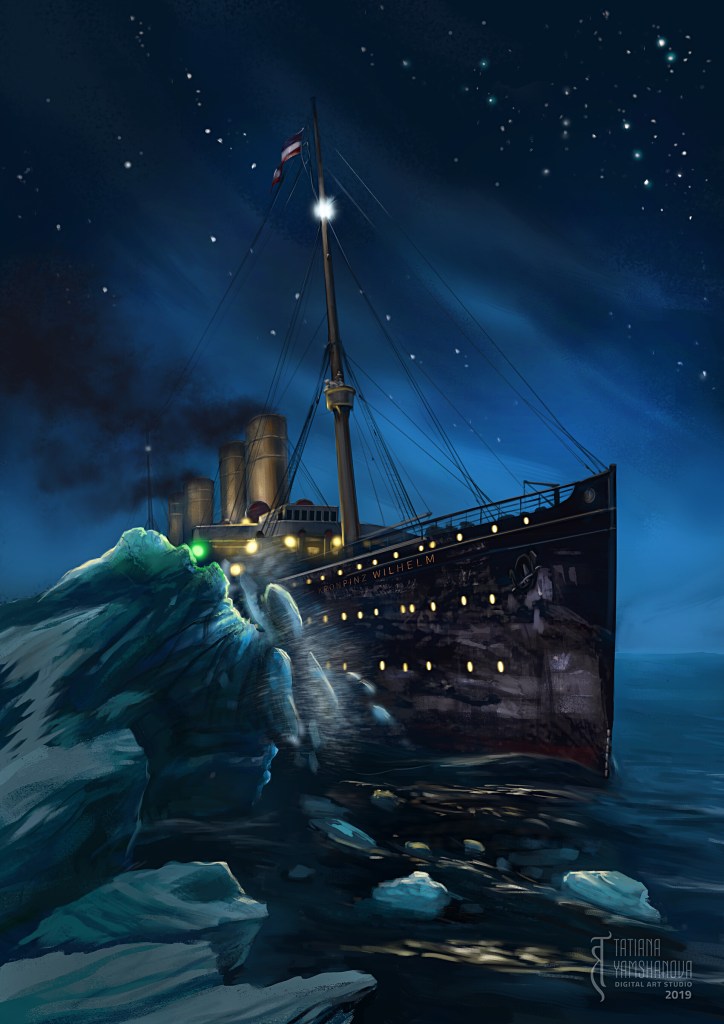
An Iceberg on the North Atlantic
Likely the most infamous event that ever happened to the Kronprinz took place just past midnight on Monday, July 8th, 1907. She was in her fifth and last year under the command of Captain Richter and sailed through a beautiful calm night on the North Atlantic to New York as usual after departing Bremerhaven on the 2nd. The conditions that night were very special, it was pitch-black and the sky was completely clear. Those on board were aware of the possibility of ice, as the temperature dropped below freezing. She steamed at a reduced speed of 16 knots, there had been a strike and new replacements had to have been quickly called in to stoke the boilers. Everything was extremely peaceful, Captain Richter was on the bridge watching the seas ahead, and the lookouts were doing the same from the crow’s nest.
Sighting:
It was 00:20 Monday had just begun, when the lookouts suddenly informed the bridge that he saw ice directly ahead of the ship. Captain Richter saw what looked like a bank of fog in front of the ship that had snuck up undetected onto them and was only about 500 feet away from the ship. It was in reality: a fifty-foot high iceberg that was enveloped in mist and on a collision course with the Kronprinz. The moment Captain Richter saw the berg, he signalled the engineer to throw both screws into full astern and the wheel was turned hard-over to pull the ship away. Captain Richter also immediately hit the switch to lower the watertight doors. It was in vain as the Kronprinz was too close, and the pyramid-shaped iceberg crashed into the starboard bow.
Collision:
The force of the iceberg slamming into the hull sent a massive shock down the ship, and threw passengers who had been sleeping in their bunks to the ground. Inside the bow was where the Third Class passengers and crew slept and they felt it the most. The prow of the Kronprinz hit a mass of ice underwater and that force pushed the nose of the ship high upwards. There was a terrifying moment for those on the bridge that the bow would be torn off, but the Kronprinz cleared it and slammed back down into the water behind the berg, rattling the entire ship. After the impact, came a loud grinding, crunching noise as the iceberg raked along the bow with tons of it falling onto the forward decks which crew had to dodge to avoid getting crushed. There was another horrifying moment as a colossal overhang of ice weighing hundreds of tons, broke off the top of the berg and fell down narrowly missing tearing through the Kronprinz’s decks and hit the water with a mighty splash. The ice didn’t just perpetrate the upper decks, crew reported blocks of ice came raining in through the portholes, nearly filling some rooms. The berg continued to pass along the side of the ship, and then vanished as soon as it had arrived.
Assessing the Damage:
Immediately during the collision, Captain Richter had lowered the watertight doors to stop any flooding that might occur. This was a system the North German Lloyd was proud of, as it lowered 20 doors within 30 seconds, blocking all 17 watertight compartments. With everything possible having been done during the collision, Captain Richter sent First Officer C. Hagermeyer down to assess what had been done to their ship. Down on the open decks, he met many startled and confused passengers who had felt and heard the impact. Some from the lower decks had even run outside wearing life preservers whilst others had fainted. They were assured by the crew that everything was under control and to go back into the warm indoors.
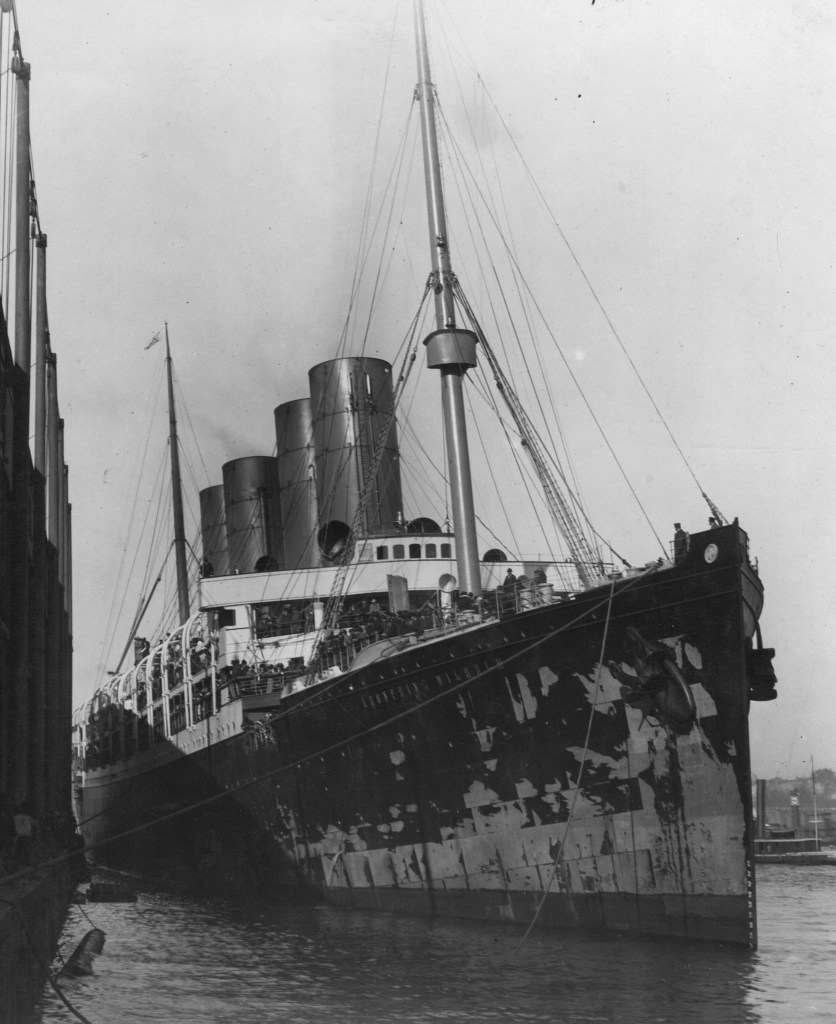
When one peered over the bow of the Kronprinz that night they would have found that most of the paint had been stripped off, something that happened quite frequently on the Kronprinz’s voyages. Officer Hagermeyer returned to the bridge with a smile on his face. Damage below decks was non-existent, -besides the ice that had flooded the crew’s quarters. There was no water breaches anywhere, and no part of the ship had been opened up or holed. It was truly a close shave, and a very lucky one at that. Captain Richter assessed that the iceberg had not been a very large one, and that the ice itself was soft with the berg being due to melt soon. Just fifteen minutes after the collision, the Kronprinz set forth again at a speed of 16 knots even more cautiously than before.
The Kronprinz Wilhelm arrived safely in New York harbour on Wednesday morning, the 10th July 1907. She disembarked 1’172 grateful passengers which included the German Ambassador to America: Baron von Sternberg. Onlookers were shocked seeing the ship: most of the paint from the starboard bow was missing as were the load draught numerals and it was dented. Despite the story being a miraculous escape, Captain Richter would not command the Kronprinz much longer. On August 5th the next month, he was succeeded by Captain Richard Nierich. Captain Richter had made his decision to quit seafaring forever after the iceberg incident. This was actually something that ran in the family as 20 years earlier his brother Captain Hermann Richter, had also left the sea after his own iceberg collision. Both brothers stated that an admonition from Heaven
The Kronprinz and the Crown of Castile
March 18th 1908. After so many different objects found their way into the path of the Kronprinz, there should have been nothing to worry when the vessel had dropped anchor but things weren’t the case today. The Kronprinz had arrived in New York from Bremerhaven after another successful voyage at around 2am. She anchored off of Quarantine, was inspected and passed by the Health Officer and sailed towards the North German Lloyd piers at 06:52 in the early morning. When she passed Robbin’s Reef Lighthouse, her old enemy of fog swept in again and blanketed the entire harbour. Commanded by Captain Nierich, he ordered the ship to be anchored at 07:25, due to the conditions. It seemed almost immediately when the anchors had been lowered the fog got even thicker, and so fog bells were rung from the foremast and Nierich and his First and Second officers all stood on the bridge, staying alert.
Within three minutes of stopping, they received a call on the bridge from the quartermaster who was stationed on the aft docking bridge. What he said was an immediate cause for alarm:
“Go ahead at once. A steamer is coming from aft bearing directly on us.”.
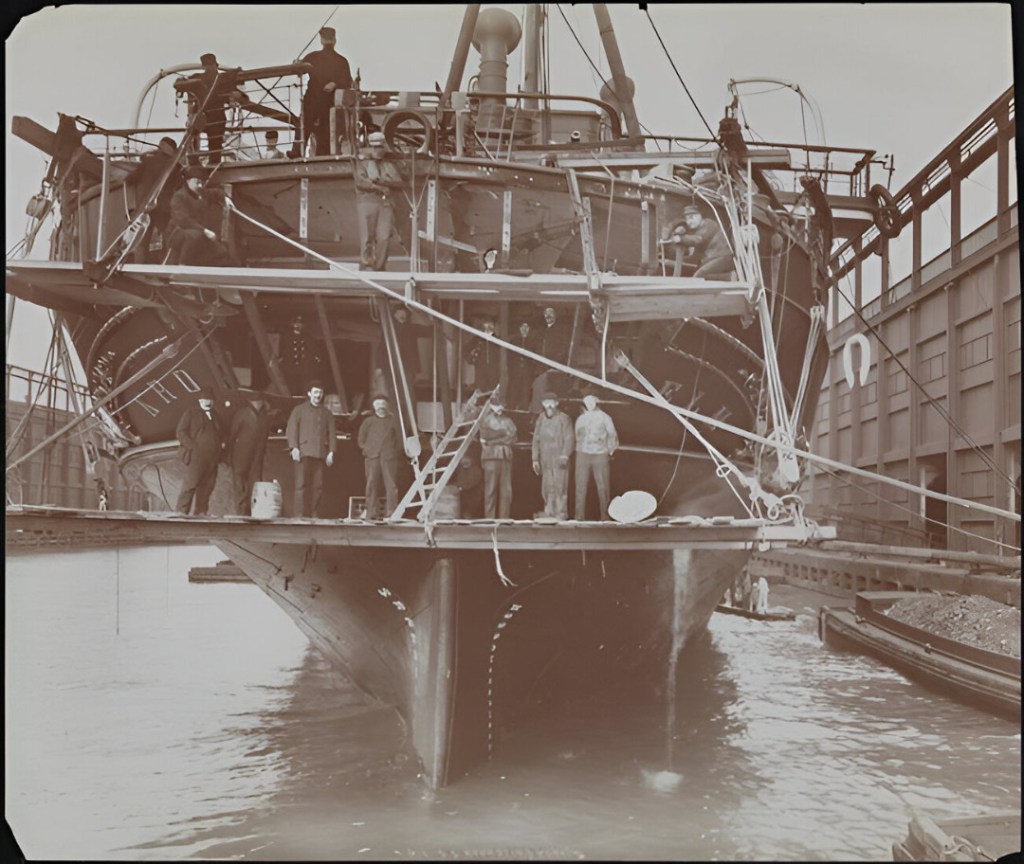
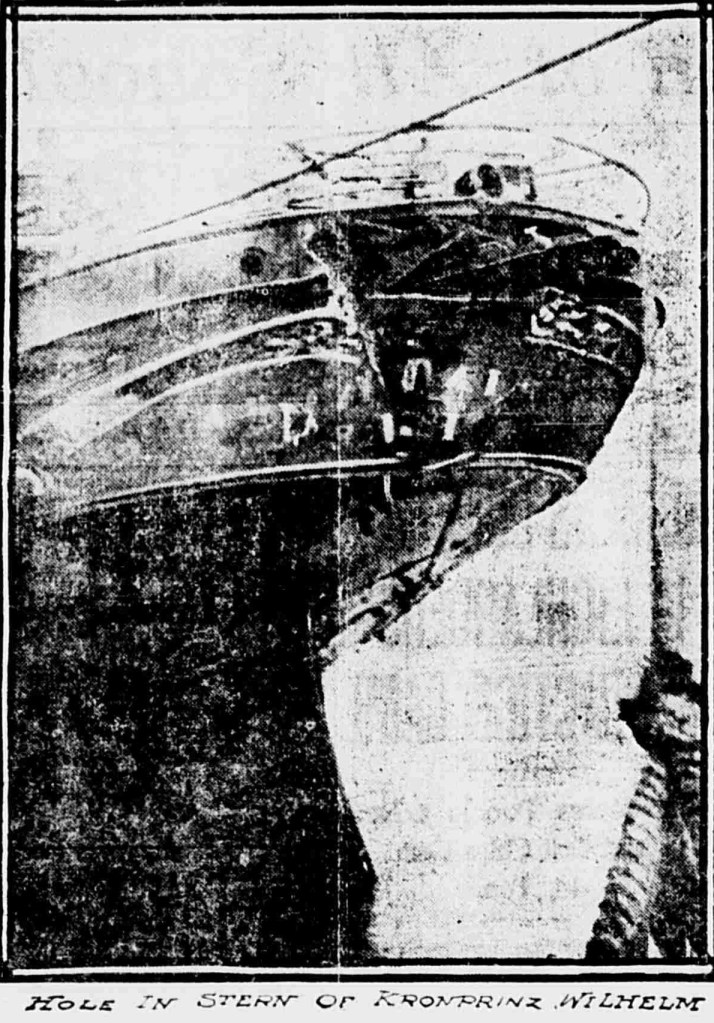
Captain Nierich immediately ordered anchors raised, slow speed ahead, and watertight compartments shut. Those doors closed in only 15 seconds and just in time: Out from the fog came the New York Continental Line steamer: Crown of Castile, heading straight for the Kronprinz’s stern. Despite her slow speed, she couldn’t stop and her prow punched a massive fifteen feet-wide hole into the stern of the Kronprinz. The hole tore right into a messroom where 10 minutes earlier it had been filled with stewards having breakfast. Fortunately there were less people in the room by then so nobody was killed. One unlucky steward: Michael Ellis, was the only one to be injured during the collision as he was scratched on the arms by a steel splinter and his knee was hurt from falling trunks. Shortly after the collision, Crown of Castile backed away from the Kronprinz and disappeared into the fog.
At 09:30 the fog finally lifted and the Kronprinz sailed to her pier. All damage was above the waterline so only temporary repairs were made and the ship’s next crossing was not delayed. As to who was to blame for the collision, all mention of it was denied aboard the Crown of Castile after she left. Captain Nierich testified he had taken extra precautions during the fog to avoid collision. As so, blame was then placed on the New York Continental Line.
Further Career:
Of course crashing into things wasn’t the only thing that happened to the Kronprinz Wilhelm from the years 1901-1914. She had many excellent crossings, astonishing moments and happy memories from that time too in a far greater quantity than the accidents. A list of many notable occurences that happened aboard this ship during this time period include:
- With the commissioning of the Kronprinz Wilhelm in 1901, the North German Lloyd could boast that they had the fastest postal service on the planet. With approximately 3.3 million letters sent this year between Europe and America, the ships of the NDL were the fastest and could place a letter in the hand of the receiver in 160 hours or 6.66 days, on the other side of the Atlantic. The next fastest lines were the Hamburg America Line, with 173 hours and the American Line with 180 hours. The Kronprinz’s personal best for delivering a letter was in 1903: with a time of 148 hours, or 6.2 days.
- The Kronprinz Wilhelm was the second German liner after the Kaiser Wilhelm der Grosse to receive the Marconi wireless system.
- On November 26th 1901, the Kronprinz would carry the Hope Diamond to New York. The previous owner Adolph Weil had sold it for roughly $5.33 million in todays money to the New York banker Simon Frankel, who took it with him aboard the Kronprinz back home.
- Many esteemed guests would travel aboard the Kronprinz Wilhelm during her thirteen-year commercial career. These included multiple German monarchs and celebrities: In 1902 Prinz Heinrich sailed for his state visit of New York, Kaiser Wilhelm II and the namesake Kronprinz Wilhelm of Prussia travelled aboard on a short trip through the Nordsee the same year, one of the richest men in the world: John Jacob Astor IV and his wife Ava Lowle Willing would sail twice in June 1905 and September 1906, one of the Wright Brothers: Wilbur Wright would cross in 1911 to testify an airship patent, esteemed boxer Jack Johnson alongside his wife and two trainers to England in 1911, world famous escapologist Harry Houdini in May 1913 and many more. An unconfirmed source states that the father of Anne Frank: Otto Frank, also took a crossing aboard in 1913.
- Harry Houdini in fact would make his crossing aboard the Kronprinz memorable in particular for one reason. On May 24th 1913 Houdini was travelling back to New York after a voyage around the world. On this day he finally recovered from sea-sickness aboard the liner and thought he needed entertainment. He then proposed to the Concert Committee that in a stunt to raise money for the seamen’s charities, he would jump overboard off the deck of the Kronprinz in a bag with his hands handcuffed behind him and free himself before his doom. The passengers were livid and so were the officers: they offered to immediately dispatch a lifeboat to pick him up after his guaranteed escape. The one person not in support was Captain Burghard Wilhelmi of the Kronprinz, he had an obligation to be responsible for the lives of his passengers and he also knew there were sharks about in the waters.
- The Kronprinz Wilhelm had a three-way race with the Cunard liner: Campania and the American liner: St Louis whilst carrying Prinz Heinrich to America in 1902. The Campania left Queenstown on February 16th at 18:45, the St. Louis left Cherbourg at 17:25pm, whilst the Kronprinz departed Cherbourg later at 21:00.
- On the 20th of February 1907, the North German Lloyd Steamship Company celebrated their 50th birthday. They were founded by directors: Hermann Henrich Meier and Eduard Crüsemann in 1857 on this date. Their little company started with only four ships: Bremen, Hudson, New York and Weser all of only about 2500 GRT. In five decades they had blossomed into one of the forerunners on the North Atlantic service, now boasting 395 ships with juggernauts like the SS Kaiser Wilhelm II of 19’361 GRT. On this day all the steamers in New York were adorned with flags. The Kronprinz Wilhelm landed in New York today too, proudly under the command of Captain Richter who had completed his hundredth round trip to this port. His very first trip had been when he brought Prinz Heinrich to America for his state visit and he had received the Eagle of the Fourth Class, with Crown. A very special surprise was prepared for the captain by his friends: whilst he sailed into New York they decorated his cabin with flowers.

Bibliography
- (1907) GIANT KRONPRINZ HITS AN ICEBERG, New York Times, July 11th
- (1903) KRONPRINZ IN COLLISION, New York Times, February 20th
- (1902) SUNK BY THE KRONPRINZ, New York Times, October 9th
- W. Pocock, Michael (2013), MaritimeQuest.com: https://www.maritimequest.com/daily_event_archive/2013/10_oct/08_ss_robert_ingham.htm (Accessed: March 2025)
- (1908) STEAMER RIPS LINER. New York Daily Tribune, March 19th
- (1907) GREAT STEAMSHIP LINE’S BIRTHDAY, New York Times, February 21st
- (1953-1960) SOS Schicksale Deutscher Schiffe: Die Jagd auf den Kronprinzen Arthur-Moewig, Verlag
- (1907) DEATH CLOSE TO BARRETTS ON LINER, The evening star and Newark advertiser, July 11th, p.2 https://www.loc.gov/resource/sn84020504/1907-07-11/ed-1/?sp=2&q=kronprinz+wilhelm+iceberg&r=-0.171,-0.041,0.956,0.457,0
- (1902) THE PRINCE IS RACING, Daily Kennebec Journal, February 20th.
- Totzke, Thorsten (2018) Lostliners.de : https://lostliners.de/schiffe/k/kpw/geschichte/index.htm (Accessed April 2025)
- (1901), THE FAMOUS BLUE DIAMOND HERE, New York Daily Tribune, November 27th p.4 (1908) Stern of Ocean Greyhound rammed by steamer in fog, The Evening World, March 18th p.2
- Interval, Tom : Houdini in the New York Times : intervalmagic.com https://www.intervalmagic.com/houdini/articles/1913_05.28.html (Accessed September 2025)
- (1907) CAPTAIN QUITS SEA FEARING A COLLISION, The News-Democrat, October 5th p.8
- https://natlib.govt.nz/records/34213981?search%5Bpath%5D=photos&search%5Btext%5D=kronprinz
 The Kaiserhafen