
| Name | SS Cap Trafalgar |
| Operator | Hamburg Süd |
| Yard Number | 334 |
| Code Number | RVCH |
| Builder | AG Vulkan, Hamburg |
| Launch Date | 31st July 1913 |
| Maiden Voyage | 12th September 1897 |
| Tonnage | 18’810 GRT 9’203 NRT |
| Length | 186.27 meters (overall) 179.92 meters |
| Width | 21.99 meters |
| Draught | 13.34 meters |
| Installed Power | 15’000 hp |
| Maximum Power | 15’900 hp |
| Propulsion | 2 triple-expansion steam engines |
| Speed | 17 knots service (31.48 km/h) 17.8 knots max (32.97 km/h) |
| Crew | 436 |
| Passengers | 1st Class: 394 2nd Class: 274 3rd Class: 912 |
SS Cap Trafalgar: An Overview
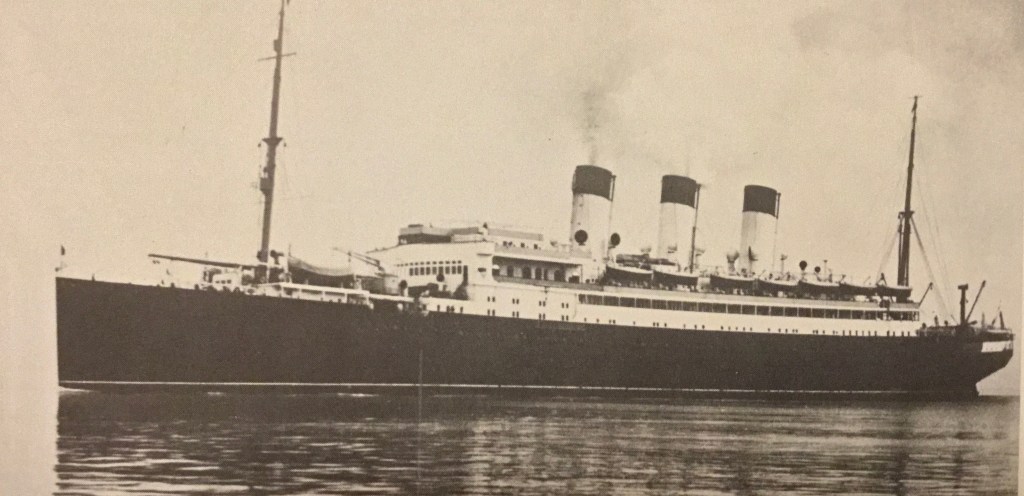
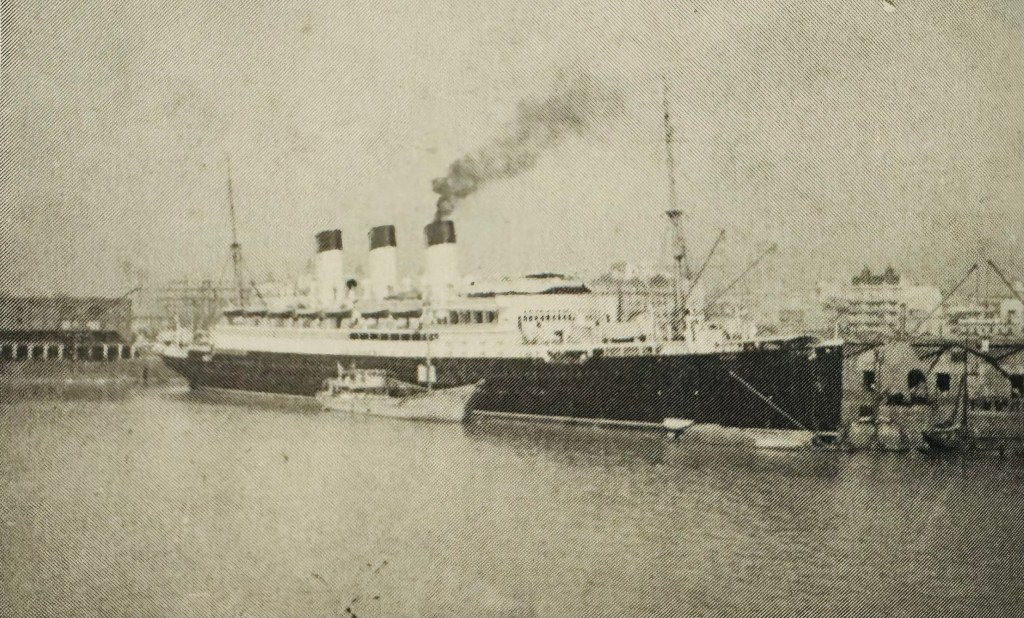
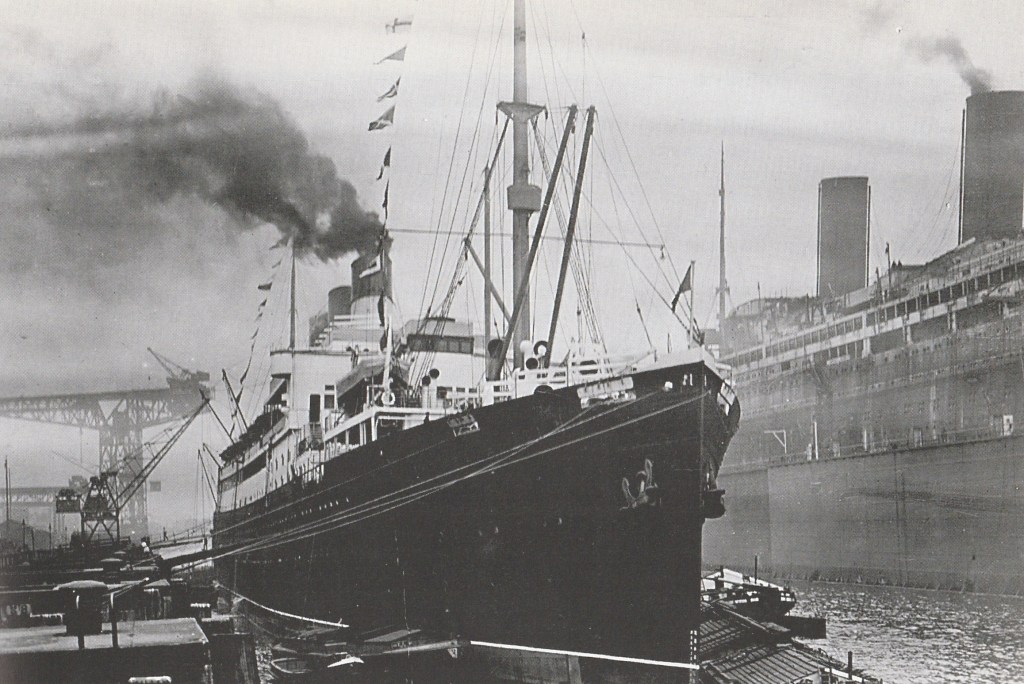
SS Cap Trafalgar is another ship whose story went that classic and infamous way, being lost before getting to have a long and deserving career. Cap Trafalgar would be designed for the best, to carry the great line of Hamburg Süd forward as their flagship with a sistership on the way, but would be sunk far too early instead, like the later SS Cap Arcona who would suffer the same undeserving fate. This ship offered the highest degree of luxury anyone sailing to South America could buy – for just 5 months. This article will go over her full career, from launch to sinking.
Conception
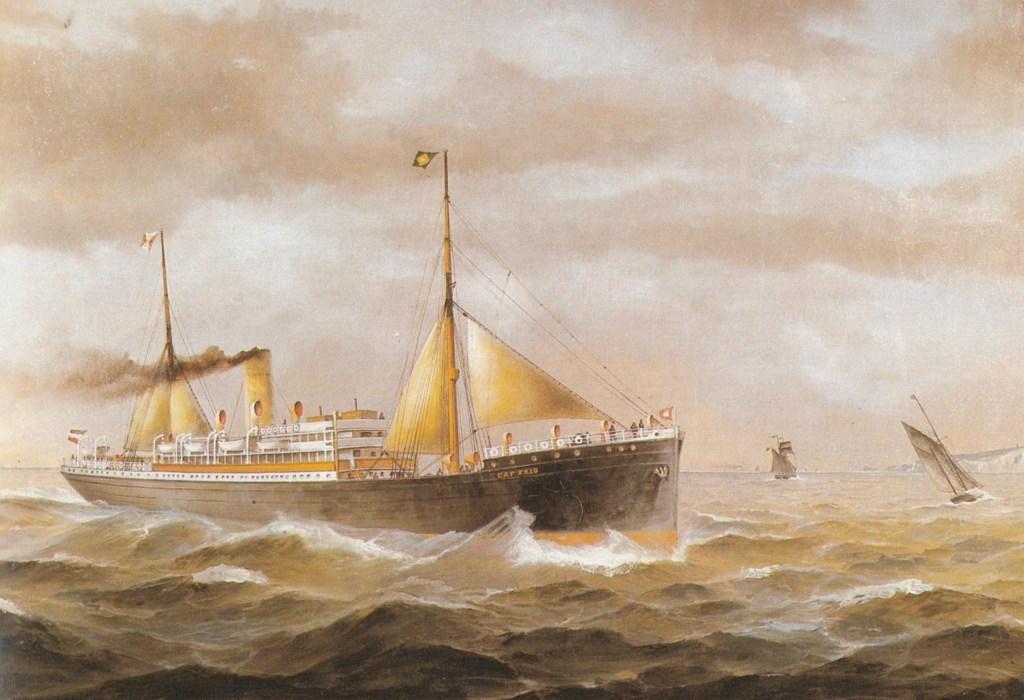
SS Cap Frio
Hamburg Südamerikanische Dampschiffahrts Gesellschaft (Hamburg Süd) always had a very strong hold on the South Atlantic passenger travel route with their specialty being passenger comfort above all. Established in 1871 and taking over Hamburg-Brasilianischen Dampfschiffahrts-Gesellschaft (Hamburg – Brazil Line), they had 3 ships which gave their fleet approximately 4000 GRT. This would soon grow over the following decades. This included the Asuncion Class with tonnages of 5800 GRT, 1000 GRT larger than their previous ships which started in 1895.
The more significant vessels would be their nine Cap vessels that started in 1900 with the Cap Frio (1900) and her sisters Cap Roca (1900) & Cap Verde (1900). The 6 following ships launched for the line which would all have the famed Cap title would include Cap Blanco (1903), Cap Ortegal (1903), Cap Vilano (1906), Cap Arcona (1906), Cap Finisterre (1911) and finally, their new great flagship Cap Trafalgar which was launched in 1913. The latter five of these ships were all the company’s largest when built, and would each serve as the flagship.
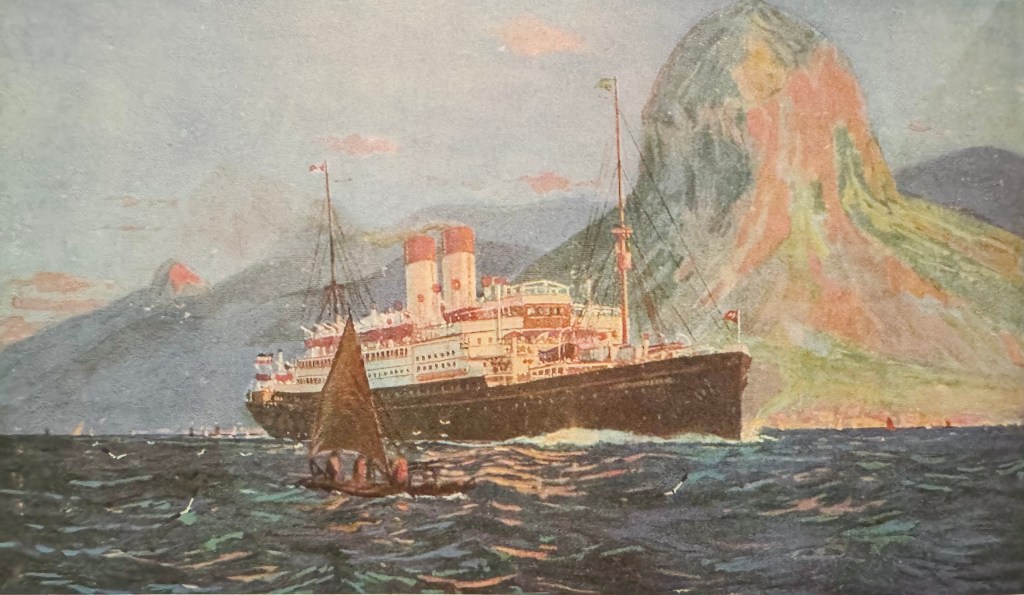
Cap Finisterre was a massive vessel at 14’503 GRT. This ship set her company truly as the forerunner on transatlantic trade to the South, serving as the international flagship for this route. On top of that she carried Hamburg Süd’s famed passenger comfort standards with her. This vessel had the world’s first outdoor pool for a liner on her highest deck, -for those passengers who wanted to sunbathe. With this great vessel, Hamburg Süd wanted to up their game even further, and introduce a new pairs of sisters to become their flagships for the South American route. These massive vessels of 18’000 and 21’000 tons would require immediate response from their competitors as they would dominate this route. The name of the first ship was even chosen specifically to attract English passengers aboard. This would be their first vessels large enough to have three funnels. This would be: the Cap Trafalgar and the Cap Polonio.
The limited prospects of the Cap Trafalgar
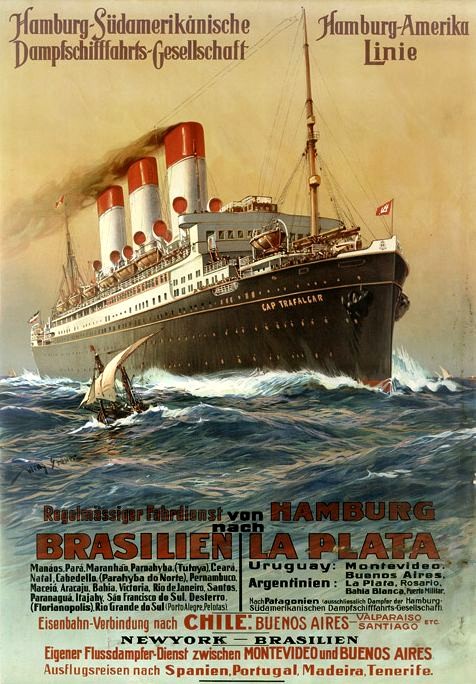
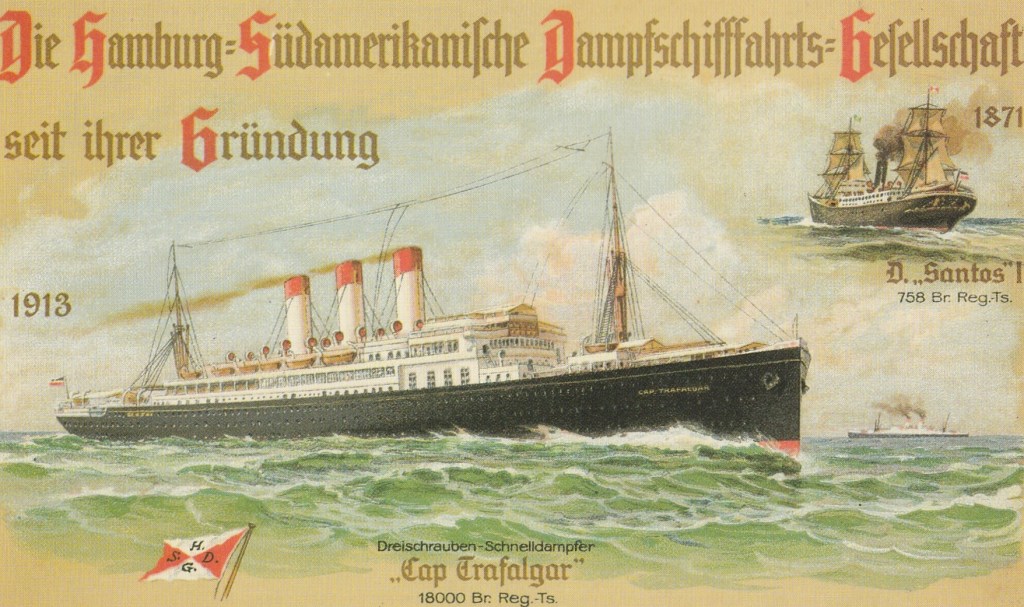
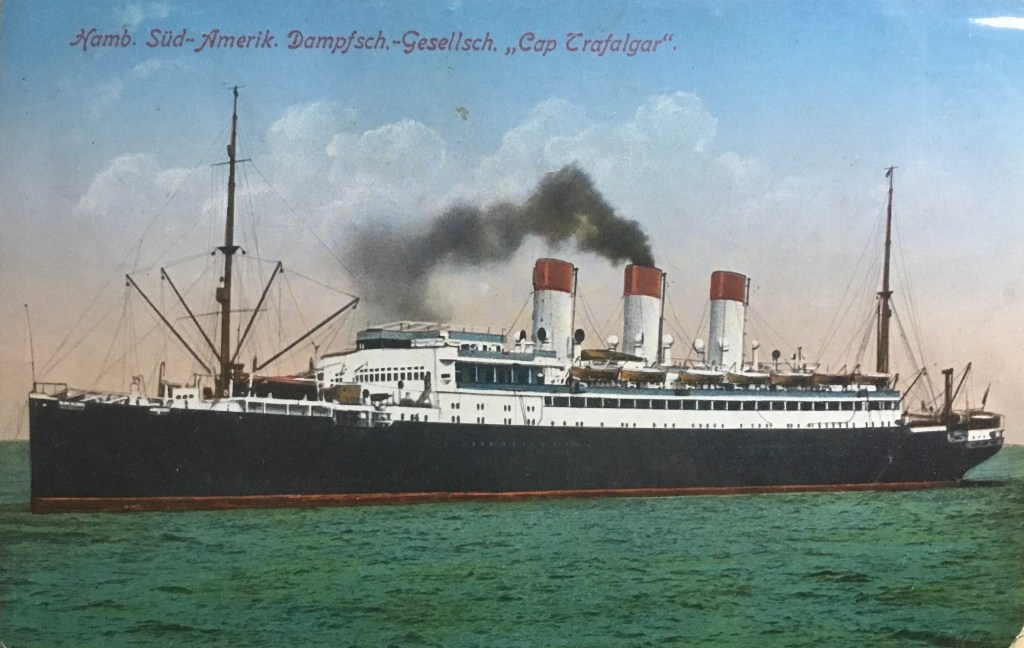
(Author’s Collection)

(Author’s Collection)
Construction and Design
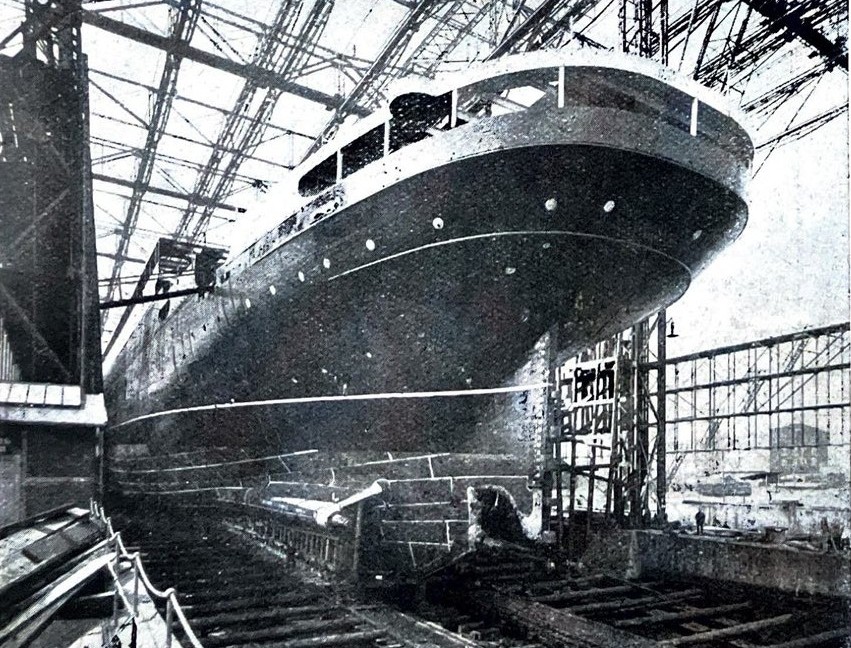
Being the pinnacle of South American travel, the Cap Trafalgar was designed to suit this route perfectly. She followed the Cap Finisterre closely and was a modified “super” version of the prior flagship in terms of design and accommodation. At 18’810 GRT she was more than 4000 tons larger than the Cap Finisterre, but was only 7 meters longer. All three of these Cap flagships had very low draughts of under 9 meters to allow them to sail to the shallow harbour of La Plata. Her third funnel was a dummy and was added for aesthetic reasons and minor ventilation purposes.
She was the largest ship on the South America service, and also marked a big change for Hamburg Süd. Before their house colours on the funnels of their vessels had been yellow, now it was changed to the iconic snow-white with red tops. It was with this and the Cap Trafalgar as their proud flagship, that Hamburg Süd was truly the international shipping line on the South-Atlantic Route. Their 41 vessels totalled 240’993 GRT, with the Cap Trafalgar at the very top.
Interiors
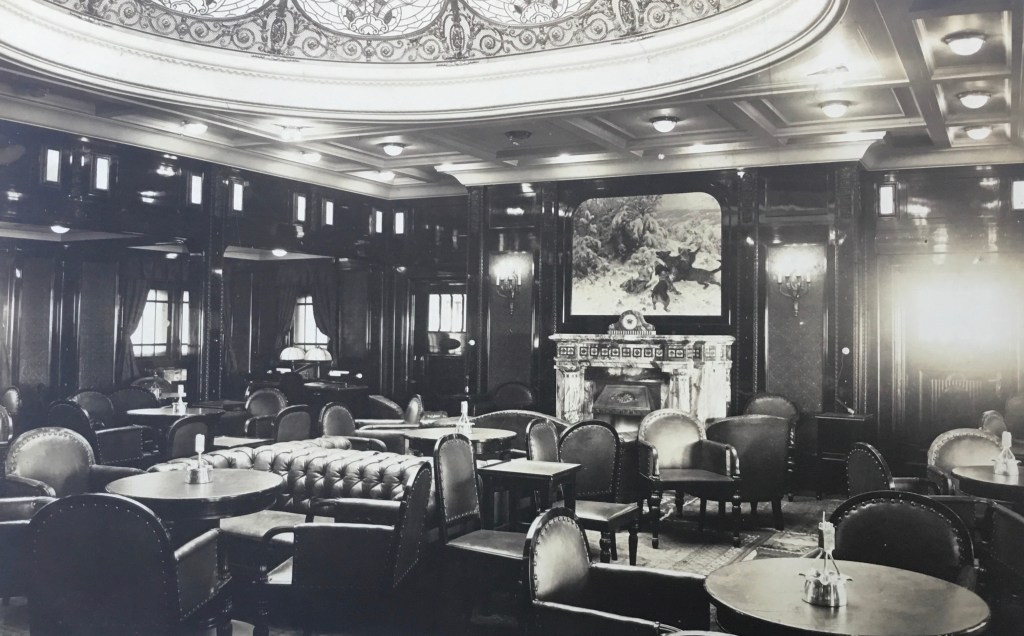
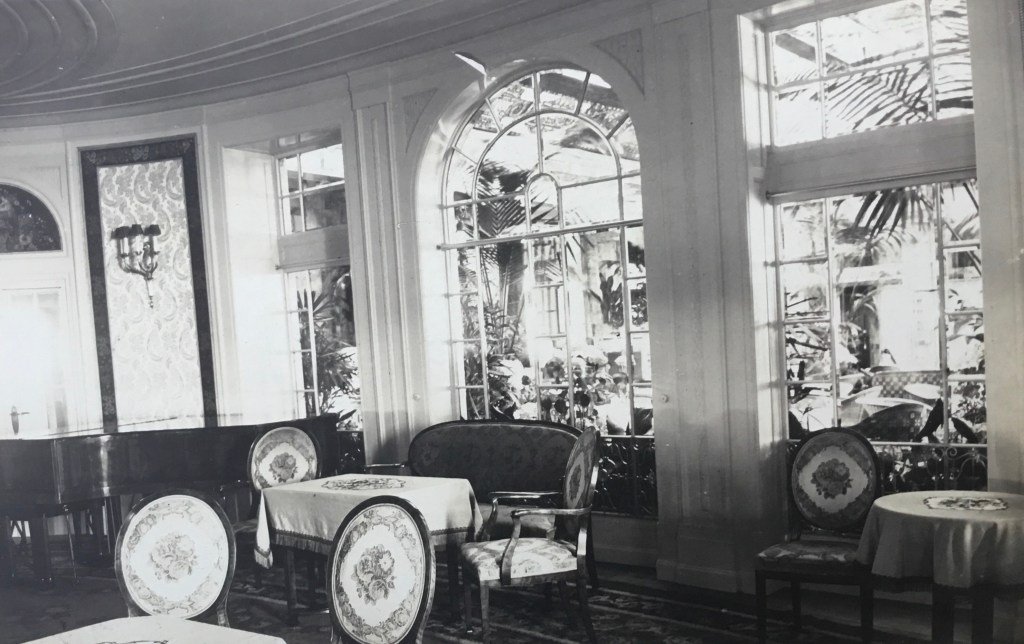
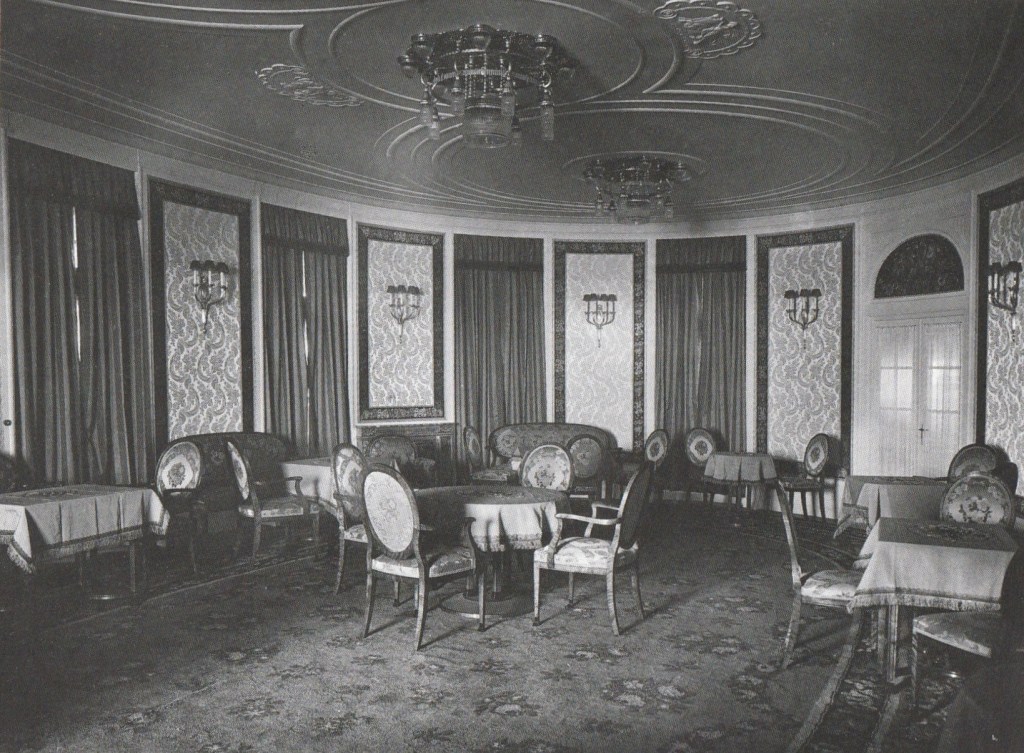
The lavish interiors of the Cap Trafalgar took full advantage of her British tie, and many parts were dedicated to the famed British Commander: Horatio Nelson. The Cap Trafalgar’s first captain: Commodre Langerhannß was a huge scholar of Nelson, and actually supervised the decoration of the First Class Smoking Room and Library with many portraits of Nelson’s major exploits and many other places around the ship bore portraits of the man himself. The deluxe cabins and even confections served by the chefs were named after prominent British and French men from the Battle of Trafalgar.
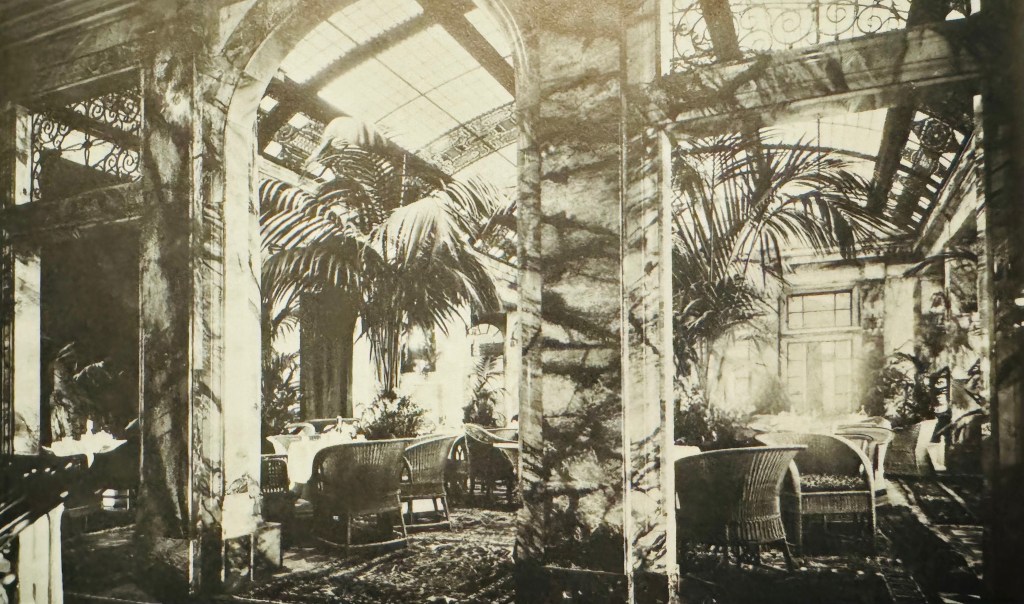
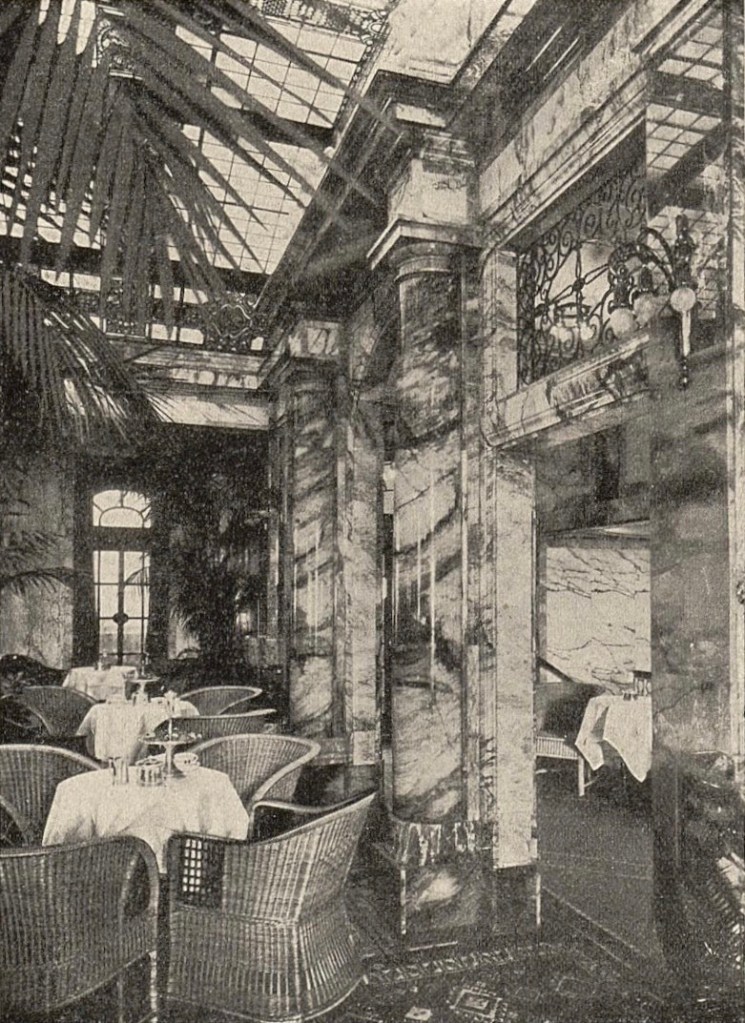
The Wintergarten of the ship was a masterpiece in itself, consisting of yellow marble terraces and fountains surrounded by the foliage of many tropical plants. Tropical birds such as parrots, macaws and toucans all were housed in this room as well.


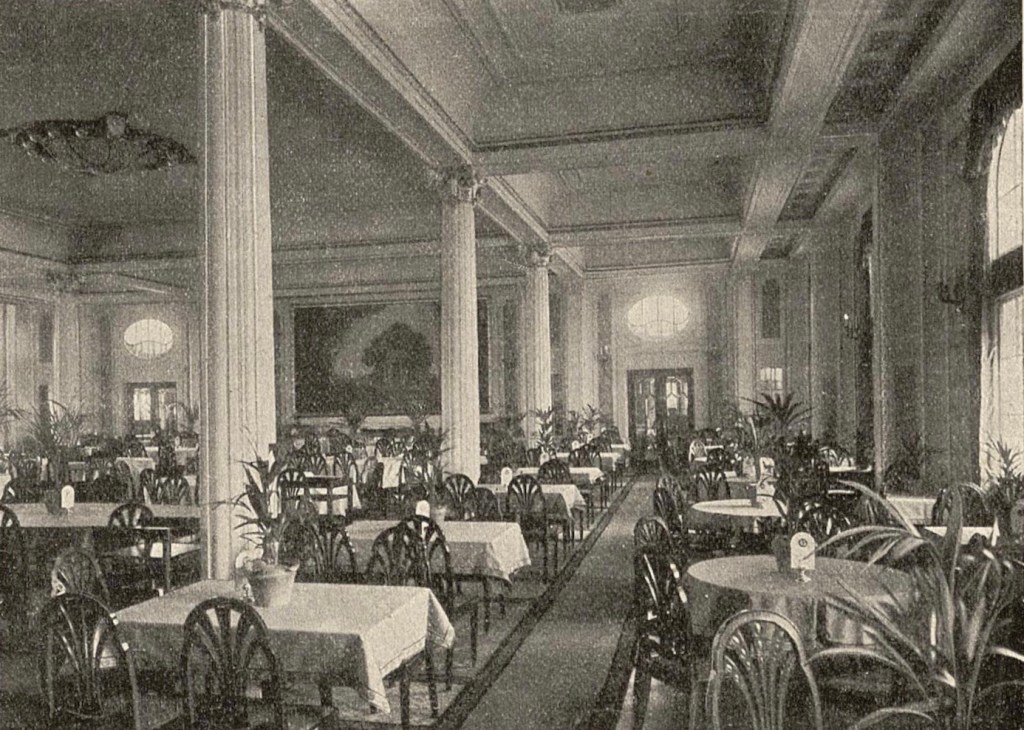



(Author’s Collection)
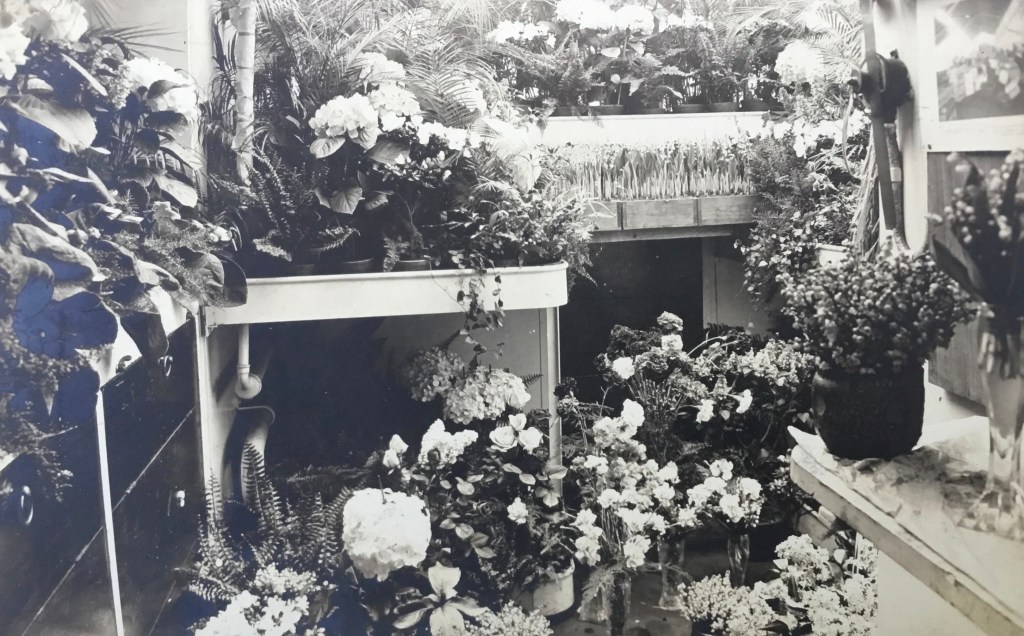


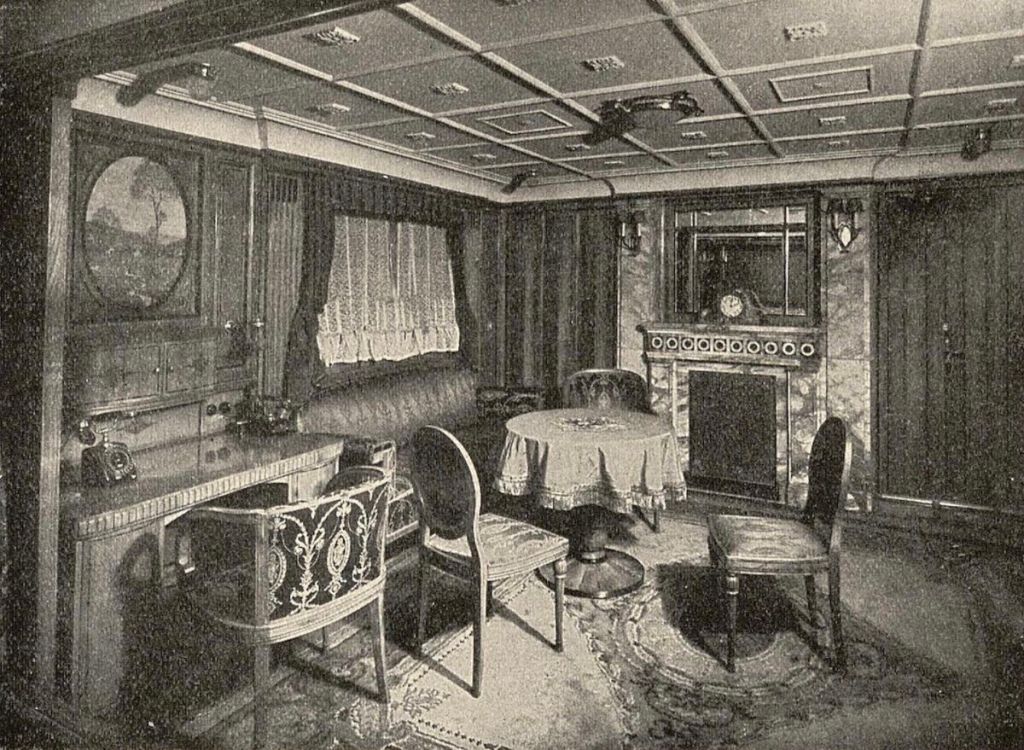
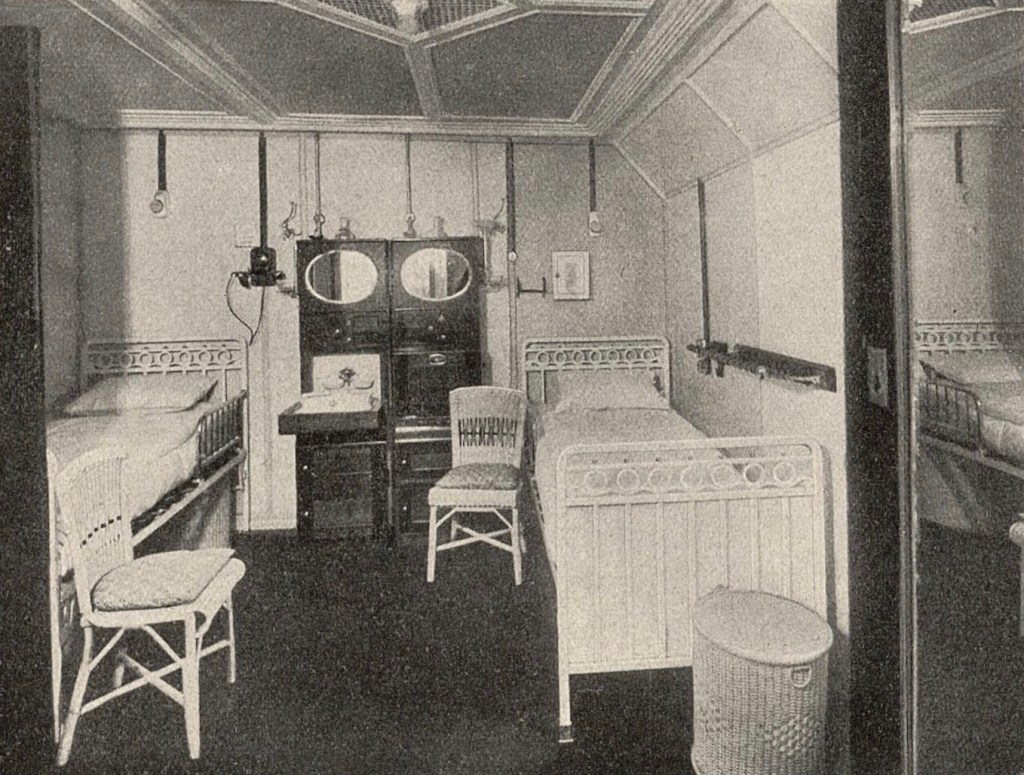
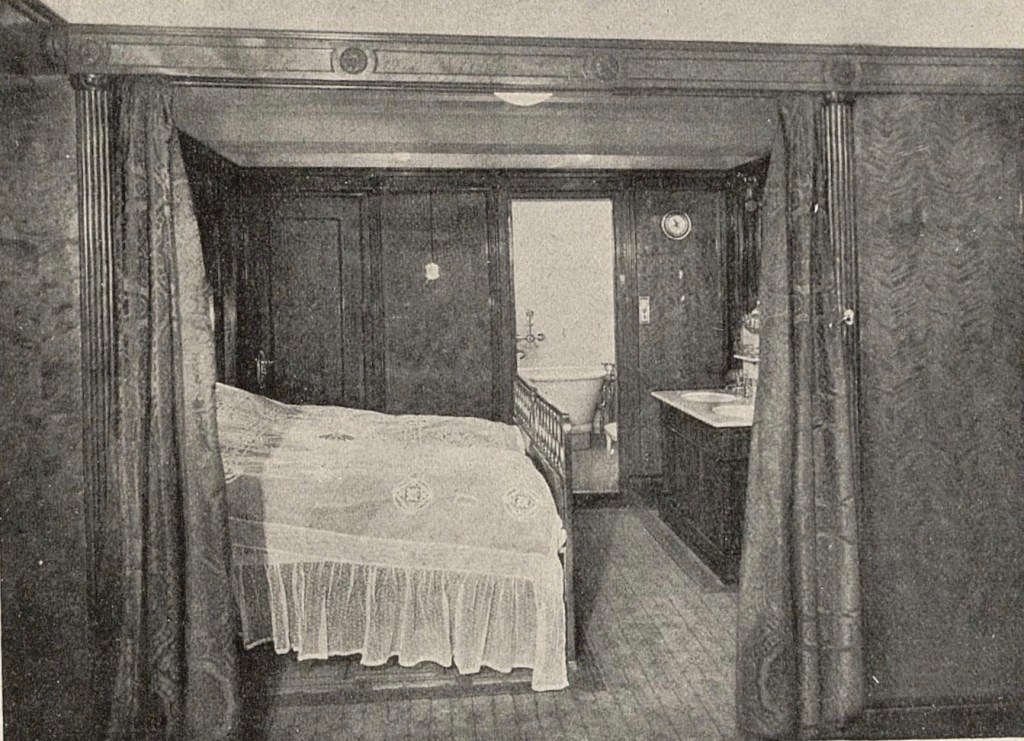


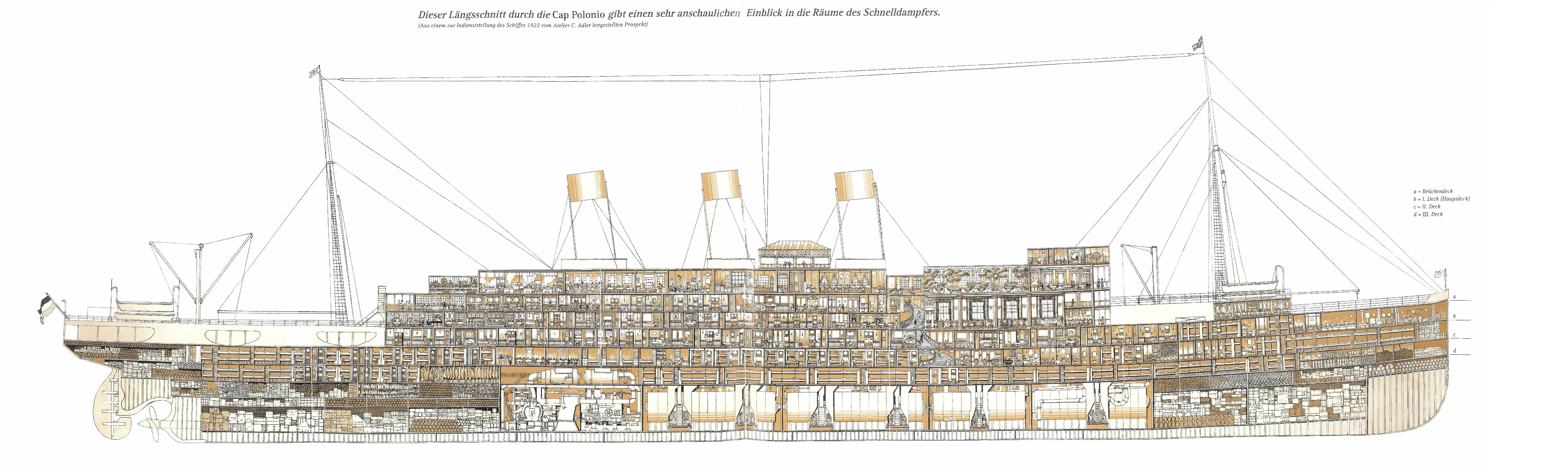
Cutaway of the Cap Polonio and Cap Trafalgar
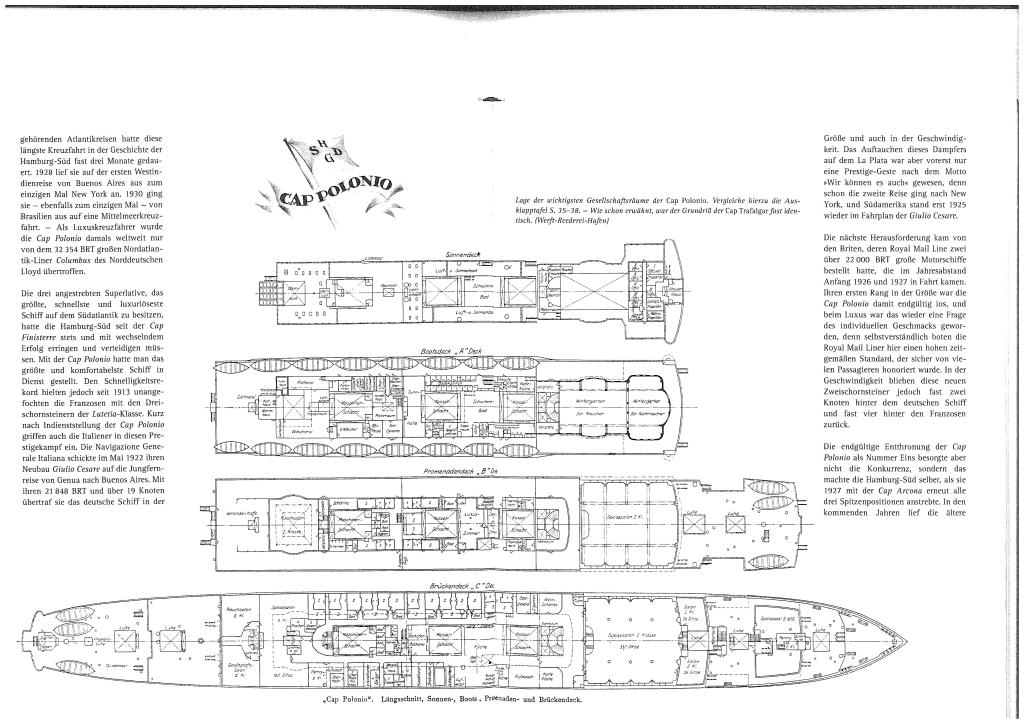
Deck Plans of the Cap Polonio and Cap Trafalgar
5 Months of service

The time certainly was right for Cap Trafalgar to enter service on the La-Plata route with Hamburg Süd in 1914. In 1912, the year had produced “very favourable results”. This year the Hamburg Süd hit a record in terms of passenger numbers carrying an astonishing 82’072 passengers compared to the 43’242 they had carried in 1910. The two Cap sisters would sail as a trio with the Cap Finisterre and could only boost Hamburg Süd’s growth. Another need for these ships was that their new French rival, Compagnie Sudatlantique had in this same year introduced Burdigala, ex-SS Kaiser Friedrich as the first vessel that sailed at 20 knots on the La-Plata route. The Cap Trafalgar commenced service on the 1st of March 1914 after her successful launch on the 31st July 1913, happening at the notable Vulkan Werft, in Bremen with her yard number being 334. The maiden voyage to Buenos Aires was nine days later on the 10th to much fanfare. Commodore Langerhannß was the best candidate as master of the ship, since he had previously commanded the SS Cap Arcona and SS Cap Ortegal.
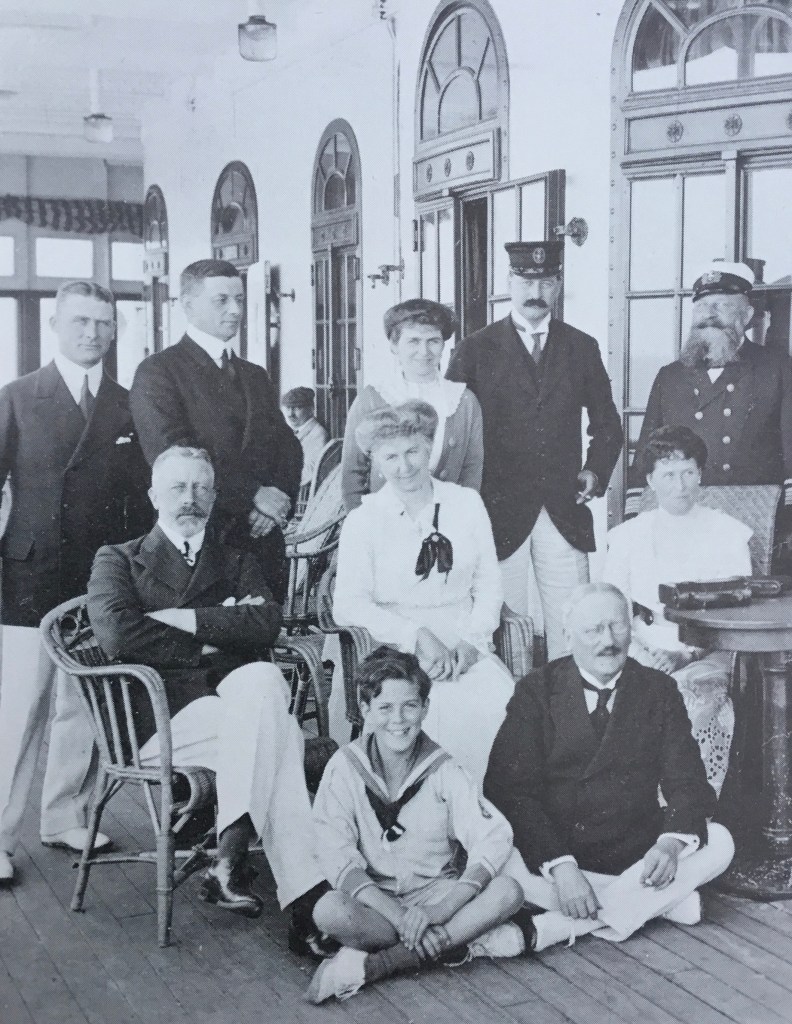
For her maiden voyage, the Cap Trafalgar carried 2 extremely special guests: Prince Heinrich of Prussia and his wife Princess Irene, the brother and sister-in-law of Kaiser Wilhelm II. The royal couple were on an official visit of South America and naturally they took the best way anyone in Germany could have chosen to get there. They stayed in a cabin with a wireless telephone that sent them all the important news of the world twice a day during their voyage. This news was also printed in the ship’s onboard newspaper. During the return voyage, Prinz Heinrich actually shot and directed a film with his consort as actors to be a present for Kaiser Wilhelm II. On May 10th the Cap Trafalgar docked back in Hamburg after a successful 30-day maiden voyage. The voyage had actually been delayed just for the royal couple because they Prinz Heinrich visited Chile.
Sadly voyages like these would not be replicated for long as Germany would join the First World War, on August 1st, 1914.

SMS Cap Trafalgar

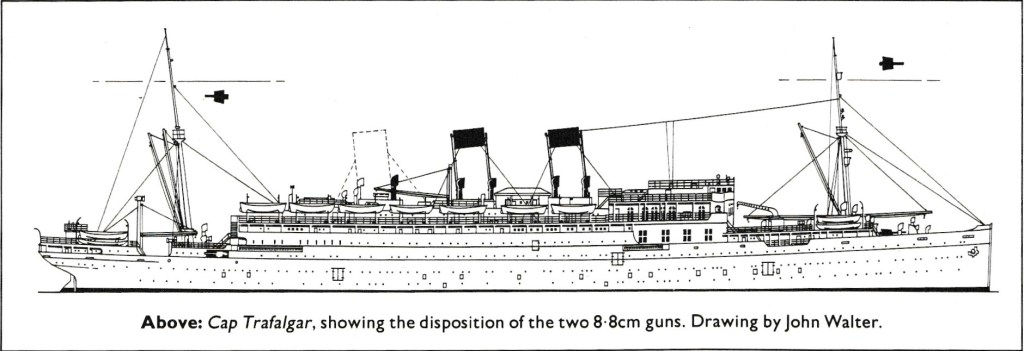
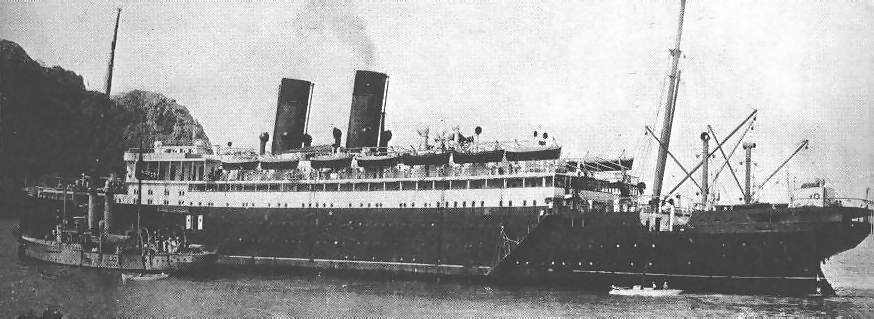
As soon as the First World War broke out, the Cap Trafalgar was in Buenos Aires on another typical voyage and was immediately interned by Argentinian authorities. She was captained by Commodore Langerhans, who had sailed the ship during peacetime. However no contraband or anything of suspicion was found in her holds and she was released despite there being rumours she was carrying extra coal and timber to reinforce her gun positions. The ship left and headed Montevideo on the 17th August where she took aboard 1700 tonnes of coal and sailed again on the 23rd. This was to meet up with with the gunboat Eber to receive her two arms and new leader, Captain Wirth who had necessary military experience. They also met the HAPAG liner Steiermark at the same time presumably to coal. During this meeting the ship’s third dummy funnel was removed to conceal her as a British vessel, as they had very few steamers with three funnels in their fleets. Now as SMS Cap Trafalgar she set out to do the raider’s work of capturing and sinking prizes to aid the war effort, but had no luck. 10 days found nothing in East South America and the ship docked in Ilha da Trinidade to coal again with her two vessels: Eleonore Woermann and Berwind. It was here, awaiting success that the ship would encounter its only fight of her two-week raiding career that spanned from 31st September – 14th August 1914.
Final Battle
Everything was quiet as the last of the coal was dropped into the chutes, leading to the belly of the ship. Suddenly, at 10:55am on this fateful day of August 14th, the lookouts spotted the smoke trails of a newcomer, and one that was far larger than the prizes they would expect to get. This newcomer was the proud British Cunard Line steamer, RMS Carmania. This was a sight of irony that surely felt like it was fabricated.
The Cap Trafalgar, having removed one of her three funnels to appear as a British vessel and was operating as merchant raider, had now met the British vessel she was impersonating, one which had been converted into a merchant cruiser, specifically to catch German raiders. Carmania was here, captained by Captain Noel Grant RN, to look for the German collier Patagonia which had been assisting another raider SMS Karlsruhe. She had already searched Pernambuco & Bahia Blanca and now arrived in Ilha da Trinidade, to look further.

Carmania was not to be taken lightly in the slightest. Despite both of them once being floating palaces, attracting many aboard to sail both their routes, Carmania was better armed and posed a severe threat. She had arrived in Liverpool exactly a week earlier on the 7th as an innocent passenger vessel three days after Britain declared war, but had been rapidly converted into a warship. She received eight old 4.7 inch guns on her shelter deck, A Barr & Stroud range-finder, searchlights on the bridge, and many rounds stored in her holds. A speaking-tube was strung between the bridge and the weapon stations, her flammable, gorgeous panelling from her cabins were removed, and finally an absolutely invaluable aft auxiliary steering room was installed should the bridge not function. Like her southern adversary, she was painted war-grey with her funnels coated black. (Although, Cap Trafalgar was disguised with red tops on her funnels). This made her surprise encounter with Cap Trafalgar, all the more shocking, as both vessels were extremely alike.

Eight minutes later after the Cap Trafalgar had spotted her foe, Carmania had done the same as she sailed towards the island. It quickly became clear that the Cap Trafalgar was not some friendly vessel, but a pirate as the two colliers beside her fled at an instant when Carmania approached. There was worry this was a trap, as Karlsruhe might be lurking behind the island awaiting an ambush with the Cap Trafalgar as bait. As a result, Carmania was steered to the centre of the island until they turned to pass Cap Trafalgar on their starboard side who was lying in harbour. However Cap Trafalgar suddenly steamed after her collier Berwind and now the Carmania turned to chase. As the two vessels drew closer, the officers of Carmania absolutely confirmed this was a disguise, as Cap Trafalgar was built with classic German lines. The missing third funnel was still confusing, and they misidentified her as Berlin of the NDL. Suddenly Cap Trafalgar swerved to starboard just off Carmania’s bow and with this the White Ensign was strung up on Carmania to declare their nationality. Three minutes later the German ensign was raised on Cap Trafalgar. The battle had begun.
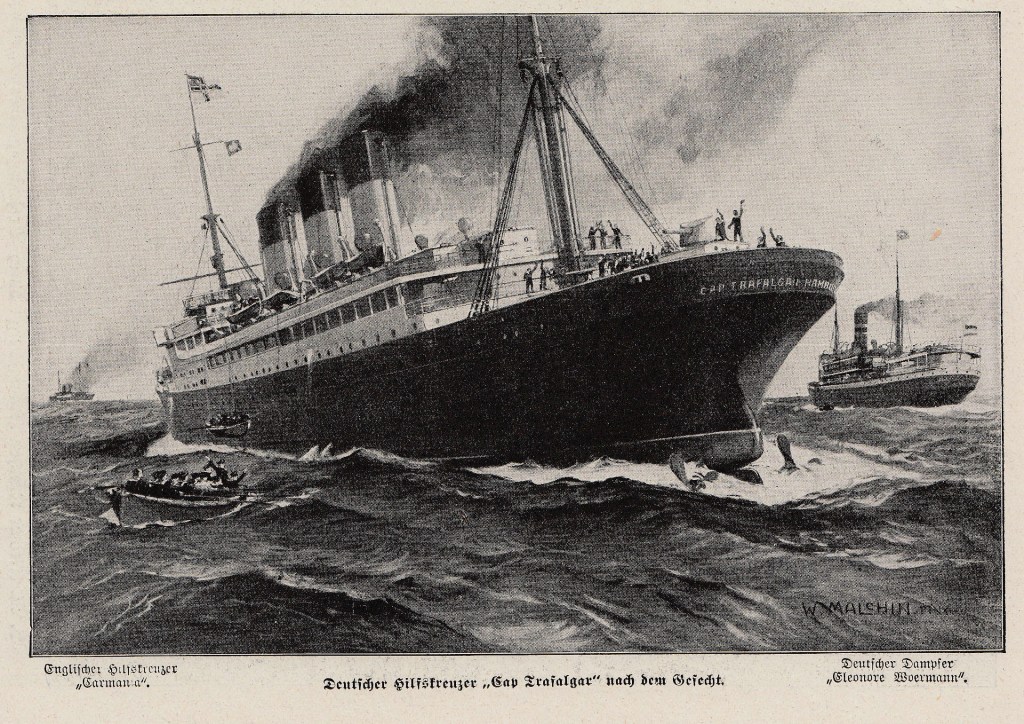
The first shot was fired by Carmania at 12:03 over the bow of Cap Trafalgar at a range of 8500 yards. Cap Trafalgar responded with several more, one only short by 50 yards. By 12:10 the distance narrowed to 4500 yards and both vessels let loose an absolute barrage, tearing at each other. The horror aboard the Carmania was described as:
“We turned into demons, in a scene that turned diabolical. Screaming shrapnel, returned by salvos of common shell; splinters everywhere; lumps of iron; ….. ;hoarse shouting and unintelligible sounds from dry throats. Men laughing with delirium …. a shot glanced off the shield of No.1 gun, past the officer in charge, and blew away the neck of a corporal of marines passing projectiles along the deck…“
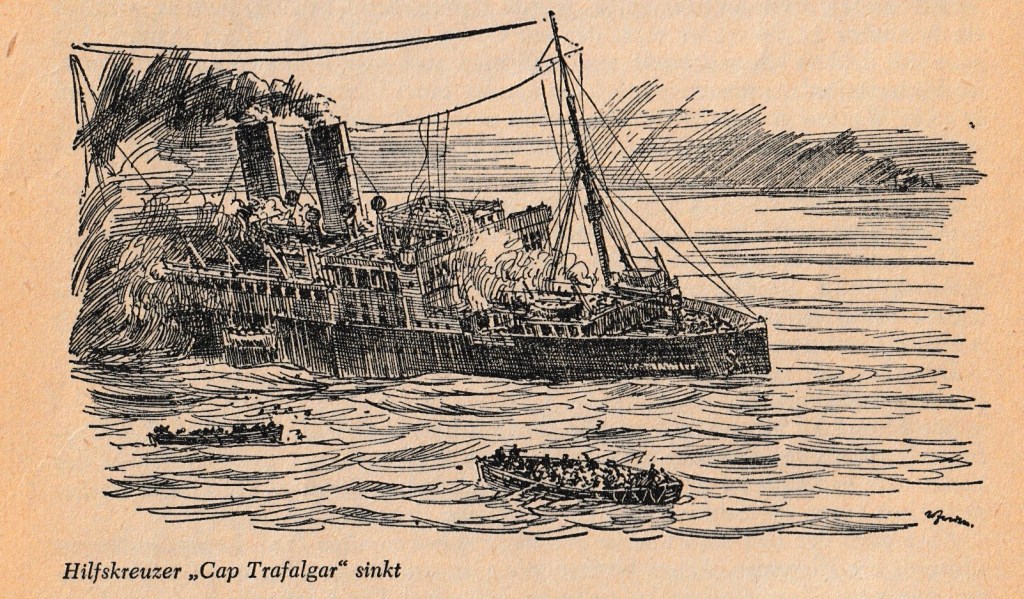
Cap Trafalgar was making 18 knots, a 2-knot advantage over her foe and as she got closer at 4000 yards, aimed hard for Carmania’s bridge setting it ablaze but that crucial auxiliary steering room kept up the fight. Cap Trafalgar also tore away the fire-control position, rigging, lifeboats and ventilators with extreme accuracy. Carmania was still holding on strong and Captain Grant took advantage of the starboard list of Cap Trafalgar and had all guns to aim for the waterline to bring the vessel down. This worked and Cap Trafalgar was seriously wounded, listing harder and her forward catching ablaze. This was the deciding point in the battle, Carmania sailed further away out of range whilst Cap Trafalgar stopped shooting altogether. It was a sad sight, she had tried to sail back to Ilha da Trinade, but her engines gave out, speed stopped, lifeboats were lowered, and the great ship was going down.

16 sailors went down with the ship, including Captain Wirth. The survivors rowed towards Berwind who had returned. Cap Trafalgar tipped onto her starboard side and sank at an angle. When the funnels reached the water, a colossal amount of black smoke and steam erupted from the ship. She righted herself, now going down at an even keel, as the stern rose up. She rose until the last third of the ship was perfectly straight out of the water, and then went straight down finally. The last thing to be seen above the waterline was the German flag on her stern.
Carmania was also in horrible condition: her fires being fought for hours and sailing without a bridge. She was holed everywhere and had also sadly lost five crewmembers, with four more dying of their injuries. She was thankfully able to make it to land in Abrolhos a day later, escorted by British cruisers. After heavy repairs she continued her war service and then resumed life with more excellent service as a passenger liner. Like many, the Great Depression rendered her unprofitable and she was broken up in 1932: the final end to the survivor of this legendary battle.
Bibliography
- WIRELESS FOR PRINCE HENRY; New York Times, March 18th 1914 : https://www.nytimes.com/1914/03/18/archives/wireless-for-prince-henry-he-gets-the-worlds-news-dally-on-the-cap.html?searchResultPosition=10
- Simpson, Colin : The Ship that Hunted Itself, Stein and Day, New York 1977 ISBN 0-8128-1926-8
- Kludas, Arnold : Die Geschichte der Deutschen Passagierschiffahrt Band III: Sprunghaftes Wachstum 1900 bis 1914 (pages 49-54), Ernst Kabel Verlag GmbH, Hamburg, 1988
- Mielke, Otto ; SOS Schicksale Deutscher Schiffe Nr. 109 “Beliebte Dickschiffe der Hamburg-Süd (page 5), Arthur Moewig Verlag, Munich
- Kludas, Arnold ;Die Geschichte der Deutschen Passagierschiffahrt Band III: Sprunghaftes Wachstum 1900 bis 1914 (page 54), Ernst Kabel Verlag GmbH, Hamburg, 1988
- Walter, John ; The Kaiser’s Pirates, German Surface Raiders in World War One (pages 47-51), Arms & Armour Press, London, 1994
 The Kaiserhafen
![[i]](https://commons.wikimedia.org/wiki/File:Dampfer_Cap_Trafalgar_1899.jpg)
![[i]](https://de.wikipedia.org/wiki/Datei:Cap_Trafalgar_Kajuete_1914.jpg)
![[i]](https://commons.wikimedia.org/wiki/File:Cap_Trafalgar_mit_SMS_Eber.jpg)
![[i]](https://commons.wikimedia.org/wiki/File:SHATTERED_BRIDGE_OF_THE_CARMANIA.jpg)