
| Name | SS Kaiser Friedrich |
| Operator | Norddeutscher Lloyd, Bremen |
| Yard Number | 587 |
| Code Number | QGMR |
| Builder | F. Schichau, Danzig |
| Launch Date | 5th October 1897 |
| Maiden Voyage | 7th June 1898 |
| Tonnage | 12’481 GRT |
| Length | 182.9m (overall) 177.3m (waterline) |
| Width | 19.42 meters |
| Draught | 11.56 meters |
| Installed Power | 25’000 hp |
| Maximum Power | 28’800 hp |
| Propulsion | 2 quadruple-expansion engines |
| Speed | 19 knots service (35.19 km/h) 21.5 knots max (39.82 km/h) |
| Crew | 456 |
| Passengers | 1st Class: 350 2nd Class: 250 3rd Class: 700 |
| Nickname | The Mammoth Yacht |
SS Kaiser Friedrich – “The Mammoth Yacht”

SS Kaiser Friedrich was a vessel truly set up to be one of the most opulent, competitive and iconic vessels of the early 20th Century, but that never happened. Instead of being remembered among ocean greats like SS Kaiser Wilhelm der Grosse, SS Deutschland and RMS Lusitania, she passed through history with very little impact. This ship had a single technical flaw which gave her unreasonably high expectations which led to this vessel sailing under her true owners for one year, their rival for another, being laid up unwanted for 10 more, sailed under new owners for two years only to be sunk after 2 years of war service bringing her story to an end once she had finally gained respect. This short, unsatisfying career was truly undeserved because even though she wasn’t capable of of the speed she was envisioned with, this ship was still a gorgeous, comfortable liner that served admirably in the First World War so she absolutely deserves recognition. And thankfully, by the multiple compassionate, extremely-informative articles that exist online and helped write this one, this ship has much-deserved admirers and so their efforts can be contributed to as well.
Conception
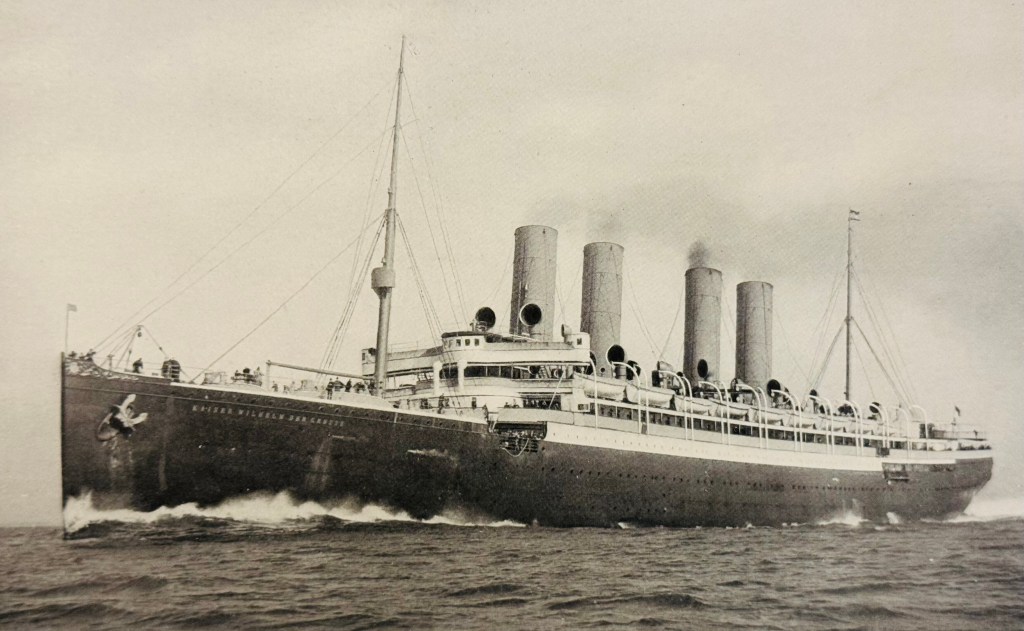
(Author’s Collection)
Everything started in the 1890’s with the North German Lloyd Steamship company. It was headed by Director Heinrich Wiegand who was determined to outclass their biggest rival: Hamburg America Line (HAPAG). Hapag was building a fleet of high-speed express steamers so Wiegand made the bold and risky decision in 1895 to order four medium-range steamers, and two colossal superliners to outclass Hapag’s best. These two vessels would soon be known to the world as SS Kaiser Wilhelm der Grosse and SS Kaiser Friedrich.
Both ships were ordered at the same time and only 2 shipyards rose to the challenge and accepted the orders: AG Vulkan, Stettin for the Kaiser Wilhelm der Grosse, and F. Schichau, Danzig for the Kaiser Friedrich. F. Schichau accepted the order on the 5th November 1895 and began construction the following February. The keel for their superliner was laid on the 5th May. Neither of these contracts were going to be easy jobs in the slightest, as both yards were mandated by contract from the NDL to build a ship each that would have at least a 21-knot service speed. This speed and size was necessary to allow both ships to outcompete the British record-holders: Campania and Lucania. With 21 knots, both vessels could cross the Atlantic to New York in only six days putting NDL at the lead amongst their competitors.

The Kaiser Friedrich and Kaiser Wilhelm der Grosse were planned to be akin to sisterships, namely matching in passenger accommodation, speed and technical prowess, but not dimensions. Because the Kaiser Friedrich was considerably smaller, she was expected to be the faster of the pair by far, easily continuing Lloyd’s train of success that the first Kaiser had proven immediately upon entering service. When she would enter service, she would be the fourth-longest ship in the world, fifth in history since the Great Eastern had been long-since dismantled. F. Schichau had assured Lloyd that the Kaiser Friedrich would be faster than her mate by roughly three-quarters to a full knot, which they had full confidence in as this company was very reputable in building high-speed military destroyers.
Building the second superliner
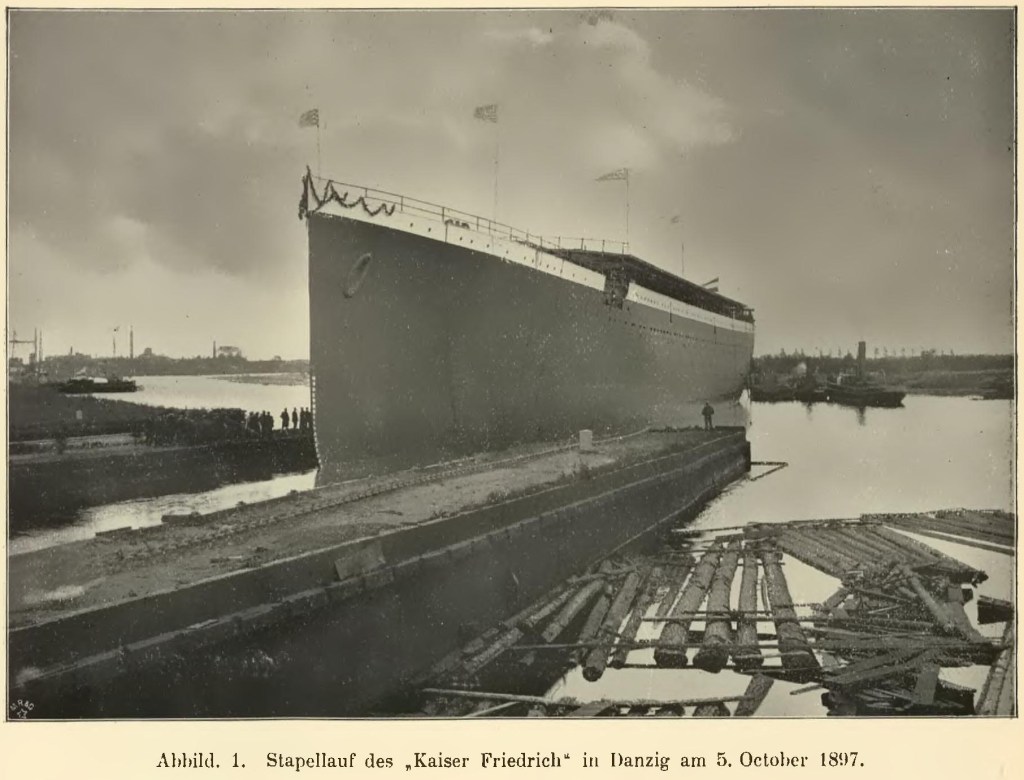
Both AG Vulkan and F. Schichau received their contracts to build their ships in 1895 from Wiegand with full creative liberty with how they were designed as long as they could achieve 21 knots. The Vulkan Werft designed and launched their ship earlier than F. Schichau with that taking place to much acclaim on the 4th May 1897. They then completed her and sent her on her sea trials less than four months later, again to great success. F. Schichau wasn’t far behind and launched their ship as Hull no. 587 on the 5th October of the same year. Just like with the Kaiser Wilhelm der Grosse, the launch was conducted by his majesty Kaiser Wilhelm II himself. Completion was a while longer compared to the Stettin liner but they still managed, setting the new ship on her sea trials on the 5th May 1898. Kaiser Friedrich had been less expensive to construct than her running mate, but had still gone largely over-budget. There was no denying that F. Schichau had an eye for design with their very first large passenger ship, with her three funnels and exquisite interiors: she was a true floating palace on sight. The long, streamlined and sleek profile of the ship would earn her the nickname of “The Mammoth Yacht”.
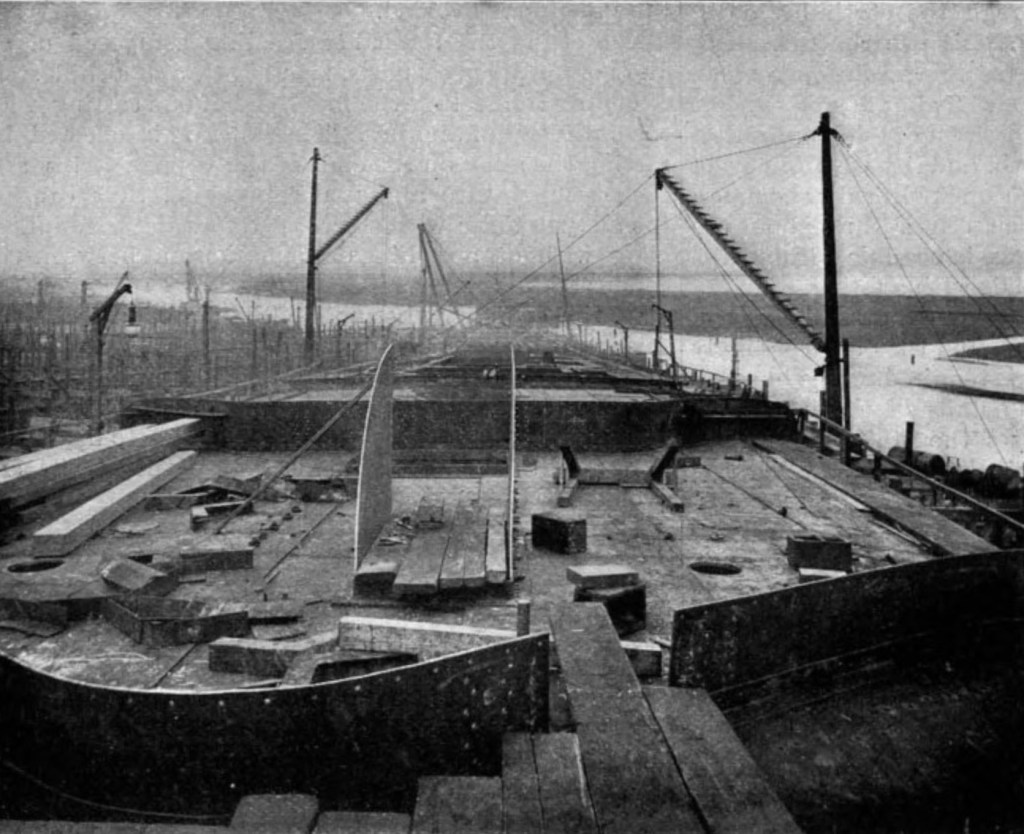
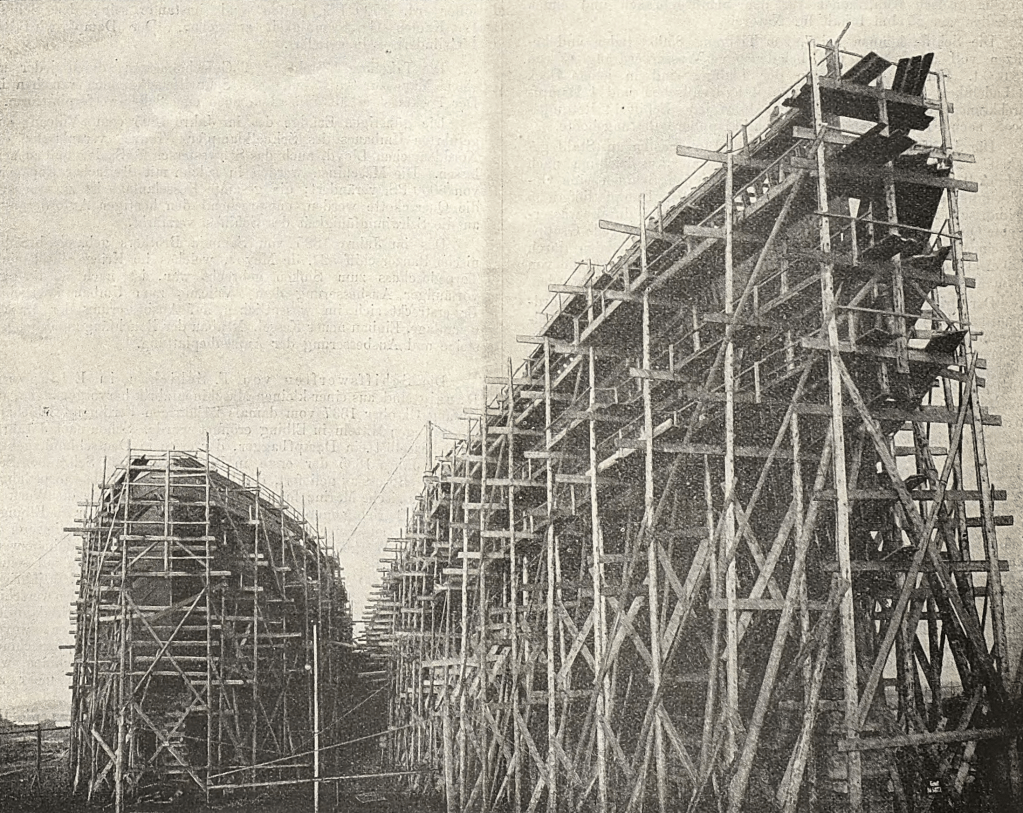
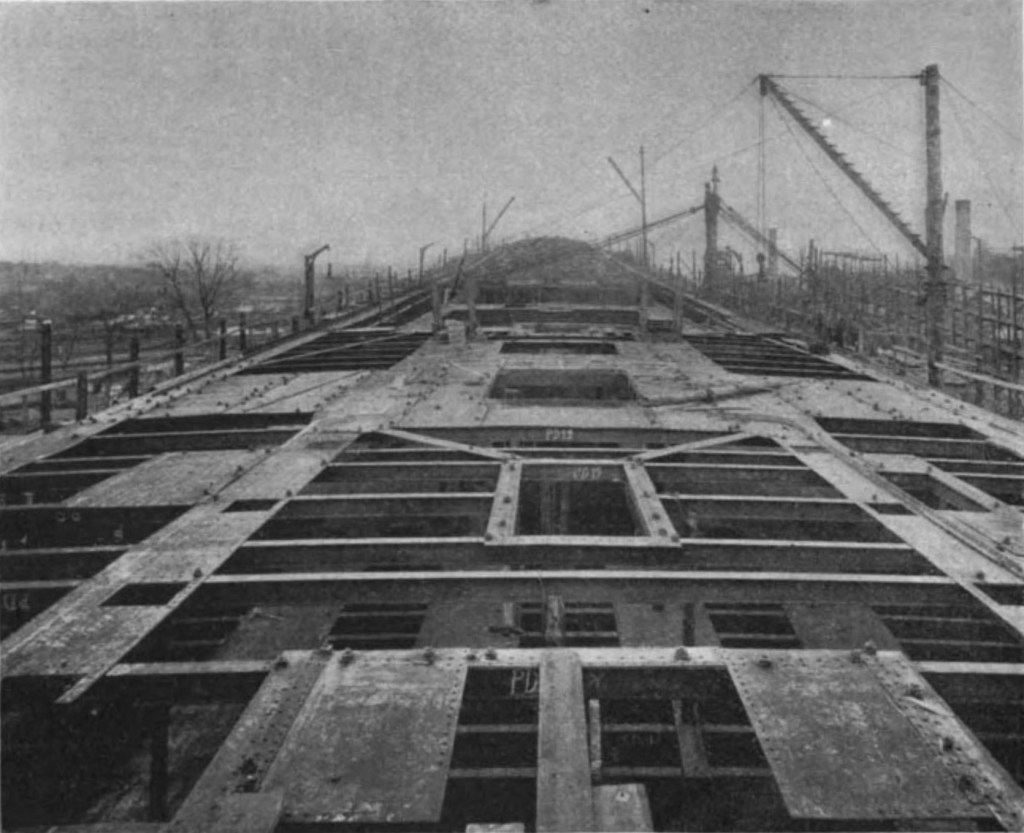

Technical Specifications
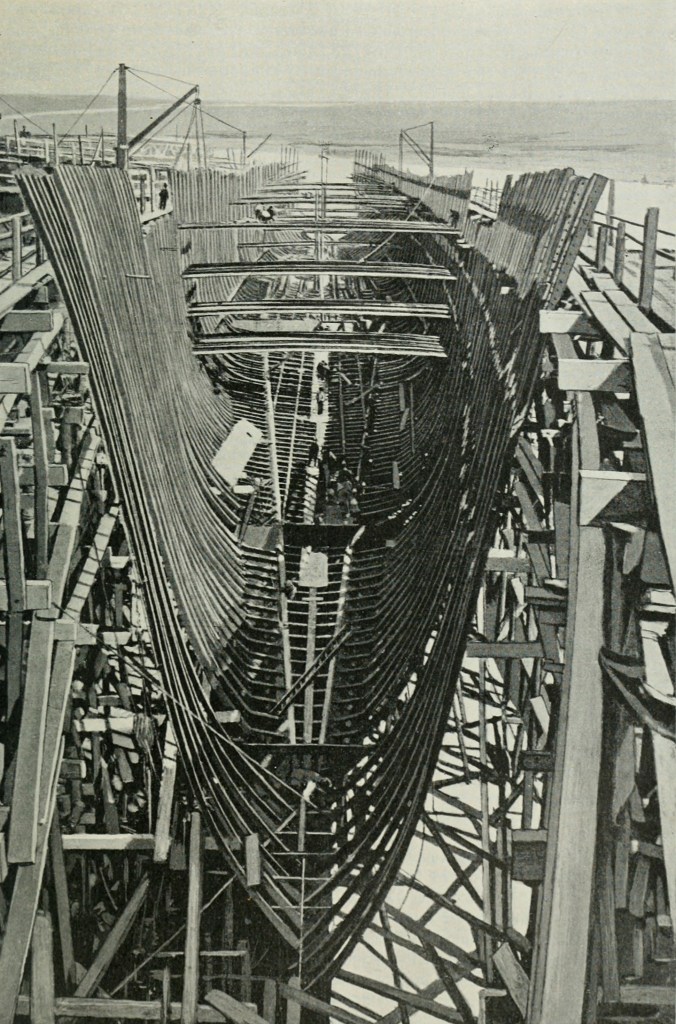
Like the Campania and Lucania before them, the Kaiser Friedrich was intended to match the power of the Kaiser Wilhelm der Grosse and maintain a timetable using both ships. Therefore, they were of similar design and specifications. She was a smaller ship in most aspects, measuring 12’481 GRT and with a length of 182.9m compared to Wilhelm’s 14’349 GRT and 197.7m. Compared to Wilhelm’s two, triple-expansion engines and maximum output of 31’000 horsepower, Kaiser Friedrich was equipped with two, quadruple-expansion engines that gave her a maximum of 28’000 horsepower. It was calculated that the vessels smaller size would allow her to reach the same speed as her running mate despite the lower engine power. Being built a year later too, lessons were learned and the Kaiser Friedrich was equipped with anti-vibration measures, namely her engines being placed more towards the centre of the vessel, compared to aft on most ships. The ship’s propellors were made from bronze with the propellor shafts being nickel steel. The boilers were all grouped in threes, each in surrounded by a watertight compartment. Because of this arrangement, she had one boiler room placed behind the engines, whilst all the others lay in front for a total of nine double-ended, and one single-ended.
The ship was built with a watertight double bottom that ran the entire length of the vessel, and the hull itself was divided into 18 watertight compartments with 17 bulkheads. It was calculated that if any 3 of these compartments were flooded, the ship would still remain afloat.
In accordance to the construction of all express steamers within Germany, the Kaiser Friedrich was also built with extra features and modifications so that she could serve as a cruiser in the Navy, if war broke out. These included the rudder being placed entirely underwater to prevent it from being shot off during a fight, her entire steering apparatus was also placed below water and her stern was reinforced to protect it, gun mounts being pre-installed on her decks to allow for faster conversion.
Deck Plans
Interiors

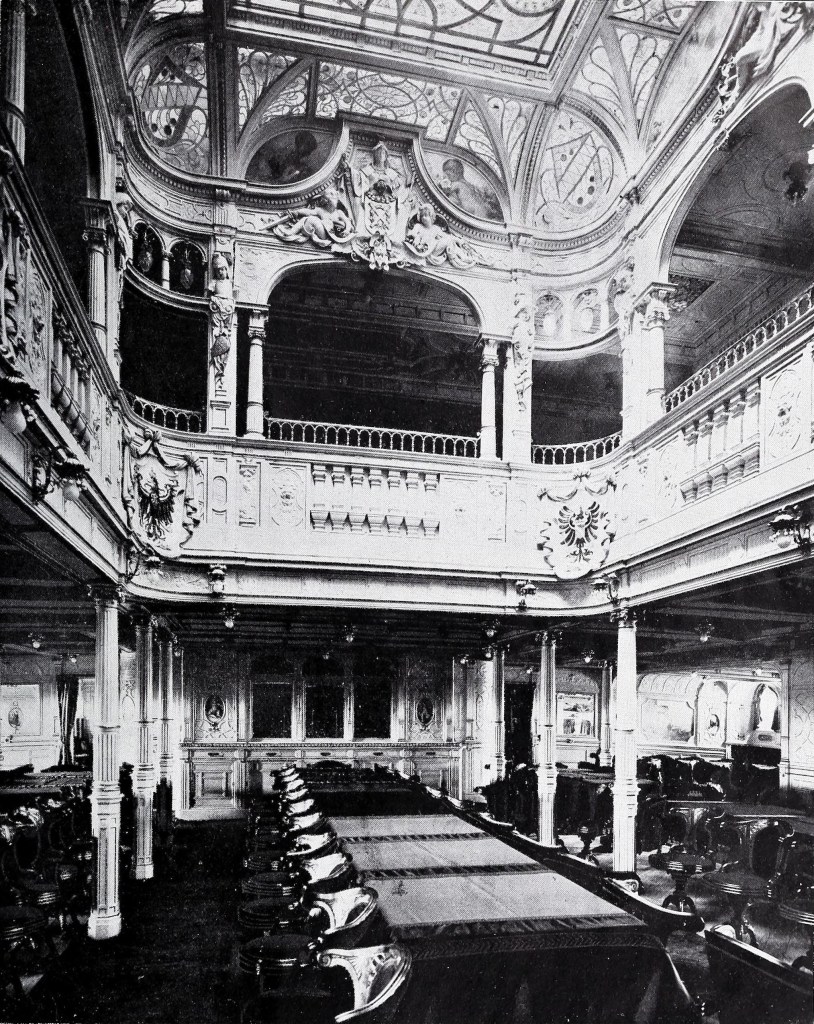
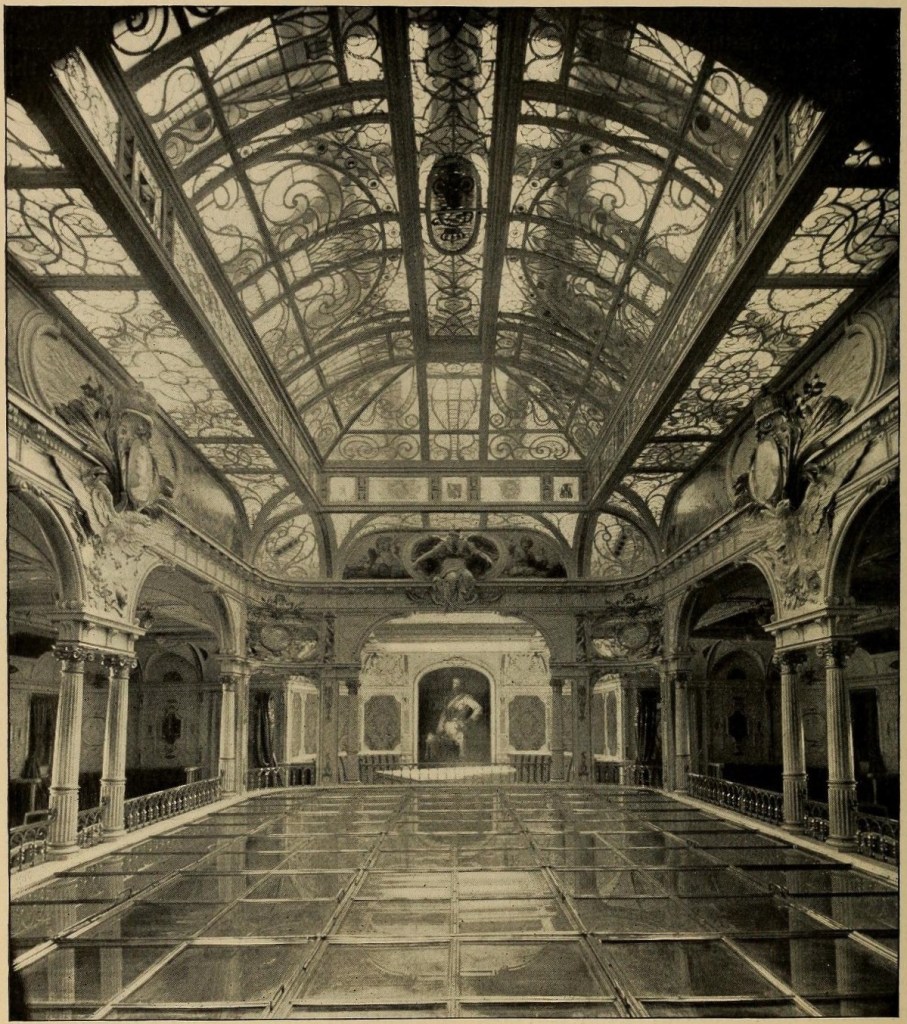
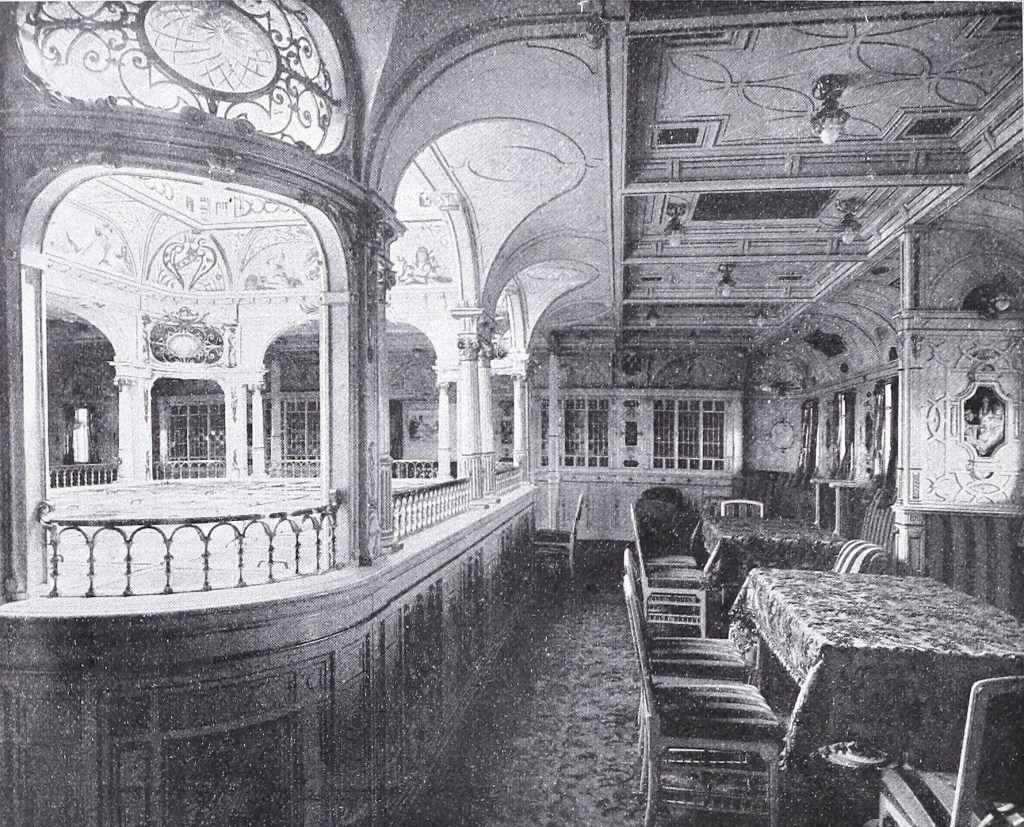
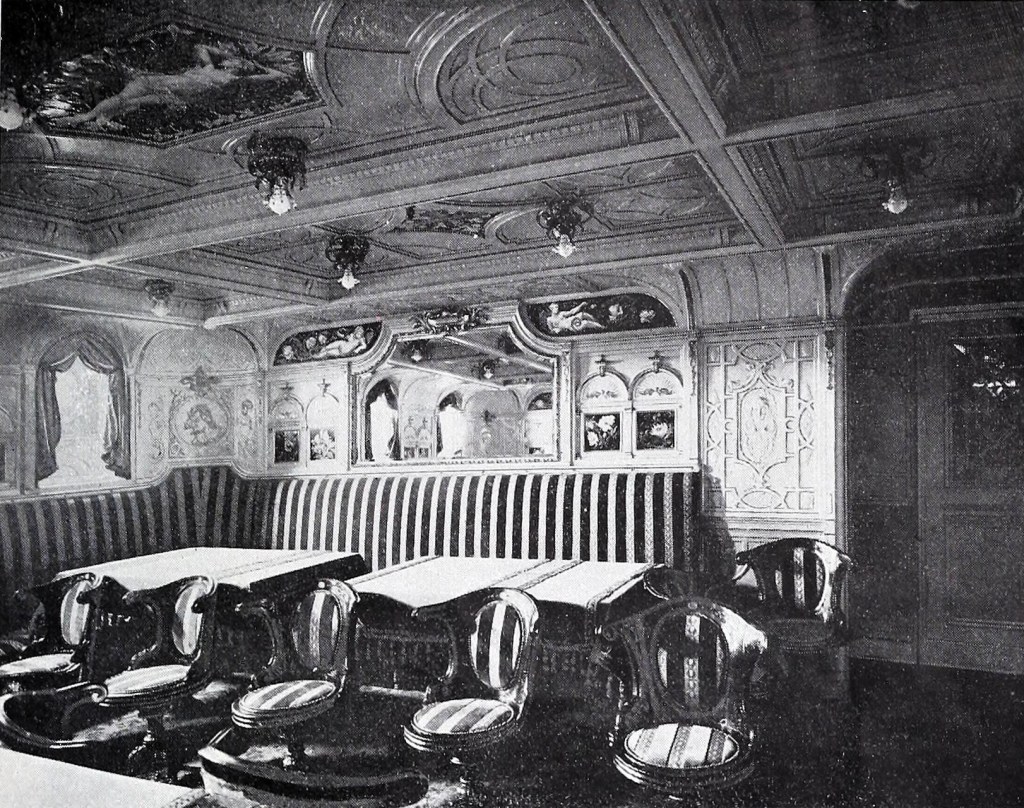


Sailing Career
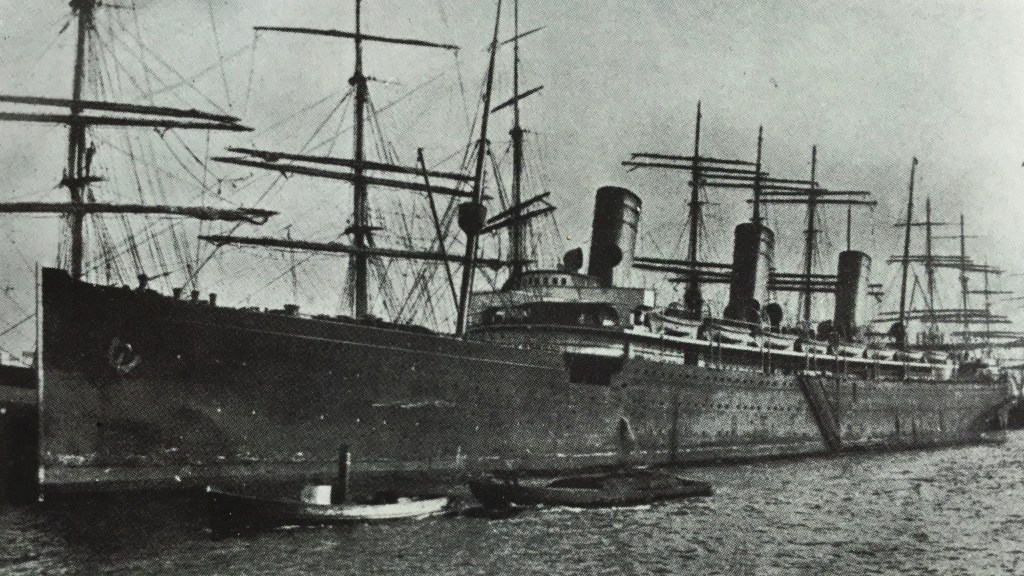
The Kaiser Friedrich left Danzig for the first time on the 12th May 1898 for a test-maiden voyage to Bremerhaven. This short trip was a warning, as to the dismay of the Lloyd and the engineers who built her, the Kaiser Friedrich was underperforming, in stark contrast to the Kaiser Wilhelm der Grosse previously. Even when going full-force, the Kaiser Friedrich was only hitting about 20 knots at the most, rather than the required 22 to be a running mate to Kaiser Wilhelm der Grosse. With just that, the Lloyd refused to accept this ship as it would have no use for them without the required speed. F. Schichau understandably was not happy either, and heavily assured the Lloyd that they would fix this problem if they took back over the ship for the time being. Already from her first voyage this ship was not having any luck, and this would sadly be a hint for the rest of her career.
Kaiser Friedrich meeting her requirements was absolutely pivotal for F. Schichau as they had their worldwide reputation on the line and needed to stay as one of the best. They also owned 62% of the shares for the ship and it would become their financial burden if Lloyd rejected it. They immediately sent the ship to Southampton to be tweaked and adjusted for better speed. They drydocked the vessel and their most important change was reducing the two propellor blades by 30cm. On the first of June she departed back to Bremerhaven into the Lloyd fleet for another try.

First Crossing
This was the true maiden voyage, crossing the Atlantic to New York from Bremerhaven. This happened on the 7th June 1898 under veteran NDL captain: Ludwig A. Störmer. Her passenger count was just 392: 209 in the First & Second class with 183 in Third. The first leg was from Bremen to Southampton and things did not start out promising. After a good start, bad weather and mechanical problems slowed the ship down extremely. Insanely during this voyage, both the engines failed: the first for 20hrs and 26 mins, and the second for 11hrs and 42mins, though both not at the same time. This voyage soon turned into a disaster as the Kaiser Friedrich finally pulled into New York on June 16th after 7 days, 10 hours, and 15 minutes from departing Southampton after having sailed at an average speed of 17.73 knots. For reference, the Kaiser Wilhelm der Grosse had done the exact same journey for her maiden voyage at 21.39 knots. Even in spite of this disaster, passenger comfort was exceptional as the guests were pleased with her accommodations and there was zero vibration, – something that not even the Kaiser Wilhelm der Grosse could boast of.
Return Maiden Voyage
9 days later on the 26th June, the Kaiser Friedrich departed New York without any passengers on the return trip. Any sort of redemption on the way back was destroyed quickly as the ship had an even worse return trip of an awful 9 days 2 hours and 30 minutes just to Southampton at a speed of roughly 15 knots. This must have made the Lloyd furious as the first return voyage of the Kaiser Wilhelm der Grosse had been a fantastic surprise when she sailed at 22.33 knots and thrust the Blue Riband for the first time in history into German hands. As such, the next two trips were immediately cancelled for the Kaiser Friedrich and she was sent back to F. Schichau to be repaired and get her faster.
Second Crossing

By September 4th she was ready, and was handed back to the Lloyd for her second crossing. 10 days later she departed Southampton for New York again to receive better results. This she absolutely did, as she arrived in New York with a time of 6 days and 12 hours at a speed of 19-20 knots. This was improvement of a full day and almost 2 knots – but she was still slower than the Kaiser Wilhelm der Grosse by almost a day. That 22 knot contract or nothing else still had to be fulfilled by Schichau to actually sell the ship, thus they needed to push it even further. There was a slight bit of hope the ship might be capable of her needed speed, as she sailed at the required 21.5 knots during one sailing from Bremen to Southampton.
Later crossings
The Kaiser Friedrich had three more trips before the end of 1898 and none of them was giving the Lloyd much hope. Schichau was determined and they gave the Kaiser Friedrich an insane third refit that winter. One thing that the newspapers had been giving the ship bad press about was that her engines were “easily overheated“. Schichau sought to end this and so they installed new air pumps in her boiler and engine rooms. They also made the wise decision to lengthen the funnels by 4.5 meters – greatly enhancing the profile of the ship and making her more in line with the Kaiser Wilhelm der Grosse.
Rejection
Sadly the Kaiser Friedrich would only sail 9 more times under the Lloyd flag before they would finally rid themselves of this ship, which had only completed a grand total of 14 crossings by then. The first voyage of 1899 was off on the wrong foot as the newly-mended ship lost two propellor blades on the way to New York, and had a slow crossing of 7 days and 40 minutes. Lloyd was about done with this ship by this point, but losing the running mate of their most popular ship was too great and so they decided to be patient and stick it out, as they had no replacement. During her final few crossings until June 1899, the ship’s best record was 6 days, 22 hours and 30 minutes. It was now undeniable this ship would never maintain 22 knots, no matter how many tweaks Schichau gave the ship. Their worst fear had officially become true.
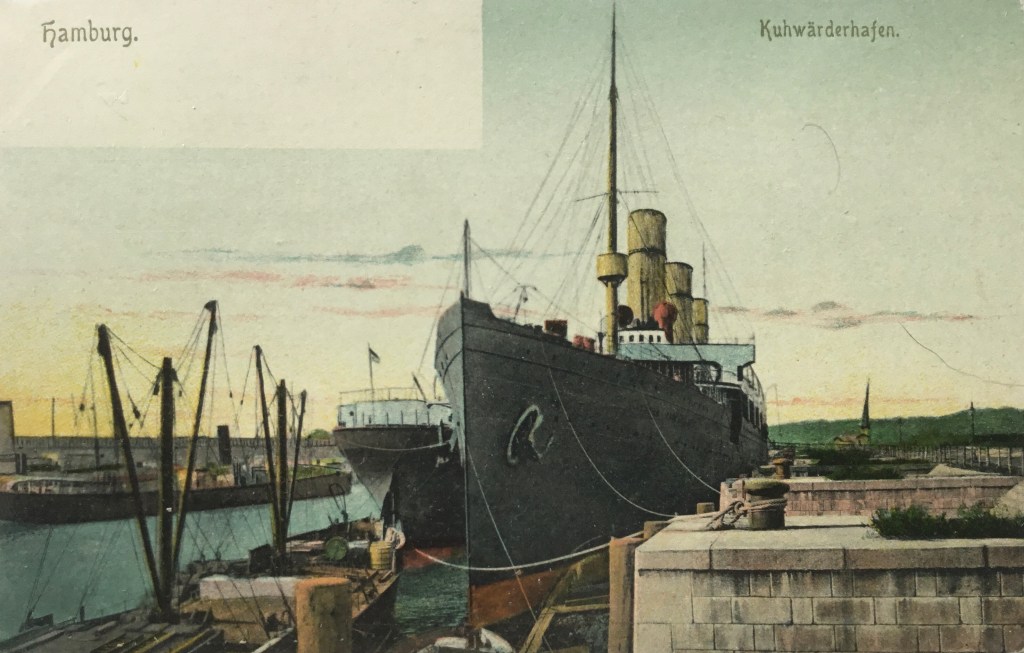
On the 27th June, -before the ship had even made it back home, the Lloyd officially notified F. Schichau that they would be returning this ship due to breach of contract. F. Schichau was upset but just 4 days later the Lloyd ordered their solution and replacement with two liners from AG Vulcan Stettin, who had given them the Kaiser Wilhelm der Grosse. This was to be a sistership and a modified larger ship of the same class. These would be the SS Kronprinz Wilhelm and the SS Kaiser Wilhelm II. These ships would arrive in 1901 and 1903 respectively, both could sail 23 knots + , and both would give Lloyd back the Blue Riband. Until then, two smaller liners: Saale and a different Kaiser Wilhelm II filled the gap left by the Kaiser Friedrich.
Lloyd vs Schichau
The Kronprinz Wilhelm would be delivered to the Lloyd in September 1901. When Lloyd had previously informed Schichau they would be returning the Kaiser Friedrich, Schichau was angry and said the Lloyd couldn’t return the vessel as they had never officially accepted her in the first place. F. Schichau themselves wanted to withdraw the Kaiser Friedrich from service and dispose of her in their own way. They also claimed that the Lloyd had used inferior quality coal and inexperienced engine staff which was why the ship had never reached its contracted speed. The moment the Lloyd received the Kronprinz Wilhelm, Lloyd and Schichau would go to court in an intense legal battle over the Kaiser Friedrich that would not be resolved until 1908. Eventually in 1908, Lloyd won the case but even before that they still offloaded the Kaiser Friedrich back to F. Schichau who now had to convince somebody to buy it.
Why was this ship unworkable?

As mentioned, F. Schicau Shipbuilders Danzig was no joke and was highly-regarded as a builder of high-speed vessels. The main issue was that they primarily designed military vessels: torpedo boats and destroyers, and they had never built large civilian craft before. And so, they applied their knowledge of military craft to the Kaiser Friedrich because that was simply what they did best. Kaiser Friedrich’s totally radical machinery placement was just like that of a military destroyer: – quadruple-expansion engines in the centre with three boiler rooms forward, and one aft. They also paid attention to her hull shape and believed it would make her faster. Despite her lower engine power of 28’000 hp, her arrangement made F. Schichau confident she would be roughly a knot faster than Vulcan’s Kaiser Wilhelm der Grosse. The math all seemed to add up, but this ship was an experiment – a word the Lloyd would come to dislike over their next few years. Besides the machinery and propellor problems the ship would be plagued by in her civilian career, her extremely long military-like propellor shafts would be another source for her shortcomings.
Thus that was what the Kaiser Friedrich was: a gorgeous, beautifully-appointed ship that was a pleasure to sail on, – and would work wonderfully under any shipping line besides the North German Lloyd. Her only issue was that she was not a record-breaker, and never could be.
Under the Hamburg American Line
Coming Soon!
Souvenirs from time aboard the Kaiser Friedrich
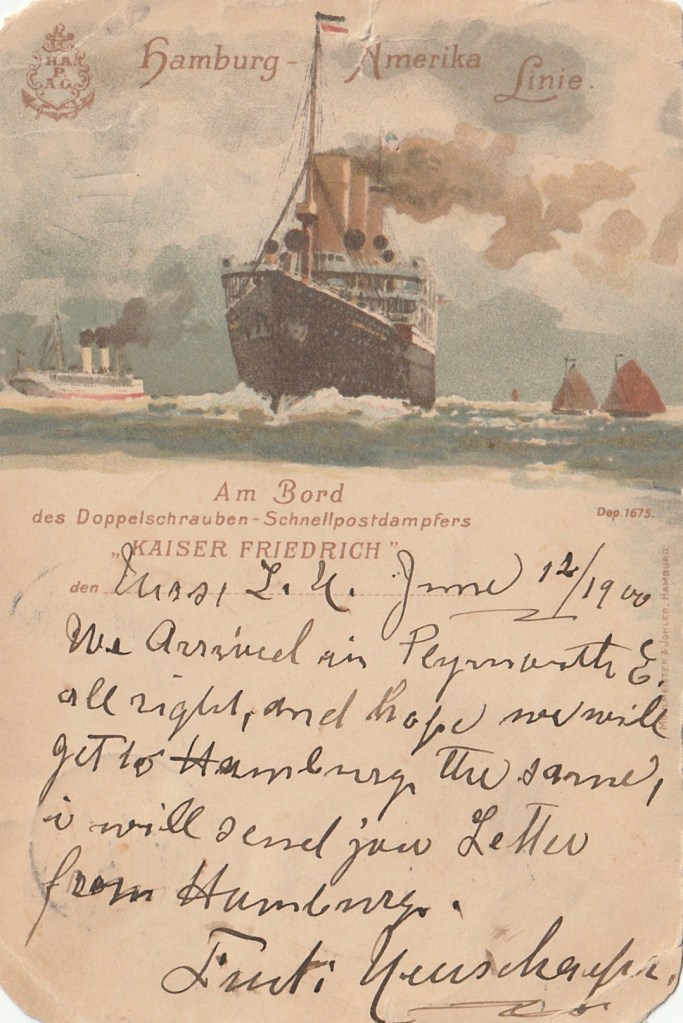
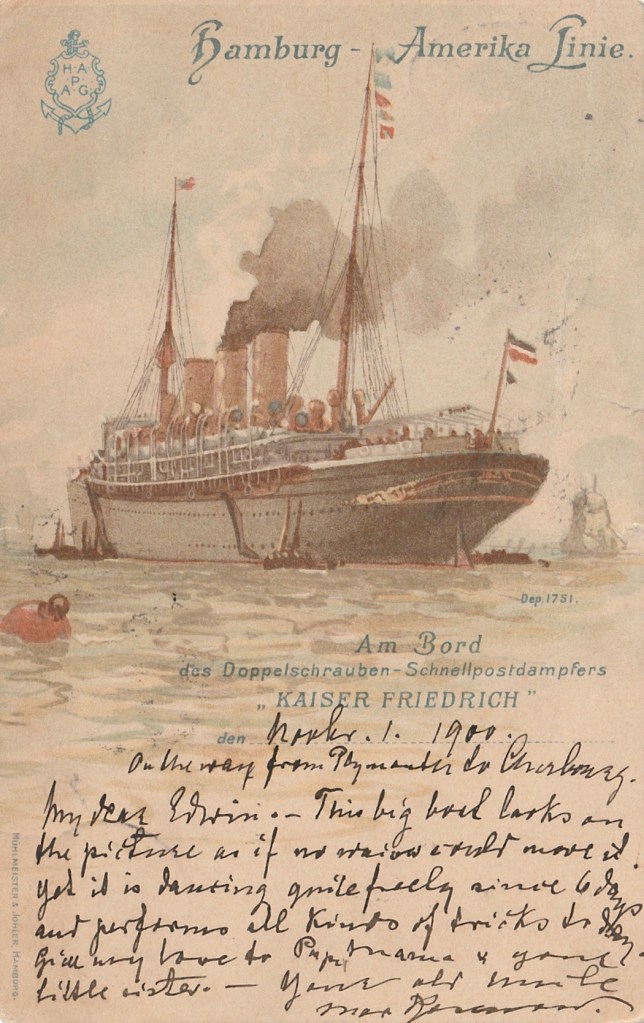
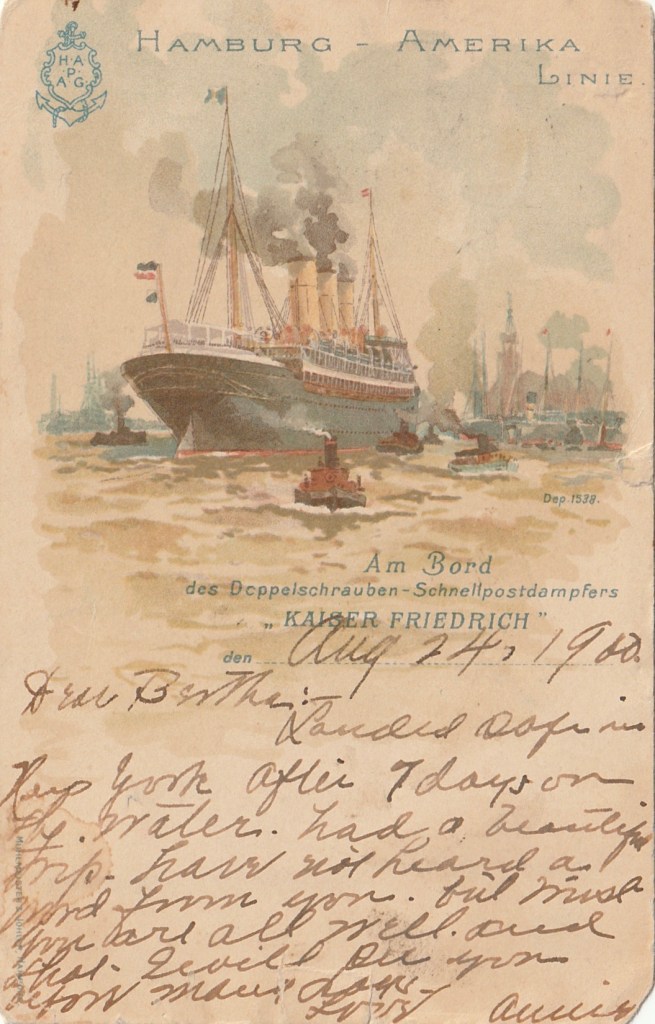
These three official Hapag postcards come from aboard the Kaiser Friedrich and give a special glimpse into the 10 voyages she sailed for the company
First Postcard
June 12th 1900 : We arrived in Plymouth alright and hope we will get to Hamburg the same, I will send your letter from Hamburg. Fred Neuschafer
Second Postcard
November 1st 1900 : On the way from Plymouth to Cherbourg. My dear Edwin, – This big boat looks on the picture as if no wave could move it. Yet it is dancing quite freely since 6 days and performs all sorts of tricks today. Give my love to Papa, Mama & your little sister
– Your old mate Max Ramond
Third Postcard
August 24th 1900 : Dear Bertha, Landed today in New York after 7 days on the water, had a beautiful trip, have not heard a word from you, but trust you are all well and that I will see you before many days
Love, Annie
Bibliography
- Kludas, Arnold (2000) Record Breakers of the North Atlantic. Chatham Publishing, London
- The New Twin Screw Express Steamers of the North German Lloyd Company. Scientific American Vol. 76, No. 24, June 19th, 1987
- The New Transatlantic Mail Steamer “Kaiser Friedrich”. Scientific American Vol. 78, No. 26, June 25th 1898
- Kludas, Arnold (1987) Die Geschichte der Deutschen Passagierschiffart Band II: Expansionen auf allen Meeren 1890 bis 1900. Ernst Kabel Verlages, Hamburg.
- Galon, Dimitri The sad story of SS Burdigala: https://burdigalaproject.wordpress.com/the-sad-story-of-ss-burdigala-former-ss-kaiser-friedrich/ (Accessed March 2025)
- Mielke, Otto (1954) Vom Luxusdampfer zum Hilfskreuzer, SOS Schicksale Deutscher Schiffe No.34, Arthur Moewig Verlag, Munich.
- (1899) NEW NORTH GERMAN LLOYD BOAT, New York Times, July 1st, p.5
- (1899) KAISER FRIEDRICH REJCTED, New York Times, June 28th, p.7
- Schrödter, E. Red. & Beumer, W. Red.(1897) Stahl und Eisen, Jg. 17, № 24 : https://sbc.org.pl/en/dlibra/publication/706865/edition/665557?search=cmVzdWx0cz9hY3Rpb249QWR2YW5jZWRTZWFyY2hBY3Rpb24mdHlwZT0tMyZwPTAmcWYxPWF2YWlsYWJpbGl0eTpBdmFpbGFibGUmcWYyPURhdGVfcmFuZ2U6MTg5NjAxMDF-MTkwMDEyMzEmdmFsMT1xOmthaXNlcitmcmllZHJpY2grbGxveWQ
- (1897) Der Dampfer “Kaiser Friedrich” des Norddeutschen Lloyds Zeitschrift der Vereines Deutscher Ingenieure Bd. 41 pt.1 https://babel.hathitrust.org/cgi/pt?id=pur1.32754080001740&seq=179&q1=kaiser
- Marine engineering vol.2 (1898) CONCERNING THE NEW NORTH GERMAN LLOYD LINER “KAISER FRIEDRICH” https://babel.hathitrust.org/cgi/pt?id=njp.32101048913030&seq=256&q1=kaiser
 The Kaiserhafen
![[i]](https://burdigalaproject.wordpress.com/wp-content/uploads/2008/10/ms15-8852-kaiserfriedrich.jpg)
![[i]](https://commons.wikimedia.org/wiki/File:DINNER_(held_by)_NORDDEUTCHER_LLOYD_BREMEN_(at)_KAISER_FRIEDRICH_AT_SEA_(%22SS,FOR;%22)_(NYPL_Hades-271620-467780).jpg)
![[i]](https://commons.wikimedia.org/wiki/File:Kik%C3%B6t%C5%91,_szemben_a_Louis_Pasteur_vitorl%C3%A1s_%C3%A9s_a_Kaiser_Friedrich_%C3%B3ce%C3%A1nj%C3%A1r%C3%B3_haj%C3%B3._Fortepan_95291.jpg)