
| Name | SS Prinz Eitel Friedrich |
| Operator | Norddeutscher Lloyd, Bremen |
| Yard Number | 254 |
| Code Number | QHvN |
| Builder | AG Vulkan, Stettin |
| Launch Date | 4th May 1897 |
| Maiden Voyage | 18th June 1904 |
| Tonnage | 8’865 GRT 8’200 NRT |
| Length | 154.53 meters |
| Width | 16.96 meters |
| Draught | 9.78 meters |
| Installed Power | 7’000 hp |
| Maximum Power | 7’500 hp |
| Propulsion | 2 quadruple-expansion steam engines |
| Coal Capacity | 6’000 tons |
| Maximum Range | 10’000 nautical miles |
| Speed | 16 knots service (29.63 km/h) 17.5 knots max (32.41 km/h) |
| Crew | 488 |
| Passengers | 1st Class: 206 2nd Class: 226 3rd Class: 1074 |
| Nickname | The Arrogant Ship |
An overview of this legendary ship:
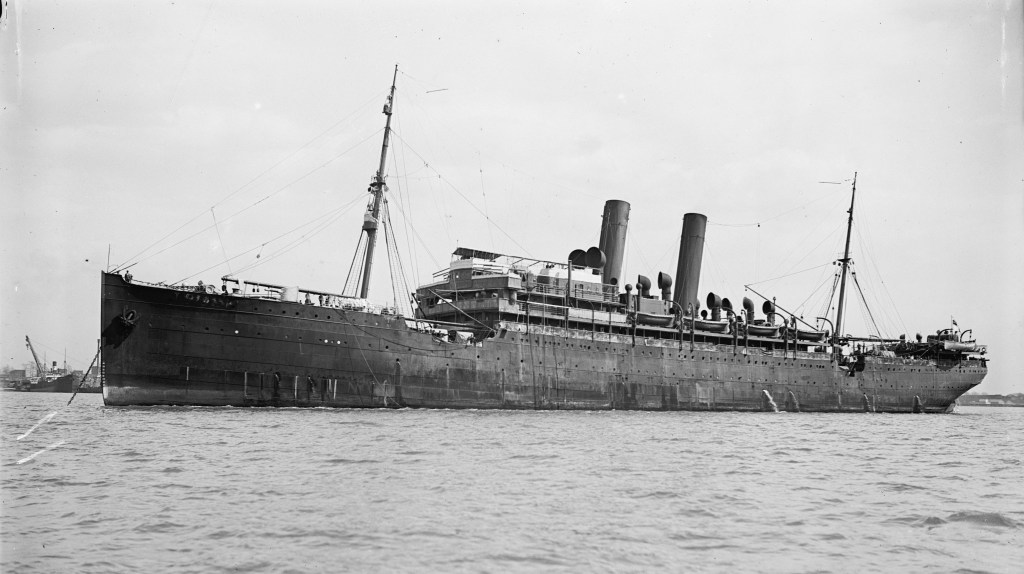
SS Prinz Eitel Friedrich was another exceptional ship of the North German Lloyd. She was likely the second most successful luxury liner-turned fierce commerce raider after the Kronprinz Wilhelm. She had a war career just as exciting, sending 11 ships to the bottom of the sea all alone. One of her victims was the very first American ship to be sunk in the First World War, and stole the world’s attention as President Woodrow Wilson scrambled to make an inquiry. The Eitel lacked massive size or speed, but under the extremely effective command of Captain Thierichens, this 16-knot ship prowled the seas taking prizes, escaping everyone sent to destroy her, and then finally dodged 5 British warships at once to escape to the safety of Newport News. This innocent-seeming ocean liner that had once stolen the Europe-East Asia passenger trade, would also steal the minds of both sides of the First World War, and live to tell the tale.
Conception + Running Mates:
The Far East Route:
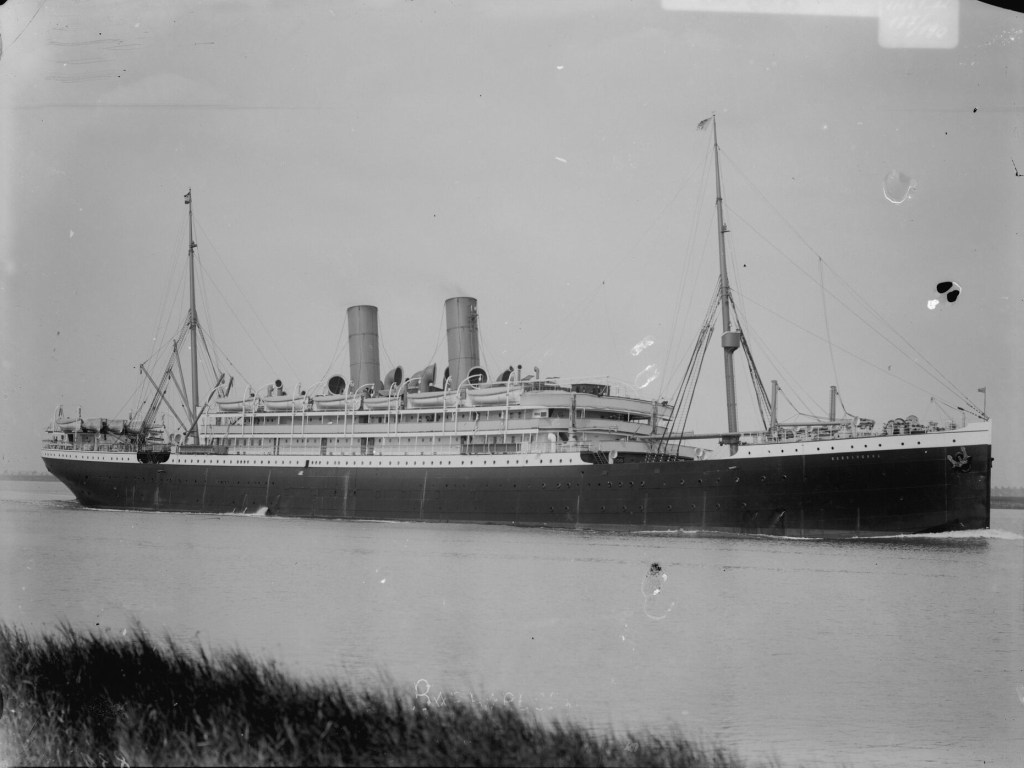
A prominent slogan of the North German Lloyd was “Schiffsverbindungen nach allen Weltteilen” as in: “Shipping connections to all parts of the world“. One prominent route they had control over by the 1900’s was to the Far-East and Australia. It hadn’t started this way, when this route opened their vessels were small and inadequate so the fleet had to be upgraded. NDL had won the mail contract of the Imperial German Mail service and had subsides from the government. The two liners they built that served this run: Prinz Regent Luitpold & Prinz Heinrich were of 6’500 GRT and sailed at 14 knots. But these vessels did not prove financially successful. Things changed in 1899, as they were replaced with two far larger vessels: König Albert & Hamburg. The following year came the two even larger Prinzess Irene & Kiautschou into the fleet. These additions were done in conjunction with HAPAG and they owned two of the vessels, however this charter came to an end in 1903 as HAPAG wanted to focus more on cargo services to this route whilst Lloyd would do the passengers and mail. With this, Hapag completely withdrew from the East-Asian service leaving Lloyd to establish a stable fleet of vessels running the route.
In 1904 Hamburg was chartered to the North Atlantic run, and König Albert & Prinzess Irene were transferred to the Mediterranean-New York run. All that was left was Kiatschou which was owned by HAPAG and they transferred her to Lloyd who renamed her Prinzess Alice. She would continue to sail here with the much smaller Prinz Heinrich as well as the upcoming ships of the Roon Class. Now with the route underserviced, NDL began to plan a new supplementary liner that would enter service in 1904. It would be smaller than the Prinzess Irene, but likely would be the most luxurious and prestigious vessel on this route. This would be the Prinz Eitel Friedrich.

(Author’s Collection)
Beginning Service:
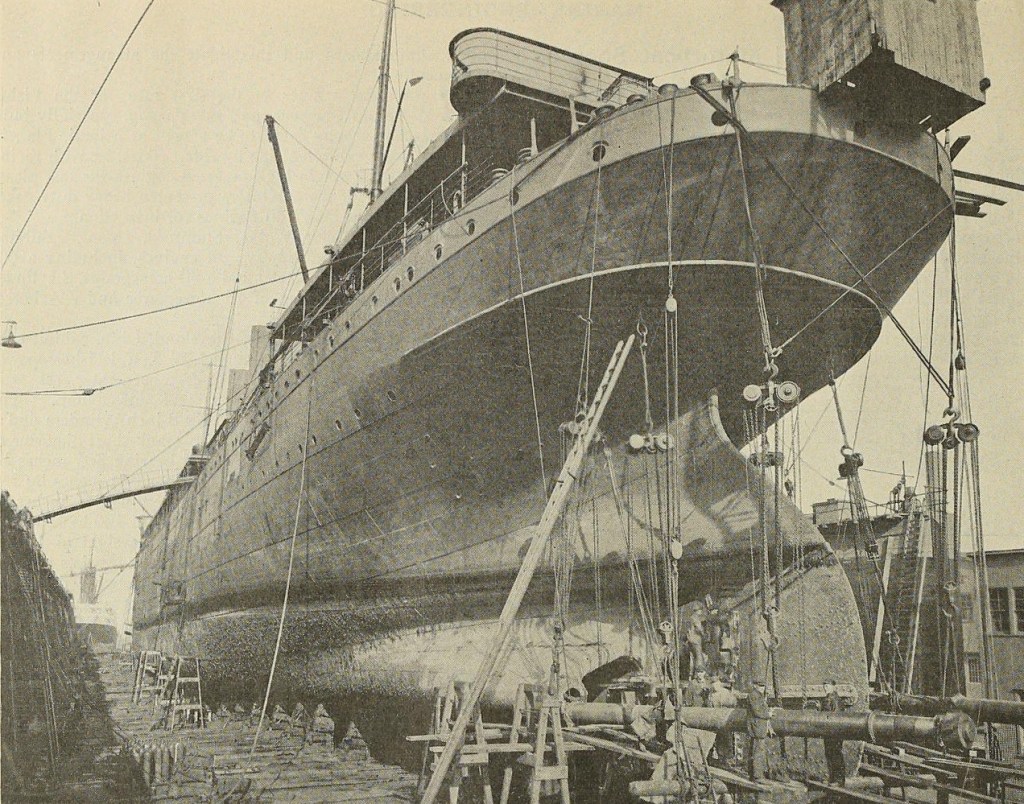
Prinz Eitel Friedrich was a culmination of the designs of the other post steamers that came before her. She was a larger and modified version of the König Albert-Class ships which themselves were modified versions of the previous Barbarossa Class liners. Her yard number was to be 254 at the Vulkan Shipyard in Sczcecin, Poland where many great steamers were built. She was registered at 8865 GRT with a designed service speed of 16 knots. Prinz Eitel Friedrich was launched on the 18th June 1904 and would enter service only three months later on the 27th September. Her original name before completion was planned to be Prinz Eitel Fritz, but this was changed to Prinz Eitel Friedrich by the time the ship was ready to sail. She was christened by the wife of NDL Captain Georg Thumann who had also supervised the construction of the ship. The first master of the ship was to be Captain Eduard Prehn. The ship set out for her sea trials on the 27th September down the river Weser from Swinemünde and reached a satisfactory 16.75 knots and 7600 horsepower during this voyage. The engines were quiet and there wasn’t the tiniest bit of vibration or discomfort. The Directors of the NDL: Zimmermann and Flohr were present onboard and were also satisfied. After the trials the Prinz Eitel Friedrich was proudly declared as:
“The most beautiful and appropriate ship to designate to the East Asian Route”
Technical details and Facilities
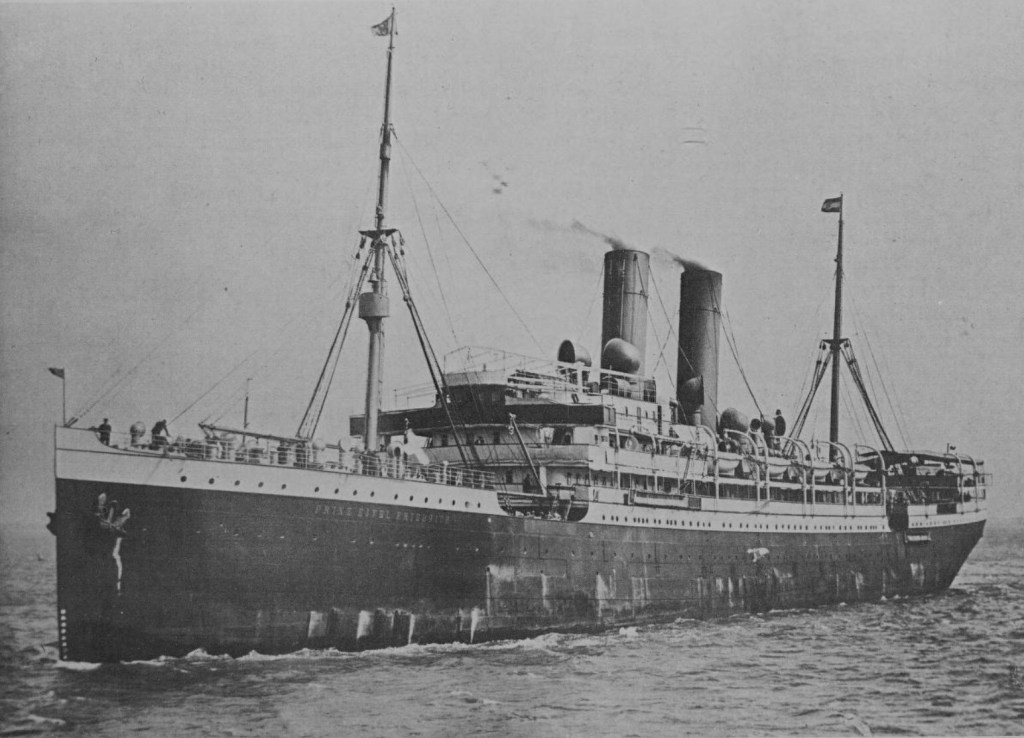
The ship would consist of four decks with a total of six floors including the double bottom. For her duties she would need more cargo space than most and had four hatchways and holds serviced by eight mastheads. The vessel had 2 four-bladed bronze propellors, operated at 85rpm with two quadruple-expansion steam engines producing 7500 horsepower, sailing at a service speed of 16 knots with a top speed of 17.5 knots. She had five boilers – 2 double ended and 3 single ended. The ship would usually burn 45 tonnes of coal supplied to 24 fires per 24 hour shift. Her passenger accommodations would be 158 First Class, 156 Second Class, and 754 Third Class with 222 crew. As German regulations called for at the time, the Prinz Eitel Friedrich was built with swift conversion to an auxiliary cruiser if war was to break out. Both her main and auxiliary steam engines were placed below the water to prevent them being pierced by fire from enemy craft. There were 10 watertight transverse bulkheads reached the upper deck, all equipped with modern watertight doors. Any two adjacent watertight compartments could be flooded without sinking the ship.
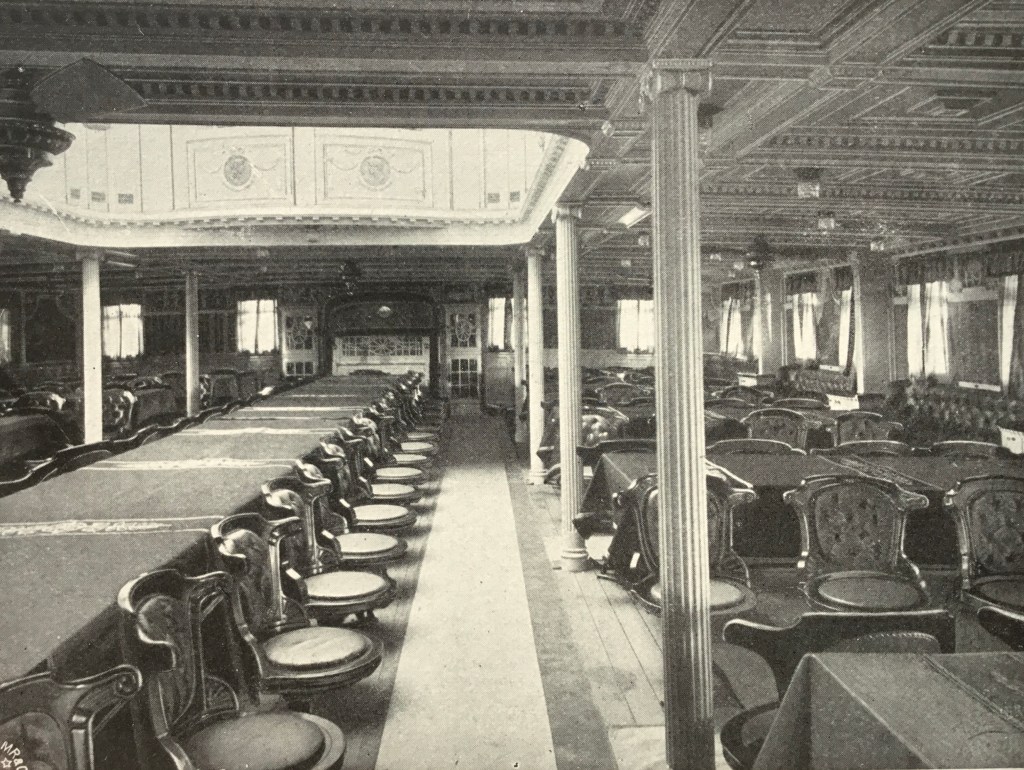
The interior decor of the Prinz Eitel Friedrich was done by a number of architects. The two architects Alfred Altherr and W. Ort designed the First Class Dining Saloon and incorporated various stained oaks. This room was adorned by a magnificent 20sqm light well and could seat 122 guests. The promenade deck contained her best rooms which included: the dining saloon, children’s room, smoking room and another saloon. The luxury cabins of the ship were done by Fr. Sauvage. The onboard facilities of the Prinz Eitel Friedrich were also praised with particular attention given to the passenger’s gymnasium. The gym measured 21 feet long, 25 feet wide and 15 feet high. Some of the machines afforded to passengers were used for rowing, swimming, cycling as well as two special Swedish health machines.
Interiors
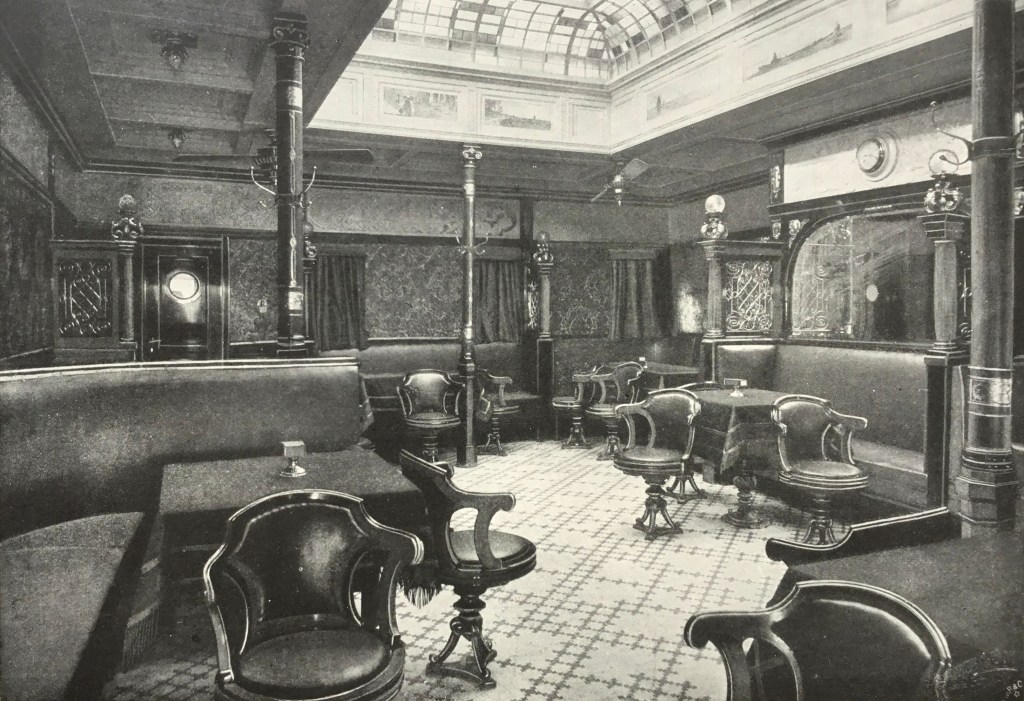
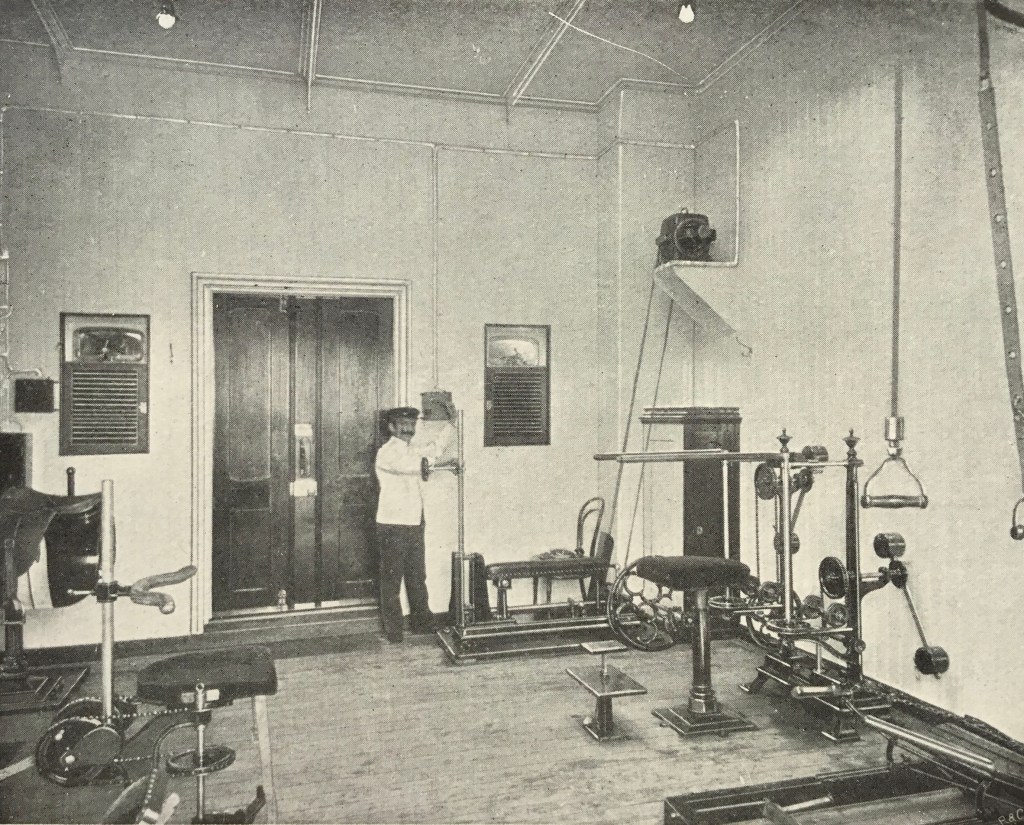
(Author’s Collection)
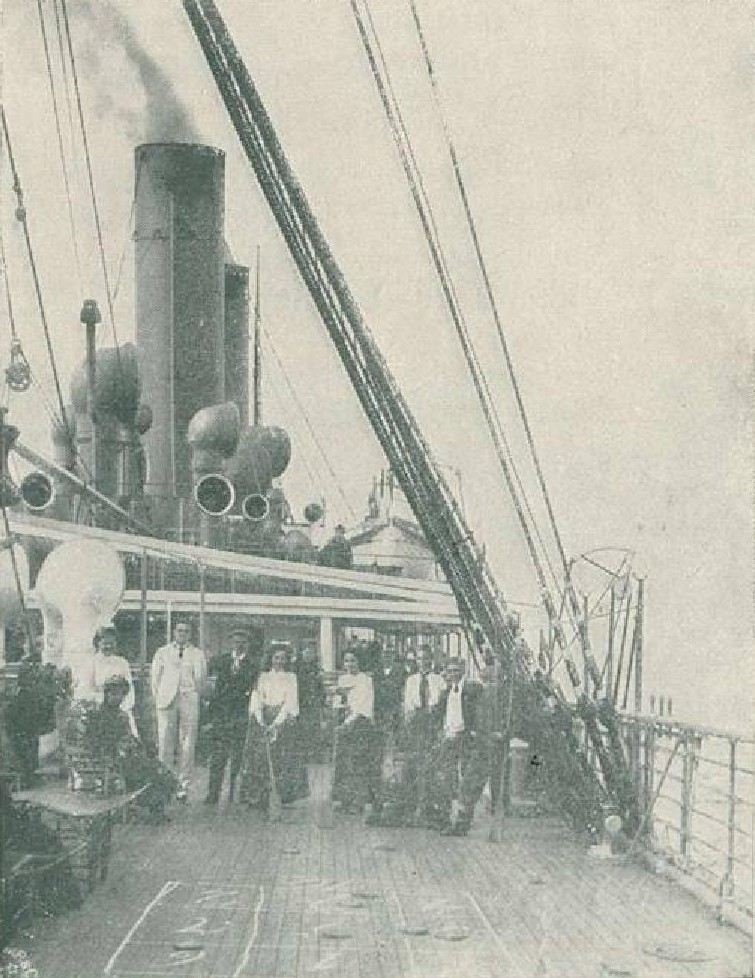
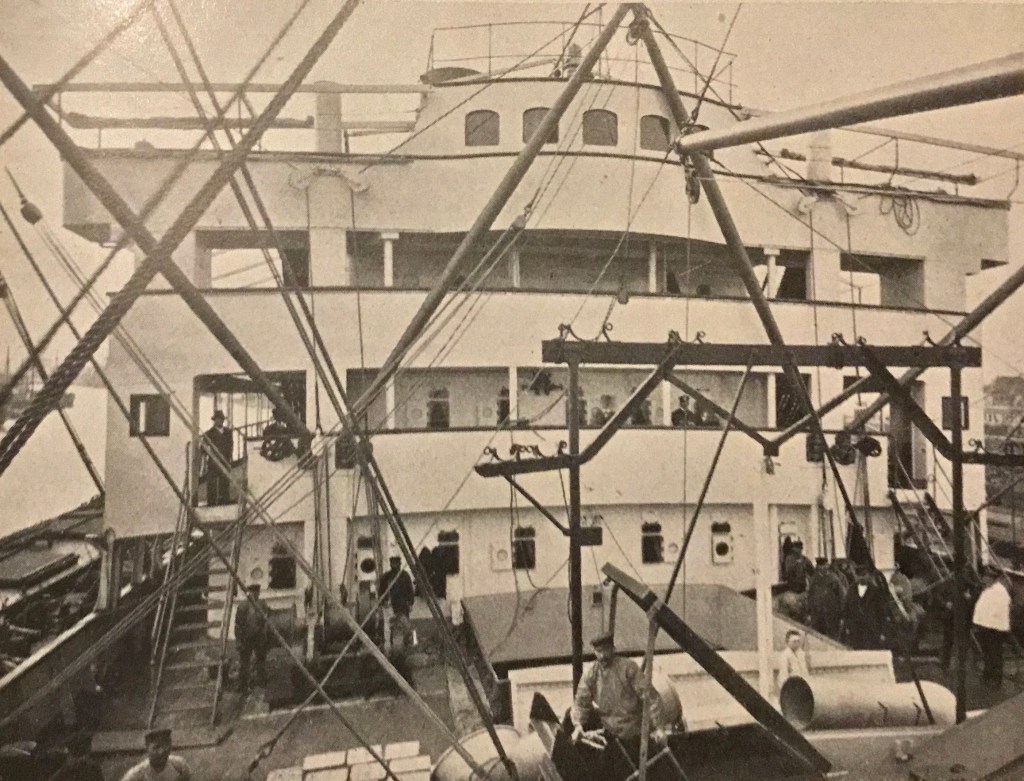
(Author’s Collection)
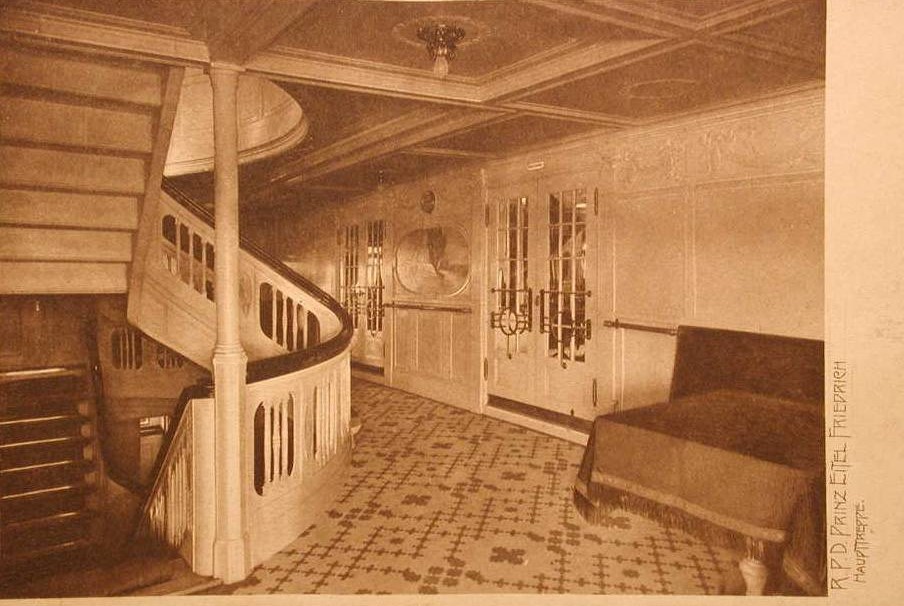
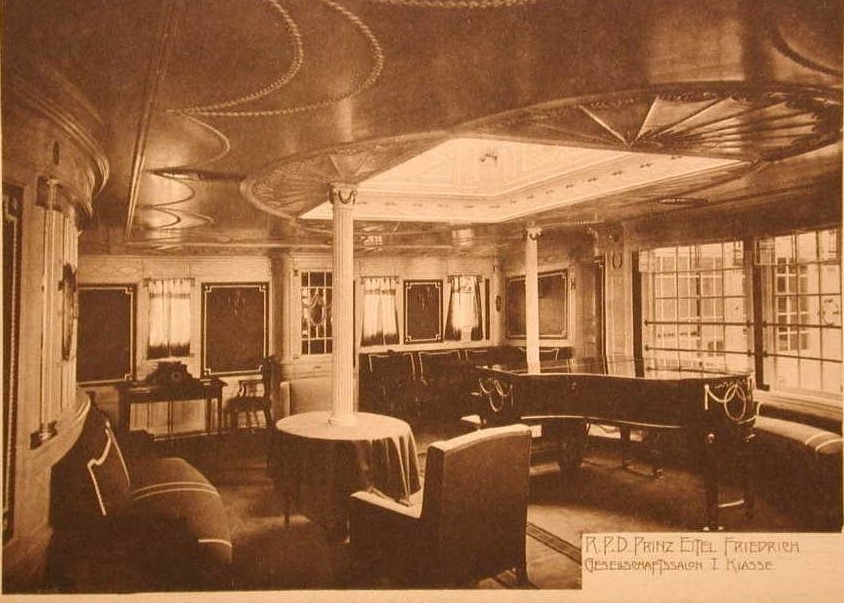
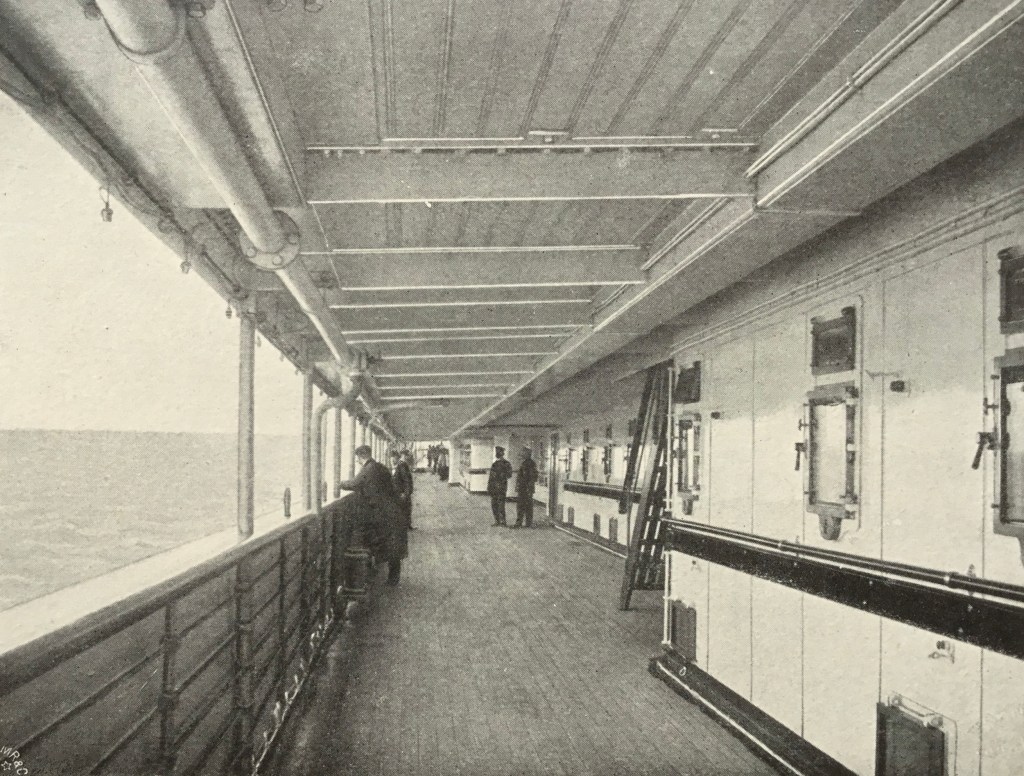
(Author’s Collection)
Serving the East-Asia Route
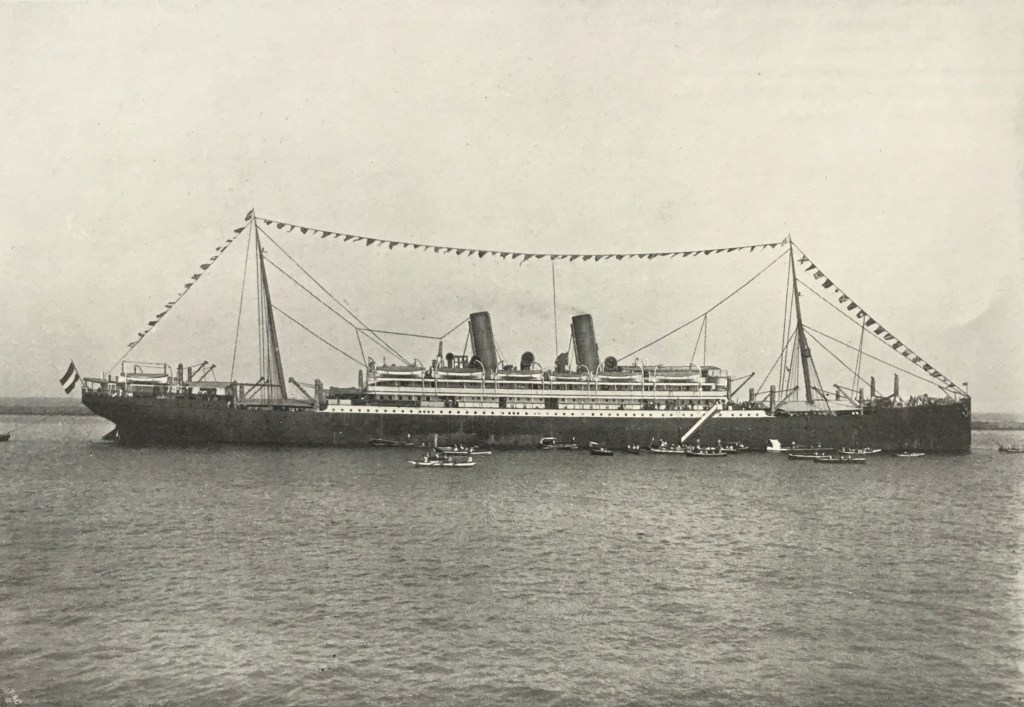
(Author’s Collection)
The ship travelled on her maiden voyage from Bremen to China and Japan under the command of Captain Prehn on the 16th October 1904. The ship would service many ports through her passenger career. These would be Hamburg, Rotterdam, Antwerp, Southampton, Genova, Gibraltar, Naples, Port Said, Suez and Aden for her Mediterranean service. For trips to Asia, she would service Colombo, Penang, Singapore, Hong Kong, Shanghai, Nagasaki, Kobe and Yokohama.
After Hapag had withdrew from the East Asia service, Lloyd removed the König Albert Class liners that sailed there and replaced them with the more advantageous Feldherrn Class which the Prinz Eitel Friedrich supplemented together. This assortment of ships particularly the Eitel, quickly proved very popular which prompted the Lloyd to order three more Feldherrn Class steamers and even a near-sister to the Prinz Eitel Friedrich with the Prinz Ludwig within just 2 years.
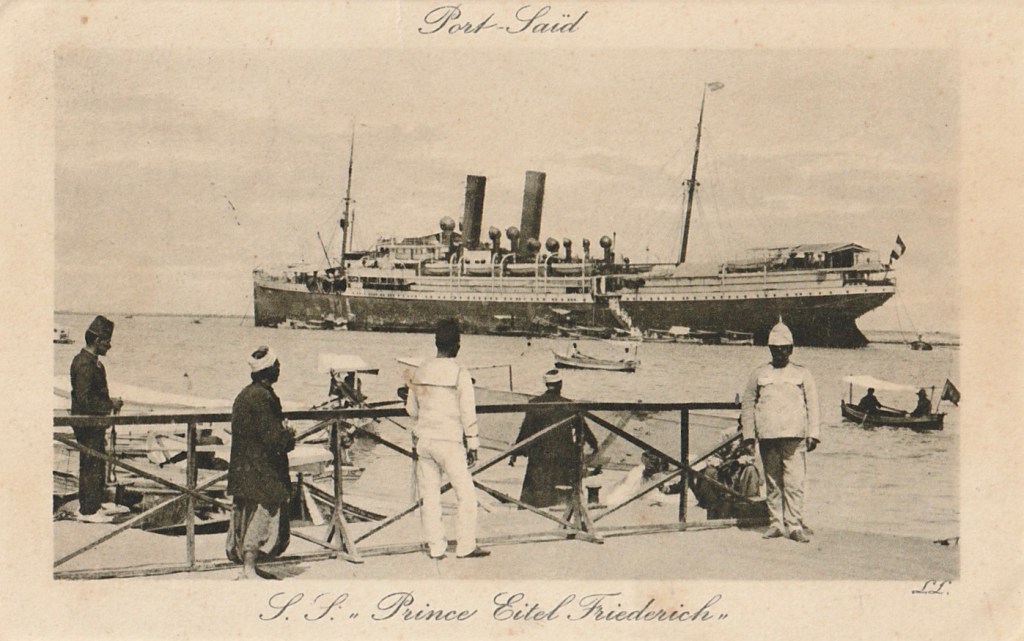
(Author’s Collection)
The ship would have two special passengers onboard during a voyage on the 30th February 1907. It was the brother of Kaiser Wilhelm II: Prinz Heinrich of Prussia and his 17 -year old son Prince Waldemar. Waldemar was in poor health, and so he and his father took a trip to the Spanish city of Algeciras aboard the Prinz Eitel Friedrich where they believed the warm climate would help them. This would not be the only brush the Prinz Eitel Friedrich had with royalty, as on the 14th May 1905 the vessel landed in Qingdao, China with Prinz Leopold von Hohenzollern on board too.
On June 25th 1908, the United States Senator from New York Chauncey Depew crossed the Atlantic for Britain aboard the Prinz Eitel Friedrich. He needed to attend the annual dinner of the Pilgrims Club in London on the 4th of July. He was worried he wouldn’t reach there in time, but Captain Prehn assured him they would land in Dover on the 3rd. And so he sailed aboard with his wife.
Throughout her decade of passenger service, the Prinz Eitel Friedrich would continually prove to be an extraordinarily comfortable, popular and reliable liner on the East Asian Route, often becoming completely booked-out months before voyages. The Lloyd would quote several times that the ship had:
“met our expectations in every respect”.
Becoming one of the Kaiser’s Pirates
That quiet, mostly uneventful decade of passenger service would come to a crashing end in 1914. Heirs to the Austrian-Hungarian Empire, Franz Ferdinand and Sophie of Hohenburg would be assassinated on the 28th June of this year and threw the countries of Europe into turmoil that was very close to blowing over. News quickly reached the Prinz Eitel Friedrich which was laid up in Shanghai at this very moment, and she was ordered to sail at once to the German naval base at Quingdao, to receive the arms for a very likely war.
The German Village on American Soil

USS DeKalb
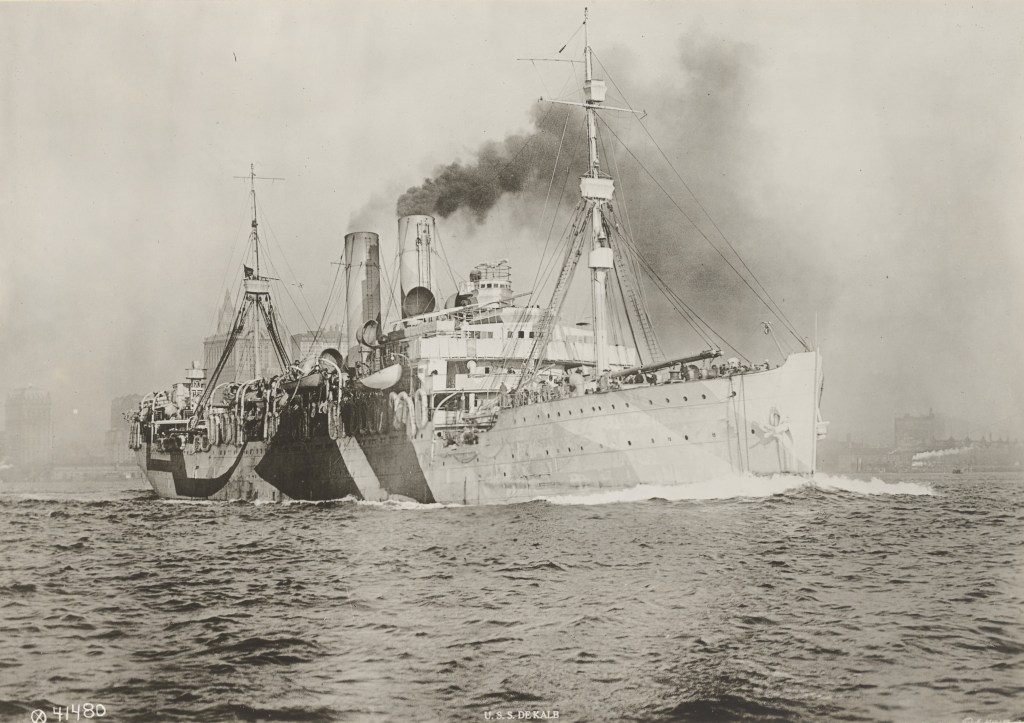
After her conversion, the now American-manned DeKalb conducted her trials and coaling from the 3rd-11th June. She was then assigned to the Cruiser and Transport Force under the command of Rear Admiral Albert Gleaves. She was designated as the escort in charge of two other transports: Henderson and Hancock. The convoy then carried the first units of the American Expeditionary Forces to France with 816 alone aboard the DeKalb.
USS Mount Clay
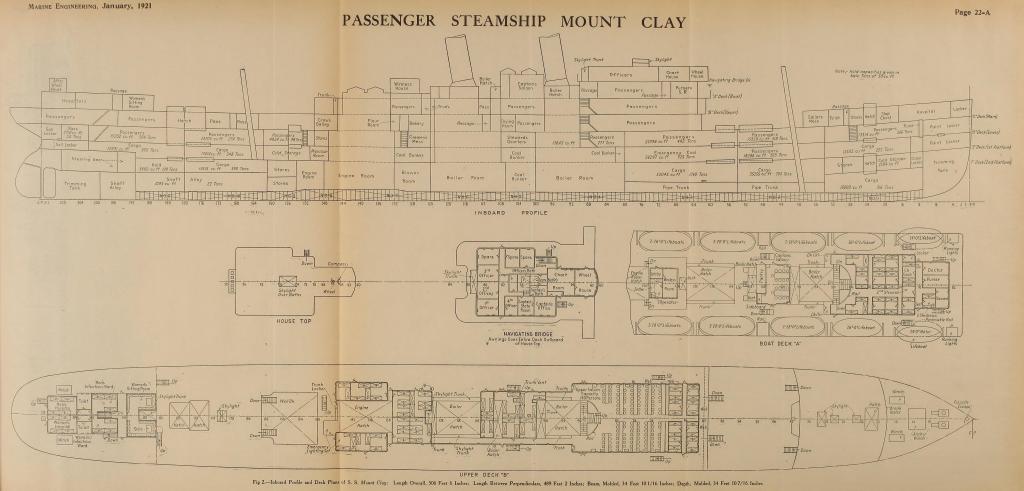
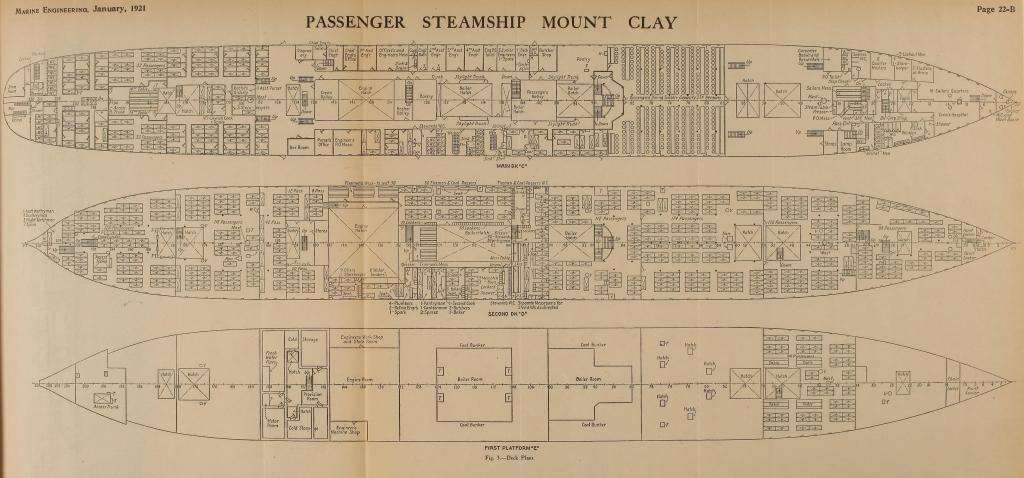
Deck Plans
Rebuild:
The estimated costs for the rebuild were put between $750’000 and $1 million.
The ship was taken to the Morse Dry Dock and Repair Company following the Hudson River fire. Her owners decided to refit into into a top of the line emigrant carrier that carried as many passengers as possible, but gave them far more space, facilities and comfort than most other ships of the same role had.
All passengers would be allowed to access all parts of the ship and the former First Class facilities would now serve them. They would utilize the Boat, Promenade and Main decks which gave them use of the two main dining saloons as well as the lounge for women and the smoking room for men. The new Mount Clay would even receive a special Kosher kitchen for Jewish passengers and hot and cold baths and showers for all.
The ship’s new capacity would be 1800 passengers with 208 crew members. She was to be one of the 11 ships of the American Ship & Commerce Navigation Corporation altogether totalling 77’000 tons.
Emigrant Career:

The ship sailed in joint service with both the United American Line and the Hamburg American Line and used the latter’s piers and facilities in both Hamburg and Hoboken. Her new maiden voyage was on Christmas day 1925, and was a usual 10-day trip from New York to Hamburg. On February 9th 1921, the British steamer Bombardier reported itself to be sinking after departing New York for Antwerp. They broadcasted a distress signal and thankfully the Mount Clay was in the vicinity. Mount Clay quickly arrived and was able to take all crew members off the Bombardier which had been abandoned. The Mount Clay steamed away and last reported the Bombardier as going down.
This wasn’t the only rescue the Mount Clay undertook as she dispatched her lifeboats to rescue the 33 persons on board of the sinking fishing vessel, L. & S which was foundering due to a storm on November 31st 1923.
Abandoned:

(Author’s Collection)
After three years of being laid-up at Sparrow’s Point, new hope finally came in for the ex-Prinz Eitel Friedrich as bidding began in 1928. On December 4th 1928, the Pacific Steamship Company purchased the 24-year old veteran for approximately $1 million with the aim of refitting her to sail coastwise routes out of Seattle and Victoria. The ship was to be given another massive refit that reduced her colossal carrying capacity to just 300 passengers. Her passenger rooms were to be revamped and fitted with all the latest in modern apparel. She was planned to sail the following summer and would be named after a member of the Alexander family just the company’s other vessels. It was planned that she sail to Alaska and California alongside the Ruth Alexander and Dorothy Alexander. Such an exciting prospect to breathe life into the dormant liner, but sadly this new role never happened and the ship would never sail again.
Bibliography
- Isherwood, J. H. (1972) NDL Liner Prinz Eitel Friedrich” of 1904 Sea Breezes, Vol. 46 No. 313
- Thiel, Reinhold (2003) Die Geschichte des Norddeutschen Lloyd 1857 -1970, Band III 1900 1919, Verlag H. M. Hauschild GmbH, Bremen
- Kludas, Arnold (1988) Die Geschichte der Deutschen Passagierschiffahrt Band III: Sprunghaftes Wachstum 1900 bis 1914, Ernst Kabel Verlag GmbH, Hamburg,
- Mielke, Otto SOS Schicksale Deutscher Schiffe Nr. 153 S.M. Hilfskreuzer Prinz Eitel Friedrich. Im Gefolge des Kreuzergeschwaders, Arthur Moewig Verlag, Munich
- (1907) Washington Journal p.4, Saturday 2nd March
- Depew hurries for London for the 4th, New York Times, Friday 26th June 1908, p.4
- (1904) Gymnasium on liner, The Rice Belt Journal, November 25th, p.6
- Die Kunst, 1903/1904, Volume 10, (Jg. 7 der “Dekorativen Kunst”), H. 12, p.471
- (1904) STEAMSHIP PRINZ EITEL FRIEDRICH Marine review v. 30 p.20 https://babel.hathitrust.org/cgi/pt?id=nyp.33433109947543&seq=208&q1=eitel
- ARCHIV FÜR POST UND TELEGRAPHIE, Berlin 1905. https://archive.org/details/bub_gb_pAE_AQAAMAAJ_2/page/n257/mode/2up?q=stettiner+zeitschrift+prinz+eitel+friedrich
- Bericht nebst Anlagen zur vierundzwanzigsten ordentlichen General-Versammlung des Norddeutschen Lloyd am 9. April 1881. – 1881 – 1906 https://www.deutsche-digitale-bibliothek.de/item/3RQZ5JCDGGHF7KIUT4PLDU6B2M2F4RVR?isThumbnailFiltered=true&query=norddeutscher%2Blloyd&viewType=list&facetValues%5B%5D=type_fct%3Dmediatype_003&offset=80&rows=20&hitNumber=8014
- Popular Mechanics 1921-04: Vol 35 Iss 4 : Accessed: https://archive.org/details/sim_popular-mechanics_1921-04_35_4/page/524/mode/2up?q=mount+clay
- (1921) Victoria Daily Times p.8. Wednesday February 9th, Accessed: https://archive.org/details/victoriadailytimes19210209/page/n7/mode/2up?q=mount+clay
- (1928) NEW LINER FOR PACIFIC SERVICE OUT OF VICTORIA, Victoria Daily Times Tuesday December 4th, Accessed: https://archive.org/details/victoriadailytimes19281204/page/n17/mode/2up?q=mount+clay
- Questionable Source: https://archive.org/details/marine-engineering_1928-11/page/624/mode/2up?q=mount+clay
- (1923) LINER RESCUES WRECKED FISHING BOATS CREW, China Mail Monday December 1st, Accessed: https://archive.org/details/NPCM19241201/page/n9/mode/2up?q=mount+clay
- Marine review v. 51 (1921), Accessed: https://babel.hathitrust.org/cgi/pt?id=nyp.33433007959905&seq=195&q1=dekalb
- Havern Sr, Christopher B .DeKalb (Id. No. 3010) , Naval History and Heritage Command, (Accessed September 2025) https://www.history.navy.mil/content/history/nhhc/research/histories/ship-histories/danfs/d/dekalb.html
 The Kaiserhafen
![[i]](https://commons.wikimedia.org/wiki/File:Stoomschip_%27Barbarossa%27,_asset_EATJpFXQhosEnYAbLwpRWnKE.jpg)