
Janury 31st 2026
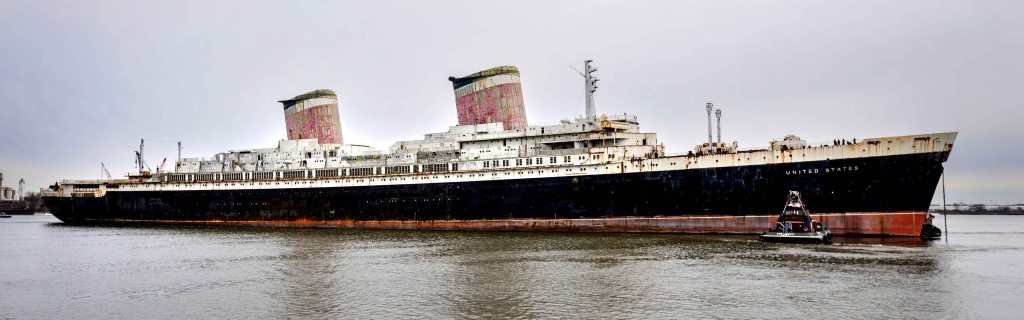
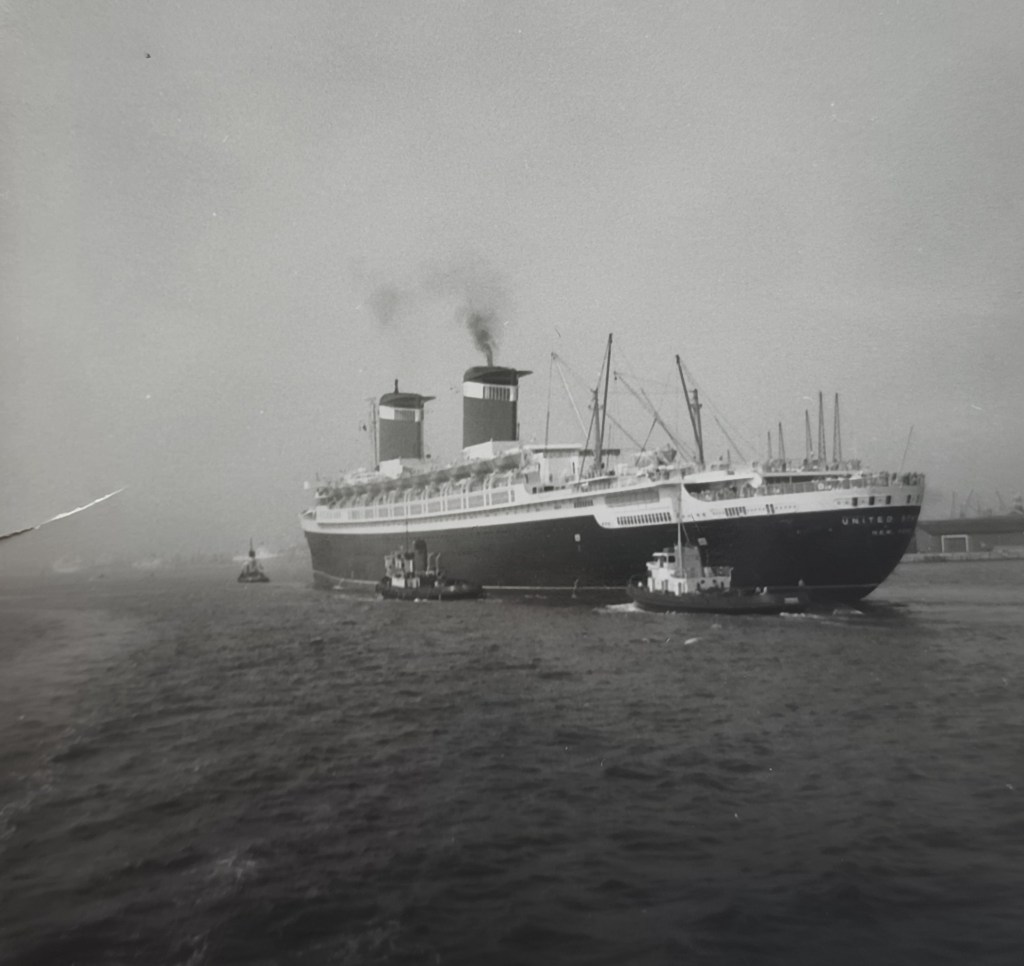
As of the time this article is being written: (January 2026), one of the very last ocean liners in existence- the SS United States, is in the very last phase of her conversion to an artificial reef due to be sunk off the coast of Florida in the coming months. In this vessels current 74-year existence she has seen nine separate owners, likely only two of which will actually succeed in their aims for the vessel. It is owner number 3 we want to talk about: Seattle financier and entrepreneur Richard Hadley who had grandiose plans for the perfectly-preserved liner which he owned from 1978-1992. Hadley’s ambitions sadly did more harm than good, but by incredible chance and fortune we can take a look into a ship and company that never sailed: United States Cruises and their flagship: the all-new reborn SS United States.
The SS United States
Creation:
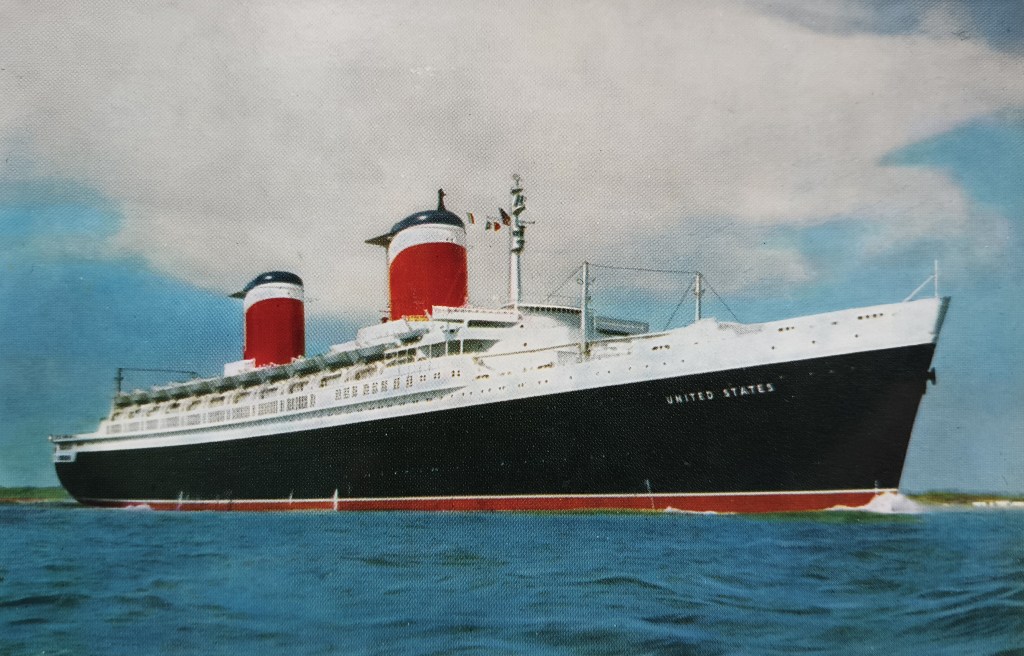
The SS United States was the lifelong dream project of self-taught naval architect William Francis Gibbs. After trying all the way since the 1910’s, the construction contract was finally signed on May 3rd 1949 but it still took $70 million and 1218 days before the world’s fastest liner could embark on her maiden voyage on July 3rd 1952. The government saw the superliner as a key national asset that could transport 14’000 men to battle for ten whole days without refueling at incredible 30 knot + speeds. Impressed with the British superliners: Queen Mary and Queen Elizabeth, the former of which had carried 810’730 total troops throughout the Second World War, they agreed to fund $42 million of her construction costs.
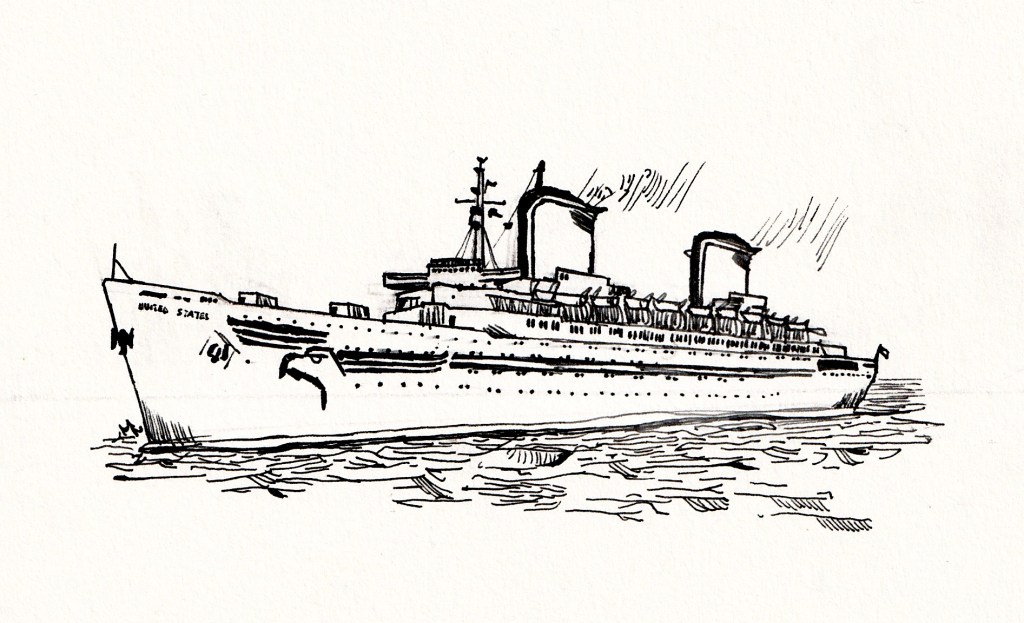
Built to be long and sleek, the United States was only 30 feet shorter than the current speed champion RMS Queen Mary, but nearly 28’000 tons lighter owing to more aluminum used in her construction than any other project in the country at the time, – land or sea. She beat both of the Queen’s records by four whole knots with speeds of 35.59 and 34.51 knots on her maiden and return voyages, and enjoyed worldwide success as one of the most popular and affluent ships of the 1950’s.
Decline:
However no ship could outspeed commercial aircraft. Already by 1958, the monopoly owned by transatlantic liners had now been surpassed by the age of the jet liner. By the turn of the decade, she had stopped covering her losses. Throughout her 17 years in service, the United States received $118.8 million from the government in subsidies, with them finally being cut off in 1969 which signaled her doom. She was pulled from service in the middle of her winter overhaul- so abruptly there were still crumbs in the toasters and crew belongings aboard. Her engines fell silent that year, and have never stirred in the 57 years since.
The Deck Plans in Question:
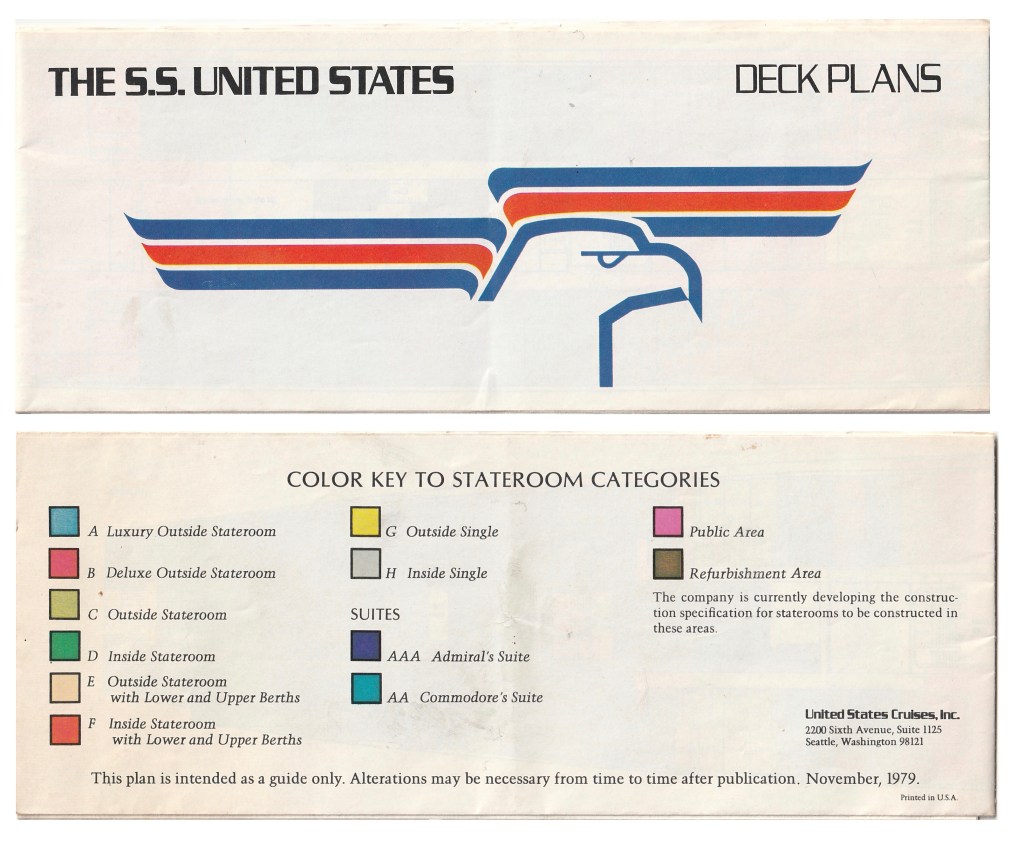
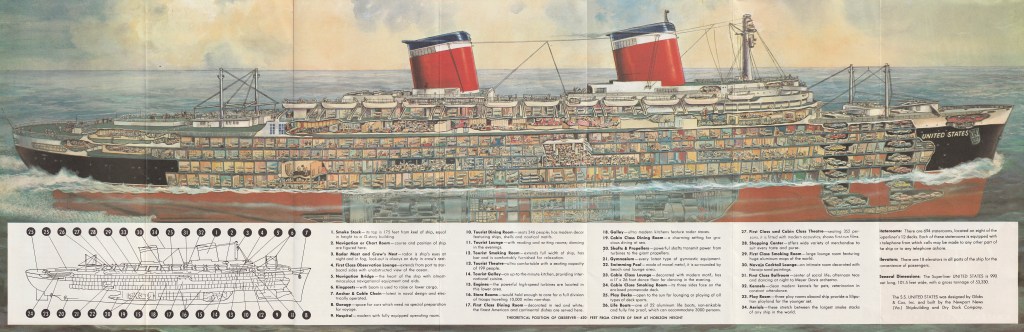
In the previous December of 2025, these deck plans were seen for sale on eBay. After a 30-second decision, they were immediately bought as the Author was in an SS United States phase. After an annoying wait of an entire month to cross the Atlantic, they arrived. They were printed in the United States and are dated November 1979 and feature United States Cruises’ long-defunct address of 2200 Sixth Avenue, Suite 1125 Seattle, Washington 98121. It seems likely other copies at various dates were also printed as this plan states: “Alterations may be necessary from time to time after publication”. As part of the colour key for accommodations, those filled in as brown were still subject to future alterations. When fully opened it measures 77.5cm x 40.5cm (30.5” x 16”) and spans nine decks.
Richard Hadley
Transferal of Ownership:
After withdrawal from service, a special act from Congress immediately had the ship sold for $12.9 million to the Maritime Administration and placed in the US Reserve Fleet. She was only to be sold in future to US buyers and under continued US registry in US waters. The ship was hermetically sealed just as she was, and in excellent condition. Just four years later on the 26th February 1973, the ship was already listed for auction starting at $12.1 million. Five total times until 1978 the Maritime Administration tried to sell the United States, lowering their price to $7.5 million in August 1975, and then $5 million in December 1976. However no interested parties could provide the immediate 10% deposit so their bids were rejected.
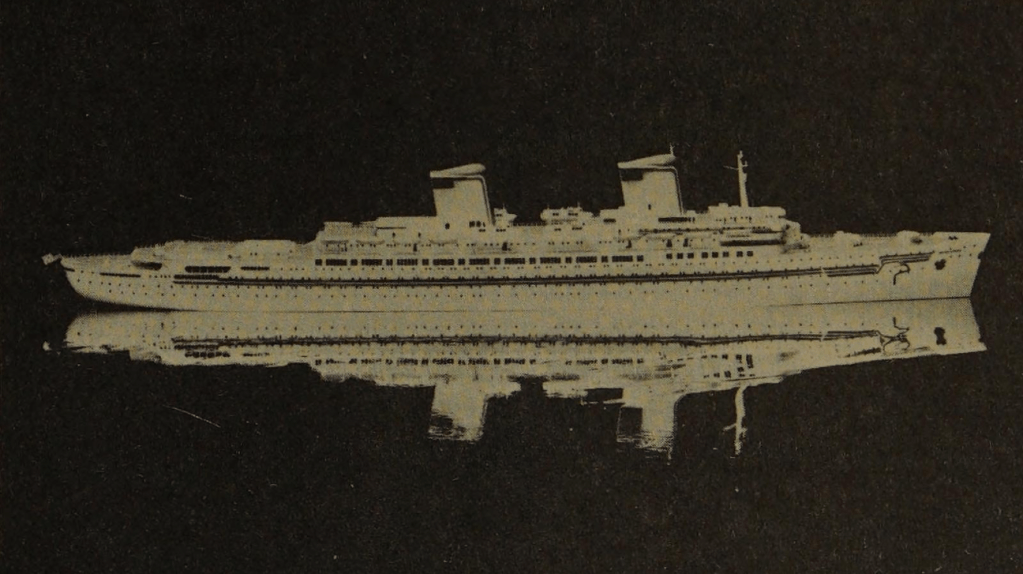
All sorts of parties were still eager to purchase the ship. Some of their far-fetched plans to repurpose the United States included sending her cruising on a three-year voyage, making her a waterfront complex in Virginia, a hotel and attraction in Boston, a dormitory for oil rig workers in Alaska or Persia, or a 14’000-person capacity transatlantic ship stuffed with fast food restaurants. None of these groups managed to acquire the ship.
The Idea:
MARAD’s ownership of the United States would finally end when the Seattle-based developer Richard Hadley and his associates offer to purchase the ship was accepted . Their aim was to put the United States to sea as a floating condominium and modern cruise ship under their company United States Cruises. In 1979 Hadley put forward the first $500’000 of the $5 million agreed. He himself stated around this time that the plan would cost $30 million to refurbish and modernize the SS United States for her new role over a full 12 months in the shipyard. United States Cruises initially planned the “second maiden voyage” of their new superliner to take place in 1981.
Other details from this period included that one sixth of the ship’s space was to sold as the condominiums, which would help finance the rest of the conversion. These were aimed at investors who would be part of Hadley’s “United States Cruising Society” and would range from $11’500 to $149’500 for 14 days per year. As for the cruises, half the time would be spent sailing between Los Angeles and Honolulu, whilst the other half to various ports around the world. On November 28th 1979, Hadley stated that 100 of these memberships had “already been sold” or were “in the works”. Prices were to be competitive and started at around $165 per day. The payment of $5 million for the ship itself was not paid until 1981, and that was after multiple deadline increases and interest paid off.
Converting the United States
Cruise Conversion Details:
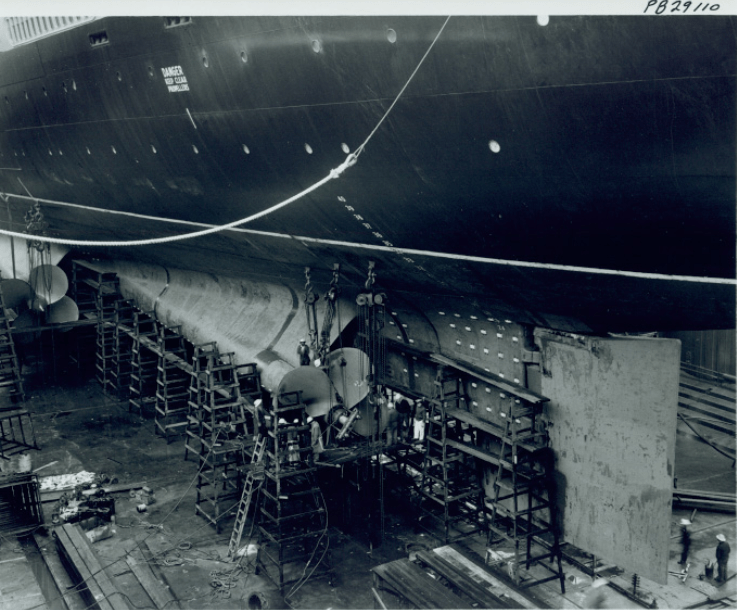
During the conversion it was planned that her three classes would be condensed into one, and her 600 staterooms would now accommodate approximately 1200-1500 passengers instead of the prior 2000 with 550 crew members to operate the liner. Her record-breaking speed would also be reduced heavily and the ship put down to two propellers and one engine as economy was needed for cruise service. As a fascinating additional detail, woods were to be allowed in the decor of the interior rooms for the first time in her history. The ship was to stay under the American flag and it was believed the stars and stripes would fuel national pride and bring passengers aboard.
As the years went on, details changed and numbers kept rising. The initial 1979 proposed passenger count of 1200 had increased to 1500 by 1985, and the total estimates for the conversion had skyrocketed by more than three times to $100 million by 1983. Newer ideas included seven restaurants aboard each with a new cuisine, three separate swimming pools, a running track, the glass-enclosed promenades being removed, the upper decks made open to the air, jacuzzis, casinos and the likes being added and a full-size tennis court placed outdoors on the stern. A new massive external change was to also add a whole new deck of superstructure with 116 extra staterooms on top called the Eagle Deck.
The ship would sail from US ports on 7 and 14-day cruises at a rate of now $250 per day. By this point Hadley and his team were essentially building a new ship from scratch. They were expecting high-level guests with cabins being 35-50% larger than competing cruise liners. Hadley would state the following back in November 1979:
“We don’t want a pack-em-in operation. We’ll have the lowest passenger population for a ship of our size by far. If a person likes to cruise and is affluent, it’s the only plan that makes any sense.”
Work Commences on the Ship:
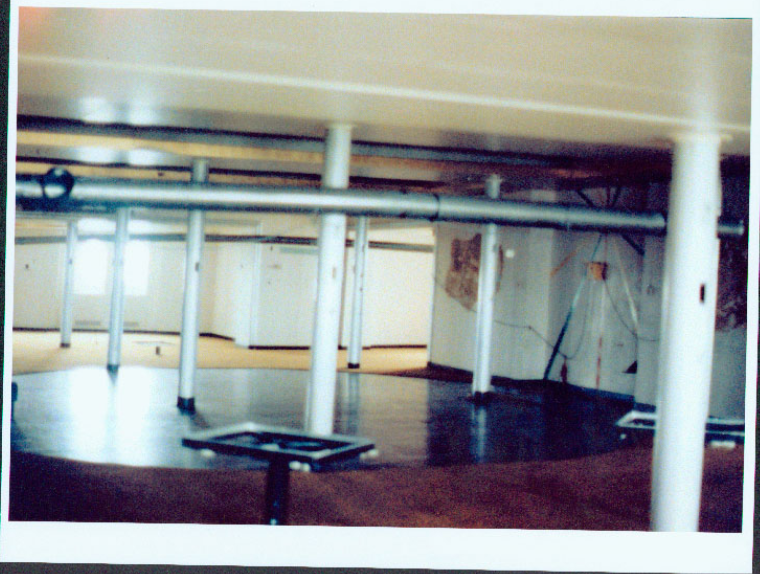
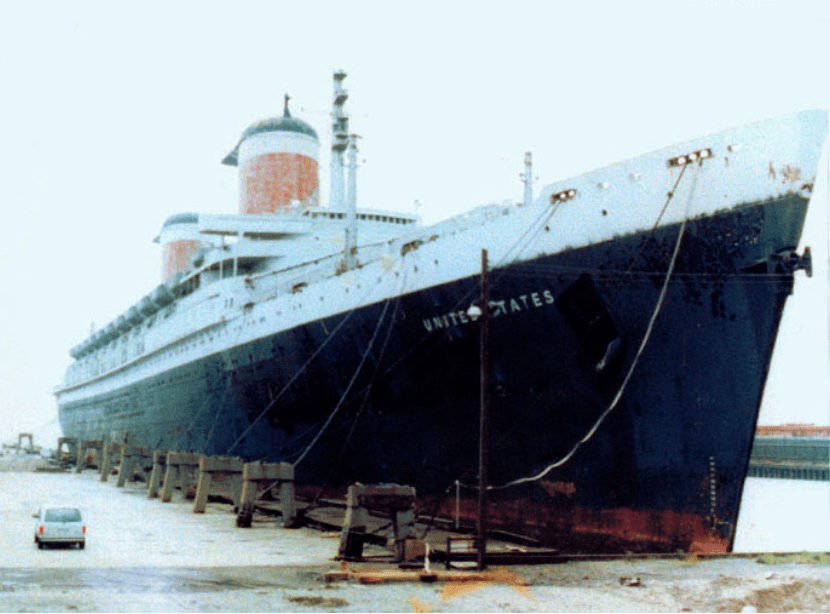
Amidst the constant planning, delays and problems since acquiring the ship in 1978, some actual work did commence. In 1980, The United States finally got moved to the Norfolk Shipbuilding Company several miles away to survey her condition. There was no worries whatsoever as the ultrasonic tests revealed the hull plates to be in excellent condition. In 1983 with costs now estimated at $100 million, United States Cruises finally began taking bids from 15 major shipyards to begin the work. It seems planning and other hindrances weren’t over as costs continued to grow to $120 million by autumn of 1984.
By this point capital was needed and Hadley planned a financing package this year with Chase Manhattan Bank, two German banks and a German shipyard but those fell through. Following this there was a great auction of the United States’ interior furnishings in October 1984 with the aim to raise $1 million, or even as high as $5 million according to another source, whilst clearing the way for the new fittings. 3’000 bidders descended upon the ship over 7 days, completely clearing her loose fittings out. But this small gain was not enough to fill the hole that had already been dug.
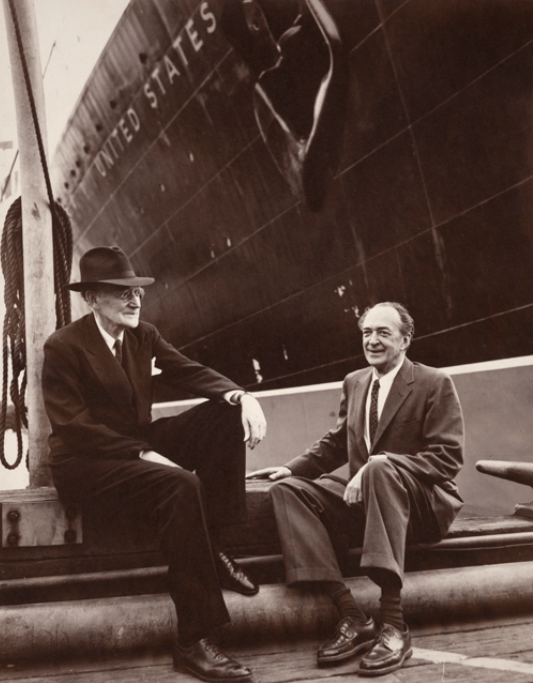
By 1986 it was stated that Hadley had spent a fortune on the ship, but still was determined to succeed in his aim as this was a labour of love for him. Despite in the many years since where Hadley has been viewed as the great villain who doomed the ship by leaving her a stripped hulk, he went in with good intentions and was unhappy the ship was still lying idle without a purpose. He even worked on this project in association with others bound to the United States such as her 1968 captain: Commodore Leroy Alexanderson and even the man who supervised her original construction: Nicholas Bachko. Bachko would also bring in some of the liner’s original engineers to help with moving the ship.
Amidst all his struggles of revitalizing the United States, Hadley was even overheard to remark:
“Why can’t this country put this ship to sea flying the American Flag?”
And unfortunately, the ship would never be put to sea under any flag in the decades since.
Final Proposal:
Sometime during the 1980’s rumors stated that the costs to make the cruise ship United States were around $150 – $200 million! – a far cry from that $30 million Hadley had proposed at the start of the decade. Some of the last details of the plan stated that the United States would first go to Haiti to have all her asbestos removed. Then she would travel to Alabama to for structural work and receive that new additional deck. Finally she would travel all the way on a $130 million contract to Howaldtswerke-Deutsche Werft, Germany to receive her final touches and decorating for her new role. Hadley requested a full $152.3 million in loan guarantees from the United States Maritime Administration around this time but was rejected. Nothing would ever come to fruition until 1992.
The Collapse of United States Cruises:
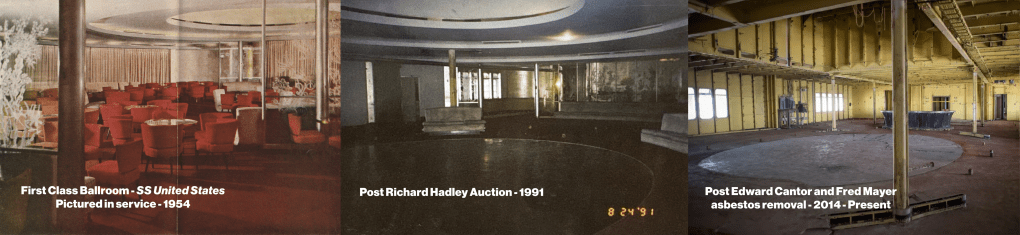
In 1992, United States Cruises was so strained for cash: Hadley could not pay pier rental for the ship, much less the 5.7 million he now owed in mortgage. It was this year the offices of United States Cruises were shut down, and Hadley filed for Chapter 11 Bankruptcy Protection. The ship was put up for auction this year and sold for $2.6 million to her fourth owners: Fred Mayor and Edward Cantor who also wanted to pursue making the United States a cruise ship. All they were able to achieve before being bankrupted too was removing the ship’s asbestos by gutting every non-machinery space on the entire ship down to the bare steel.
Over the 13 years of United States Cruises it seems far more harm was done than good, despite the promising intentions. Hadley would pass away in 2002 at the age of 80, ten years after his ownership of the United States had ended. Over his decades-long career, he had achieved much success in the development of residential properties in Hawaii and Seattle. The United States project would grow to consume him, despite his efforts to see it through. His wife who succeeded him after his passing had said this project: “was his dream.”
Overview of decks and changes made to original layout:
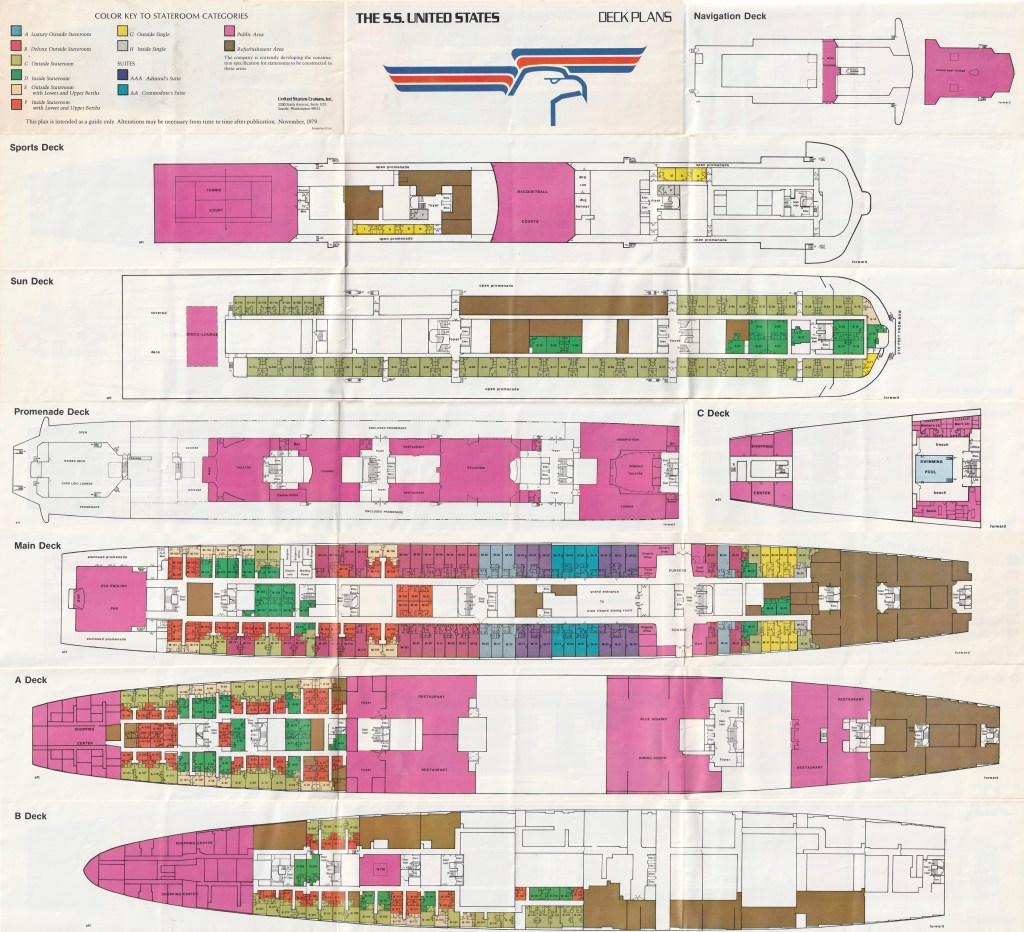
There were many versions of the proposal on how exactly to refurbish the United States during the United States Cruises years. Here in the November 1979 version, the ship lacks the additional Eagle Deck and did not require nearly as vast of a space to be gutted. Let us take a look into an alternate reality if the SS United States finally had her second maiden voyage in 1981, according to these plans:
Navigation (Bridge) Deck
- The area above the Wheelhouse around the Crow’s Nest would become the Crow’s Nest Lounge for passengers. The two Mushroom Vents and Radar Mast would remain.
- The Tourist Sheltered Deck behind the Fan Rooms on the Navigating Bridge would receive a Soda Fountain.
Sports Deck:
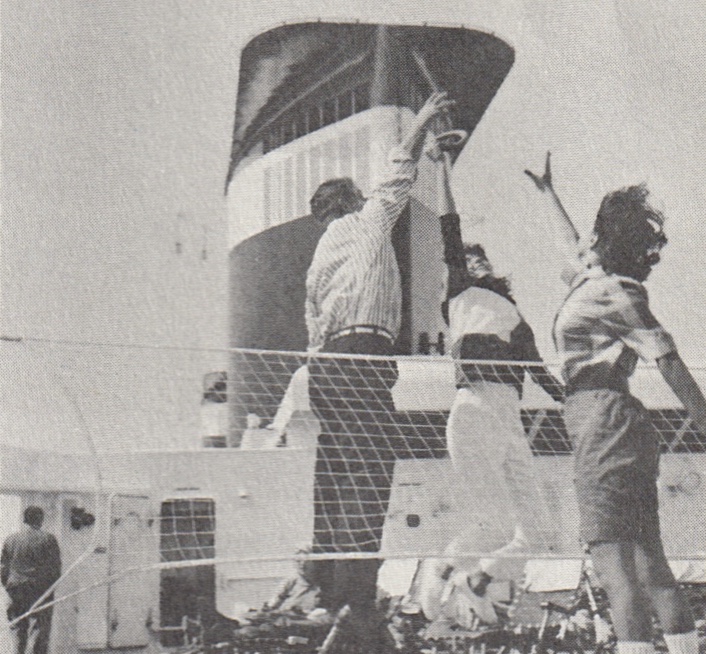
- The First Class Deck space would have new racquetball courts installed.
- Aft of the racquetball courts, all of the various Officer’s and Engineer’s Mess rooms as well as the cabins aft of the After Boiler Hatch would be refurbished into passenger Staterooms.
- The First Class Children’s Playroom would be spared as would be the open promenades on this deck.
- The Game Deck would be extended aft significantly to accommodate a new full-size tennis court.
Sun Deck:
- The space for the Stewardesses forward of the Forward Boiler Hatch would be refurbished into new Staterooms.
- On the Port side, the entirety of the Engineers Quarters from all positions and the Chief Engineer’s Reception Room in a straight line would be refurbished into passenger Staterooms.
- The Exec Engineer’s Office and spaces, the Junior Assistant Engineer’s quarters and the rooms forward of the Pantry – all in the center of the ship, would be refurbished into passenger Staterooms.
- The Working Deck aft on the ship would be incorporated into the rest of Sun Deck and extended aftways to create a new covered space on the Promenade Deck below.
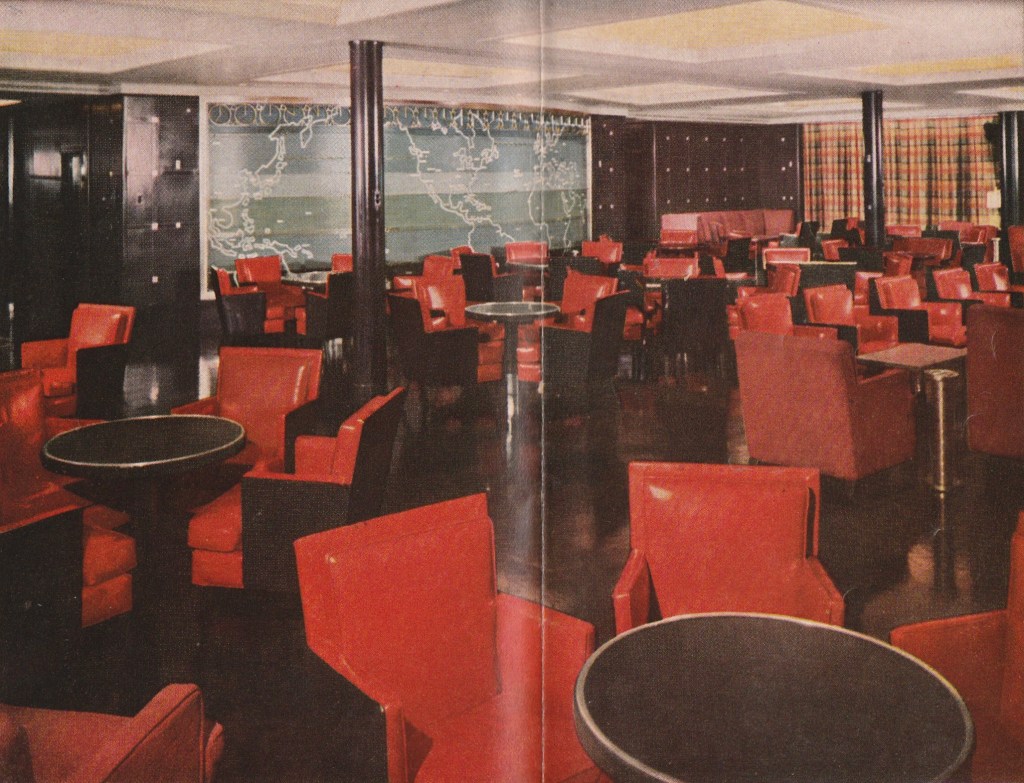
- A new Disco/Lounge would be built on this new covered deck, and the booms and kingposts here would likely be removed.
Promenade Deck:
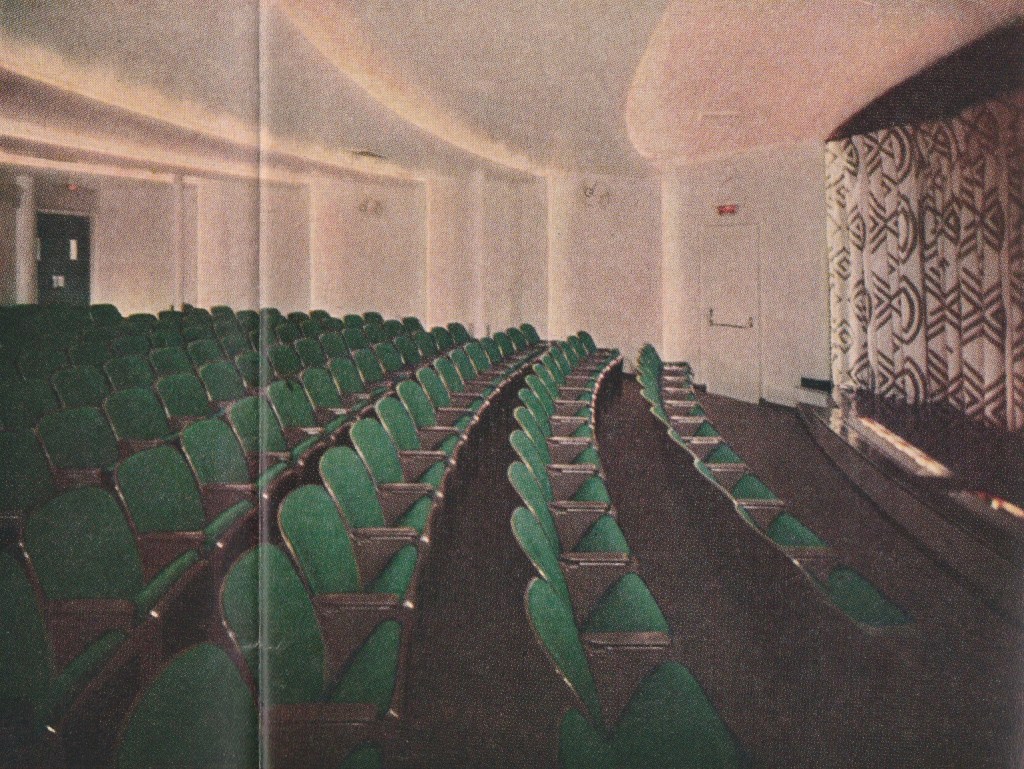
- The Tourist Class Theater would be renamed the Seminar Theater and would keep its same basic layout.
- The Observation Lounge would keep the same shape. It is not stated what would become of the Library and Writing Room within it.
- The layout within the First Class Ballroom would be made different with walls removed to make the room less circular. There would be four much larger windows added to both sides in the center of the Ballroom to replace the smaller set of five windows on each side previously.
- The First Class Smoking Room would be converted into a Casino and kept the same size. The Service Bar would remain intact on the Port side whilst the Tobacco Shop and the Shopping Center on the Starboard side would be merged to create a Casino Office.
- The First Class Theater would be kept whilst the dividing walls aft of this room would be removed.
- The Enclosed Promenades on this deck would be left intact.
(Author’s Collection)
Upper Deck:
- All of the crew quarters around the No. 1 Automobiles Hatch such as the Master at Arms, A. B. Seamen, Fire Patrolmen would be renovated into passenger Staterooms.
- The stairway here would also be reconfigured into a spiral design for passengers.
- The No. 2 Automobiles Hatch would be removed as well as the bathrooms in front of it and turned into more passenger Staterooms.
- The hallways around the No. 2 Hatch would be made into two parallel on each side, and several Tourist Class Cabins would be removed to do this.
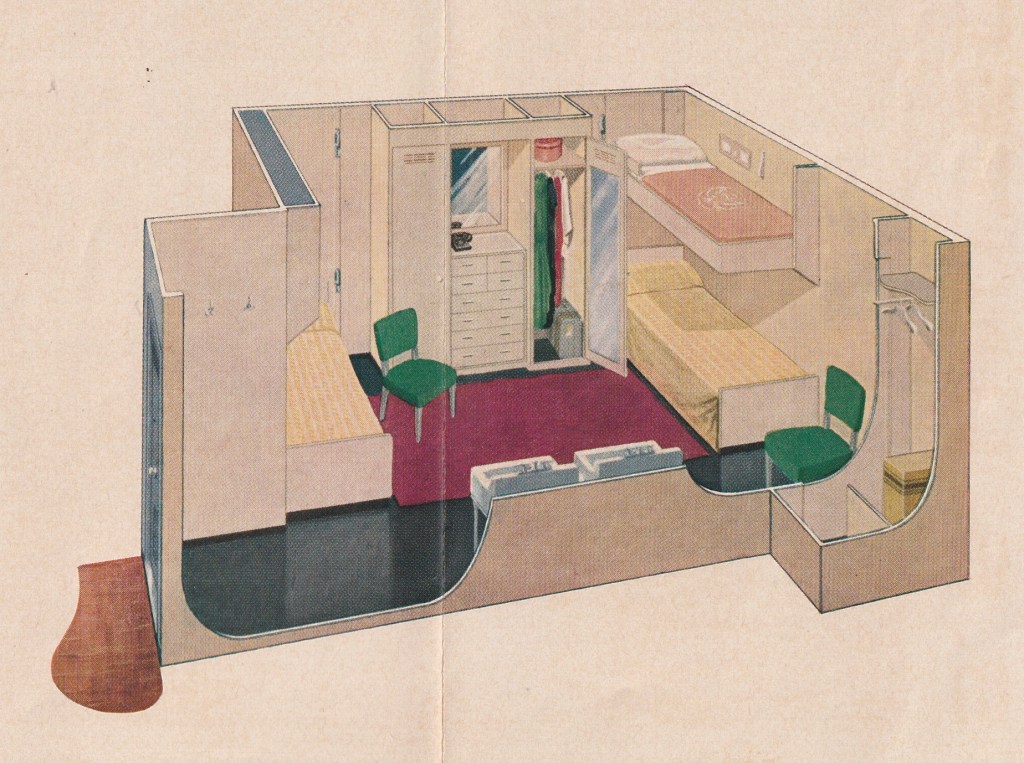
- The Tourist Class foyer would be largely reduced and new Staterooms would be built into this space as well as where the Tourist Class Children’s Playroom once stood.
- The men and women’s bathrooms behind the Forward Engine Hatch would be renovated into new passenger Staterooms. Other spots that received this treatment would include the Stewardesses and Telephone Operators Room.
- All the former Tourist Class Cabins would now feature private bathrooms rather than the shared ones from before.
- The Cabin Class Library and Writing Room would be converted into new Shops.
- The Tourist Class Lounge would be converted into the Lido Lounge, and a new outdoors Swimming Pool would be added aft of this room.
Main Deck:
(Author’s Collection)
- The Tourist Class Entrance Foyer forwards on the ship would be reduced to just a stair hall and new Staterooms added all around it. The Tourist Class Smoking Room, Purser’s Office and every single Tourist Cabin in this space leading to the bow would all be transformed into new Staterooms.
- The First Class Foyer would be renamed: The Pursers Square and many of the original service rooms around here would be kept in their original function. One notable exception would be both the Chief Steward’s rooms as those would be transformed into a bank.
- The original dome over the First Class Dining Saloon had a balcony that looked down into the room from above. Now this would have two sets of stairs and lead directly into it.
- The First Class Barber Shop, Beauty Salon, Health Ward, Hairdresser’s, Manicurist’s and Children’s Nurses rooms would all be converted into new Staterooms.
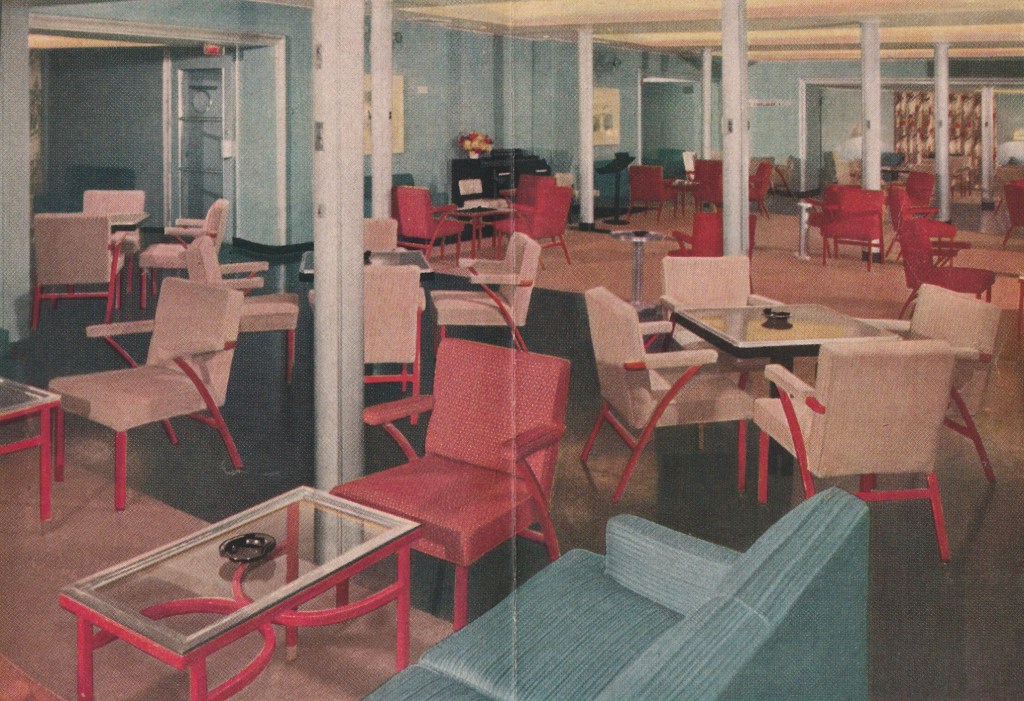
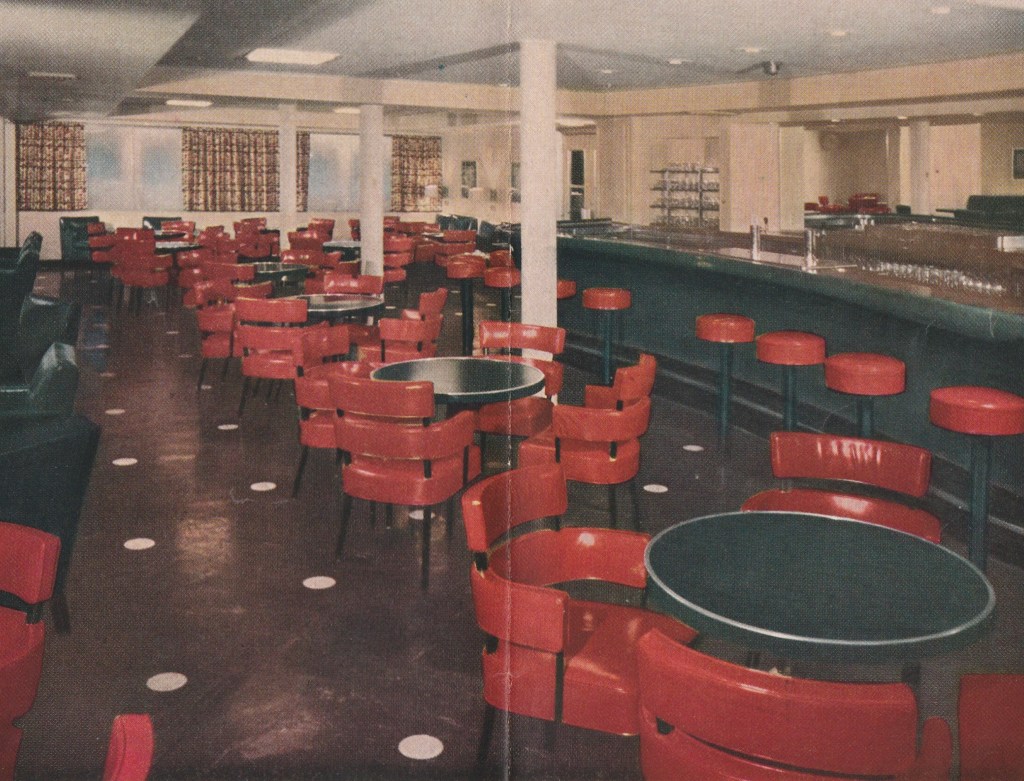
- The Cabin Class Smoking Room would be converted into an Old English Pub, whilst still maintaining its original space and Enclosed Promenades.
(Author’s Collection)
A Deck:
- Forwards on A Deck there were to be mass renovations and removal of spaces to transform them into new Staterooms. All the Tourist Class Cabins, public bathrooms, Steward’s Offices and crew space would be converted into them.
- The Tourist Class Dining Saloon would be split in half perpendicular to the ship to create two new restaurants beside eachother with a staircase in the middle leading above decks.
- The Foyer around the Forward Engine Hatch would be reduced to just surround the stairs.
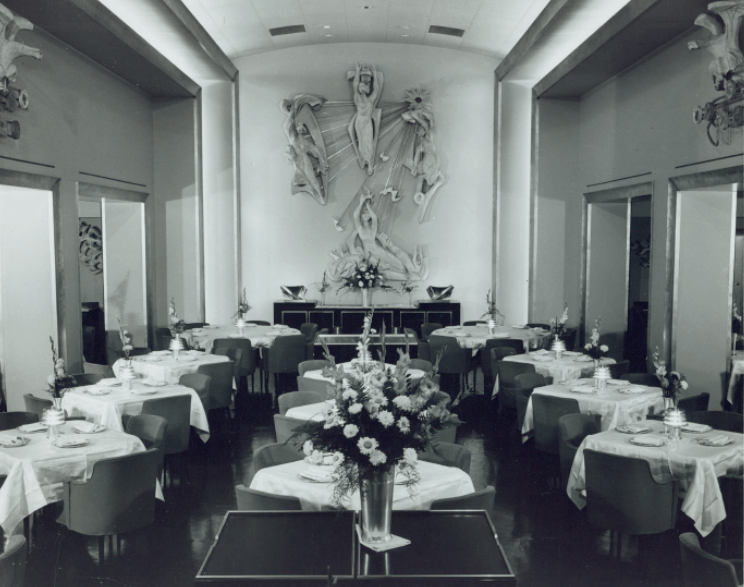
- A massive new Blue Riband Dining Room would be created in the former First Class Dining Saloon.
- A large number of First Class Cabins around the After Engine Hatch on both sides would be gutted to create two new Restaurants, one each on the Port and Starboard sides.
- The Cabin Class Dining Saloon would be split along the middle of the ship into two separate new Restaurants.
- All of the Cooks, Pantrymen, and Butchers rooms would be gutted with the forward half of this space creating more new Staterooms, and the aft half becoming a new Shopping Center.
B Deck:
(Author’s Collection)
- All of the Tourist Class Staterooms on the Starboard side were to be refurbished into new Staterooms. The crew areas on the Port side seem to have been left untouched.
- The Cabin Class Gymnasium was left untouched and would still serve its original purpose.
- The Bedroom Stewards and Waiters Rooms on the Port side were to be refurbished into new Staterooms,
- The final large Crew area in the stern of the ship was to gutted of its furnishings and transformed into a large new Shopping Center. The original cabins themselves would likely become the shops.
C Deck:
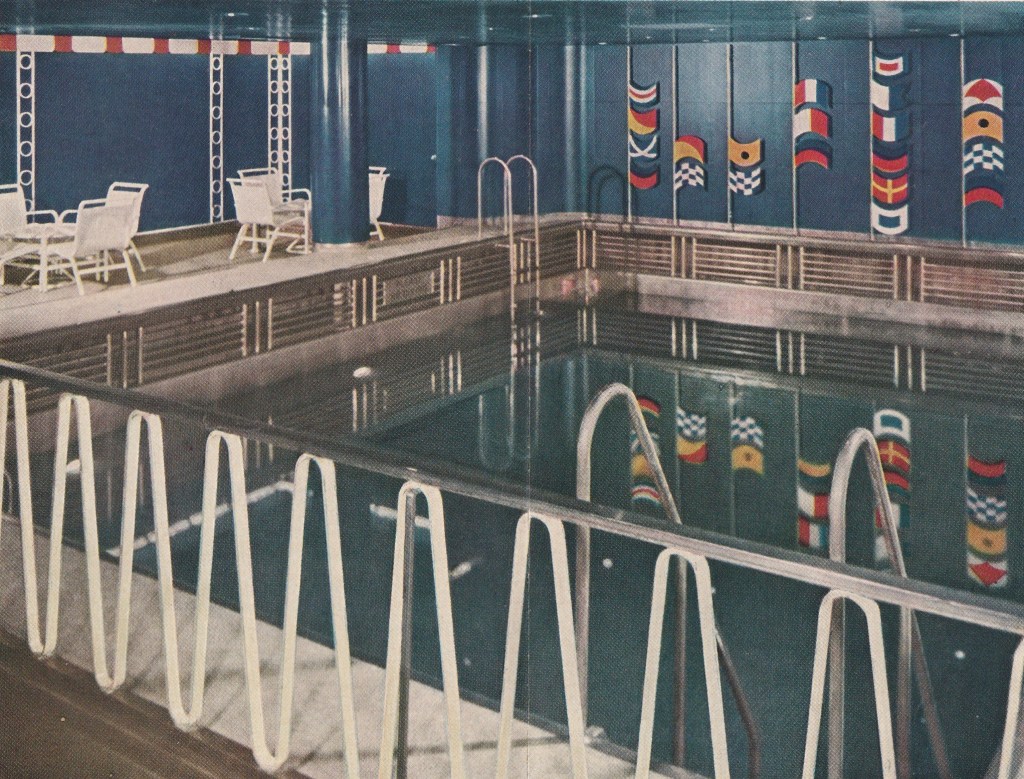
(Author’s Collection)
- The Swimming Pool would keep its beach theme.
- The Massage Table, Shampoo Table and Ray Light Bath on the starboard side would be replaced by a new sauna.
- The other features of this area would be kept mostly intact including the Men’s and Women’s Locker Rooms, the Office as well as smaller features such as the starboard side Steam Bath.
- Further aft, all five of the Utilitymen’s and the Porter’s one areas would be gutted completely to be a shopping center, with each of these six rooms likely housing a shop.
(Author’s Collection)
Bibliography and References:
- (1979) Blum, Ethel, The Total Traveler by Ship: The Cruise Traveler’s Handbook : Burt Franklin, (pages 28-29)
- (1985) Blum Ethel, Total Traveler by Ship (Total Traveler Guide to Worldwide Cruising) : Hippocrene Books
- Victoria Daily Times, (1979) Wednesday November 29th, page 9 https://archive.org/details/victoriadailytimes19791128/page/8/mode/2up?q=richard+hadley
- (1986) Largess, Robert, SS United States, THE MILITARY FACTOR – Warship. vol. 10 Conway : Maritime Press, Naval Institute Press (pages 199 – 204)
- (2025-ongoing) Troopship Service : rmsQMwiki https://rmsqmwiki.org/wiki/Troopship_Service#Highlights_of_Her_War_Work (Accessed January 2026)
- (2023) K. Rindfleisch, James, Samuel Bauer, F. & R. Daywalt, Stanton, SS United States : An Operational Guide to America’s Flagship : Schiffer Publishing
- (1991) Miller, William H. , SS United States : the story of America’s greatest ocean liner : W. W. Norton & Company, Inc, New York
- (2014) Maxtome-Graham, John, SS United States : Red, White & Blue Ribband, Forever :
- (1979) B-193086, FEBRUARY 28, 1979 : U.S. Government Accountability Office https://www.gao.gov/products/b-193086 (Accessed February 2026)
- New York Times, (2002) Richard Hadley, 80; Planned Floating Condos for Ocean Liner April 15th, p.6 : Accessed: https://www.nytimes.com/2002/04/15/us/richard-hadley-80-planned-floating-condos-for-ocean-liner.html
 The Kaiserhafen