
| Name | RMS Mauretania |
| Operator | Cunard Line |
| Yard Number | 244 |
| Builder | Cammell Laird, Birkenhead |
| Keel Laid | May 24th 1937 |
| Launch Date | July 27th 1938 |
| Sea Trials | May 31st-June 3rd 1939 |
| Maiden Voyage | June 17th 1939 |
| Tonnage | 35’739 GRT |
| Length (LOA) | 235.3 meters |
| Length (LWL) | 201.47 meters |
| Height from keel to superstructure | 33.88 meters |
| Width | 27.28 meters |
| Draught | 9.37 meters |
| Installed Power | 42’000 hp |
| Maximum Power | 47’800 hp |
| Propulsion | Two Parsons single -reduction geared turbines |
| Screws | Twin Screws |
| Speed | 22.5 knots service (42.60 km/h) 25.34 knots max (46.93 km/h) |
| Cargo Capacity | 465’000 cubic feet |
| Crew | 780 |
| Passengers | Cabin Class: 440 Tourist Class: 450 Third Class: 470 |
| Construction Cost | $10 million (1939) |
| Nickname(s) | The Sunshine Ship Little Liz The Mystery Ship |
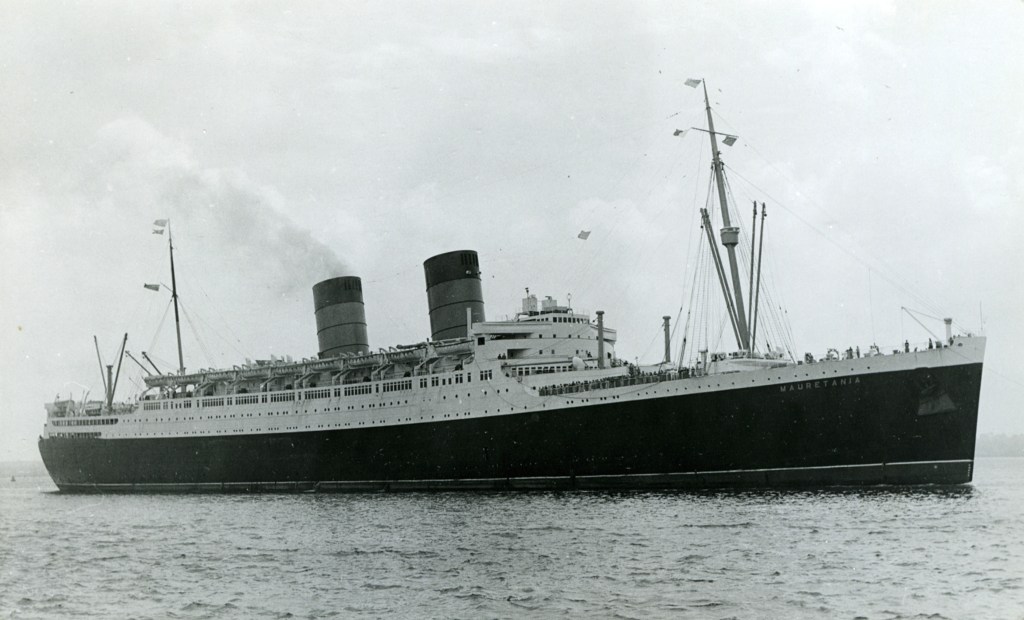
Cunard’s “Little Queen”
The RMS Mauretania was a premier vessel of the Cunard Line built just before the outbreak of war in 1938. She carried the name of a previous liner that had been a complete favourite of the public. As a result she is still widely considered to live in the shadow of her namesake. In spite of this, the New Mauretania proved herself as an outstanding war veteran and a dependable passenger ship. She never stole the world’s attention, but let no one down throughout her 26 years of service. Dare say, she could even stand alongside her forebear and make that name her own. This is the story of Cunard’s Little Queen, RMS Mauretania (1938).
A Name with Legacy
The first Mauretania
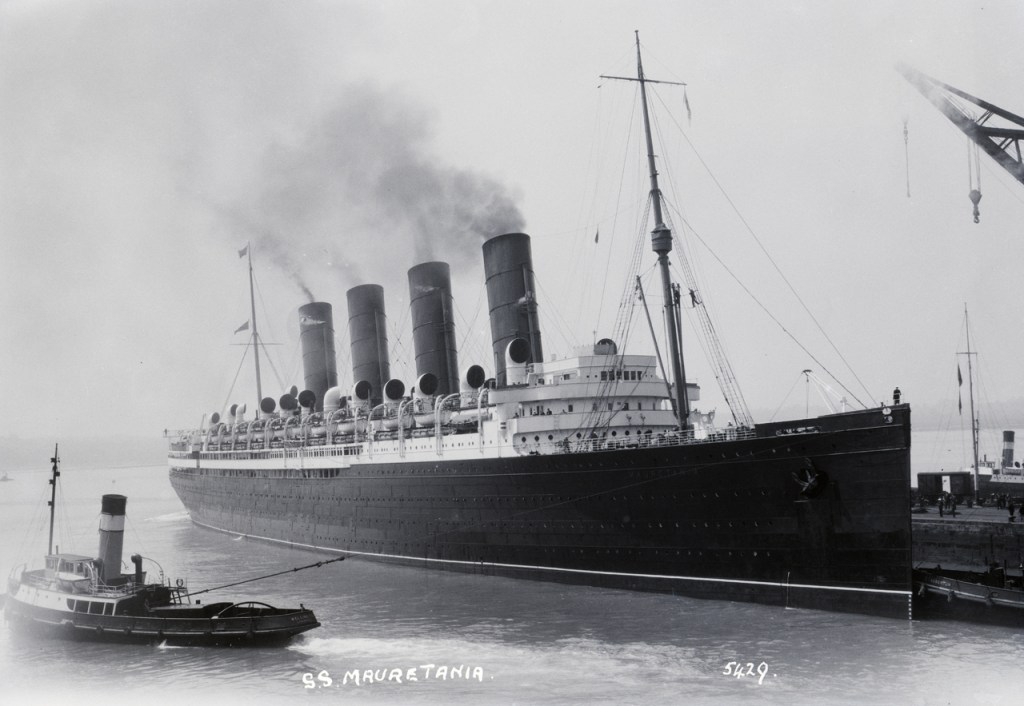
Cunard Line’s RMS Mauretania, launched in 1938 was one that the public certainly knew had not been the first. She very intentionally carried the prestigious names of one of the most beloved steamships ever built by that point in history. The first RMS Mauretania – an iconic four stacker and the larger sister of the ill-fated RMS Lusitania built back in 1907, had been the largest and fastest liner in the world and the public adored her. Nicknamed: “The Grand Old Lady of The Atlantic”, she held the speed record of the North Atlantic for a full 22 years and was capable of ludicrous 27 knot+ speeds even as an older ship. On top of that, she was firmly cemented in the hearts and minds of the many soldiers who saw her during her exceptional years of service during the First World War as a hospital ship and troop transport. Like many greats, the Great Depression sharply cut the operating capabilities of the many steamship lines, and the Mauretania was sorrowfully dismantled in Scotland in 1935 after 28 years of life.
A Worthy Successor:
With the Mauretania gone, the now Cunard-White Star Line was determined to keep that name alive. It couldn’t go to one of their top flagships again, as the enormous RMS Queen Mary had been launched in 1934 and set a new standard for their top liners. Her 80’000-ton running mate set to arrive in 1940 would follow with the name of Queen Elizabeth. These two Queens were to be the fastest liners in the world, with one sailing across the Atlantic each week. This critical service would often be cut their winter overhauls or whenever any Queen was out, so another liner would be an “essential complement to the idea represented by the two larger ships”. In addition, there was a hefty portion of sea-going passengers who would happily prolong their voyage time in order to enjoy all the pleasures and luxuries of modern ocean liners. Thus, the company started to draw up plans for a new liner that could fill this gap during the latter half of 1936.
Construction and Design
Design Specifications:
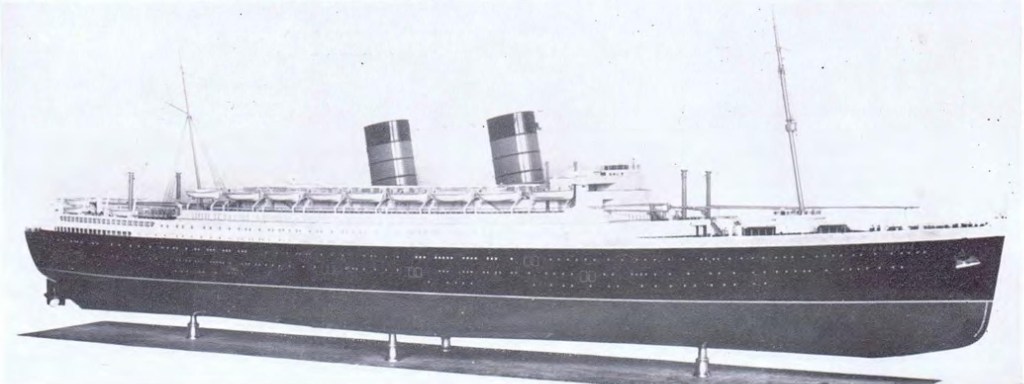
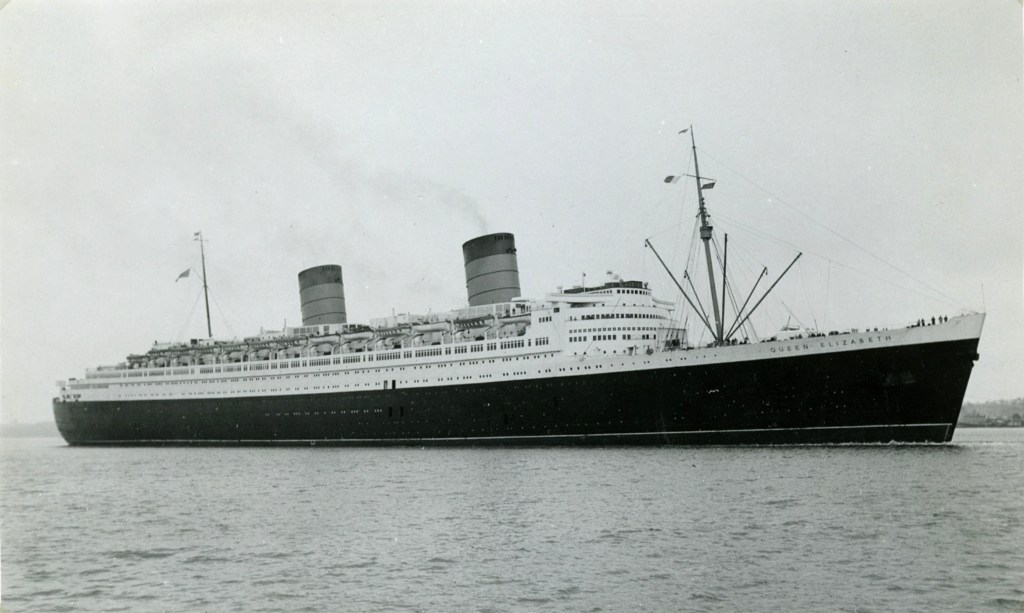
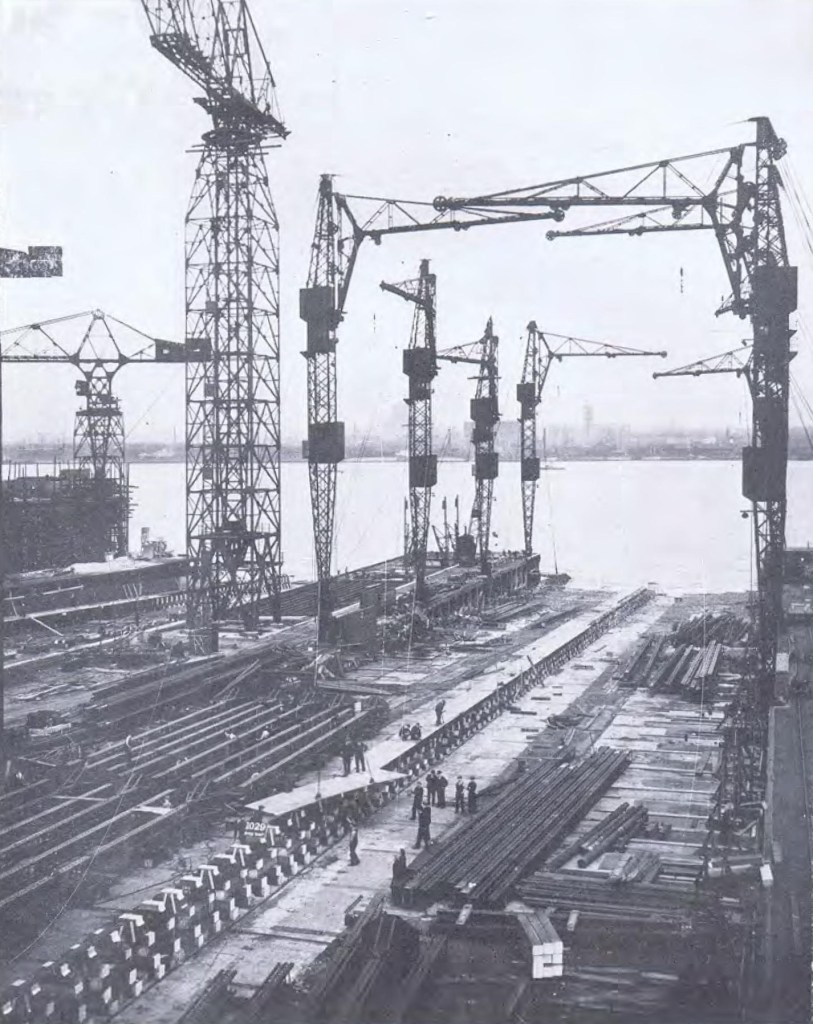
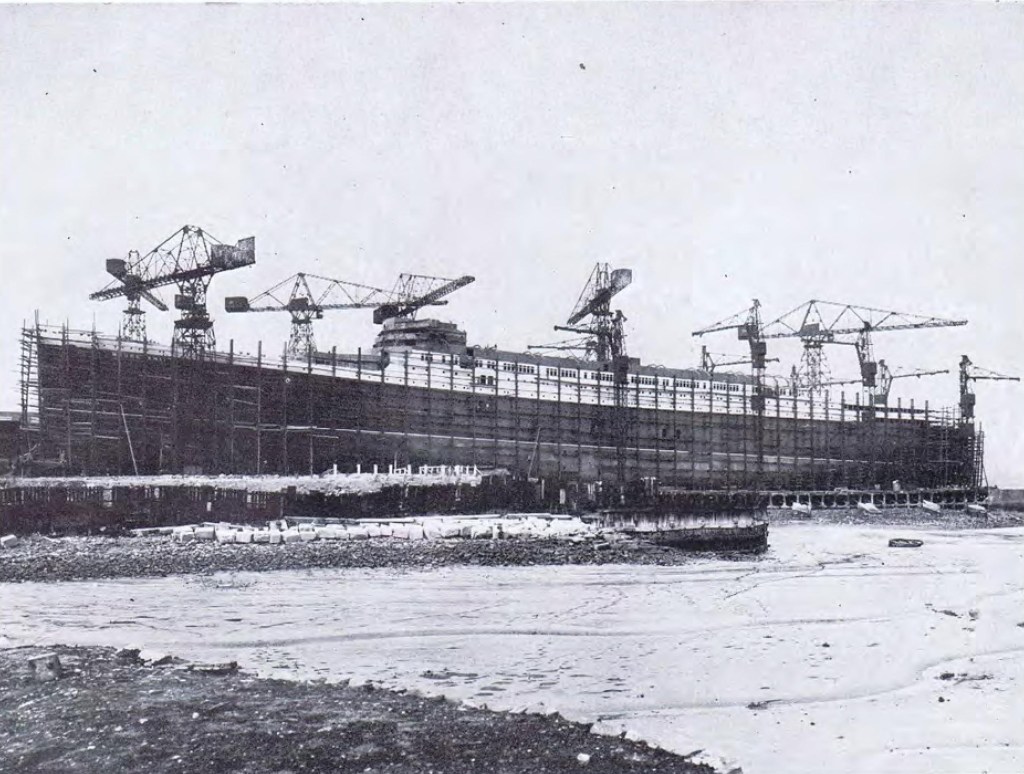
With the plan set in motion, Cunard-White Star offered this contract to four leading British shipbuilders with each presenting their proposals to get the job done. On the 30th December 1936, the tender from Messrs, Cammell, Laird & Co. Ltd was accepted. Five months later on May 24th 1937, the keel for this new liner was laid. As she was being designed and built at the same time as the Queen Elizabeth, the new Mauretania would be distinctly similar to the latter. She was primarily designed to sail from the river Thames to New York, and so a size nearly the same as her old namesake at around 36’000 tons was deemed suitable. A minimum 22-knot service speed was also required to provide a comfortable, economic crossing of 5-6 days. At the time of her launch, the Mauretania was the largest ship yet built in England (both Queens were built in Scotland). This record would stand all the way until the RMS Oriana of 1960.
This much history, inspiration and 1930’s elegance could only equate to a truly beautiful ship. The Mauretania bore a striking familiarity to both Queens, almost making her a sort of Princess-liner. She had a terraced, rounded bridge front, superstructure that sloped nicely aft, a cruiser stern and a speed-length ratio of 0.875. The Queen Mary needed three funnels to ventilate all of her boilers, but the Queen Elizabeth and Mauretania only needed two due to their updated and more compact machinery spaces. Mauretania’s funnels differed from the Queen Mary’s by being aluminum to make them lighter and to protect them from corrosion.
Machinery and Technical Aspects:
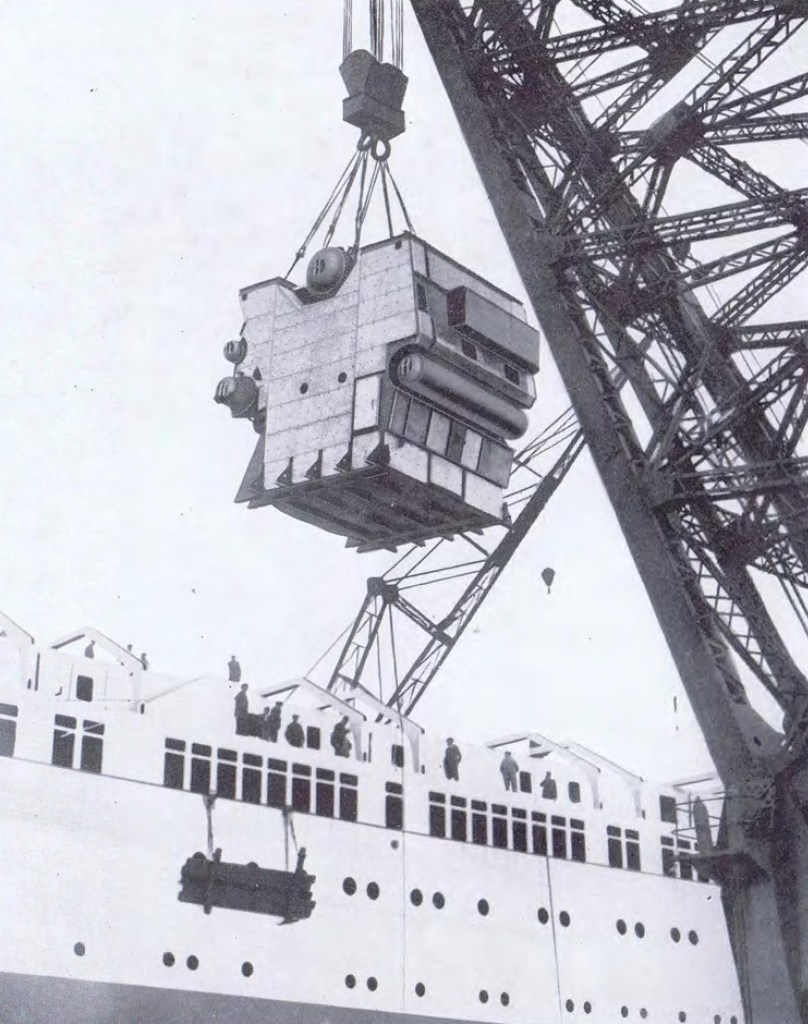
To power the big ship and give her a service speed of roughly 22.5-23 knots, she had two boiler rooms to serve each upshaft with three Yarrow side-fired oil fuel boilers each. These powered two twin-screw Parsons reaction single-reduction geared turbines to turn her two 25-ton propellers. Mauretania shared many technical features with the much-larger Queen Mary, such as her Yarrow Boilers, Taylor Patent Gravity Davits, Martin Black Wire Ropes for her davits, Wakefield Mechanical Lubricator for her stern tubes and rudder, Howden Forced-Draught Fans + Howden Dust Collectors, Weir Closed Circuit Feed System, Marconi Wireless telegraph System and more.
She would have ten decks (Sports, Sun, Promenade, Main, A-F) which were serviced by 11 elevators. The ship would have 390’000 cubic feet space for general cargo, 75’000 cubic feet for refrigeration, and finally garage space for 70 cars. Following recommendations from the Board of Trade, she was subdivided into 33 watertight compartments.
Interior Accommodations:
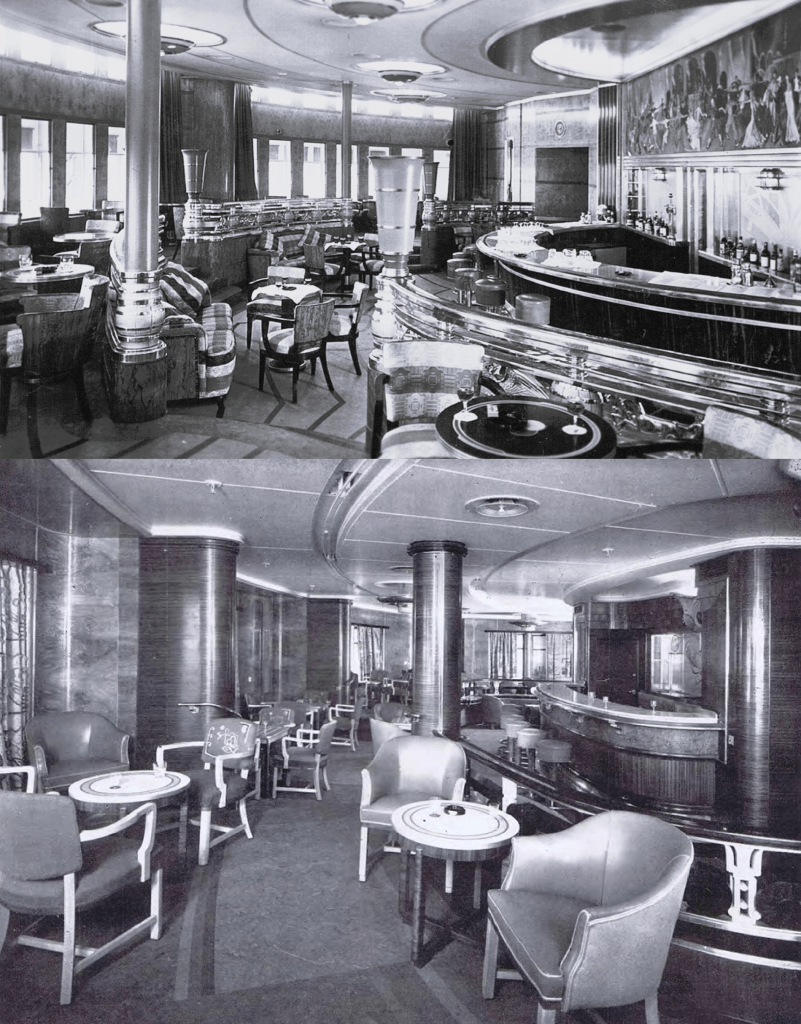
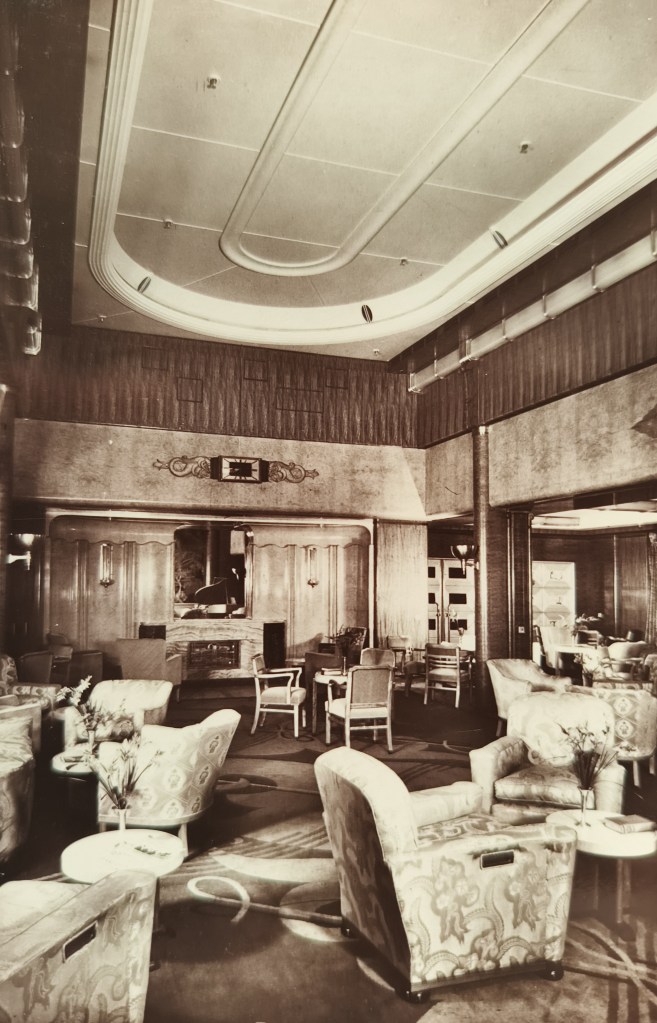
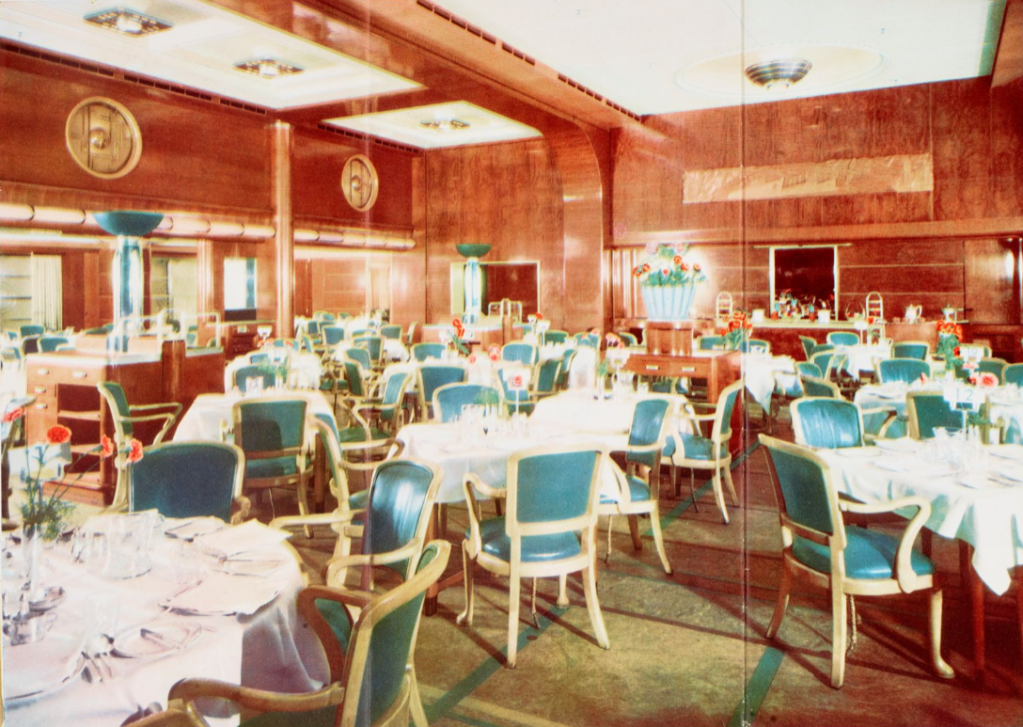
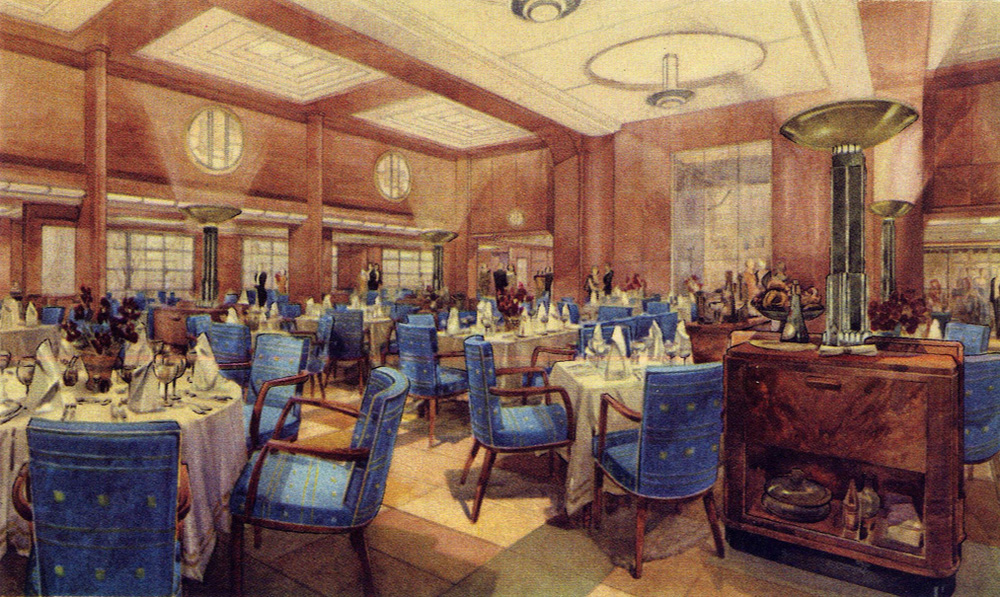
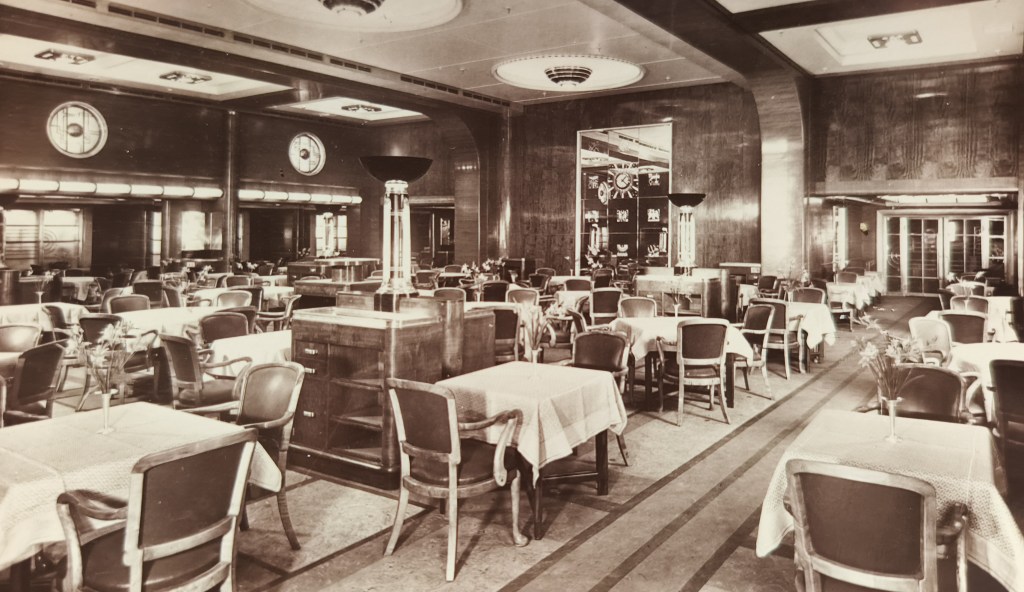
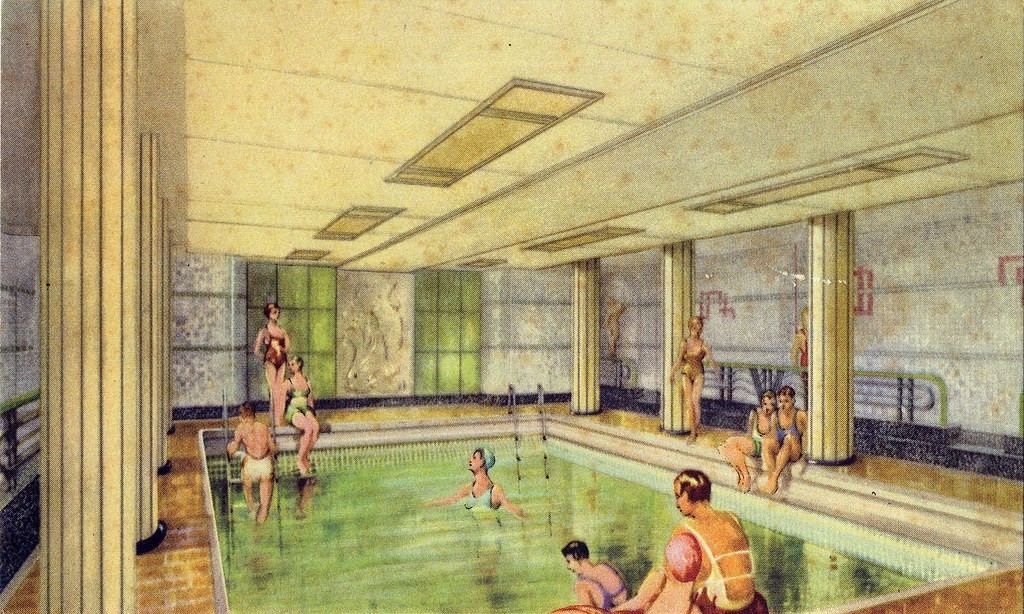
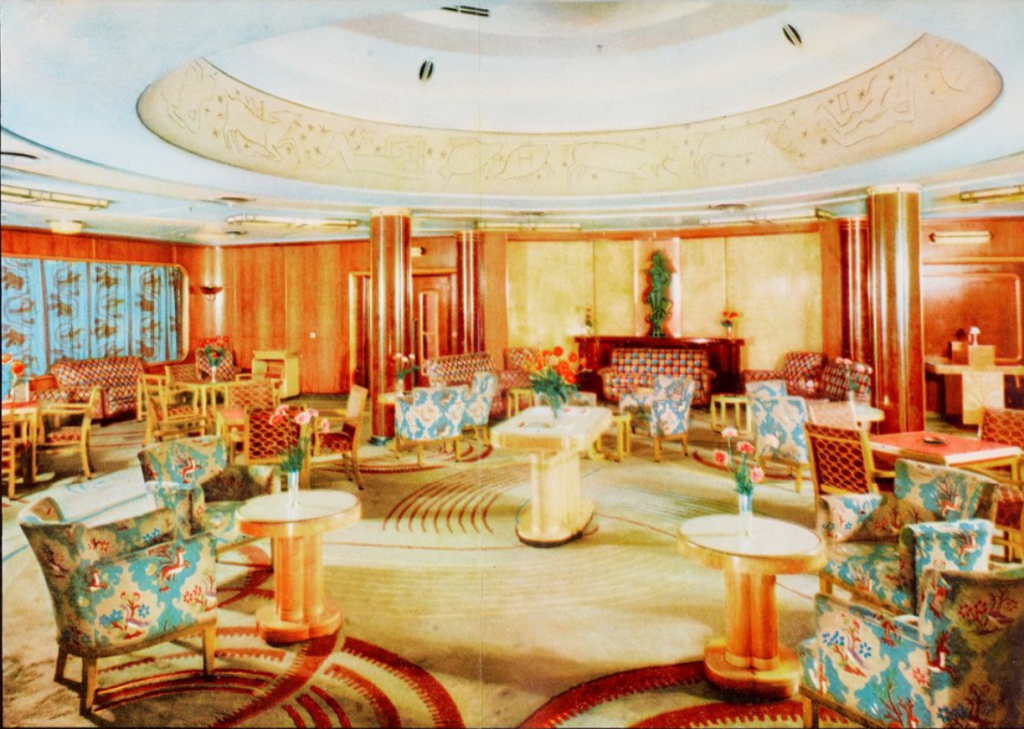
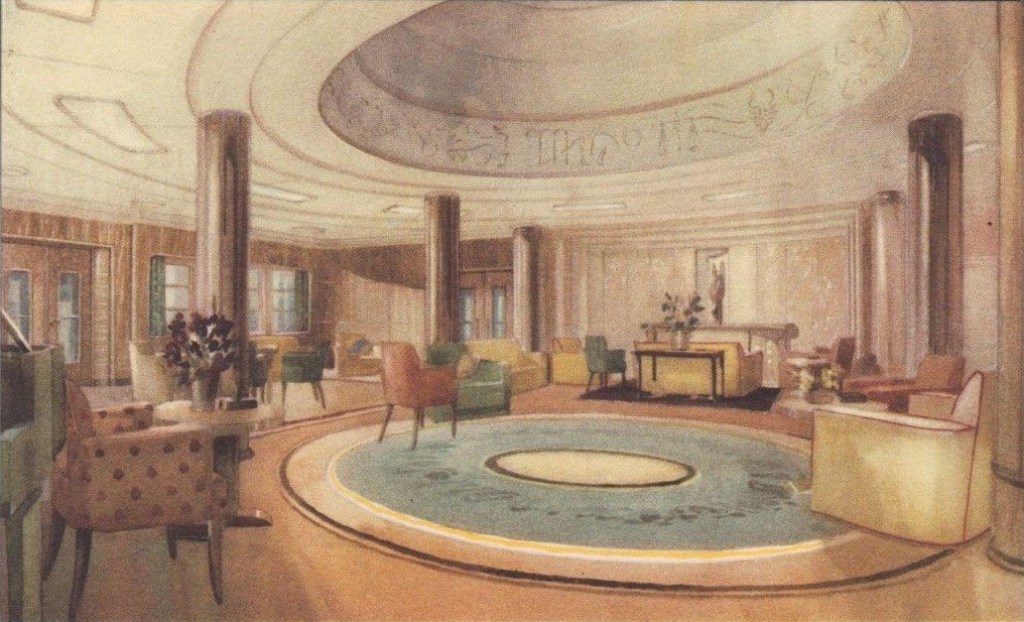
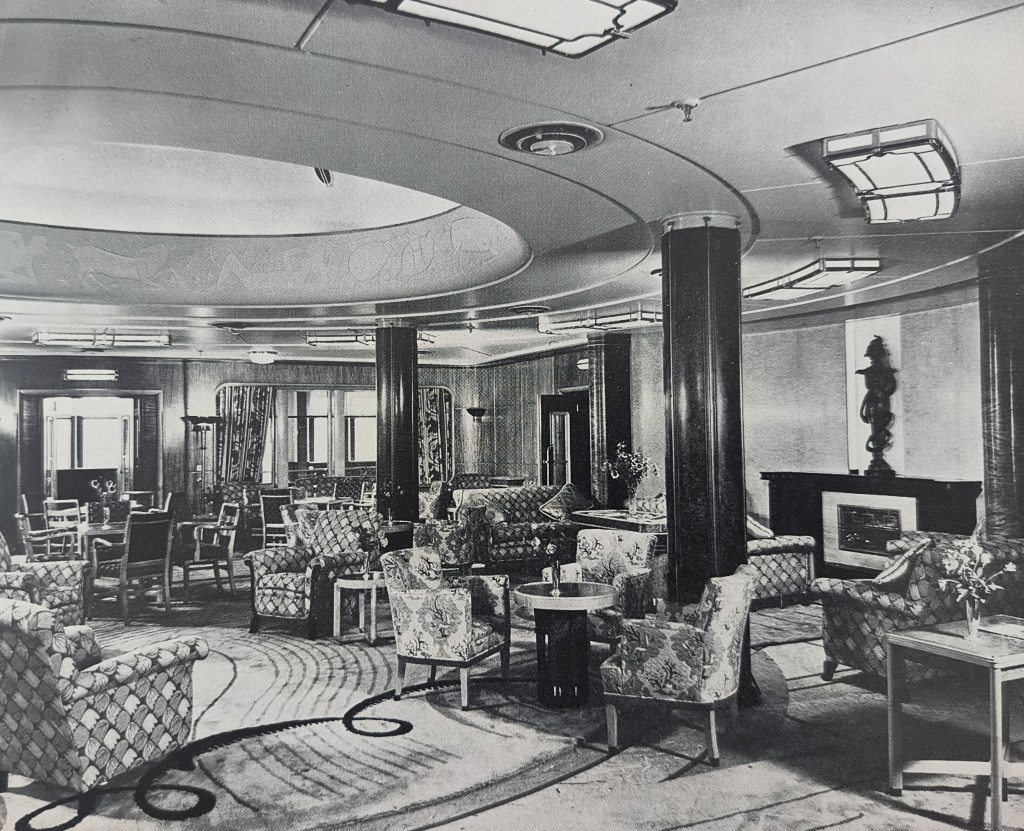
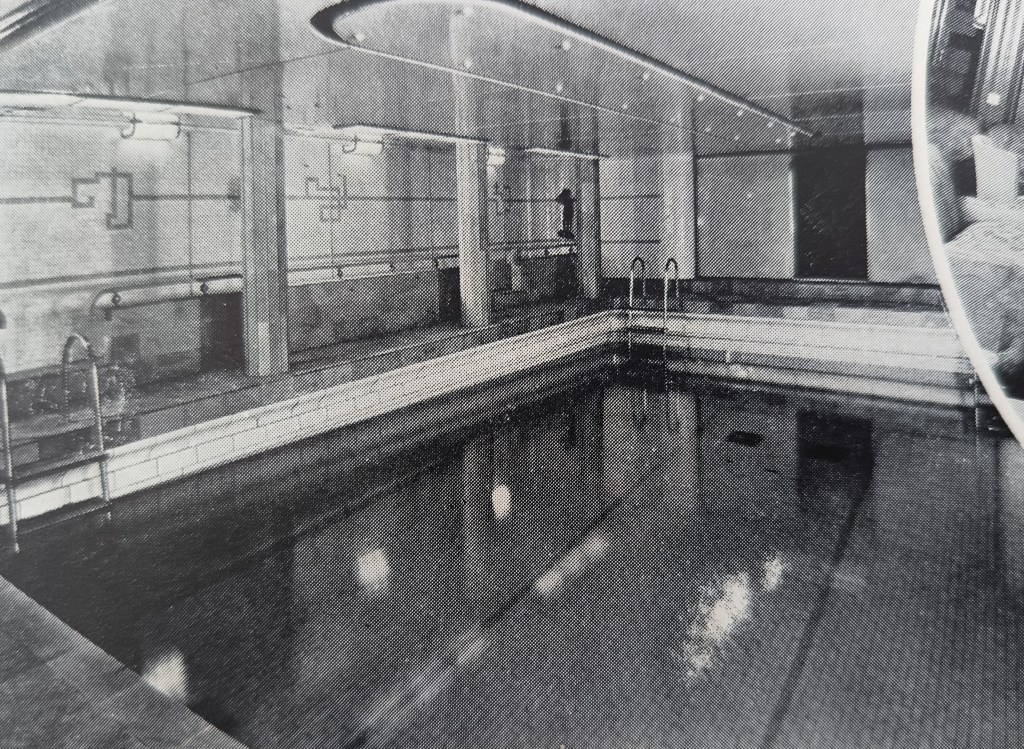
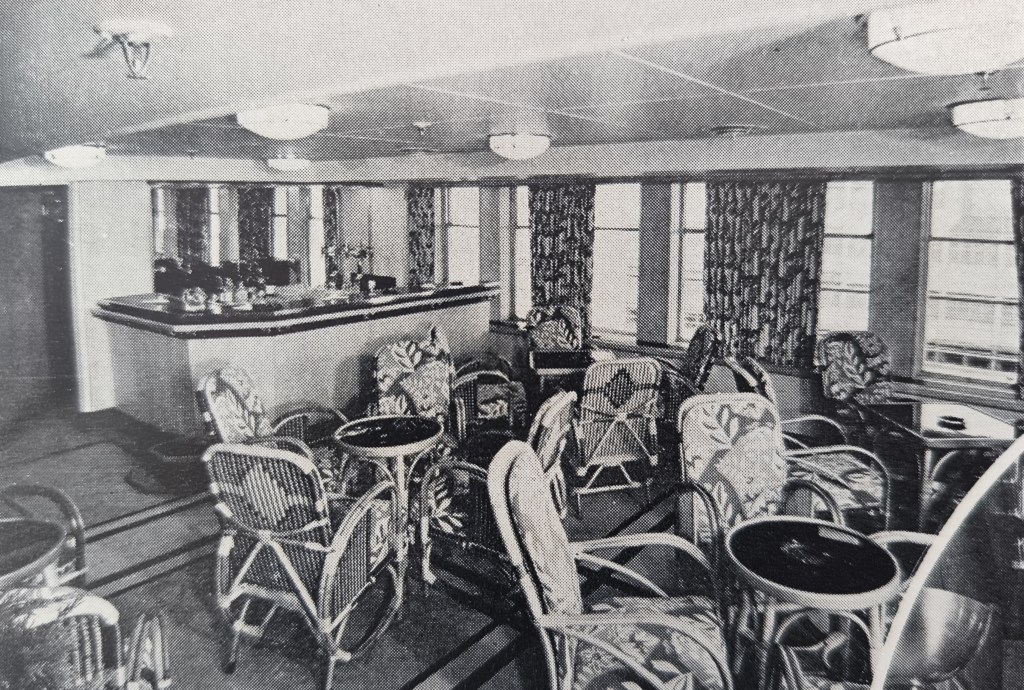
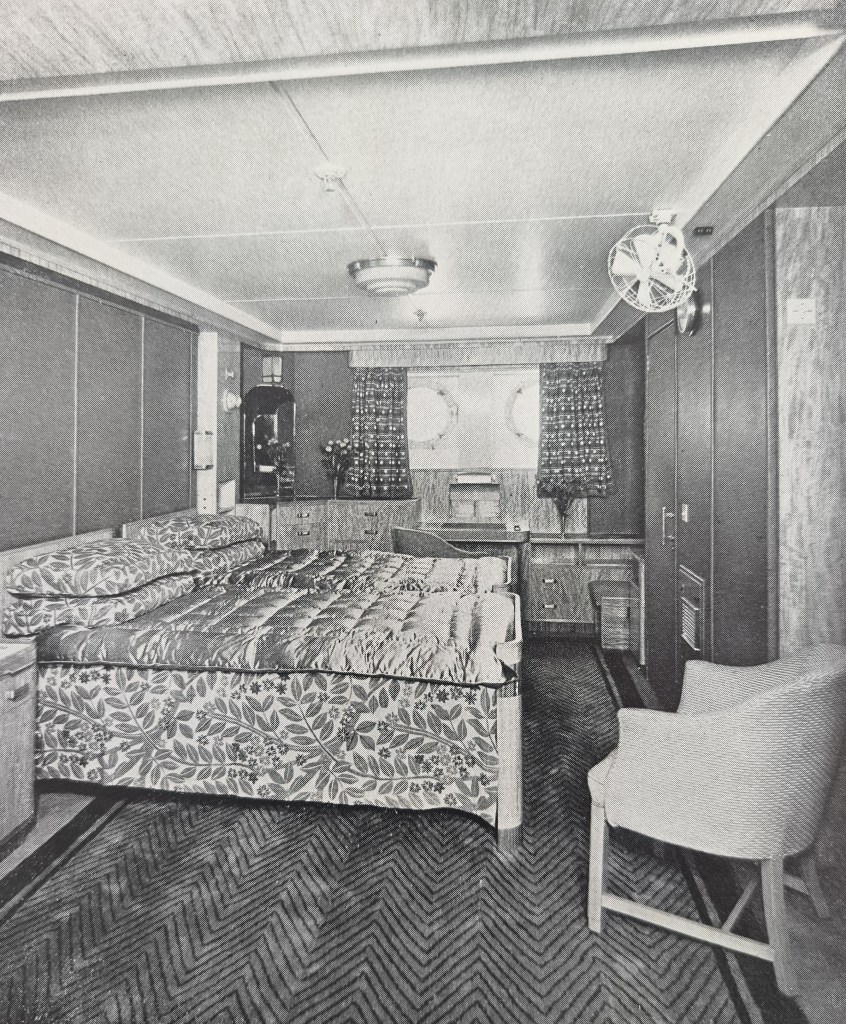
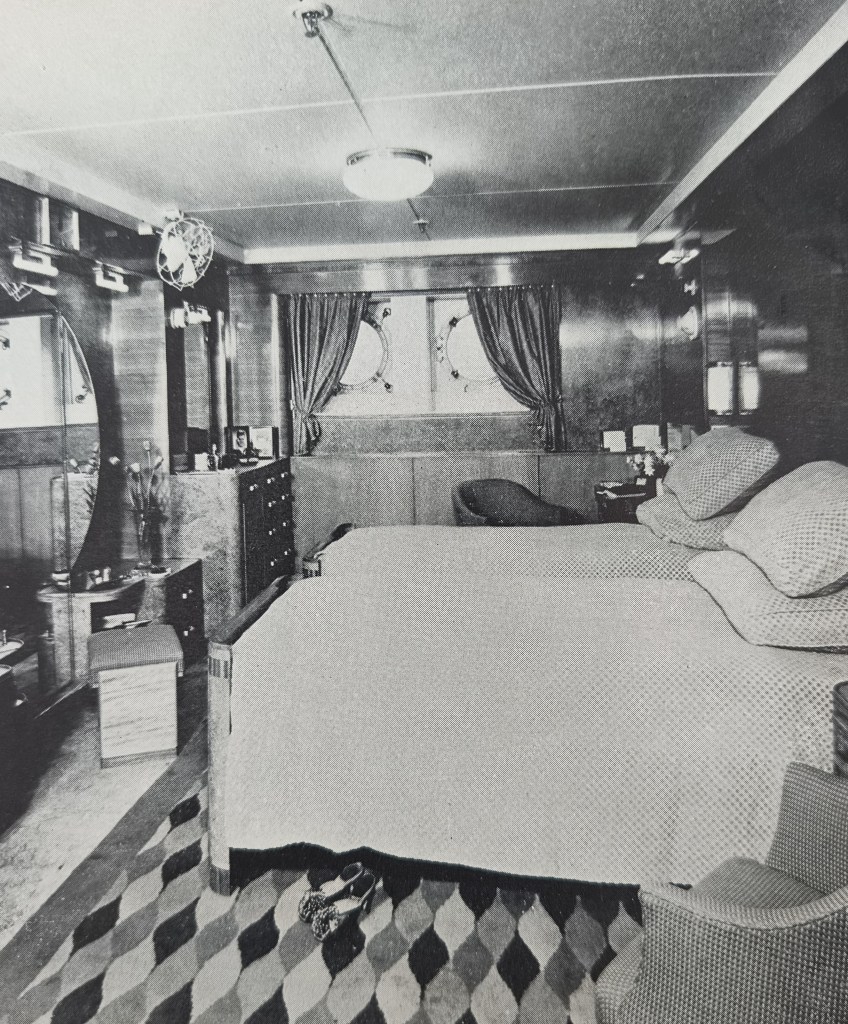
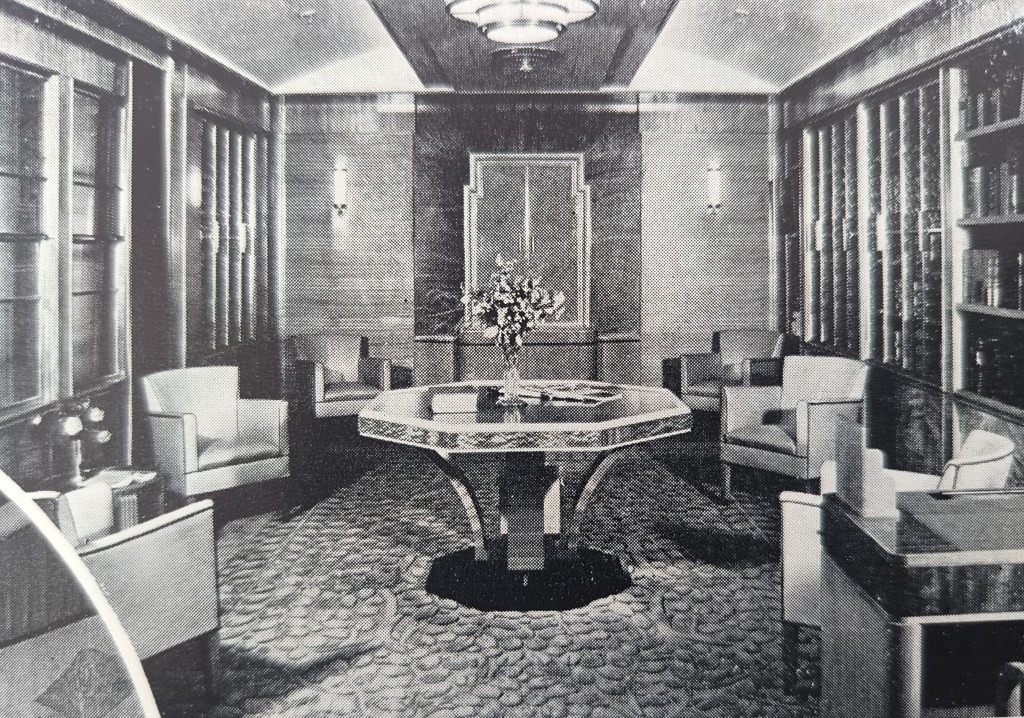
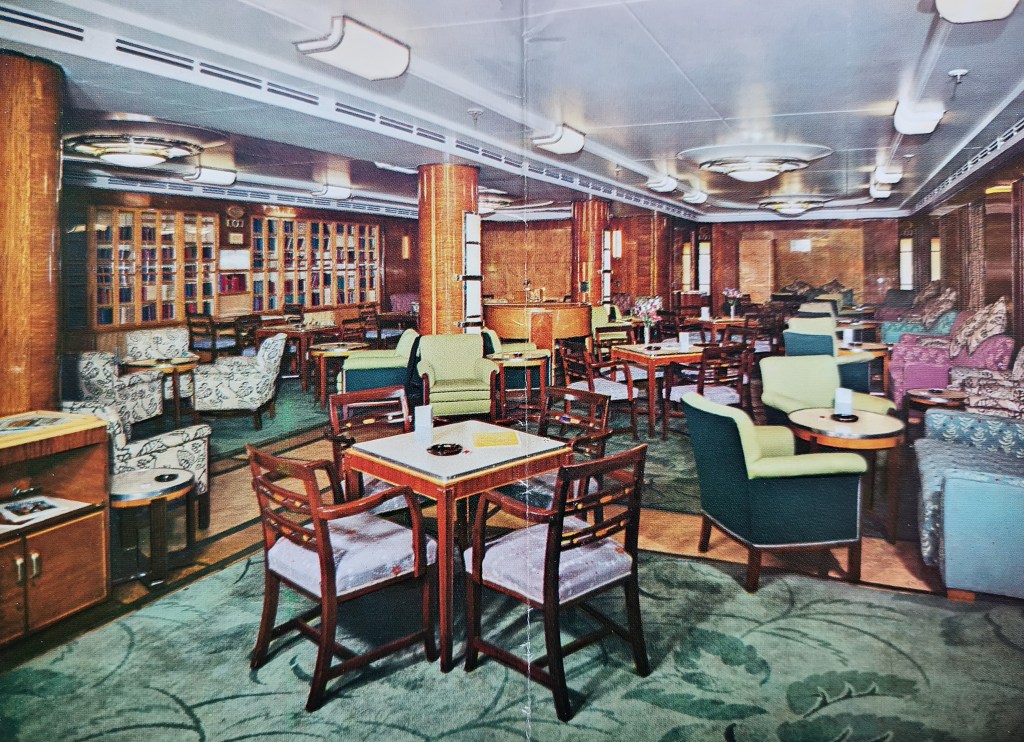
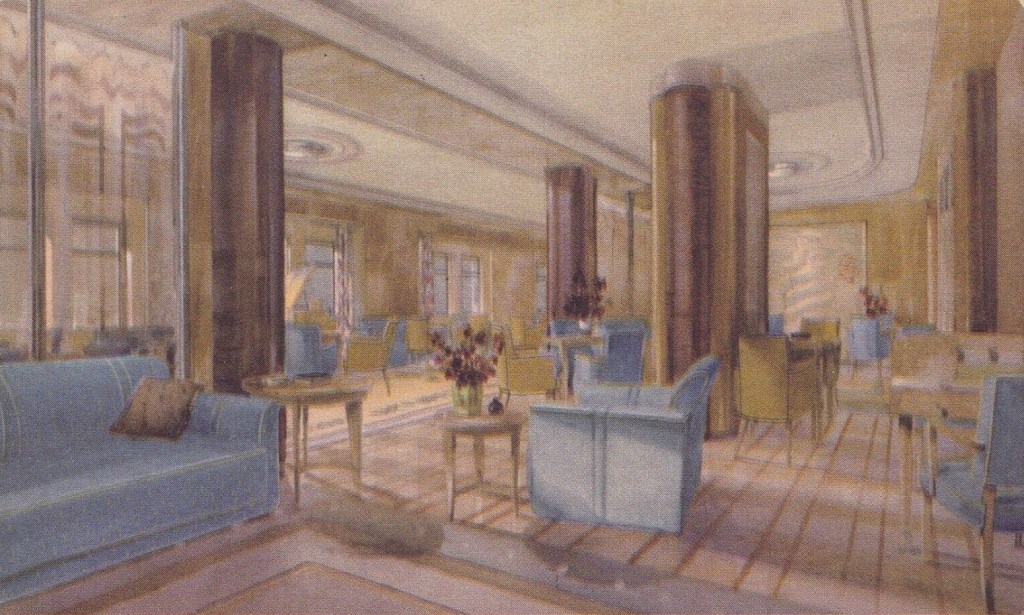
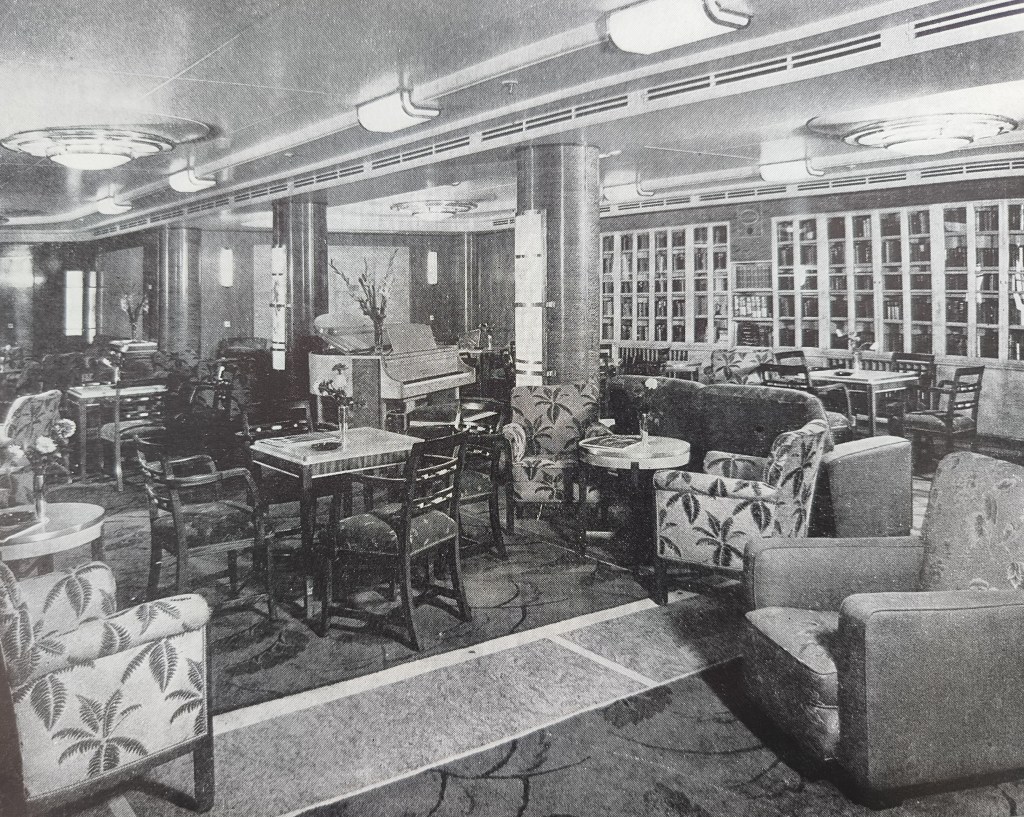
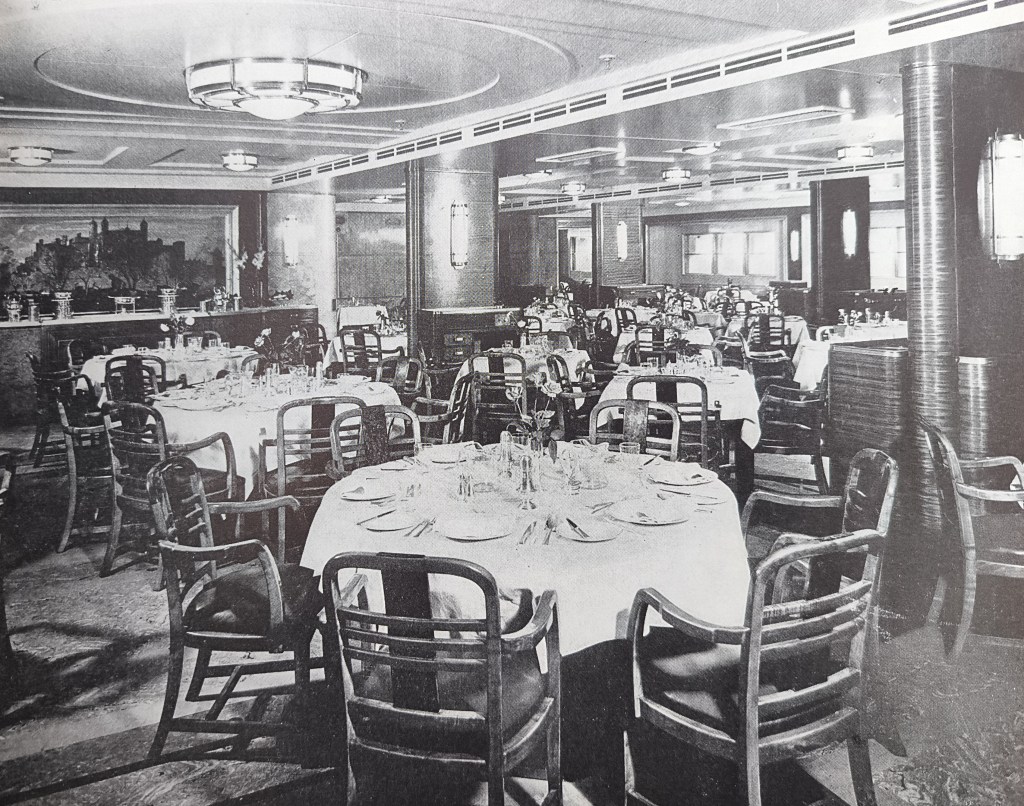
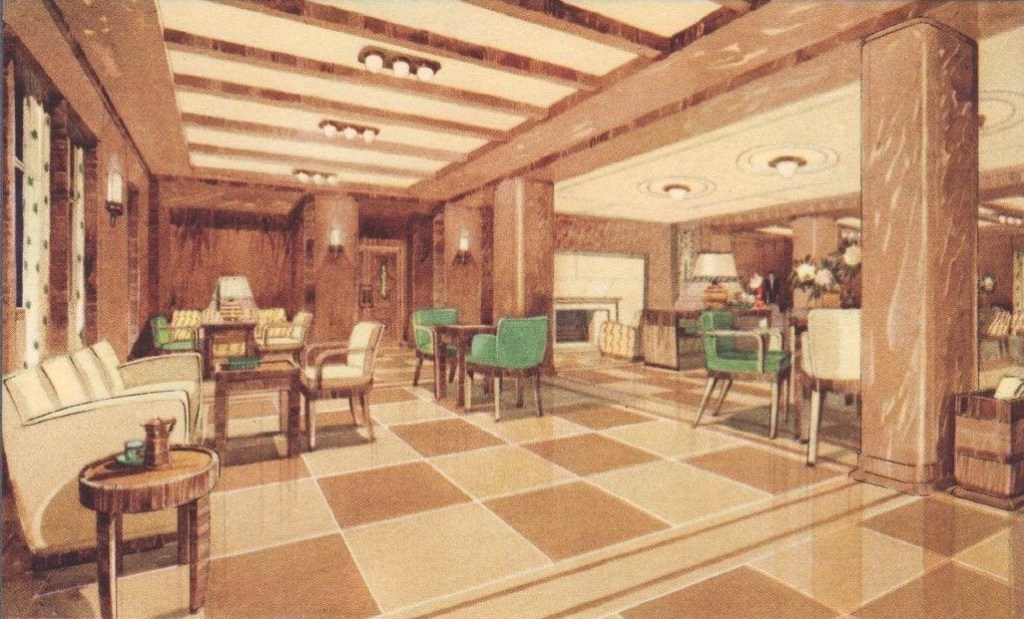
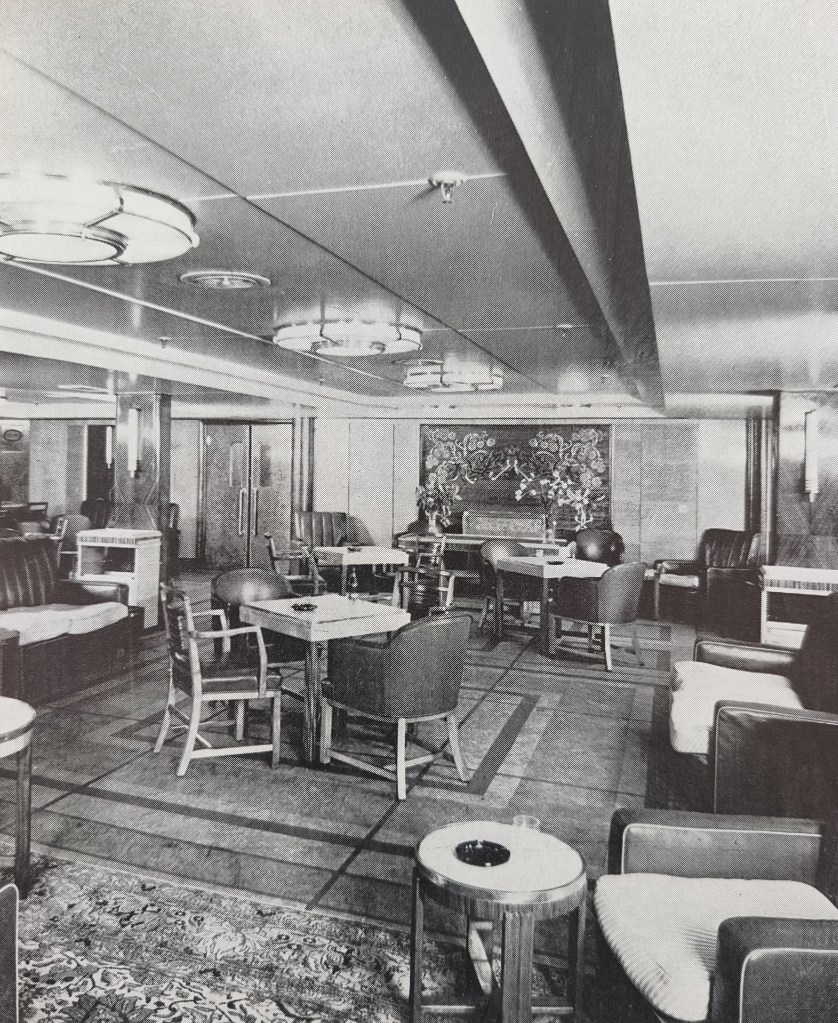
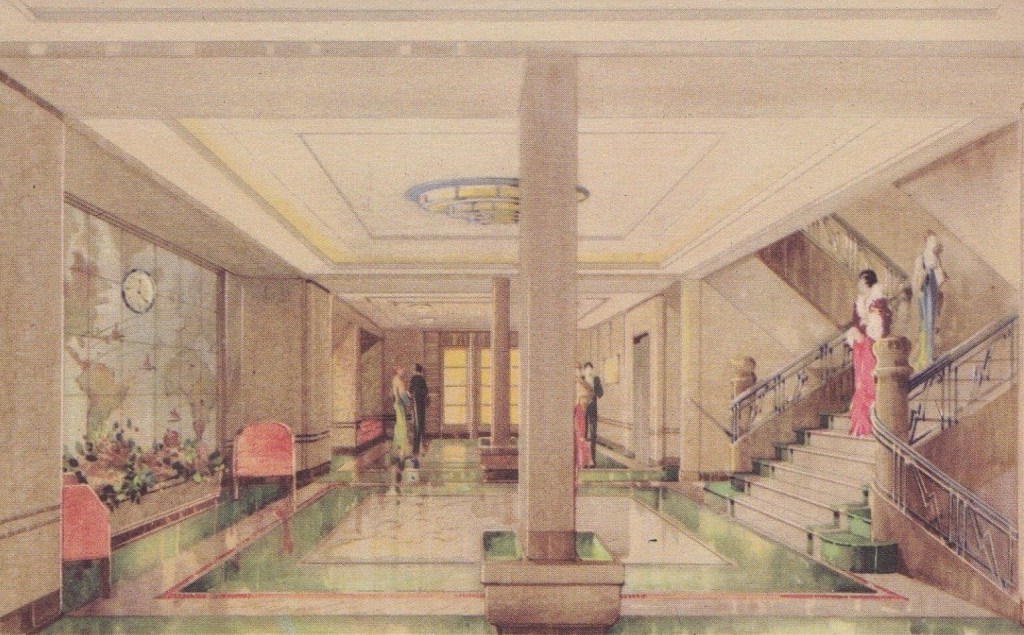
The Mauretania was uniquely built without a First Class; instead her three-class layout was Cabin, Tourist and Third. All three classes boasted exceptional facilities and standards for their time. Waring & Gillow, who had been awarded the largest contract for the interiors of the Queen Mary were also entrusted in the exact same way for the fantastic Art Deco and Streamline Modern interiors of the Mauretania. Additionally, some of the panelling from the original Mauretania was built into the new one. Each class was given their own movie theatre and air conditioning for the principal public rooms. Some of the onboard facilities would include a tiled marble swimming pool, a library with 1400 books, fully-equipped gyms, long graceful promenades, playrooms for children, dance floors that could be erected at a dime and much more. She boasted 602 separate staterooms for her passengers in total.
Third Class passengers were given a uniquely large amount of outdoor deck space and sports area on the Sun Deck, close to the cabins. They would even receive a Verandah Cafe for the outdoors.
The Launch
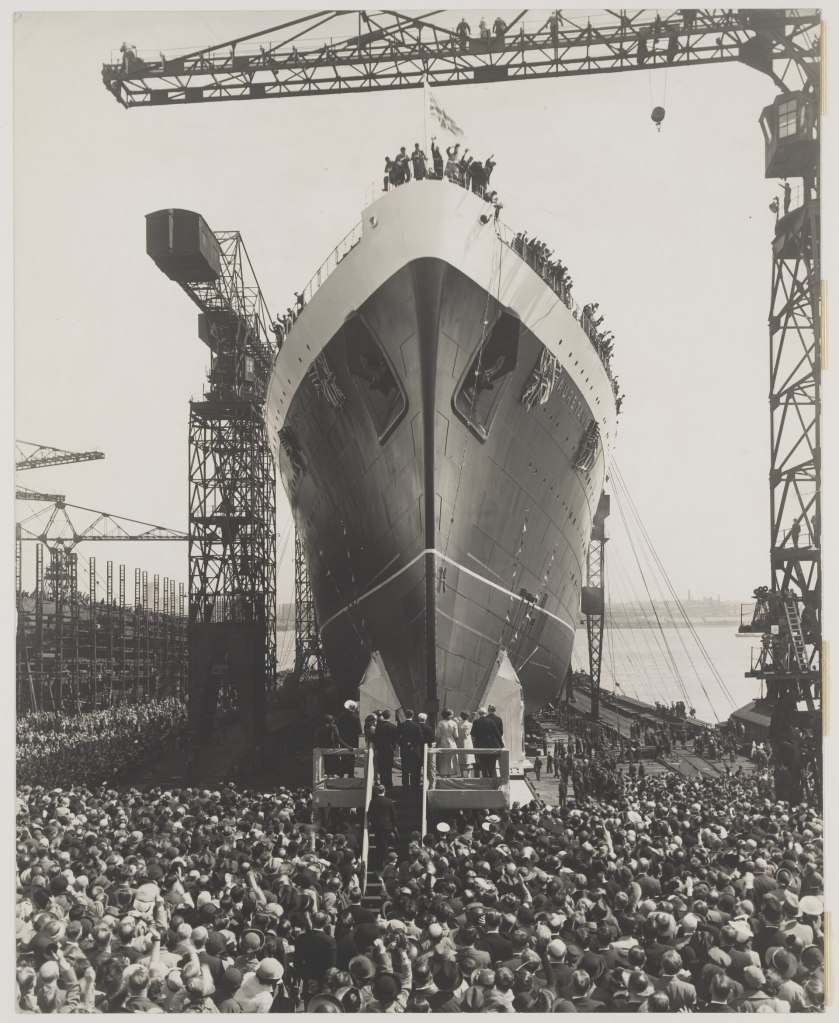
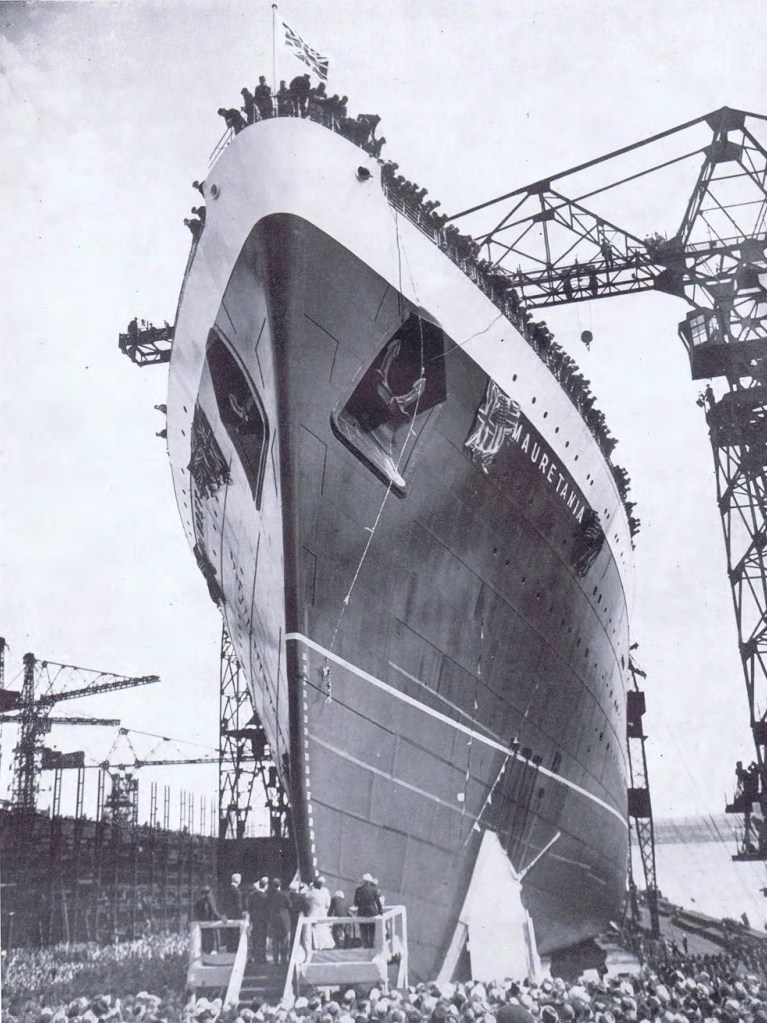
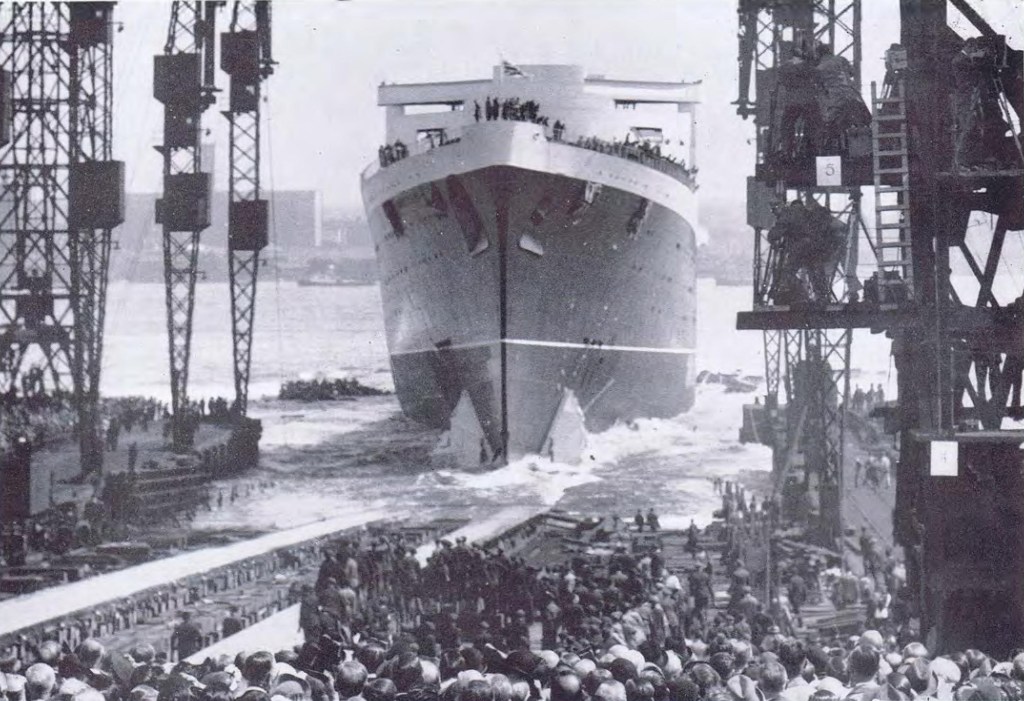
On July 28th 1938, the 16’457-ton hull was ready for launching. 2.5 million individual hand-fixed rivets held the 12th-largest ship in the world together. Several factors such as this being the largest English-built ship, the impact on those living near the river Mersey, and the long-standing popularity of the old Mauretania all resulted in attracting an immense crowd of 100’000 to Messrs, Cammell, Laird & Co. They gathered all around the Mersey from early in the morning to watch the spectacle. Workers still conducted last-minute touch-ups to the hull high above. In front of the bow on the slipway, was a platform for the launching party. The ceremony was conducted by Lady Bates, wife of Sir Percy Bates who was the Chairman of Cunard-White Star Line. Standing before the crowds on the platform, she spoke the following words:
“This is a red letter day, not only for me but for Merseyside. The launch of the largest ship that has ever been built in England. I hope that like her namesake she may work her way into the affections of all who have to do with her on both sides of the Atlantic. To the ship and all who serve or sail in her I wish all good fortune. I name you Mauretania.“
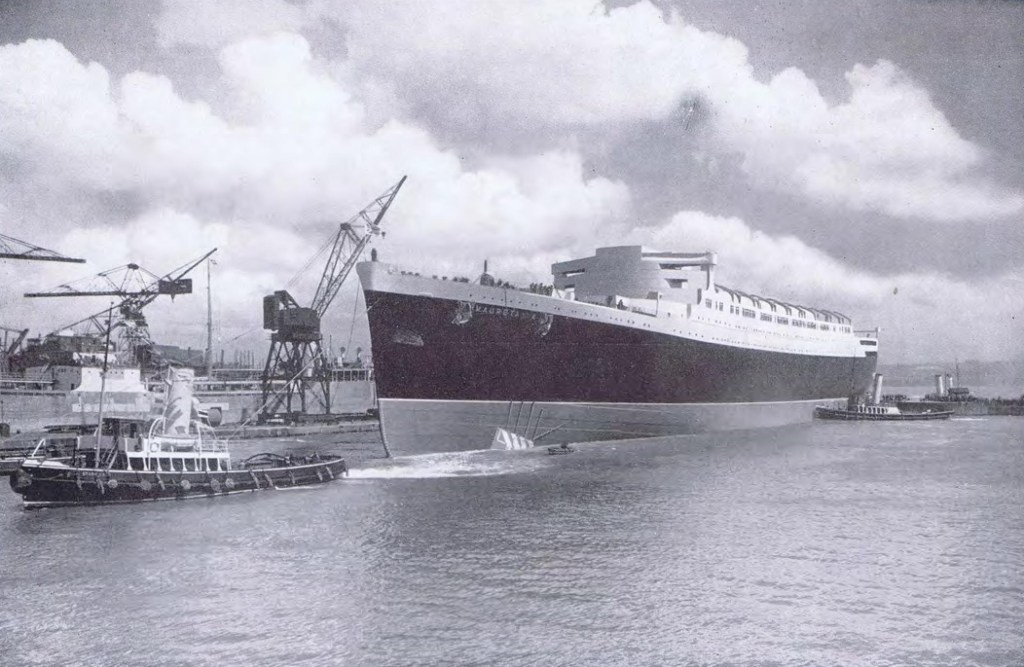
To much cheer, Lady Bates turned a crank which pulled two American and British flags to unveil the massive 27” brass letters of that prestigious name: MAURETANIA, riveted onto each side of the bow. And with that, she swung a bottle of Veuve Clicquot 1928 which crashed into the bow giving the signal. At 12:15 on that day, the Mauretania was pulled down her slipway stern-first towards the waters for the first time. As the hull creaked and pounded and groaned down the ways, several in the crowd were driven to tears at the sight. Within 58 seconds, the hull was fully waterborne and festivities erupted. The band present then blasted Rule Britannia amidst the thunderous celebrations. A New Mauretania now floated proudly on the water, ruling the Liverpool skyline. The tugs then gently took hold of the big liner, and took her to her basin to be fitted-out into a smart and modern passenger liner.
Completion:
Mauretania would spend the next while in Gladstone dock. She needed much more to become a full ship. Her magnificent wooden interiors and furniture were carved up by many esteemed artists and architects, all her boilers and engine components were lowered down the shafts into place, her massive 56ft funnels were raised up and placed upon the superstructure and much more occurred during this time. Upon being completed, the Mauretania immediately set a record in being the fastest a ship of her size had ever been completed. It took only fourteen months from the time her keel was laid on May 24th 1937 to her launch on July 27th the next year. Then only ten and a half months after that she was fully complete.
Bringing a Liner to Life:
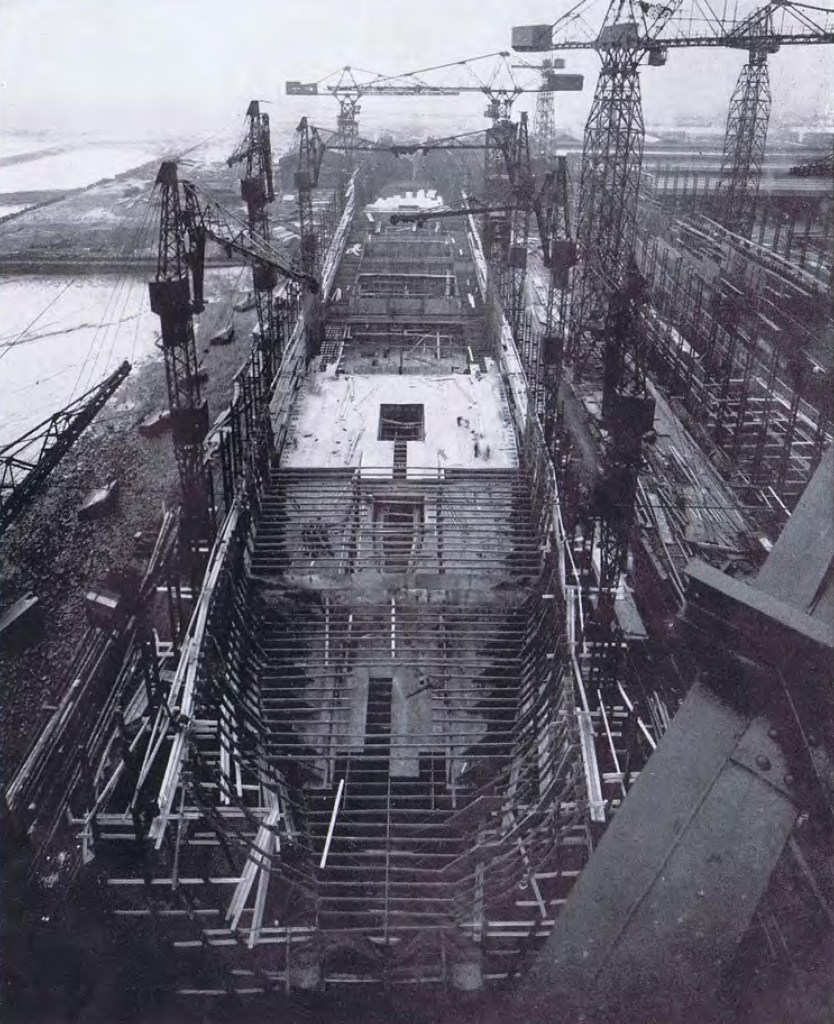
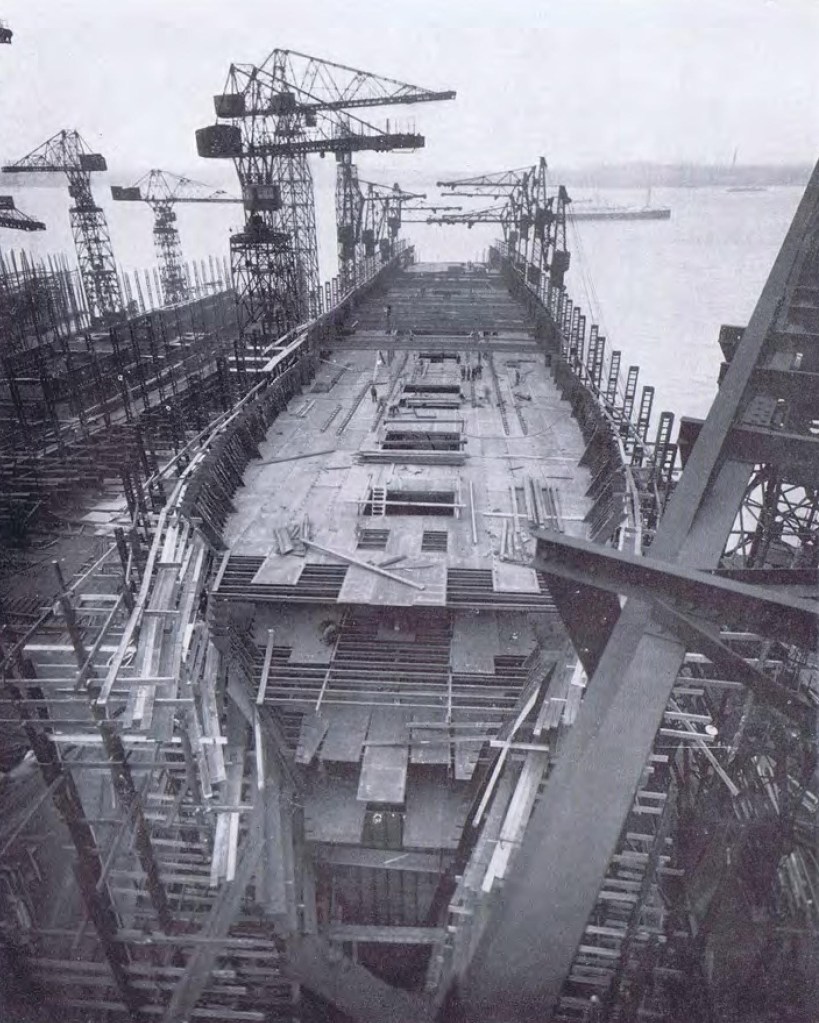
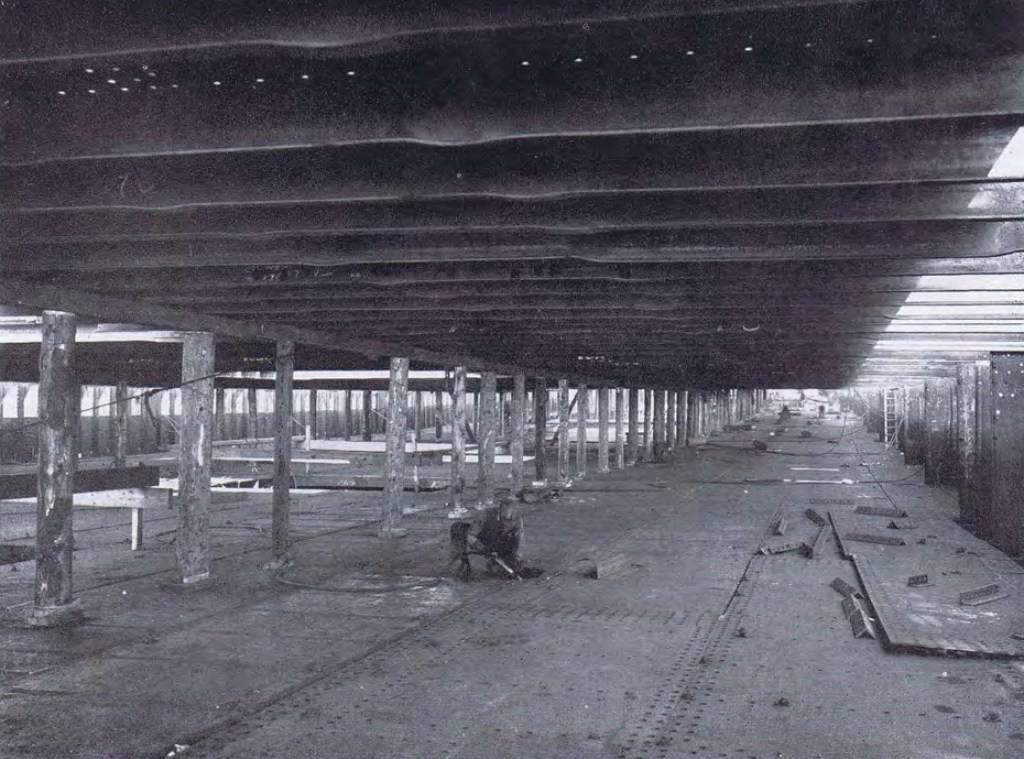
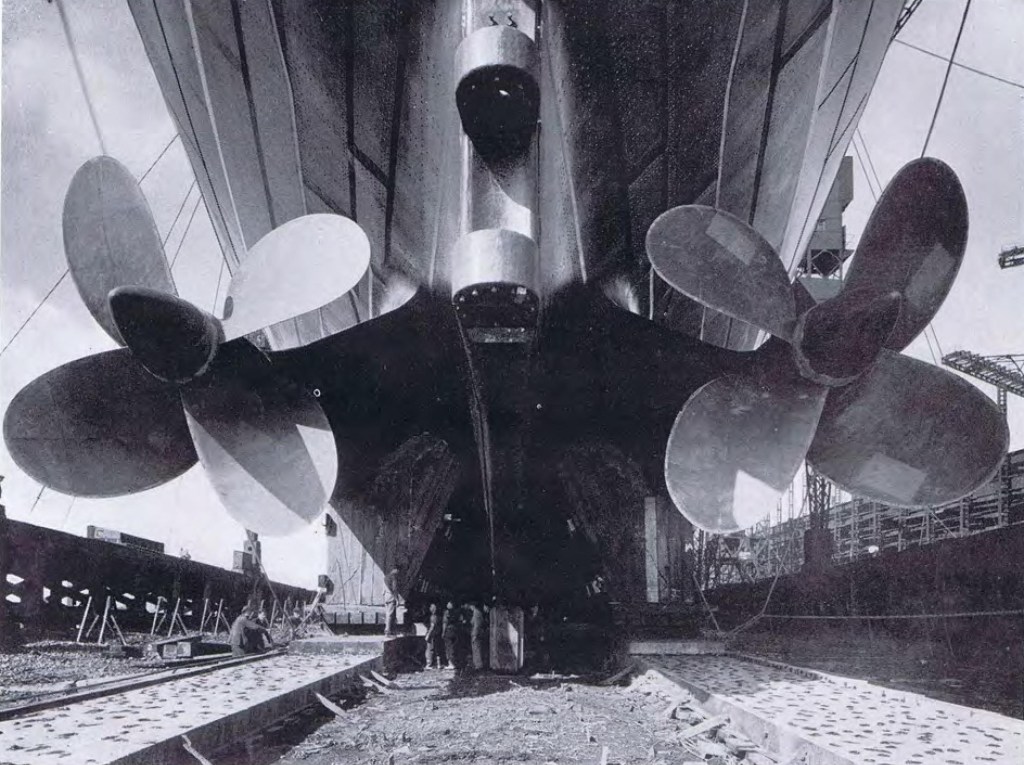
“The best has been put into her design, construction and equipment ; and we therefore have to look into her with the greatest confidence to maintain the high prestige of the amalgamated Cunard White Star interests on the North Atlantic.”
-Cammell, Laird & Co. Ltd, upon completing the Mauretania
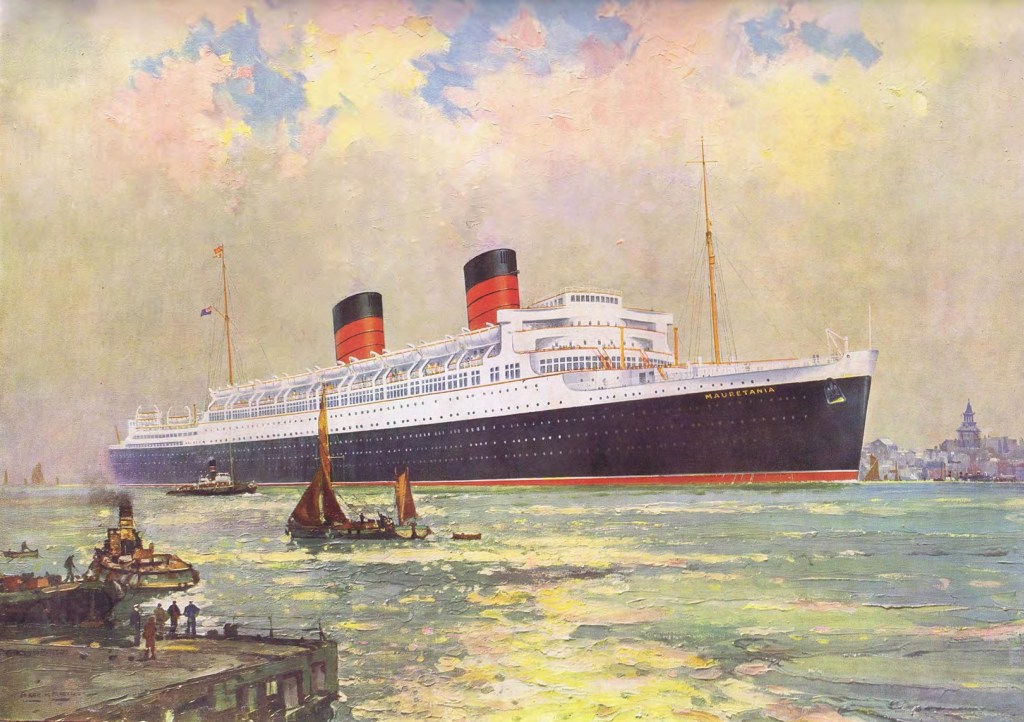
The Splendid Interiors of the Mauretania:
*Note: The Mauretania was initially built with her 3 class layout being Cabin-Tourist-Third. This was changed after the war to the format: First-Cabin-Tourist. The following photos will be stated in their post-war configuration.
First Class:
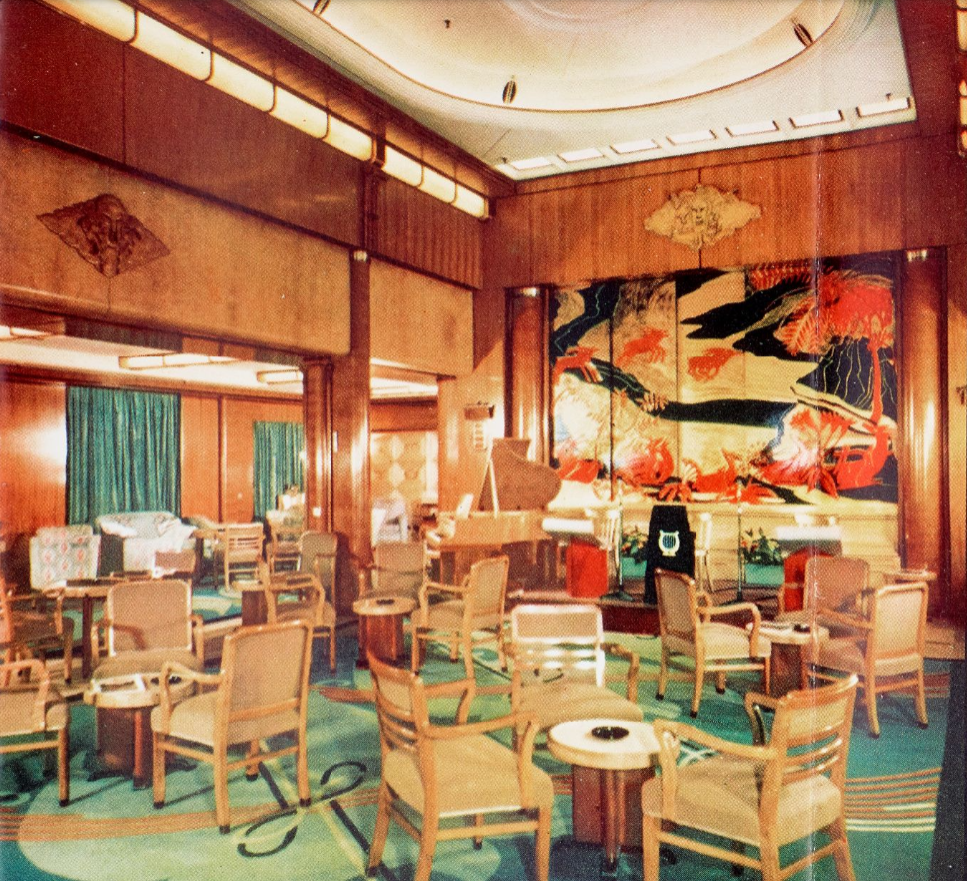
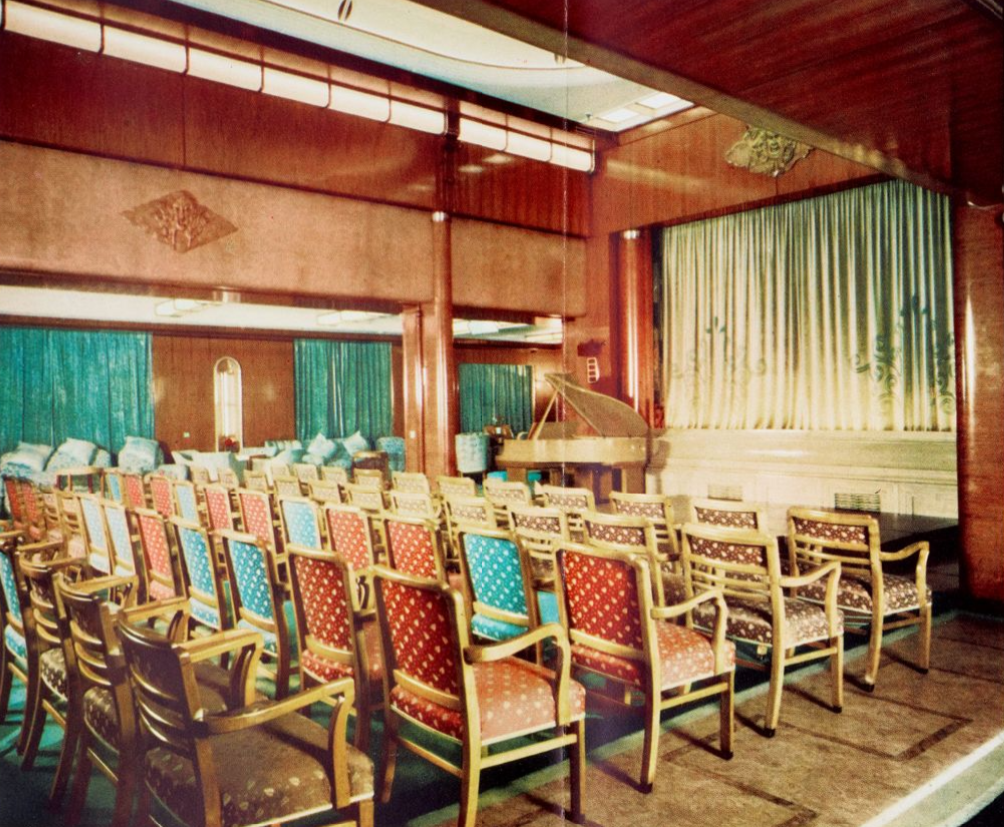
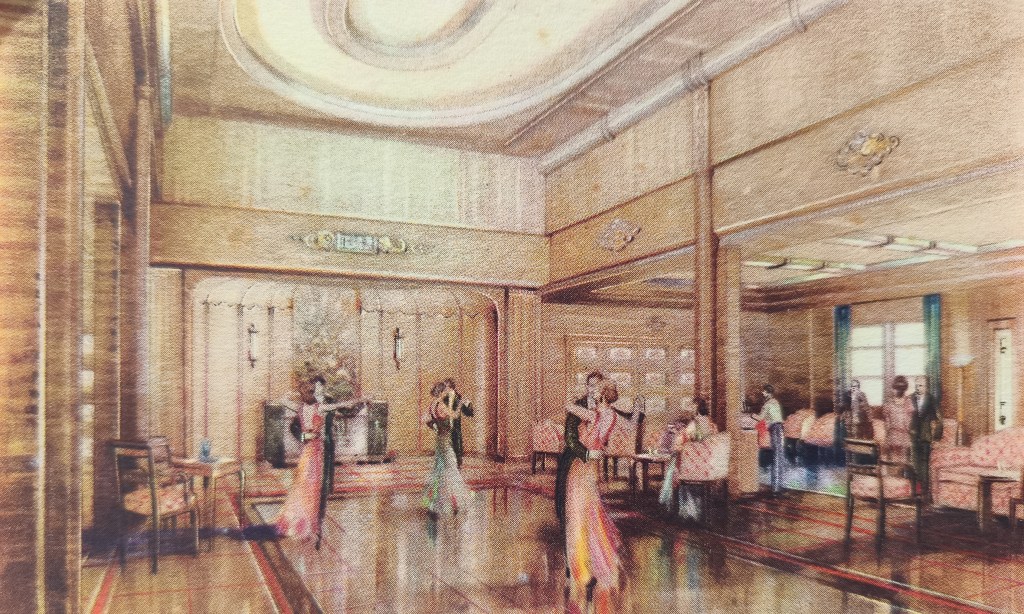
(Author’s Collection)
(Author’s Collection)
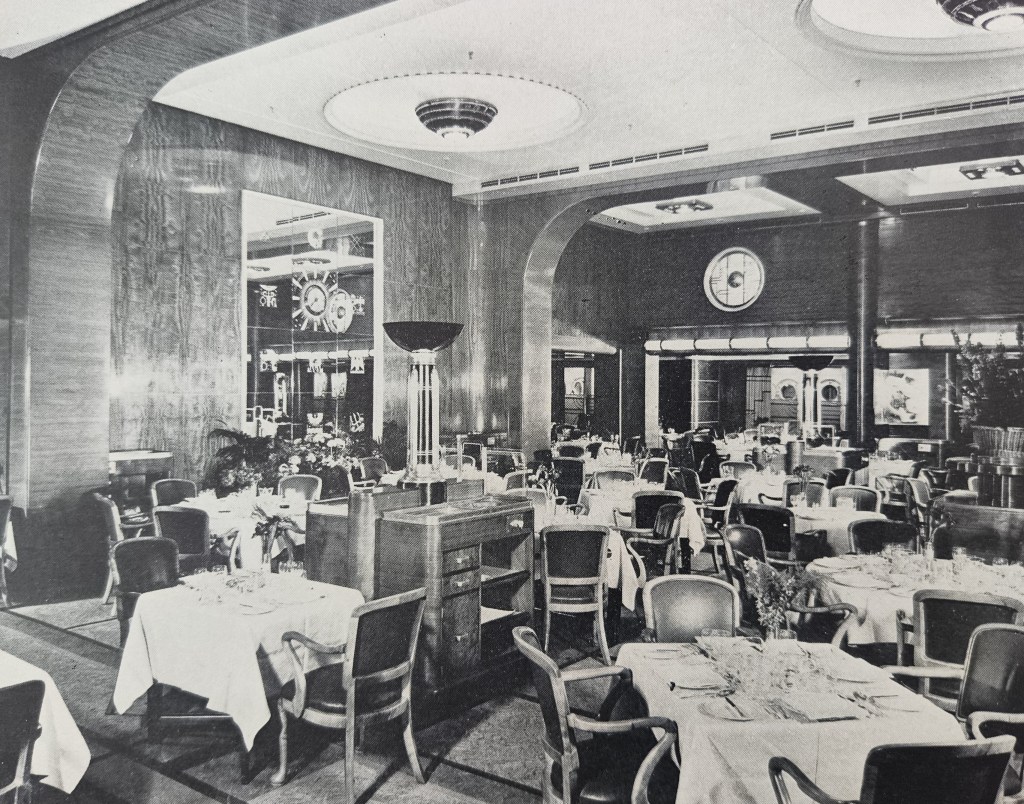
“In the first-class dining room a bas-relief carving over the sideboard recess at the aft end of the room depicts the two Mauretanias bridging the Atlantic between England and the United States. Great Britain is symbolized by St. Paul’s Church and a silhouette of London and America by the Empire State Building and other skyscrapers.”
(Author’s Collection)
(Author’s Collection)
(Author’s Collection)
(Author’s Collection)
(Author’s Collection)
(Author’s Collection)
(Author’s Collection)
(Author’s Collection)
(Author’s Collection)
Cabin Class:
(Author’s Collection)
(Author’s Collection)
(Author’s Collection)
(Author’s Collection)
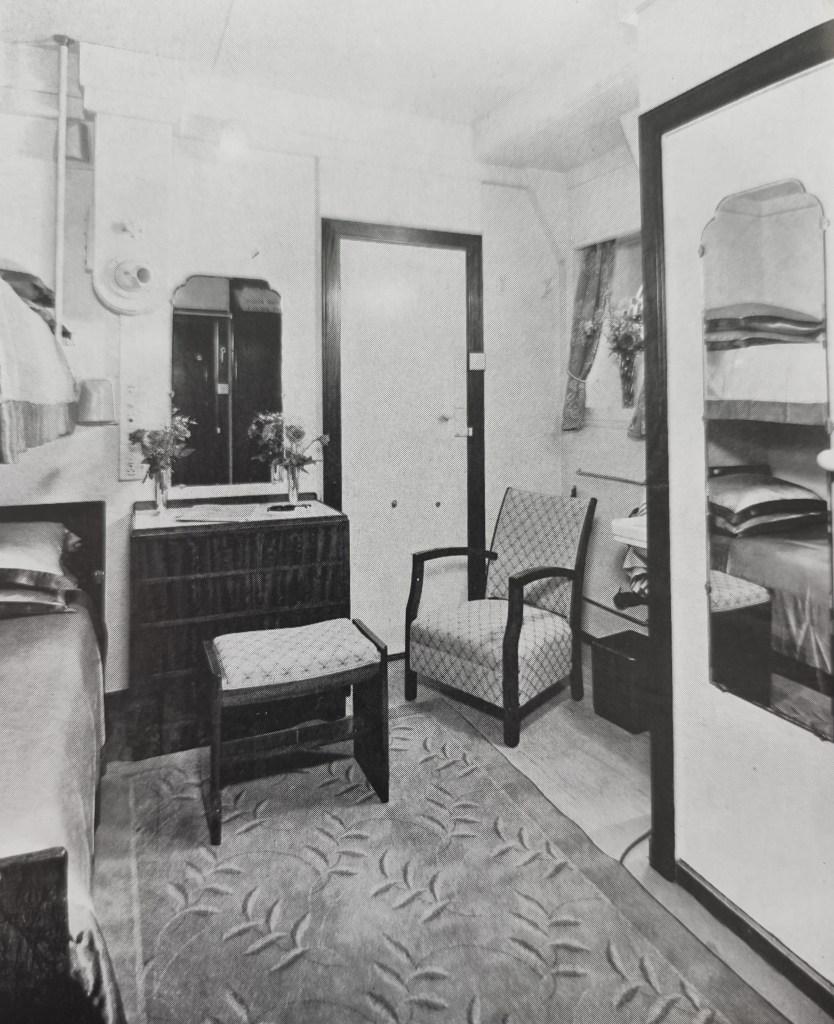
(Author’s Collection)
Tourist Class:
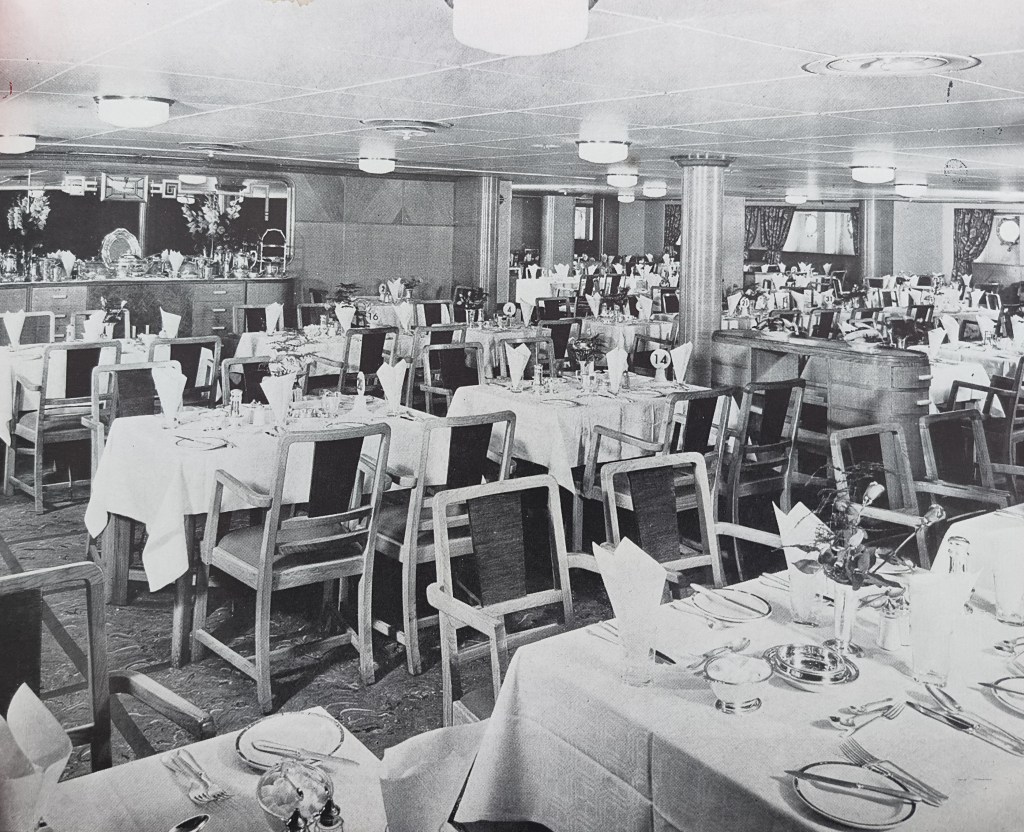
(Author’s Collection)
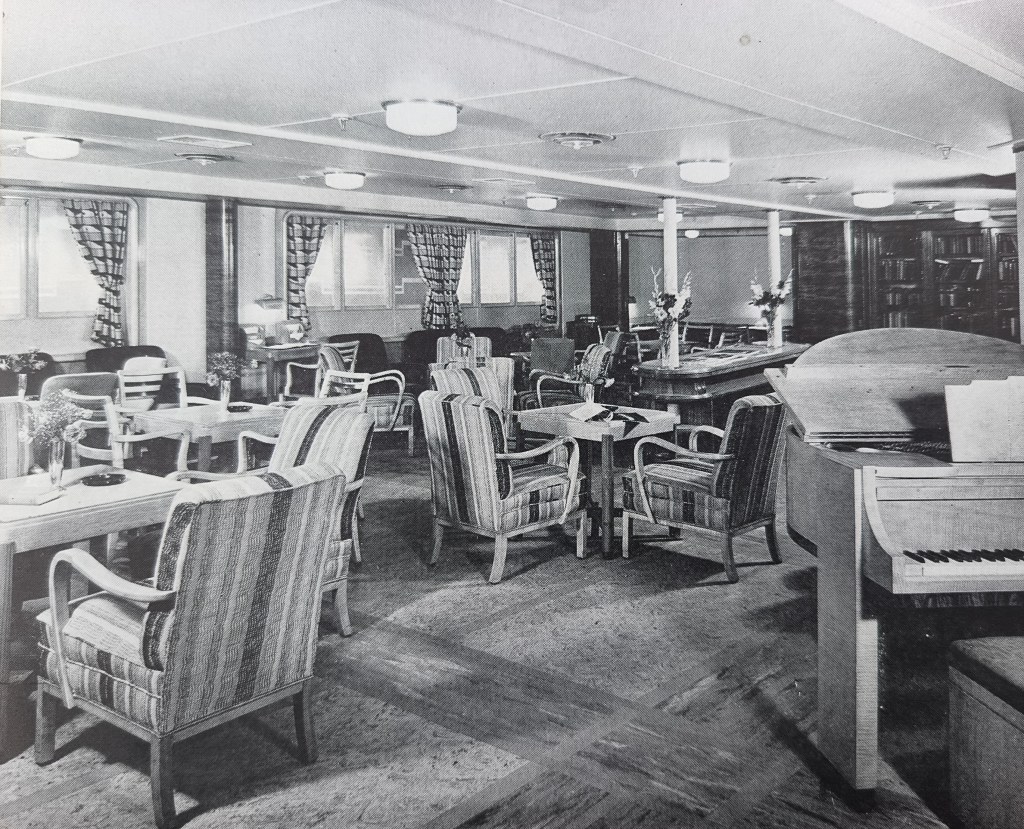
(Author’s Collection)
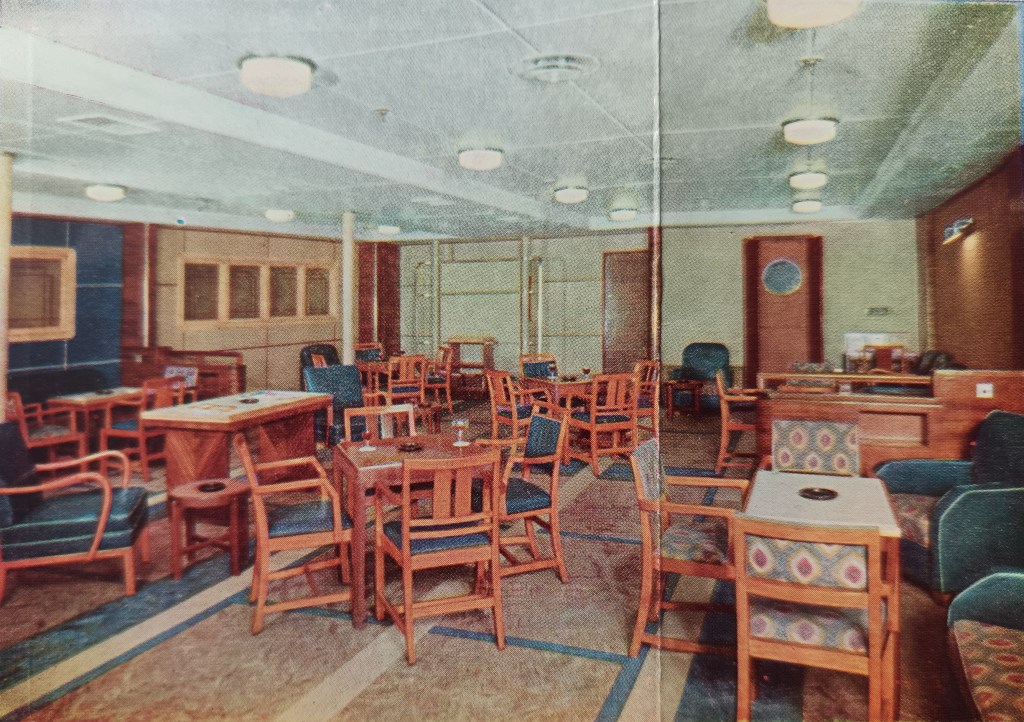
(Author’s Collection)
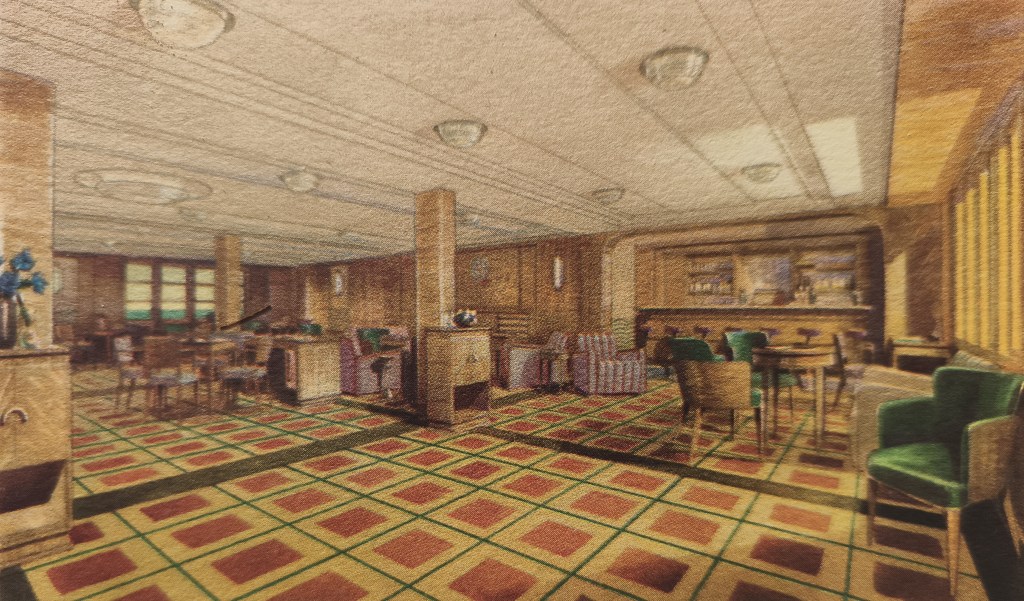
(Author’s Collection)
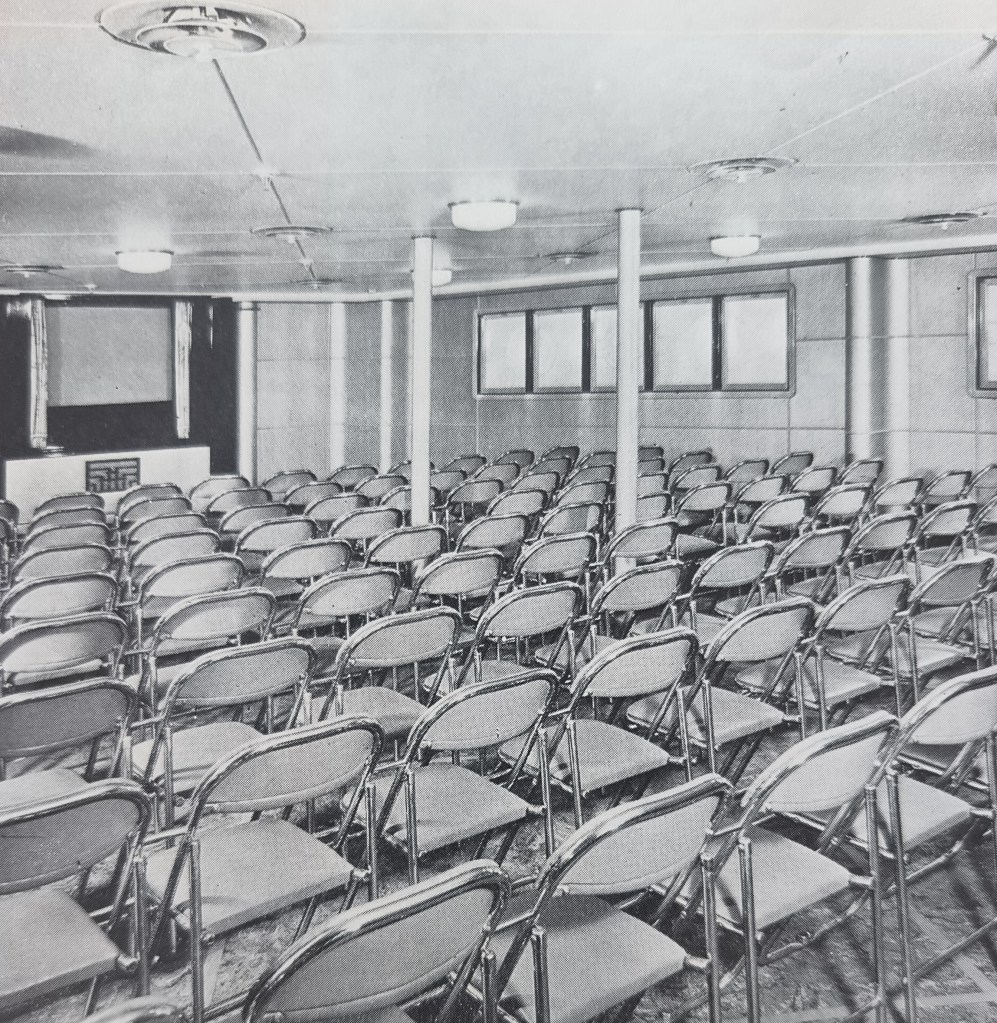
(Author’s Collection)
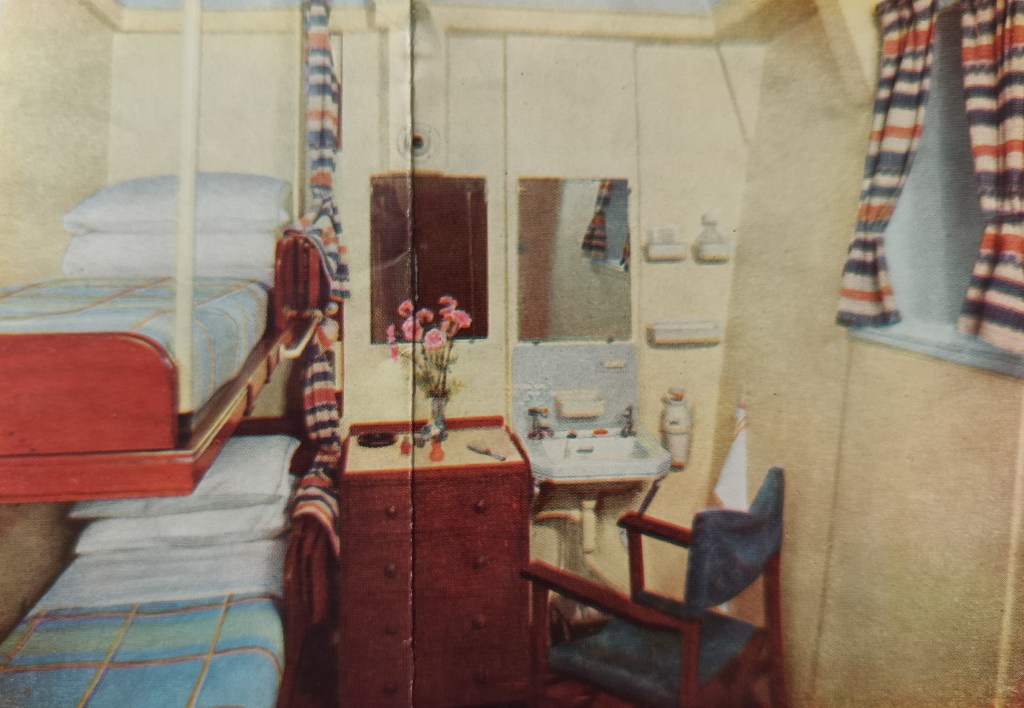
(Author’s Collection)
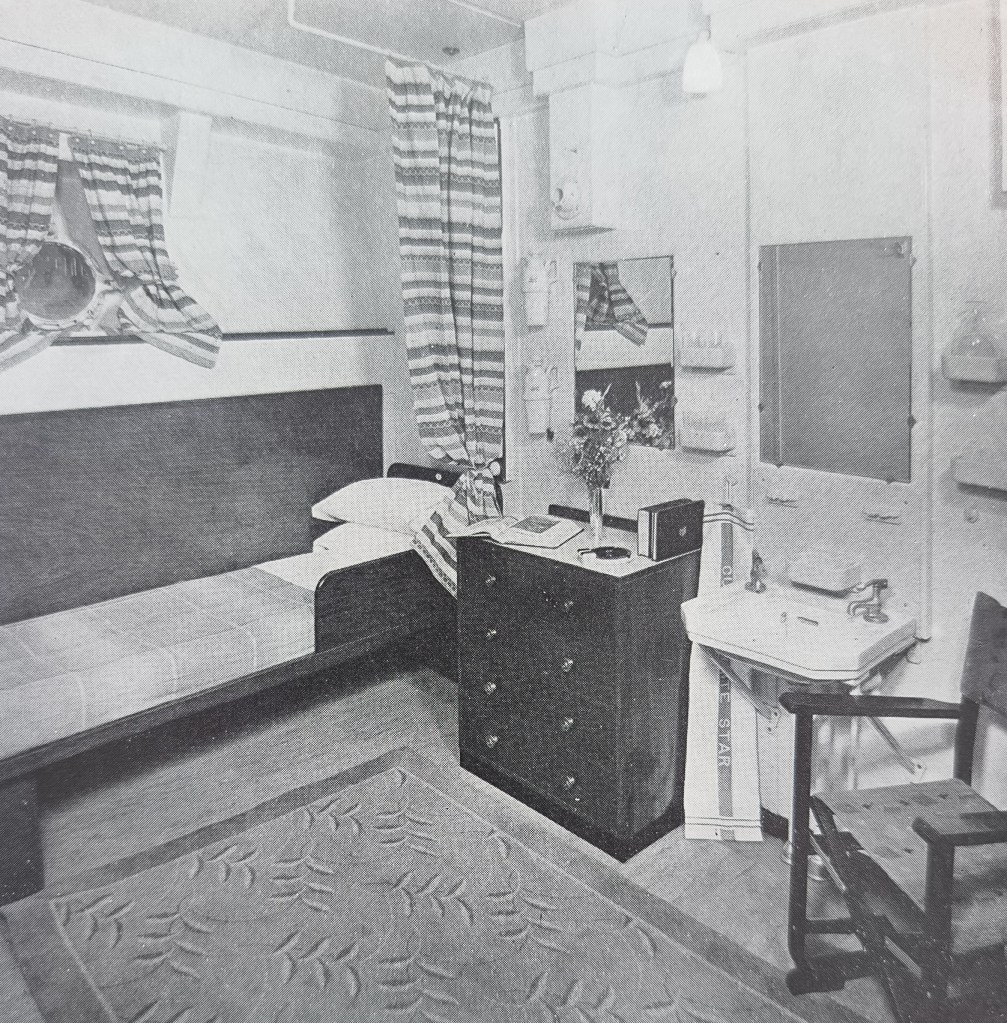
(Author’s Collection)
Operations and Crew Facilities:
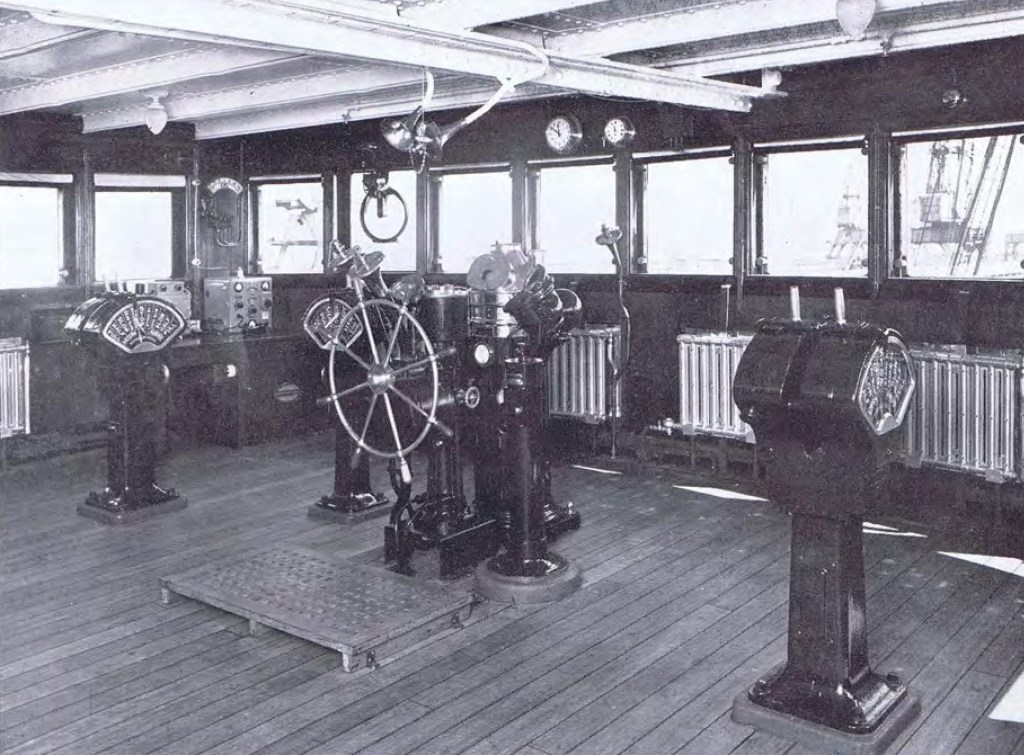
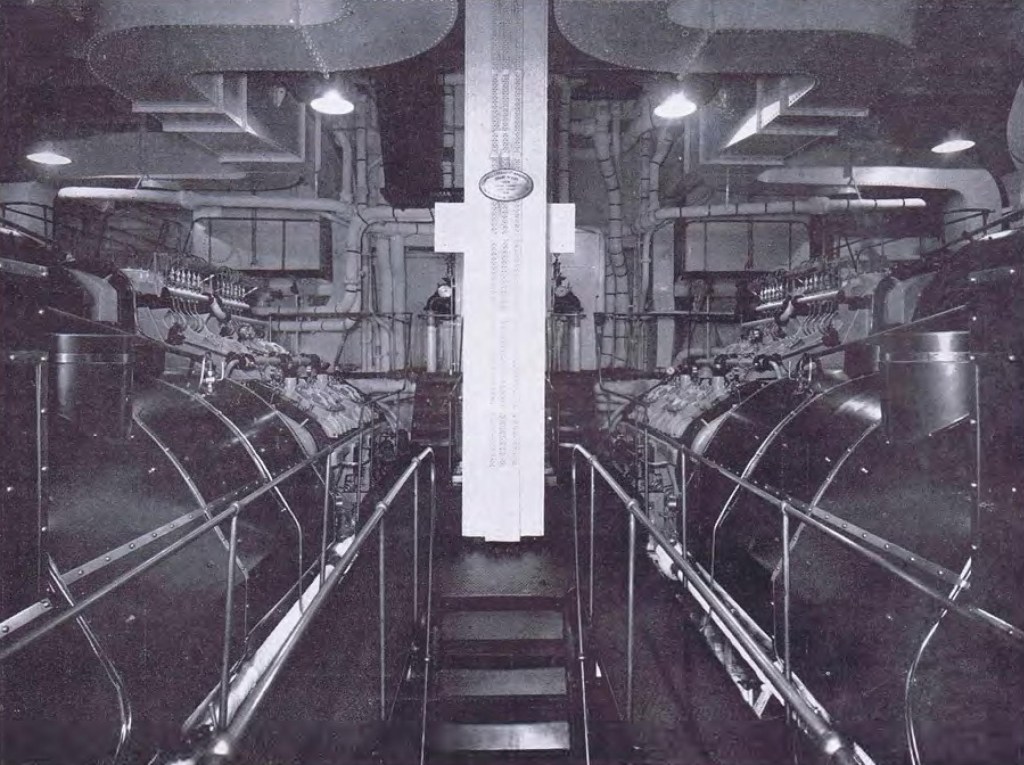
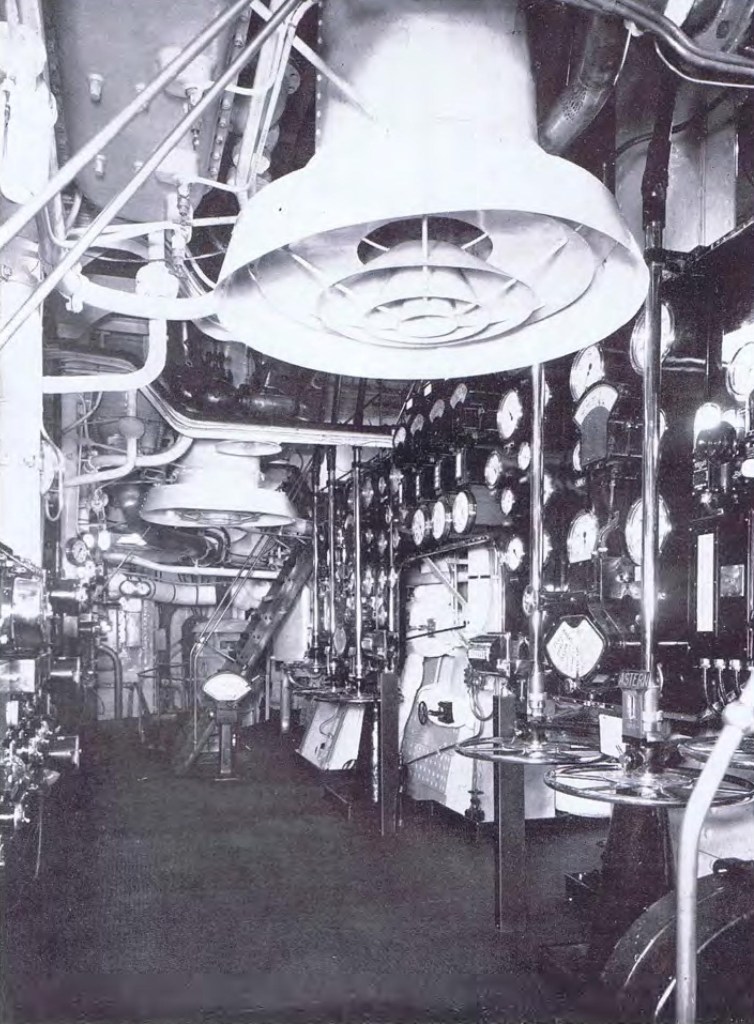
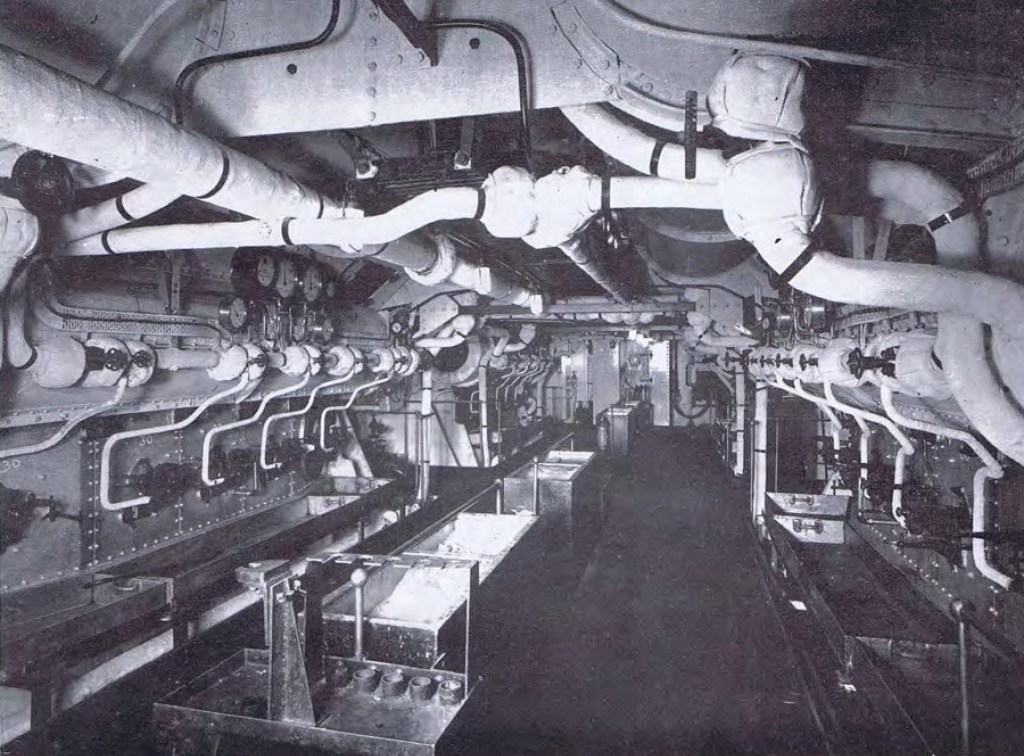
Brief Service Life
Sea Trials
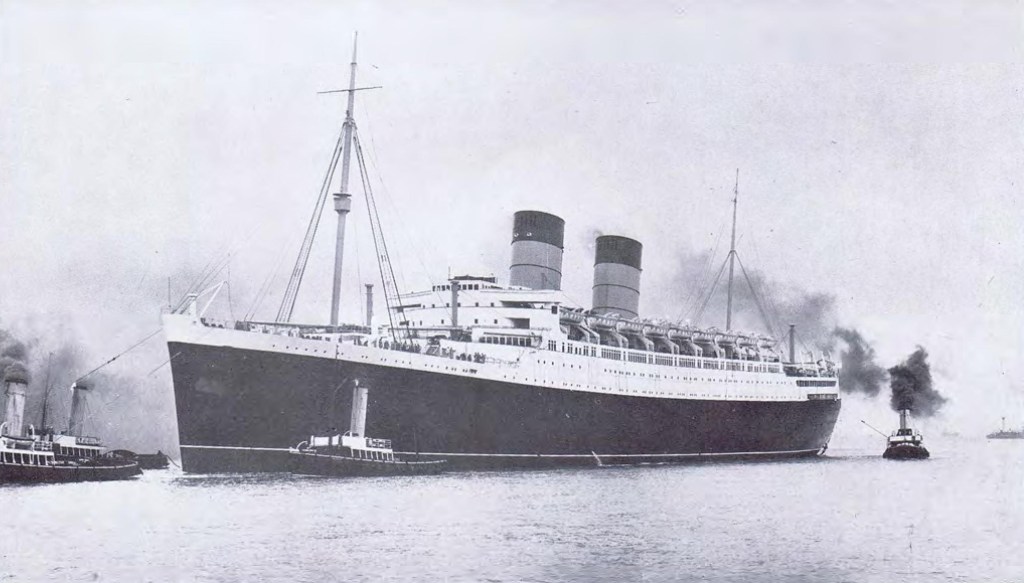
On the 31st May 1939, Mauretania left Gladstone Dock as a complete ship bound for her sea trials. As she sailed down the Mersey and departed Liverpool, crowds of thousands watched and cheered from both sides of the river. After arriving at Mersey Bar, she completed her anchor trials and then turned towards the river Clyde whilst carrying out her preliminary steering and manoeuvring trials during the journey. She then embarked on a 12-hour trip to bring her engines up to full power. The next day she had reached the Tail of The Bank and conducted five sets of double runs as well as her official steering and manoeuvring trials. The next day saw a 24-hour consumption trial with the Mauretania finally returning to Gladstone Dock in Liverpool on the 3rd June at noon.
With everything done, Cunard-White Star was very satisfied and delighted to take their new liner off her builder’s hands as her trials had went: “highly successfully”. The biggest triumph had been that the Mauretania recorded a staggering top speed of 25.34 knots, far in excess of her required minimum of 22. The Mauretania could now call herself the sixth-fastest liner afloat. Just as important was that throughout it all, there wasn’t the tiniest hint of vibrations even at maximum power. The Queen Mary had heavy vibrations issues, and also rolled like a barrel. Even the Mauretania of 1907 vibrated so hard on her trials some of her rooms became uninhabitable. Percy Bates would state the following after the Mauretania completed her trials:
“There has never been a Cunard ship which has gone through her trials with less trouble, with less fuss – almost an air of casual ease – than this ship has done.”
(Author’s Collection)
Maiden Voyage
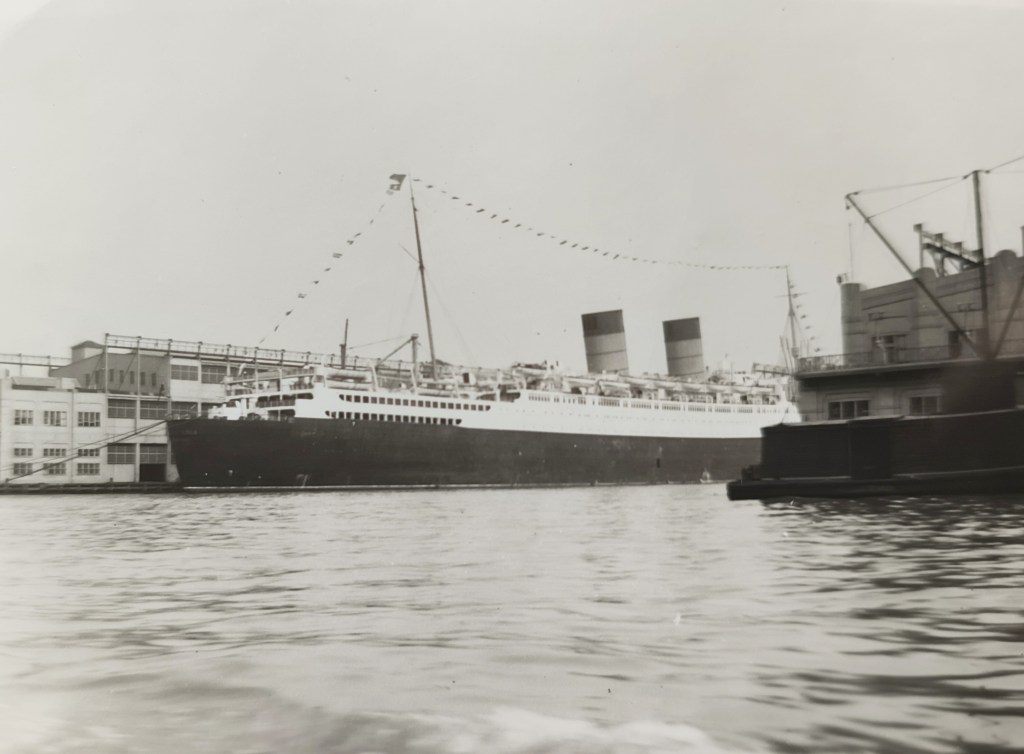
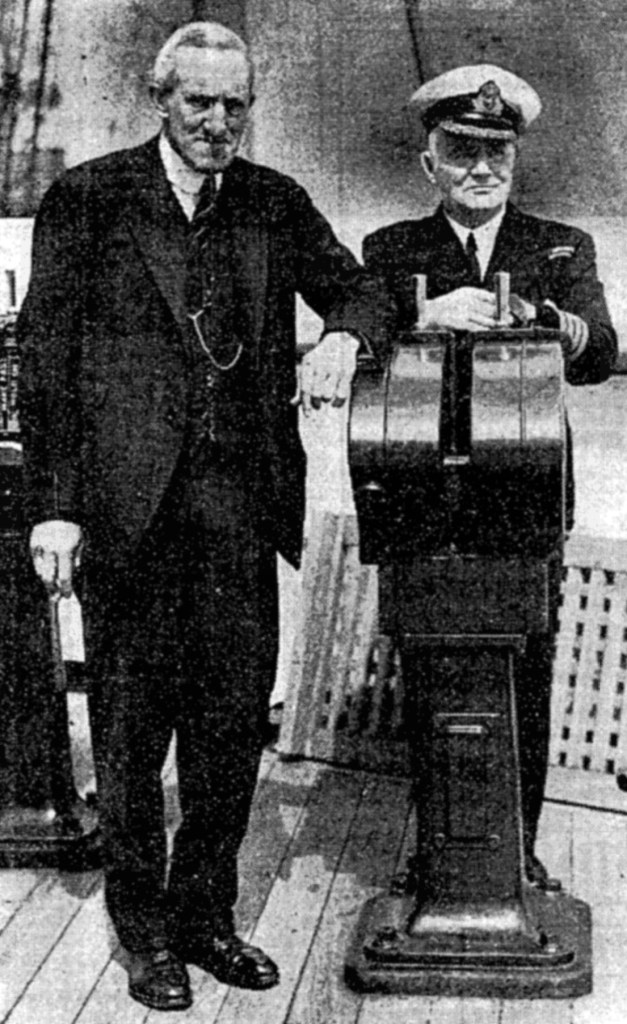
With her sea trials having been a complete success, the maiden voyage was conducted two weeks later at 7pm Friday, June 17th 1939 from Liverpool to Cobh to New York. As she departed the Princess Landing Stage in Liverpool, she was shown off by a crowd of 100’000 people. The Mauretania was mastered for her first crossing by Captain Arthur T. Brown. Incredibly he had been Junior Third Officer for the maiden voyage of the first Mauretania back in 1907 as well as been her last master who sailed her to the breakers in 1935. He was proud of his new Mauretania and stated she “handled like a yacht”. Passengers shared his opinion and were again happy to report the Mauretania showed absolutely zero vibration. For this crossing there was a passenger count of 819 with 588 crew members. Sir Percy Bates and Lady Bates accompanied this voyage, so did famous actor Ray Milland, 40 members of the Junior Car Club of England (with their cars), £2.5 million in gold and silver, and finally three passengers who had also been aboard the original Mauretania‘s maiden voyage a full 32 years earlier. They were Mr. & Mrs. Middlemas of Glasgow as well as C. Morfey.
By the 18th June, the Mauretania had departed Ireland and sailed into a storm whilst crossing the pond. The rough seas did little to slow the liner and she sailed at an average speed of 20.7 knots, but could easily sail a full day faster if she wanted. That wasn’t necessary in the slightest, and she actually had to reduce speed on the 23rd to not arrive too early in New York. Her crew, passengers and the Cunard officials on board were further impressed with her exceptional stability: she sailed through the choppy seas without the slightest rolling or discomfort.
She landed in New York on June 24th at 7am with a crossing time of six days, 18 hours and 5 minutes after leaving Liverpool. Her reception was enormous: every vessel in port blasted their whistles, chartered planes flew over her, hundreds crowded the Cunard-White Star pier awaiting her, and thousands more cheered her from aboard the many ferries and steamers that drew close. This entire event was broadcasted on the news and televised.
Return Maiden Voyage:
Two days after the Mauretania’s arrival on the 28th, she held an extremely lavish gala party hosted by Percy Bates with 2000 highly-sought spots. That day she had already seen 4269 visitors who surged aboard, with 1500 who reportedly didn’t pay. For the gala party, police were required to stand guard on the pier from the many more who wanted to board. After the dinner was a lengthy tour and inspection of the ship, with dancing until midnight. The next day on the 29th at noon, she departed for her return maiden crossing back to Europe. She was fully booked-out on this crossing, no doubt benefited by her good name as it seemed the whole of New York could not get enough of this ship during the last few days.
Remainder Pre-war Service:
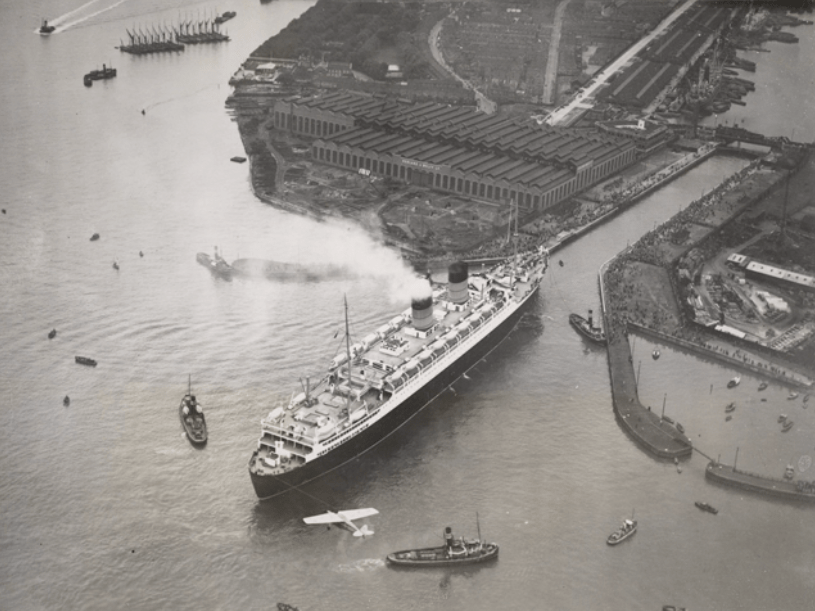
On August 6th 1939, the Mauretania squeezed herself through the long lock at London to reach the King George V dock. She was the largest ship to ever dock in London, and there were only 42” of clearance on both sides as she passed through the lock. The crowd of nearly 100’000 that watched could even reach out and touch the liner as she passed by. For her London-New York route, the Mauretania sailed on a Saturday to Saturday service in companion with the White Star liners Britannic and Georgic. She sailed a full day faster than either of those two motor liners but had only time to complete two round trips before war would break out. She also undertook her first cruise on August 19th 1939 to Nova Scotia and Bermuda with accommodations for 1020 cruise passengers, and was again fully booked-out.
The Call to War
Escape from Europe:
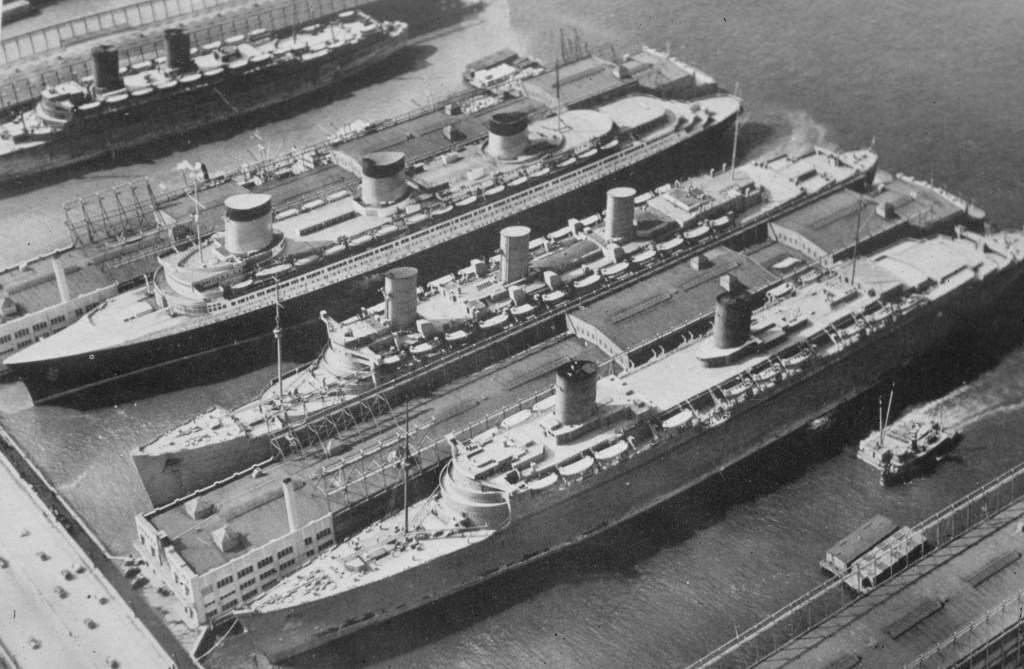
When war was declared, the Mauretania was in Britain and was given the necessary basic defensive measures in case of attack. She received an all-grey paint scheme, armed with eight guns as well as two rocket projectors. She was initially laid up to await further orders in Liverpool, but that dangerous decision was soon changed and she was sent to New York to join the many other big liners. Mauretania managed to break undetected through the German submarine blockade and landed safely in New York on the 20th September. She took 698 passengers with her, and even practiced her guns at sea. She first docked beside the colossal Queen Mary and Normandie, but then had to move when the Queen Elizabeth arrived. The Mauretania then docked at Chelsey Pier 54, between her fellow Cunarders Scythia and Samaria.
Escape from New York:
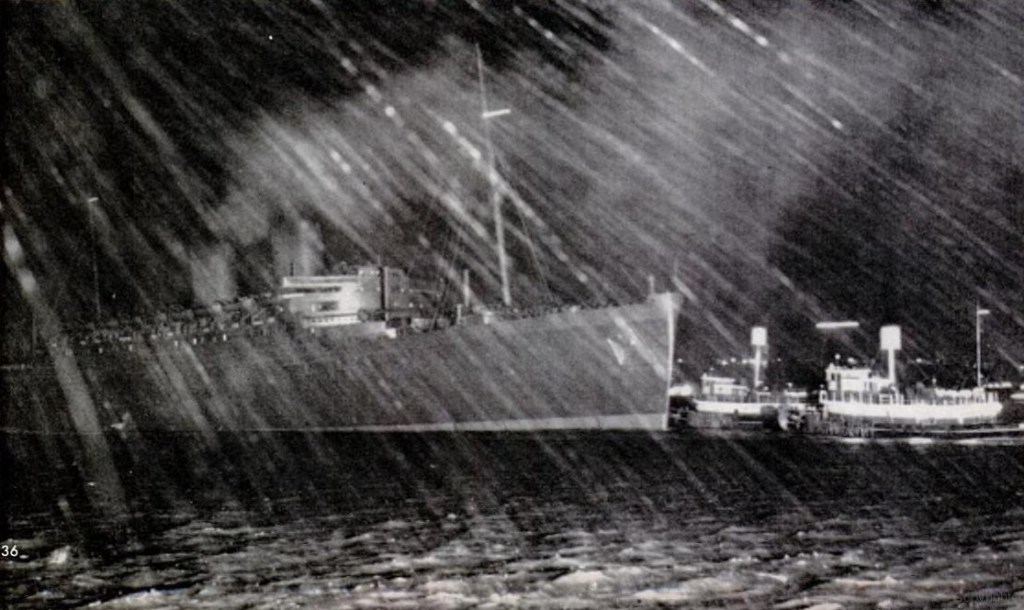
On March 6th 1940, the Mauretania was formally requisitioned by the Ministry of War Transport to become a troopship. A fortnight later on the 20th, the secret orders finally arrived and the Mauretania and the Queen Mary were to leave under the cover of darkness with their portholes blacked out to Sydney to be converted into troop transports. Under the storm and rain, the Mauretania was eased out of her berth on this night and sent on her way to the Panama Canal with Queen Mary following the next night. The enemies were not to know the movements and position of these great ships, so few New Yorkers even saw the Mauretania and Queen Mary depart. After sailing through the Panama Canal between the two Americas on March 26th, the Mauretania then headed north for San Francisco. Here her luxurious fittings were taken offship and stored to be returned after the war. Her next stop was Honolulu, and then finally the last big stretch to Sydney to be fully converted into a worthy troopship.
The Mauretania landed safely in Honolulu on April 4th to resupply. On April 6th she embarked on a daring voyage across the Pacific to safety in Sydney. The moment the Mauretania and Queen Mary had left NY, they were placed on German lists as “shoot-on-sight”. Threats had already been made by the enemies in the newspapers and they were determined not to let her be used against them. As such, she was tracked constantly, U-boats were on the lookout for her and those on board did everything possible to not let their position be known.
Troopship Mauretania
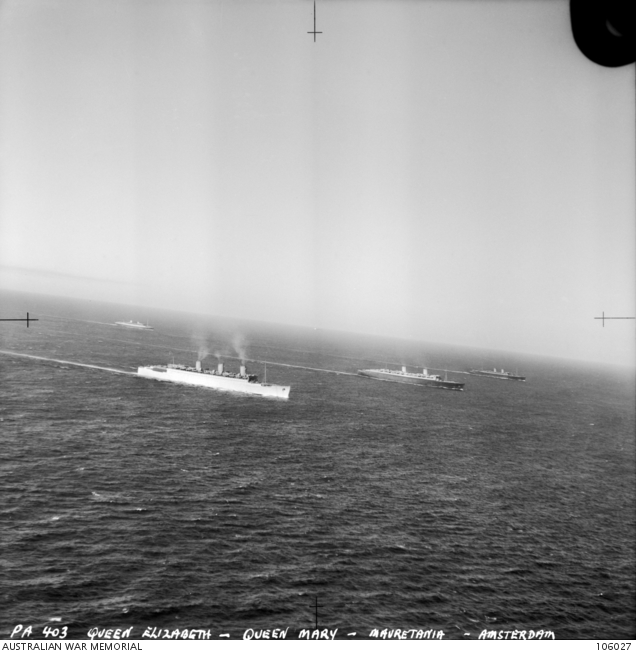
Upon reaching Sydney in April, swift work began to transform the ship into a troop transport. The remainder of her luxurious fittings were taken ashore, bunks were erected in her staterooms, her public rooms transformed into mess halls, infirmaries and offices. Her total complement of passengers was now 6’500 men. She was ready in May and joined a phenomenal convoy consisting of her fellow Cunarders Aquitania, Queen Mary and Queen Elizabeth, alongside Canada’s and The Netherland’s greats with the Empress of Britain, Empress of Canada, Empress of Asia and the Nieuw Amsterdam. This spectacular parade of liners sailed on the 4th May with Queen Mary as the lead ship with 5’000 Aussie troops aboard her. Mauretania had 2’000 troops of her own and the group zig-zagged towards Greenock, Scotland. Mauretania landed there safely on the 16th June.
She next sailed back to Durban, South Africa and was assigned on a route known as the Suez Shuttle. She would sail on this route from Bombay – Colombo – Durban – Port Tewfik regularly from mid 1941 to February 1943. The Queen Mary, Queen Elizabeth, Nieuw Amsterdam and Île de France would also regularly join this route. Both Cunard Queens were famous for being so fast that they often didn’t even sail with an escort, but the Mauretania did the same too.
Close Calls
- On the night of the 15th May 1942, the Mauretania very nearly avoided catastrophe as two of the most important Allied troopships were nearly lost. Whilst sailing the Suez Shuttle route bound for Durban, the Mauretania came in extremely close contact with the Île de France who was sailing the opposite direction for Bombay. The weather was unbearable due to the monsoon rains, visibility was extremely low and both ships were badly off course. As they zig-zagged nearer and nearer -something that shouldn’t have been possible as under ideal conditions they would have been 50 miles apart, suddenly emerged on a collision course. It was only due to the fast reactions aboard the Île de France that she was pulled hard a-starboard away from the Mauretania and both ships narrowly missed.
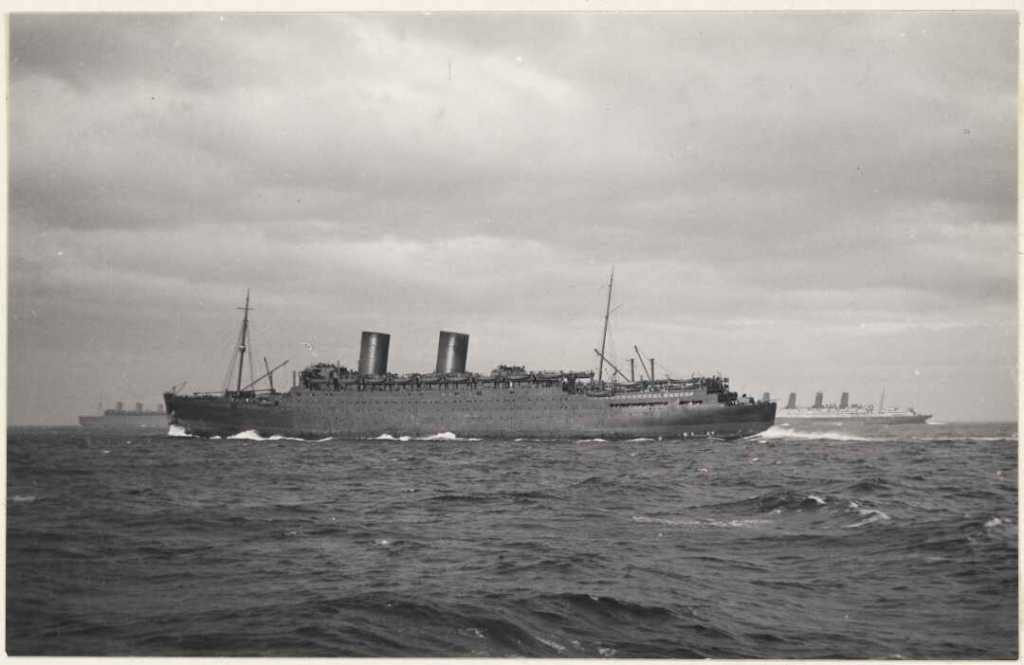
- On one instance the Mauretania was sailing off the coast of Northern Ireland with a heavy complement of 5’500 men. The peace was suddenly shattered when they were messaged that two wolf packs of German U-boats were closing in on them from behind and from port. The Mauretania was quickly fired up to maximum power and sailed on through the night in solidarity. In the morning, she detected a surfaced submarine by radar only 5 miles away straight ahead. The Mauretania then made a massive loop to turn around but the U-boat had spotted her. Those onboard the Mauretania were then sent a secret message from Liverpool that stated that U-boat had reported her location to every other sub in the area. Mauretania would successfully dodge all of them and steamed on a zig-zag course back to safety on the Clyde.
Mauretania returned to crossing the North Atlantic after the Allied victory in North Africa. She took part in Operation Bolero and carried American and Canadian troops to Europe to help prepare for the D-day landings. Between April 1943 and March 1945, she made 21 transatlantic crossings to add to the two she had done in peacetime. During one of these trips she boasted her highest total capacity of 7’124 troops on board.
As the many great liners continued to earn their stripes by aiding the war effort, several would rise to exceptional prominence. One group of six was dubbed “The Monsters” who regularly sailed along one another and massively boosted the Allied war effort. These six ships were the Queen Mary, Queen Elizabeth, Aquitania, Ile de France, Nieuw Amsterdam, and finally the Mauretania. All six of these ships were prime targets for German U-Boat commanders but none would ever claim the honour of taking a member of this group down.
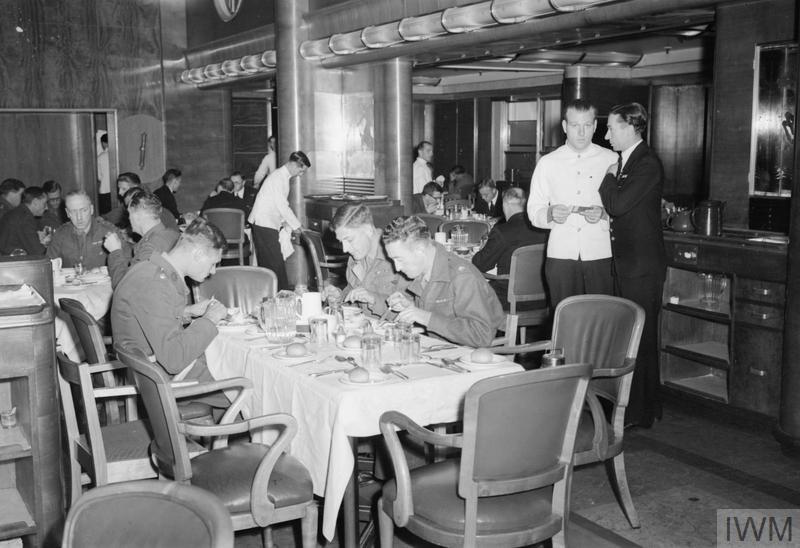
Victory!
On September 2nd 1945, the war was finally over worldwide. Vast amounts of people had been displaced and it was time to repatriate the soldiers back home. She picked up thousands of troops from the Far East and Canada and brought them back to Liverpool. She landed on the 24th September back at the Princess Landing Stage and disembarked 4’000 troops and 1’000 civillians. Since she brought back the first large group from the Far East, it was met with a tumultuous reception. Now back home, there was enough time to repaint her funnels back in the iconic Cunard colours and she departed again on the 21st October to Bombay. She was back a month later on the 26th November with a massive complement of 2’000 Army and 3’000 RAF personnel. She also took part in “Operation Baby Carriage” and helped transport 400 war brides and their 364 babies back home from Liverpool to Halifax in February 1946. Her next voyage saw her carrying 2’753 German prisoners of war back across the Atlantic.
Her final voyage saw General Bernard Montgomery onboard as she sailed back home to Liverpool. She landed on the 2nd September 1946 and had concluded her war service as she disembarked her 600 last passengers. Within mere hours she was guided back into Gladstone dock for her reconversion back into a civilian luxury liner.
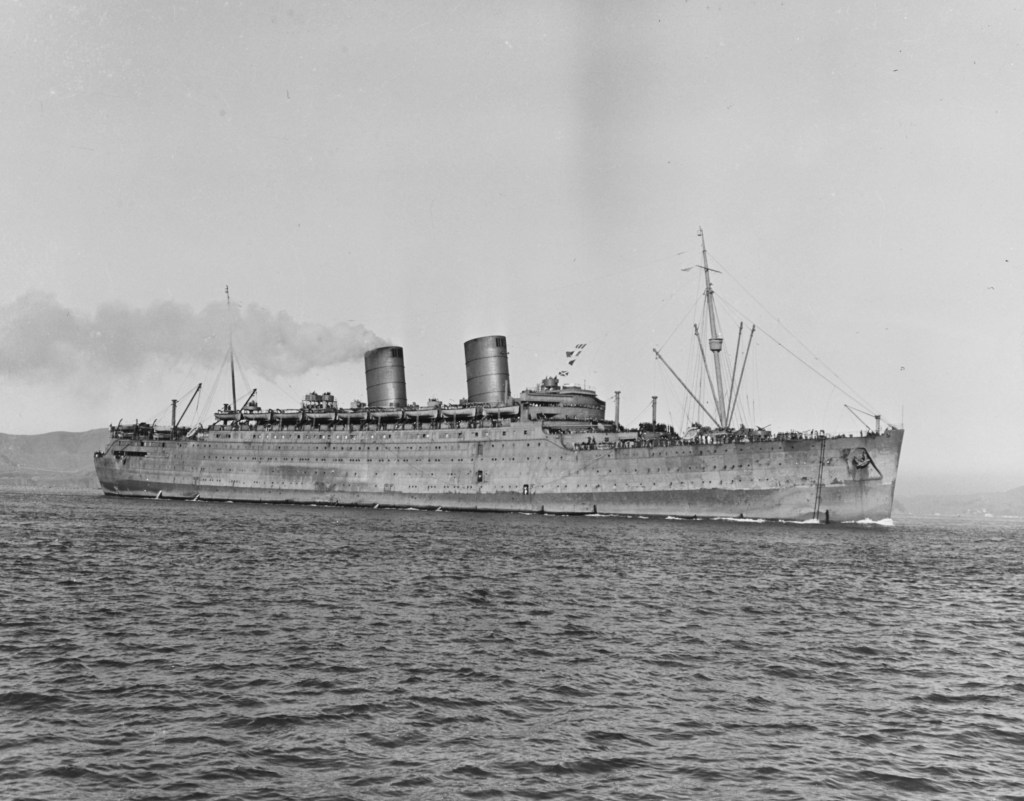
Statistics and Summary of War Effort
The two Cunard Queens with their legendary nearly-two million soldiers carried between them during the war would unsurprisingly steal the imaginations of the public for decades afterwards. The Mauretania’s own contributions were not to be discounted in the slightest, considering she was half the size. She equalled the Queen Mary in the number of Atlantic crossings during the war at 86, and in 1945 she went on an incredible 28’000-mile journey over 81 and a half days bringing troops to all parts of the world. Her war loggings for total distance travelled was an amazing 538’000 miles – equivalent to circumnavigating the Earth a full 21 and a half times. She carried 350’178 total troops during her five years and even carried 7’124 at once onboard at her highest. Throughout her voyages she frequently broke speeds in excess of 25 knots, well beyond her designed service speed.
Back to Service
Rebuild and reconversion:
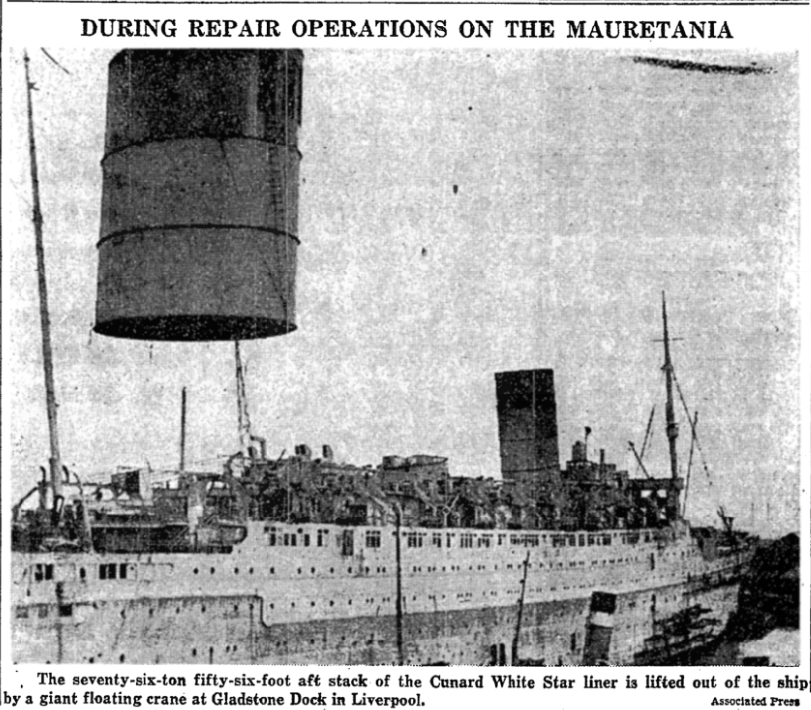
After her heroic wartime voyages were over, the Mauretania was released from war service in September 1946 and sailed back to her builders Cammell Laird & Co. at Liverpool to be reconverted back for passenger service. 1500 workers -many of whom had helped build her, had much work to do to restore her to her civilian-carrying prestige. The bill was estimated at $4 million with hopes of having her ready by early 1947. The job consisted of lifting off her aft funnel to overhaul her air-preheaters, and then cleaning and refurbishing her equipment and boilers. All of her wonderful furniture and fittings were shipped back from all over the world including the some left in Britain to be returned to their rightful spots. On October 2nd 1946 there was a small mishap as a fire started in a storeroom, but was thankfully quickly extinguished in 20 minutes. Anticipation from passengers wanting to sail was growing; the Mauretania was already booked out for her summer voyages and there was a long waiting list.
Post-war sailings:
She departed on her first post-war transatlantic crossing with a passenger list 1’128 on the 26th April 1927. She was mastered by Captain R. G. B. Woollatt, a man with exceptional seafaring experience. He had started on the Campania in 1914, then became Chief Officer of the Mauretania (1907), Queen Mary, Queen Elizabeth, and then commanded the Aquitania, Britannic, Pasteur and Franconia during the war. Mauretania left Liverpool and had arrived in New York in the mist and rain on May 2nd. Her average crossing speed was 22.16 knots and again like her maiden voyage had successfully dealt with rough weather. Captain Woollatt stated: “She can do even better than that, and she rides like the good ship she is,”. Upon her arrival, she was greeted with a thunderous welcome again from tugs and a salute from two fireboats spouting streams of water into the sky. The Mauretania carried many notable plastic surgeons with her on this voyage including it’s father: Sir Harold Gillies. Another notable passenger was Captain Douglas Bader who had attempted escape from the Germans three separate times during the war.
Snapshots from one of the Mauretania’s very first postwar crossings
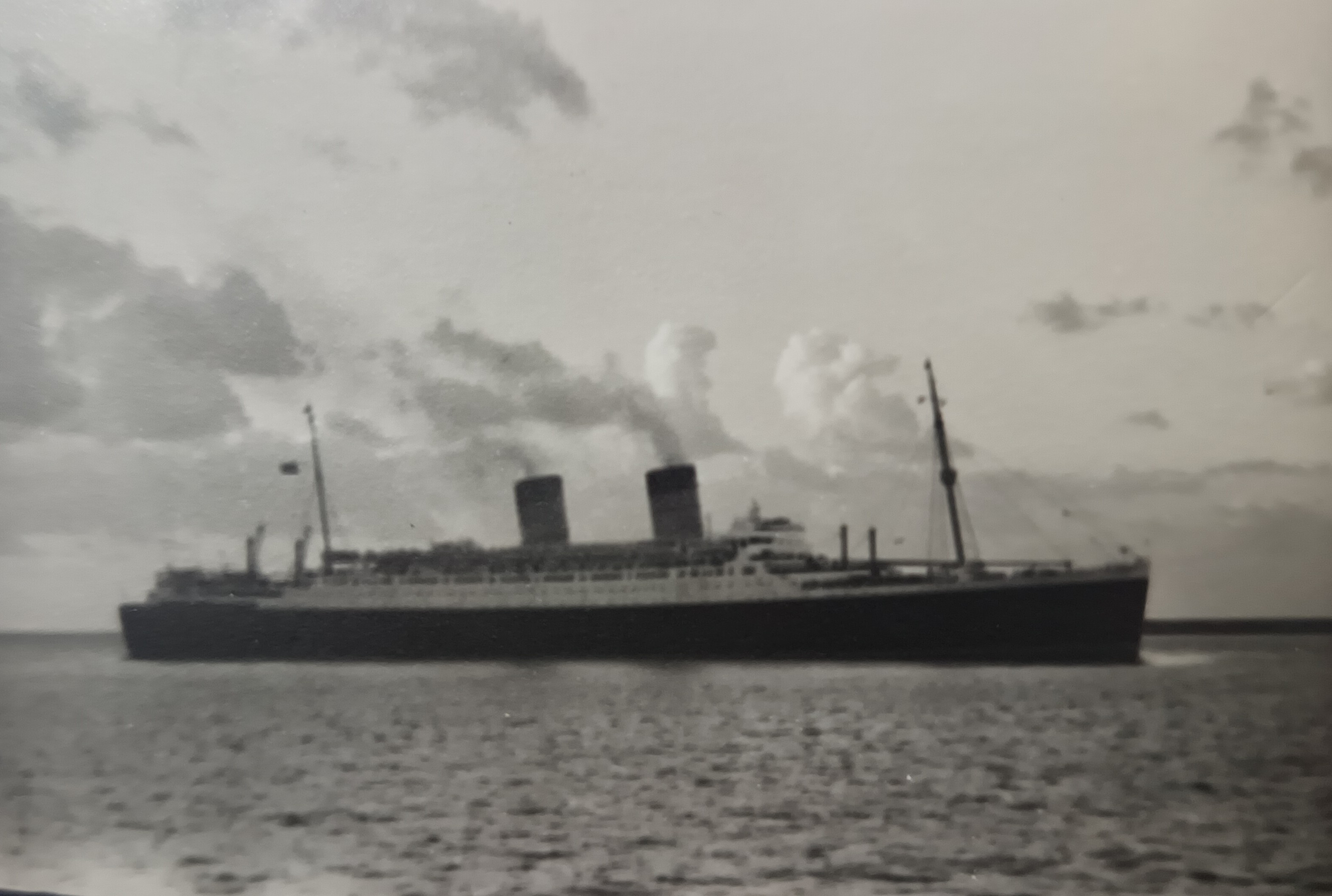
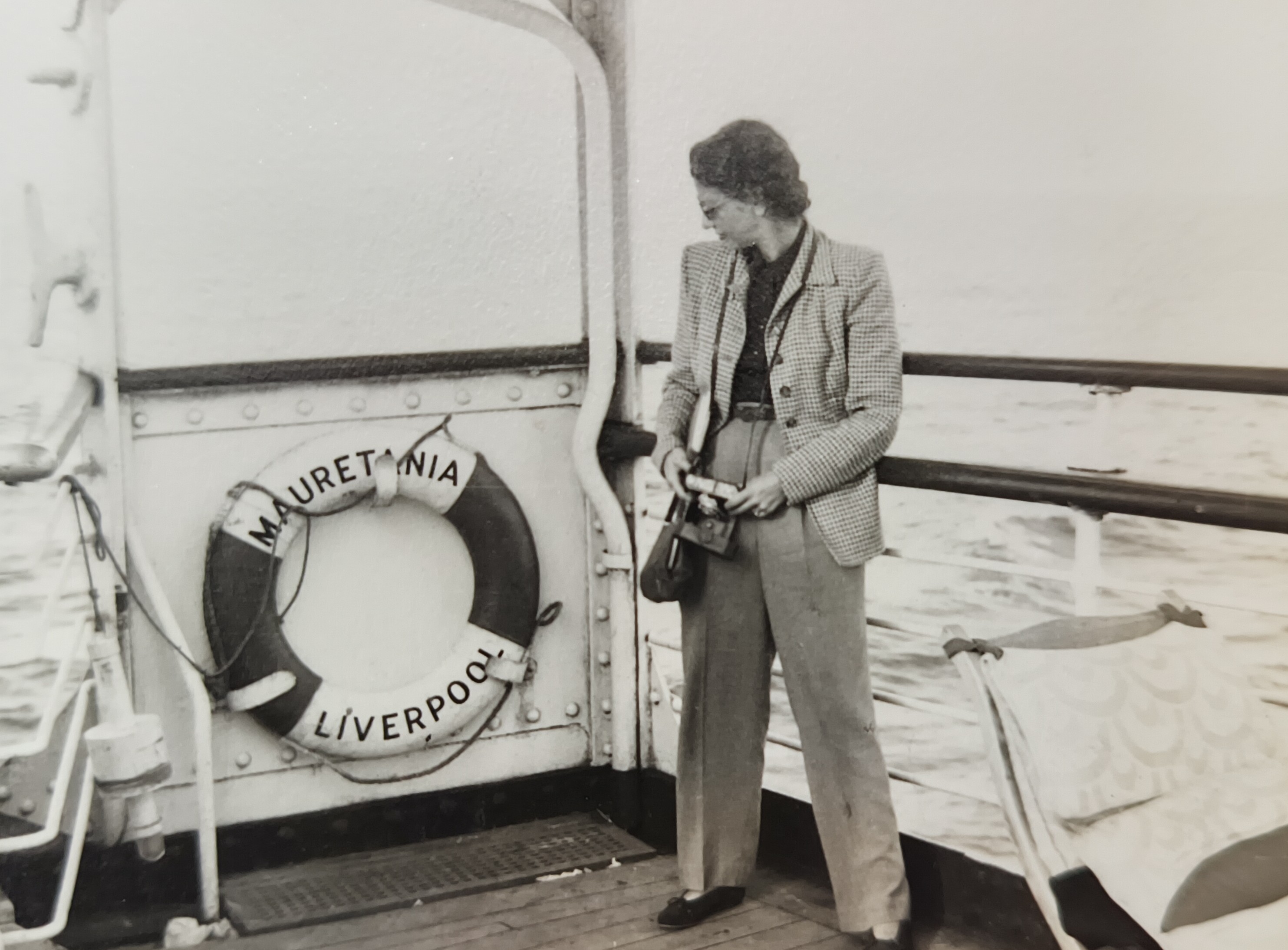
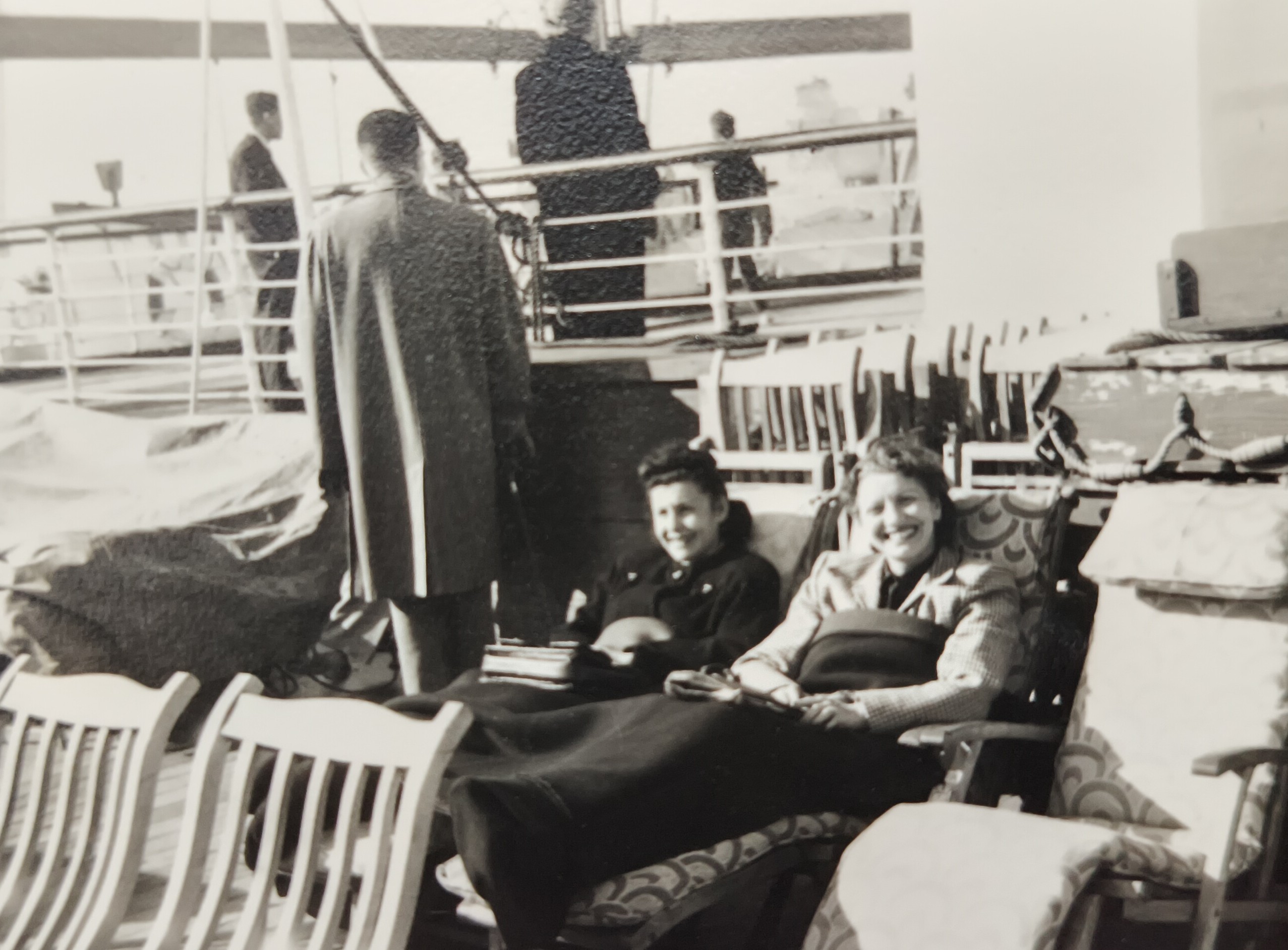
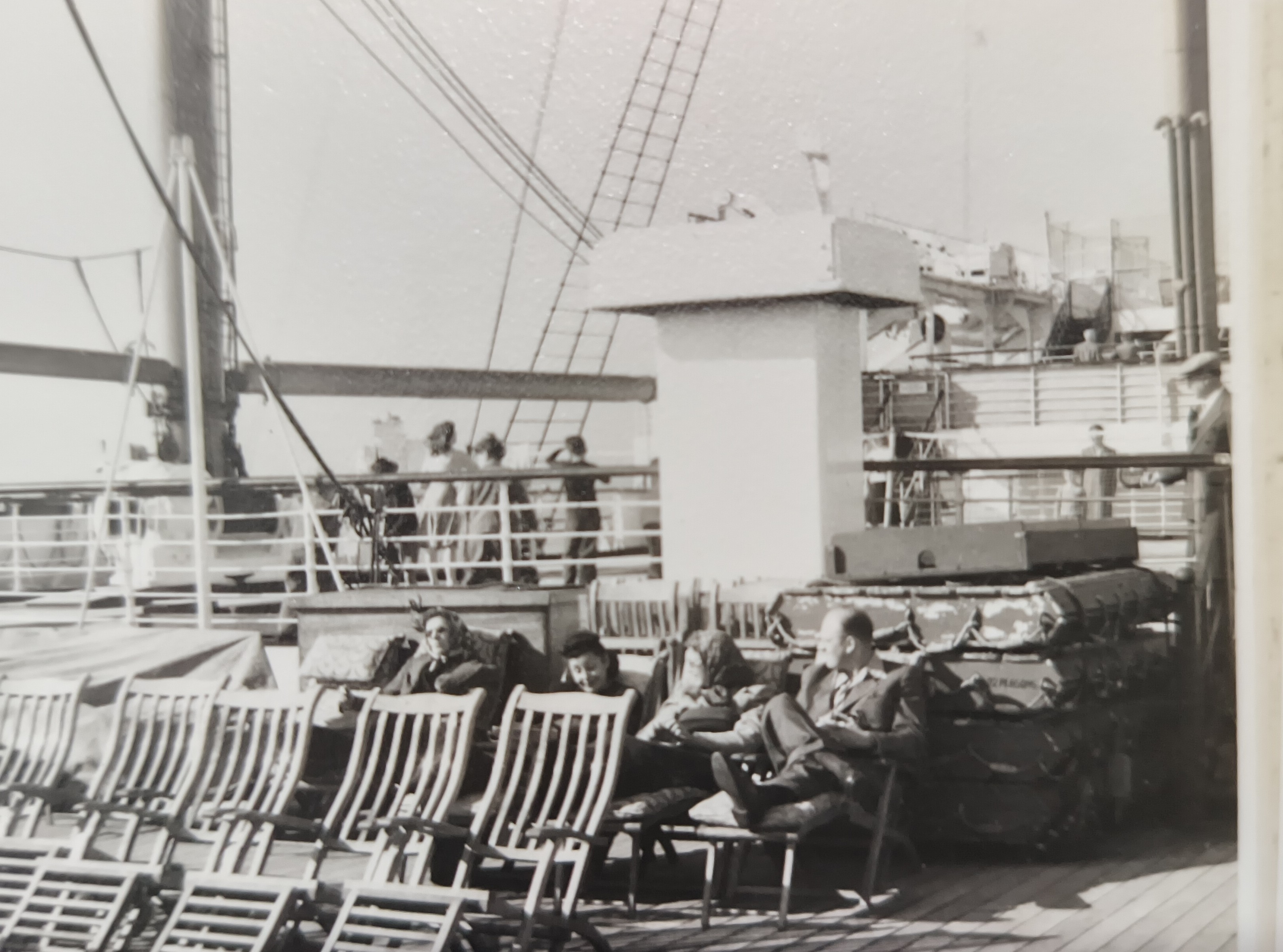
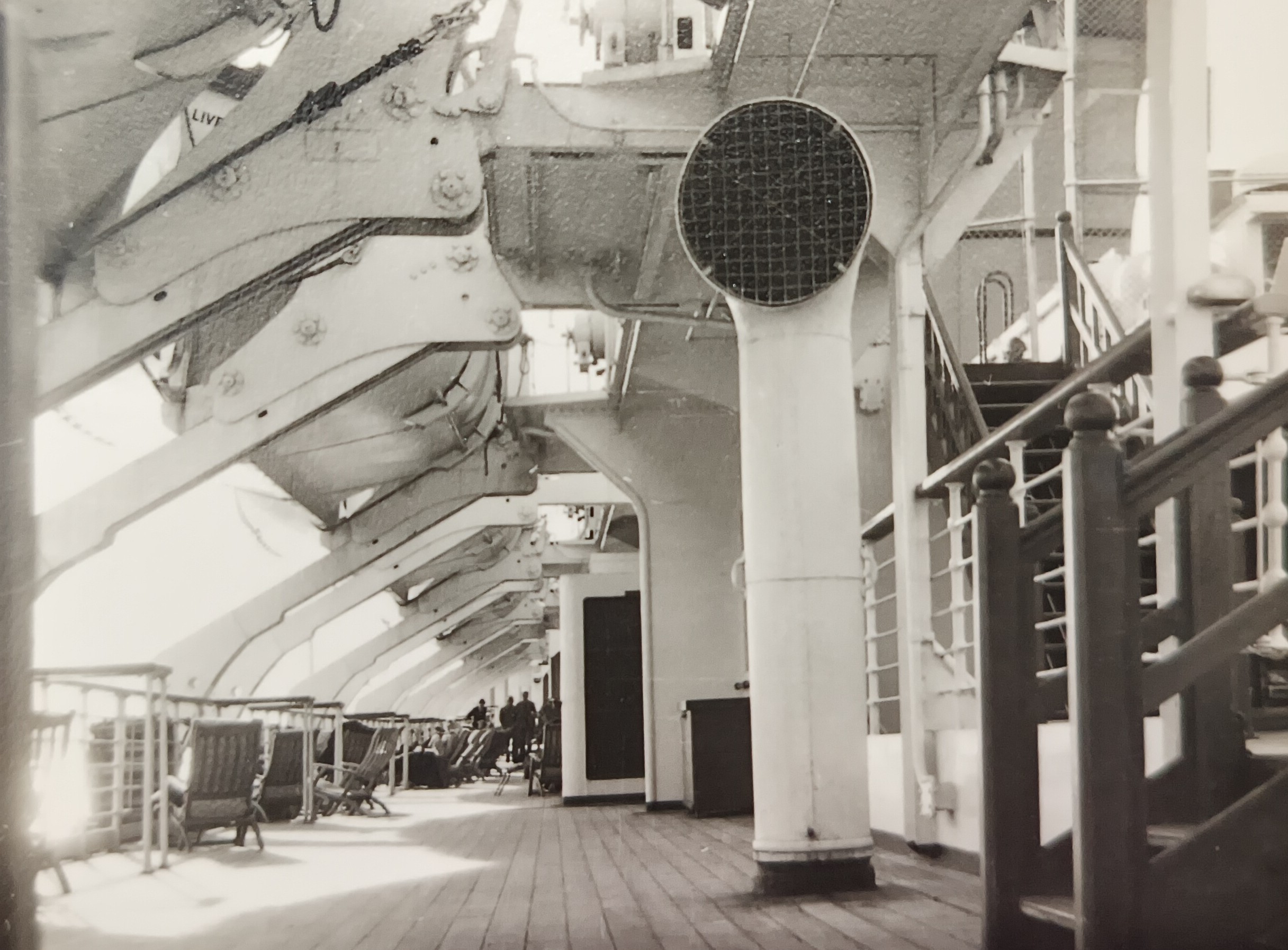
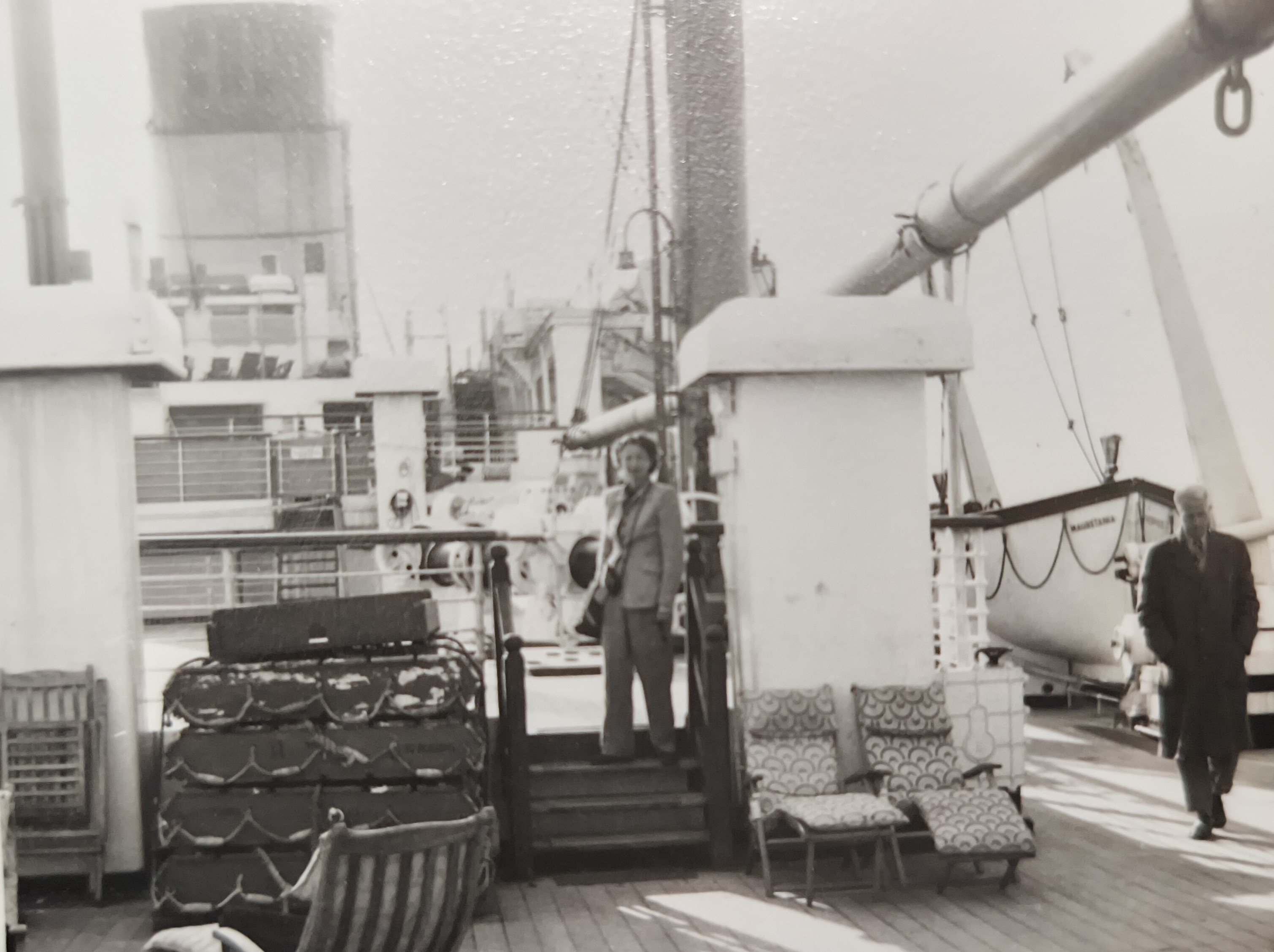
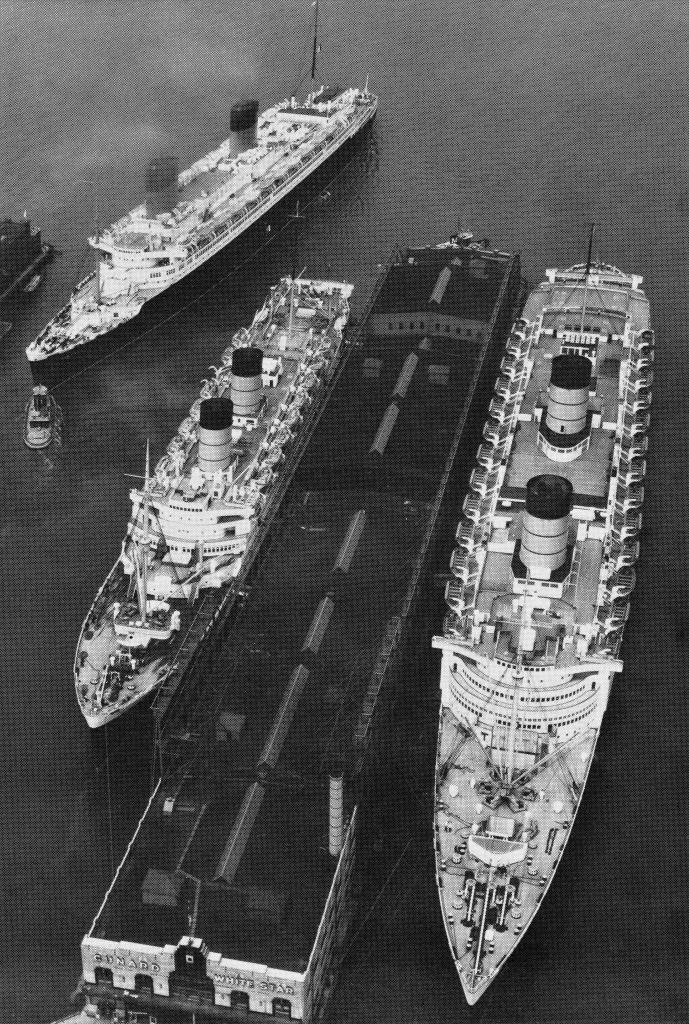
Notable Events and Facts
- Some of the esteemed guests that graced Mauretania’s halls would include actor Ray Milland during the maiden voyage, actress Lana Turner on honeymoon, tennis champion Sir Norman Brookes and actor Maurice Evans both together in August 1939, General Bernard Montgomery on her last voyage as a troop transport during the war in August 1946 and then again on December 2nd 1949, the father of plastic surgery: Sir Harold Gillies as well as one of the most famous RAF pilots Sir Douglas Bader on her first post-war crossing, actor Jackie Coogan on May 6th 1947, writer Ève Curie on May 31st 1947, singer Maurice Auguste Chevalier on June 26th 1947, film director René Clair in July 1947, violinist Jascha Heifetz and conductor Bruno Walter both in November 1947, first President of Israel Dr. Chaim Azriel Weizmann on December 17th 1947 and again on May 26th the following year, politician Richard von Coudenhove-Kalergi in and singer Kathleen Ferrier both in January 1948, writer Noël Coward in June 1948, Irish Taoiseach John A. Costello in August 1948, Antarctic explorer Lincoln Ellsworth in September 1948, politicians Ernest Bevin and Stafford Cripps together on August 31st 1949,
- On November 6th 1948, the Mauretania was given the very special honor of transporting the Kitty Hawk – the first ever airplane built by the Wright Brothers, on loan to the Science Museum in London back to America. The plane was very carefully packed into crates, and replaced with a replica in its place at London. Then it was transported back across the Atlantic aboard the Mauretania to the National Air Museum in the Smithsonian Institution in Washington.
- During the war, the Mauretania did set her own speed records just like her namesake. She sailed the 4000-mile stretch from Fremantle, Australia to Durban, South Africa in 8 days. The previous best record before her was 9 and 3/4 days. She also could claim the record for the 13’600-mile stretch between Sydney and Liverpool with a time of a month and a day. Her most serious record was for a full world crossing, which was an insane distance of 28’612 miles and took her 81 days and 16 hours. This was however challenged by Royal Mail Lines and their RMS Andes.
- The Mauretania’s electrical plant was powerful enough to supply electricity for a city of 100’00.
Cruise Service
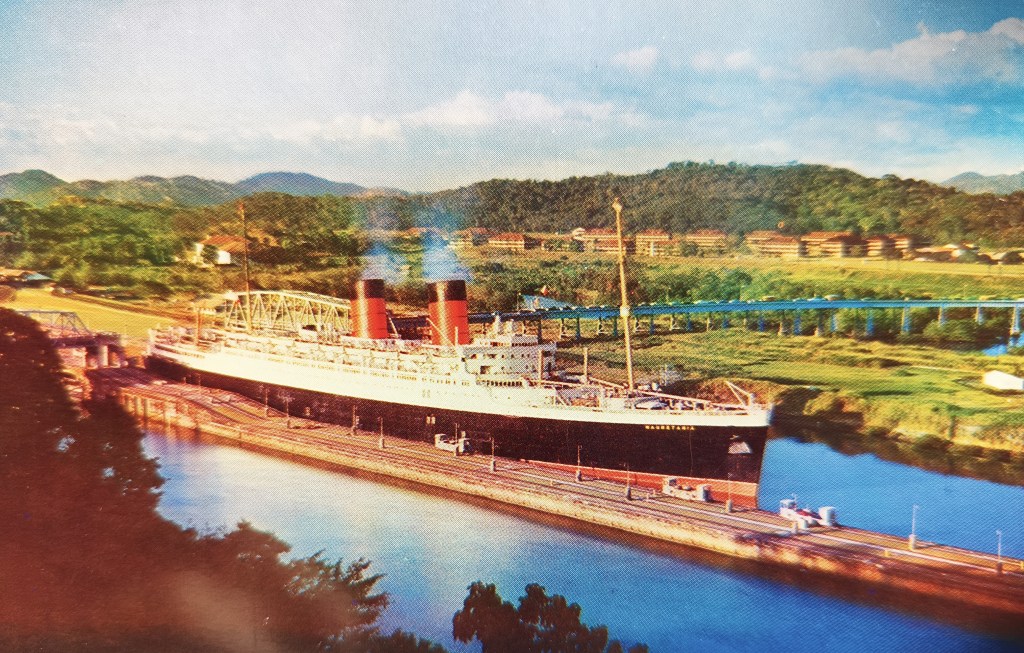
(Author’s Collection)
In addition to her transatlantic crossings, the Mauretania was deemed ideal for the growing cruise market and she departed New York for this service yearly during winter. It became apparent very quickly an additional liner to assist her with cruise duties would be beneficial. In April 1946, Cunard White Star Chairman Sir Thomas Brocklebank stated that a new: “Mauretania-Class” passenger liner was to be built on the Clyde by Spring of 1948. That ship arrived in January of 1949 as the RMS Caronia. At 34’000 tons, she was very similar in size to the Mauretania and had been the largest ship in the world under construction. The two ships cruised together in great popularity during the early 50’s.
During this decade, transatlantic travel experienced a colossal boom in terms of numbers carried. The two Queens for instance, were so popular passengers had to make their bookings five whole months in advance to secure a place. Mauretania similarly enjoyed this golden age, and swapped in for either Queen whenever one was out. During the years of 1947-1957, she made 260 Atlantic crossings and sailed at an average occupancy rate of 82.5%.
Newer Competition:
In 1958, commercial airlines first started regular flights and began to topple the monopoly ocean liners had. Newer competing vessels from foreign countries had also arisen, and began offering all the best in latest technology and comfort which the Mauretania needed to catch up to. She received full air conditioning in all spaces and an outdoor swimming pool on Sun Deck during a three-month £500’000 refit in October 1957. Starting in the 60’s, numbers crossing the Atlantic by ship dropped further every year and the Mauretania was now sailing often at only a third occupancy – the polar opposite to less than a decade prior.
The Years of Decline
Last Service Years:
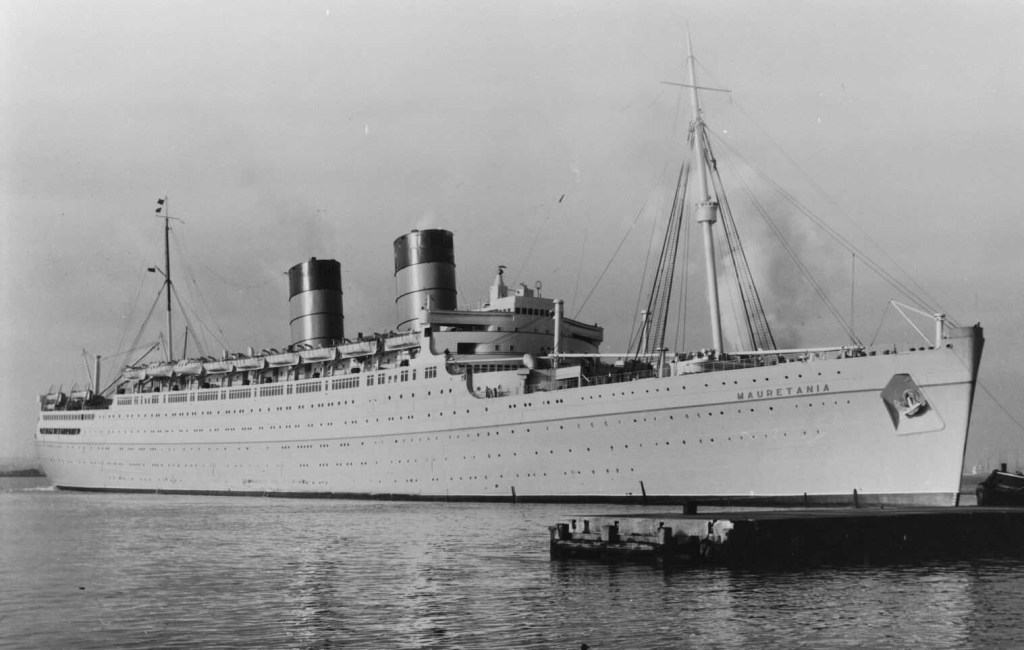
By 1962, Mauretania made zero profits on the transatlantic trade. Cunard then put her primarily on the cruising service and repainted her green in October of this year to match the Caronia. Her passenger count was also decreased to 406 in First, 364 in Cabin, and 357 in Tourist class to allow better facilities for all. Alongside declining bookings, Cunard’s operation costs rose dramatically from $3 million in 1963, to 10.9 million the following year. The company tried newer ideas such as putting the Mauretania in transatlantic service from Naples to New York with stops in Cannes, Genoa and Gibraltar in 1963. Unfortunately this Mediterranean venture failed as the Mauretania scored a meager 14% occupancy rate on these voyages. Italian and American laws put regulations on their emigrants, and stopped them from sailing on the Mauretania to protect their own subsidised services.
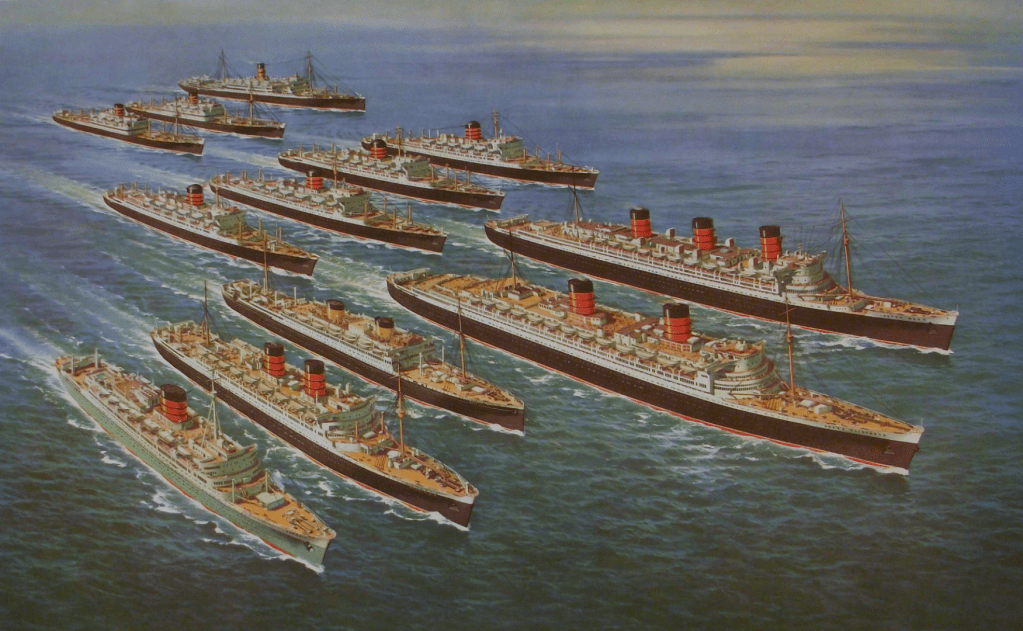
Prices for cruises were then heavily cut and services were offered to the Mediterranean, Atlantic Isles and West Indies but that again helped little. She was back on transatlantic duty during the summer of 1964 and showed a 53% occupancy rate then. Cunard Line lost a full £1 million in just the first half of 1965. Mauretania’s last great cruise to the Mediterranean had 307 passengers and lasted 61 days from September 15th – October 10th 1965. There was certainly dread aboard for those who loved the ship, as the Cunard Home Office in Liverpool had scheduled no further voyages after that date, or for the coming year. It seemed certain Mauretania’s time under the Cunard flag was up, so she sailed back to Southampton to await her future. It didn’t seem likely she was to be broken up thankfully, but instead several Greek shipowners who had been buying copious old tonnage might want her. The vessel herself was still in excellent condition. Cunard unfortunately did not have a spot for the 26-year old liner as they stated she was a “misfit” and “loner” in their fleet at around this time.
The End of the Mauretania
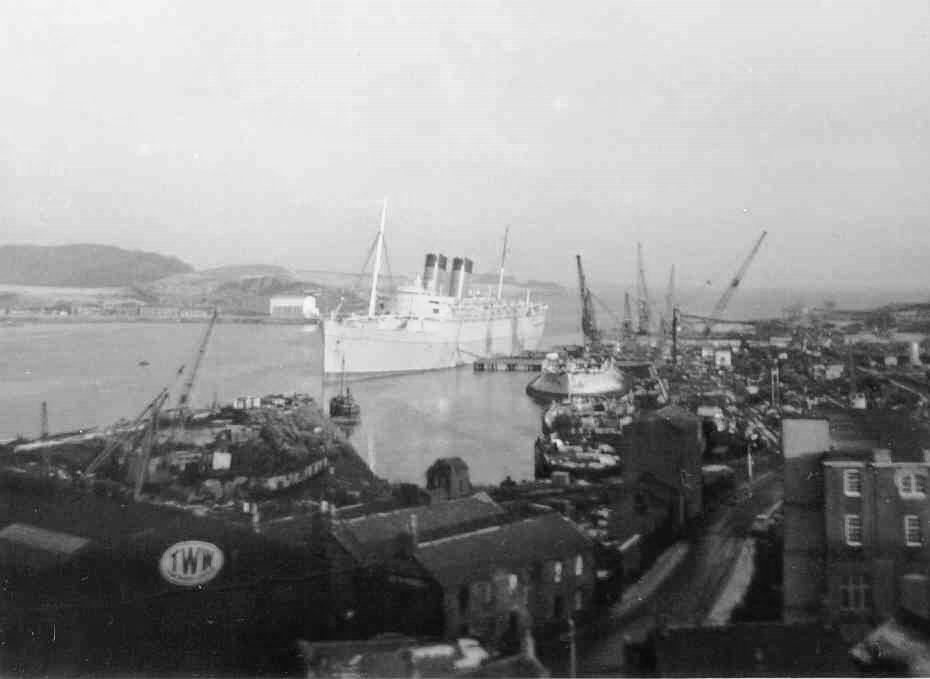
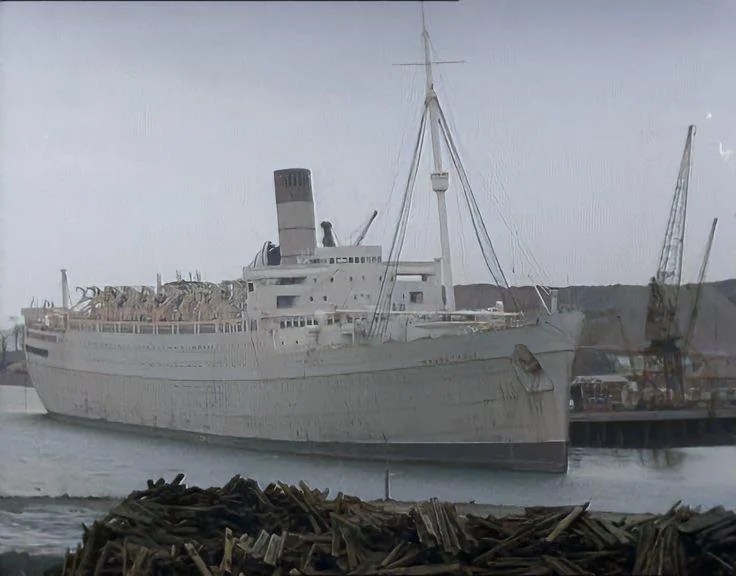
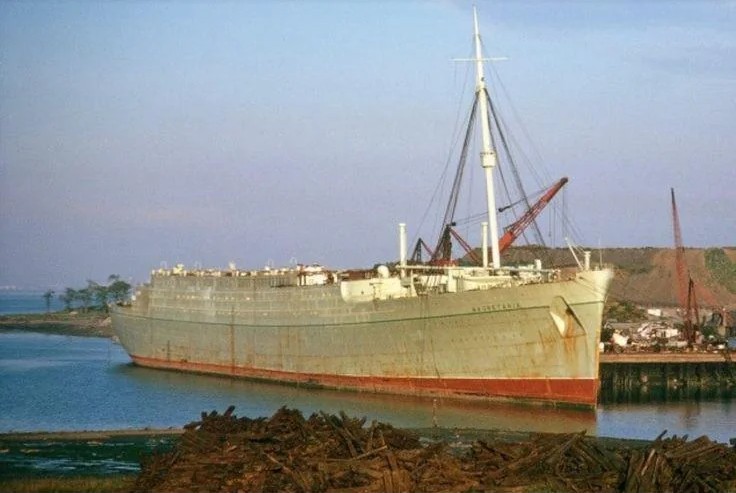
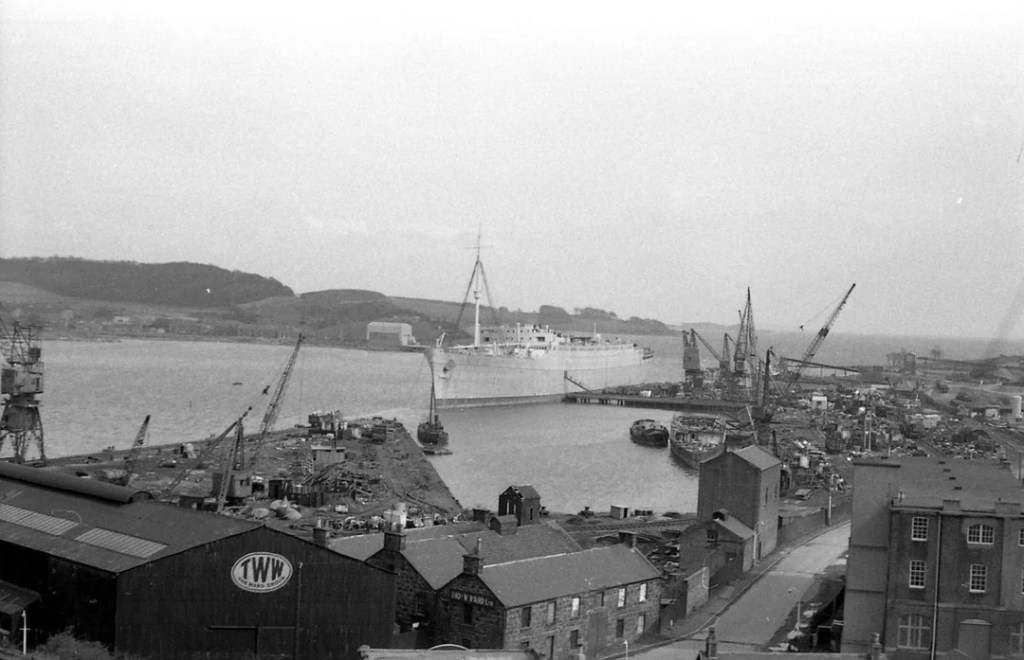
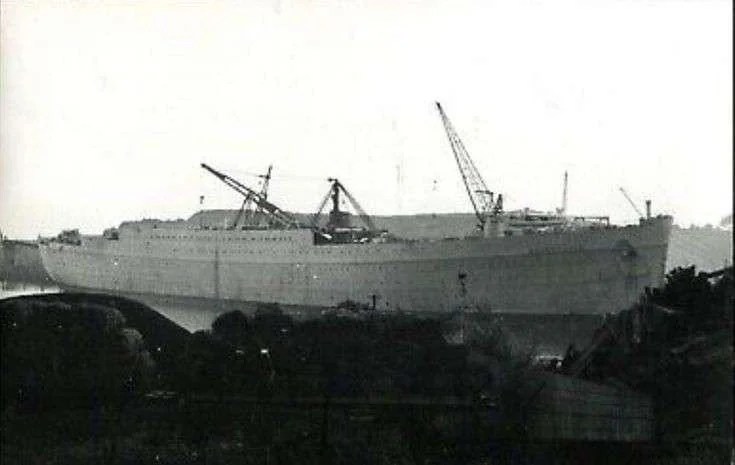
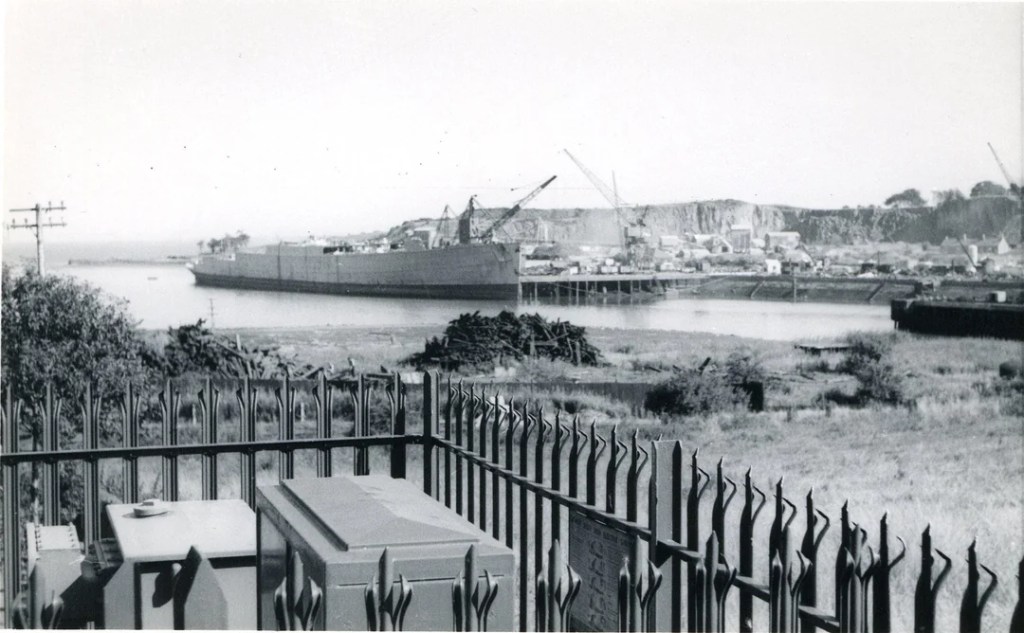
The Mauretania was put up for sale on November 10th 1965. There was idea by a group in London to dock her there as a floating exhibition hall, but that didn’t work out. Another interested party were Japanese bidders who planned on making the ship a floating hotel. Outrageously, Cunard Line rejected their offer and made sure their great liner went to the scrapheap instead! Their justification was: “If anybody’s going to do that with Cunard ships, it should be Cunard.” With her owners tragically wanting none of their liners modernized against them, the old Mauretania was sold to Thos W. Yard at Inverkeithing for £360’000 to be broken up for scrap. On Saturday the 20th November amidst the gloom and rain, the Mauretania left her berth in Southampton with her paying-off pennant for her two-day voyage to the breakers in Scotland. She wasn’t the only one in port, other vessels including her big running-mate the Queen Elizabeth all blasted their whistles as a final salute to their companion.
On November 22nd, the Mauretania arrived in Inverkeithing under the command of Captain John Treasure Jones. Throughout her entire 26-year career, she had put at least 1’070’000 miles behind her. Now her engines were silenced, her contents auctioned off, and bit by bit the little companion to the Queens was scrapped away for her bare metal, finally concluding by the end of 1966.
The Mauretania, A worthy successor?
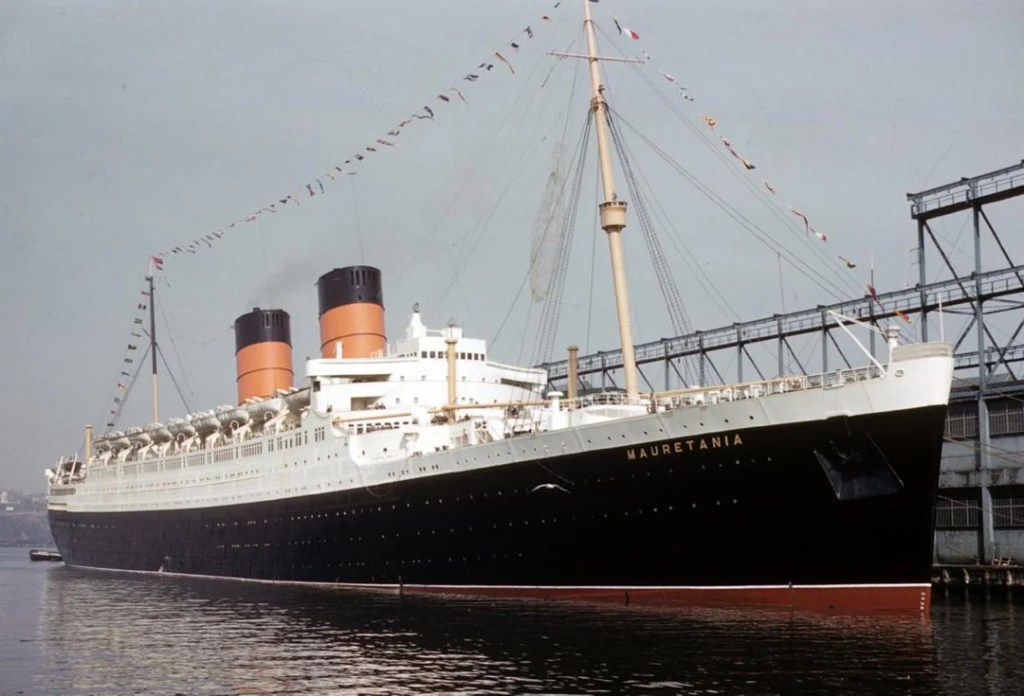
From the moment her contract was signed all the way back in December of 1936, Cunard Line’s new Mauretania was to always have something to live up to. From day one, she was all about honouring another vessel’s legacy by carrying that cherished name. Everything from the many people who sailed both Mauretanias to the original pannelling from the first taking to the seas again aboard the second cemented that. RMS Mauretania (1938) did not steal the awe and imagination of the public or smash world records like her forebear because she simply was not designed to. Being the little cousin to the two largest and fastest liners of the day that stole the world’s attention for decades only drives this point further.
In spite of everything, Mauretania made her own story as one of Cunard’s most premier and reliable liners for years on end. It is with firm belief, that the new Mauretania takes her place up with the many Cunard Line greats -up with the first Mauretania. It is only natural to compare the two, and many people felt a striking familiarity and warmth aboard the second almost as if the first hadn’t left. Captain Arthur T. Brown would say the following before taking her out across the Atlantic for the first time in 1938:
“I don’t know how it has been done but something of the old Mauretania’s charm and personality has been transplanted here.”
-Captain Arthur T. Brown, last master of the original Mauretania (1907) and first master of the new Mauretania (1938)
Bibliography and References:
- Liverpoolships.org ; THE CUNARD LINER ‘MAURETANIA’ OF 1939 https://www.liverpoolships.org/mauretania_1939_cunard_line.html (Accessed May 2026)
- The Shipbuilder, Special Number 1939 https://www.cstha.org/fleet-list/ocean-liner-plans/mauretania-1939
- Troopship Service, rmsQMwiki ; https://rmsqmwiki.org/wiki/Troopship_Service#The_Beginning_Years_Of_The_War (Accessed May 2026)
- Junior Scholastic 1940-04-01: Vol 6 Iss 9 https://archive.org/details/sim_junior-scholastic_1940-04-01_6_9/mode/2up?q=mauretania
- Technology Review 1939-06: Vol 41 Iss 8 https://archive.org/details/sim_technology-review_1939-06_41_8/mode/2up?q=mauretania
- The Warsaw Weekly. Vol. 5, 1939, no 12 https://archive.org/details/jbc.bj.uj.edu.pl.NDIGCZAS093507_1939_012/mode/2up?q=mauretania
- Pathfinder 1939-07-15: Vol 46 Iss 2376 https://archive.org/details/sim_town-journal_1939-07-15_46_2376/mode/2up?q=mauretania
- Newsweek (US Edition) 1939-06-26: Vol 13 Iss 26 https://archive.org/details/sim_newsweek-us_1939-06-26_13_26/mode/2up?q=mauretania
- https://www.nytimes.com/1965/08/29/archives/new-career-due-for-mauretania-cunard-listings-end-nov-10-with.html?searchResultPosition=3
- Bassett-Lowke, Wenman Joseph & Holland, George ; Ships and men: An account of the development of ships from their prehistoric origin to the present time and of the achivements and conditions of the men who have built and worked upon them, ; G.G. Harrap and Co. Lit, London
- Totzke, Thorsten, lostliners.de ; https://lostliners.de/schiffe/m/mauretania_2/geschichte/index.htm (Accessed May 2026)
- The New York Times (1938) NEW MAURETANIA RISES IN MYSTERY; April 3rd, p.45 https://www.nytimes.com/1938/04/03/archives/new-mauretania-rises-in-mystery-combining-of-speed-comfort-and.html?searchResultPosition=7
- The New York Times (1938) BRITAIN TO LAUNCH MANURETANIA TODAY; July 28th, p. 37 https://timesmachine.nytimes.com/timesmachine/1938/07/28/98170858.html?pageNumber=37
- The New York Times (1938) NEW MAURETANIA SLIDES INTO WATER; July 29th, p.6 https://timesmachine.nytimes.com/timesmachine/1938/07/29/98170961.html?pageNumber=6
- North Hastings Review (1939) MAURETANIA ENDS MAIDEN VOYAGE; June 1st, p.34 https://archive.org/details/north-hastings-review-june-1939/page/n33/mode/2up?q=mauretania
- The New York Times (1939) MAURETANIA SAILS AS 100,000 CHEER; June 18th, p.31 https://timesmachine.nytimes.com/timesmachine/1939/06/18/112696058.html?pageNumber=31
- The New York Times (1939) NEW MAURETANIA DUE IN PORT TODAY; June 24th, p.3 https://www.nytimes.com/1939/06/24/archives/new-mauretania-due-in-port-today-namesake-of-former-speed-queen.html?searchResultPosition=32
- The Engineer 1939-05-19: Vol 167 Supplement https://archive.org/details/sim_engineer_1939-05-19_167_supplement/page/762/mode/2up?q=mauretania
- The New York Times (1939) GALA PARTY GIVEN ON MAURETANIA; July 27th, p.15https://www.nytimes.com/1939/06/27/archives/gala-party-given-on-mauretania-2000-invitations-issued-to-reception.html?searchResultPosition=42
- The New York Times (1939) MAURETANIA SAILS, FILLED TO CAPACITY; July 30th, p.7 https://www.nytimes.com/1939/07/30/archives/mauretania-sails-filled-to-capacity-1170-pasengers-crowd-liner.html?searchResultPosition=58
- The New York Times (1939) Mauretania Is Tight Fit In London Dock’s Lock; August 7th, p.6 https://www.nytimes.com/1939/08/07/archives/mauretania-is-tight-fit-in-london-docks-lock.html?searchResultPosition=62
- Oakland Tribune (1966) Cunard Charting Different Course; Oakland Tribune, Volume 93, Number 35 p.51 https://cdnc.ucr.edu/?a=d&d=OT19660204
- The New York Times (1946) DETAILS REVEALED ON NEW GIANT SHIP; April 7th, p.46 https://www.nytimes.com/1946/04/07/archives/details-revealed-on-new-giant-ship-cunard-white-star-liner-will-be.html?searchResultPosition=4
- The New York Times (1946) SMALL FIRE SLOWS MAURETANIA WORK; October 3rd, p.55 https://www.nytimes.com/1946/10/03/archives/small-fire-slows-mauretania-work-store-room-blaze-interrupts.html?searchResultPosition=13
- The New York Times (1946) APRIL SAILING SET FOR MAURETANIA; March 3rd, p.43 https://www.nytimes.com/1947/03/03/archives/april-sailing-set-for-mauretania-british-liner-will-reenter-the.html?searchResultPosition=23
- The New York Times (1947) MAURETANIA HERE, WELCOMED IN RAIN; May 3rd, p.19 https://www.nytimes.com/1947/05/03/archives/mauretania-here-welcomed-in-rain-big-liner-glides-into-harbor-like.html?searchResultPosition=39
- The New York Times (1949) Mauretania Record Challenged; September 29th, p.5 https://www.nytimes.com/1945/09/29/archives/mauretania-record-challenged.html?searchResultPosition=2
- https://www.nytimes.com/1947/06/27/archives/chevalier-returns-to-france.html?searchResultPosition=59
- https://www.nytimes.com/1947/07/29/archives/mauretania-due-today-cobh-again-to-be-a-port-of-call-after-wartime.html?searchResultPosition=71
- https://www.nytimes.com/1947/11/25/archives/heifetz-and-walter-return-from-tours.html?searchResultPosition=108
- https://www.nytimes.com/1947/12/18/archives/dr-weizmann-sails-aboard-mauritania.html?searchResultPosition=121
- https://www.nytimes.com/1948/01/08/archives/among-arrivals-here-yesterday.html?searchResultPosition=128
- https://www.nytimes.com/1948/05/27/archives/weizmann-wife-sail-for-france-state-of-israel-president-not-going.html?searchResultPosition=153
- https://www.nytimes.com/1948/06/15/archives/manuilsky-speaks-on-palestine-issue-ukrainian-says-he-has-greatest.html?searchResultPosition=158
- The Wilmington morning star (1940) TWO LINERS BEGIN MYSTERY VOYAGES, March 22nd, p.1 https://www.loc.gov/resource/sn78002169/1940-03-22/ed-1/?sp=1&q=mauretania&r=0.34,0.882,0.653,0.312,0
- https://www.nytimes.com/1948/09/14/archives/3141-arrive-here-on-two-big-liners-archbishop-cushing-is-among.html?searchResultPosition=179
- https://www.nytimes.com/1948/10/14/archives/wright-plane-to-return-craft-british-are-sending-back-will-be.html?searchResultPosition=191
- https://www.nytimes.com/1948/05/25/archives/liner-breaks-her-record-mauretania-reduces-run-here-by-four-hours.html?searchResultPosition=152
- https://archive.org/details/sim_engineer_1939-05-19_167_supplement/page/762/mode/2up?q=mauretania
Hi Zarak Yes it was my self who was doing the tours previously! I did a Doors Open Day event…
Hi John this is absolutely fascinating. If you have more information about The Rex, I’d be delighted to add it…
Fantastic record of the ships illustrious past…..just one wee error near the end worth correcting. The Palace (Picture House) was…


![[i]](https://commons.wikimedia.org/wiki/File:Mauretania_2_at_the_breakers_yard.jpg)
Leave a Reply